
What Compliance Threshold Forces a Kigali Factory to Install an ETP
Rwanda Environment Management Authority (REMA) effluent standards limit industrial discharge to surface water at BOD ≤30 mg/L, COD ≤50 mg/L, TSS ≤50 mg/L, pH 6-9, and FOG ≤10 mg/L (per Rwanda Environment Management Authority effluent guidelines, 2024). Any facility discharging above these thresholds — or above 100 m³/day to a watercourse — must hold an Environmental Impact Assessment certificate issued under Law No. 48/2018 governing environment protection, with annual discharge fees set by Ministerial Order. Sewer discharge limits are tighter for several heavy metals (lead 0.1 mg/L, chromium 0.05 mg/L, cadmium 0.01 mg/L) and apply if a factory taps into the Kigali city sewer operated by Water & Sanitation Corporation (WASAC).
For a Kigali factory owner, the trigger is straightforward: the moment you generate industrial process wastewater above domestic-strength levels — typically anything beyond handwash and toilet flow — you need a treatment train engineered to your specific pollutant profile, not a domestic septic tank. Kigali Industrial Park tenants (Masoro, Kicukiro, Ndera) and Special Economic Zone (SEZ) operators under the Rwanda Development Board face an additional reporting layer: monthly influent and effluent monitoring logs, third-party audit access, and ESG disclosures that many multinational buyers now require.
The practical compliance ceiling is stricter than the 30 mg/L BOD number suggests. REMA inspectors test composite samples, and a single exceedance on a quarterly audit can trigger a remediation order. Build your treatment train with at least 20% margin below the limit so that shock loads and batch discharges from cleaning cycles do not push you out of compliance. For a coffee washing station discharging 50-200 m³/day of pectin-rich wastewater, or a brewery discharging 200-800 m³/day of high-strength effluent, the 30/50/50 mg/L ceiling is the number that justifies the capital spend on a packaged ETP before you ever discuss equipment models.
Which Kigali Industrial Sectors Need a DAF-Equipped ETP
Coffee washing stations, tea factories, breweries, textile mills, and dairies all require a DAF system upstream of biological treatment because their raw wastewater carries emulsified oils, colloidal solids, or organic loads above the 200 mg/L TSS threshold that suffocates biomass. Electronics assembly, light metal fabrication, and printing operations typically do not need DAF — sedimentation plus biological polishing handles their profiles.
| Sector (Kigali context) | Influent TSS (mg/L) | FOG (mg/L) | DAF needed? | Rationale |
|---|---|---|---|---|
| Coffee washing (Rwanda Specialty Coffee, NAEB stations) | 800-2,500 | <20 | Yes | Pectin and mucilage create colloidal TSS that resists gravity settling |
| Tea processing (Kitabi, Mulindi factories) | 300-900 | <15 | Yes | Tannins and polyphenols form color bodies that resist biological oxidation |
| Brewery / beverage (Bralima, Skol, East African Breweries) | 500-1,500 | 50-200 | Yes — essential | CIP cleaning releases emulsified oils that coat bacteria in downstream biology |
| Textile / garment (Kigali Garment Centre, C&H Garments) | 200-800 | <30 | Yes | Dyes and sizing chemicals need coagulant-assisted flotation for color and fiber removal |
| Dairy processing (Inyange, Bralima milk line) | 300-700 | 100-400 | Yes | FOG above 100 mg/L requires micro-bubble flotation; DAF achieves 90%+ oil removal |
| Electronics assembly, printing, light metal fab | 50-180 | <10 | Optional | Plain settling plus MBBR/MBR handles low-strength effluent |
DAF's micro-bubble flotation mechanism (bubble size 10-100 microns) attaches to emulsified oil droplets and fine suspended solids, lifting them to the surface where a mechanical scraper removes the sludge layer. For dairy processors, this delivers 90%+ oil removal before the wastewater hits the biological stage, protecting the bacterial colony from suffocation.
Rwanda's highland tropical climate — average 21°C ambient in Kigali year-round — is an engineering advantage that the top-ranking pages miss entirely. Biological treatment kinetics roughly double for every 10°C rise in temperature, meaning an MBBR or activated sludge basin sized for temperate-climate installations can be 30-40% smaller in Kigali without losing performance. You do not need enclosure heating, basin insulation, or cold-weather bioreactor modifications.
ETP-Only vs ETP-Plus-DAF: How to Choose the Right Treatment Train
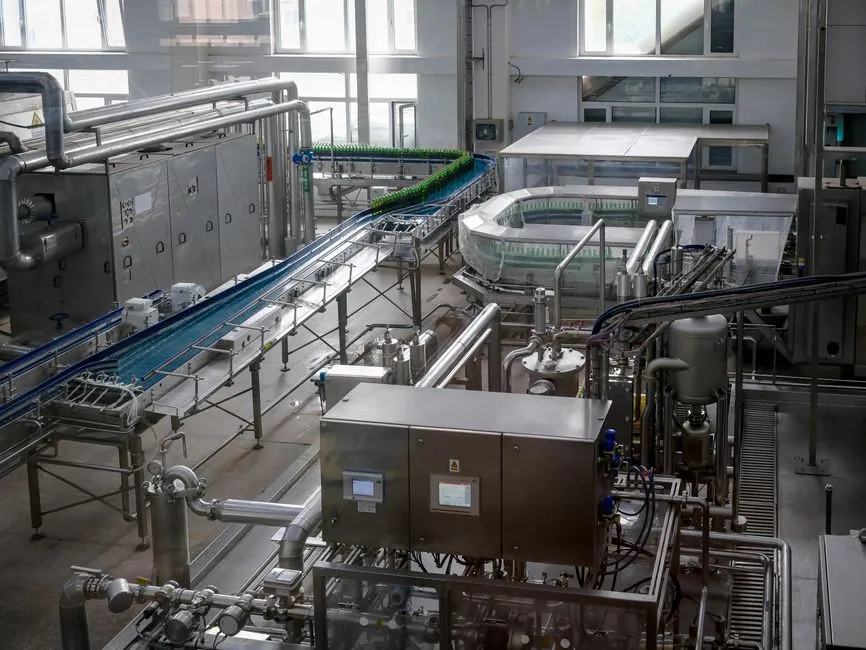
Choose ETP-only (sedimentation plus MBR or MBBR biology) when influent TSS stays consistently below 200 mg/L and FOG below 30 mg/L; choose ETP-plus-DAF when either threshold is exceeded or when emulsified oils are present, because these compounds coat and suffocate bacterial colonies in the downstream HydropureWater MBR system. The decision is not a preference — it is a process-engineering rule driven by biomass protection. For more detail on the upstream selection logic, see the DAF unit selection framework.
| Decision criterion | ETP-only (sedimentation + biology) | ETP + DAF |
|---|---|---|
| Influent TSS | < 200 mg/L | > 200 mg/L |
| Influent FOG | < 30 mg/L | > 50 mg/L |
| Emulsified oils present | No | Yes |
| Flow range (typical) | 1-2,000 m³/day | 4-300 m³/h per DAF unit |
| Chemical dosing required | Minimal (pH adjust only) | PAC/alum coagulant + polyacrylamide flocculant |
| Energy demand | 0.4-0.8 kWh/m³ | 0.5-1.0 kWh/m³ (DAF recycle pump adds ~0.1-0.2) |
| Footprint | Larger (clarifier + biology) | Compact DAF + smaller downstream biology |
When DAF is specified, chemical conditioning is not optional. Coagulant — typically PAC (polyaluminum chloride) at 50-150 mg/L or alum at 100-300 mg/L — destabilizes emulsified oil droplets, while anionic polyacrylamide flocculant at 1-5 mg/L bridges destabilized particles into larger flocs that micro-bubbles can lift efficiently. Skipping the chemistry leaves you with a flotation tank full of clear water and an untouched pollutant load.
For very small Kigali facilities below 20 m³/day — a small coffee washing station, a guesthouse, or a satellite dairy — constructed wetlands or waste stabilization ponds are a credible alternative. They run on gravity flow with no continuous electrical input, use an algae-bacteria symbiosis for BOD removal, and tolerate Rwanda's 21°C ambient temperatures well. The trade-off is land: 5-10 m² per m³/day of treatment capacity. In land-constrained Kigali Industrial Park sites, mechanical treatment wins by default.
Sizing Your Kigali ETP and DAF: Flow Rate to Model Selection
Size the DAF hydraulic capacity at 1.25x peak daily flow to handle surge from batch CIP cycles, and select a model from the DAF rated 4-300 m³/h across 13 standard sizes; a rotary bar screen upstream protects nozzles from rag and fiber fouling.
| Average daily flow (m³/day) | Peak factor | DAF model | DAF hydraulic capacity (m³/h) | Buffer tank (m³, 2-4 hr) | Upstream screen |
|---|---|---|---|---|---|
| 10-30 | 1.5x | DAF-5 | 5 | 2-5 | GX-300 (3 mm aperture) |
| 30-80 | 1.4x | DAF-10 | 10 | 5-13 | GX-400 |
| 80-200 | 1.3x | DAF-20 | 20 | 13-33 | GX-500 |
| 200-500 | 1.25x | DAF-50 | 50 | 33-83 | GX-600 |
| 500-1,500 | 1.25x | DAF-100 | 100 | 83-250 | GX-800 (dual) |
| 1,500+ | 1.25x | DAF-200+ | 200+ | 250+ | GX-1000 (dual) |
Three engineering numbers govern every DAF sizing decision: hydraulic retention time of 25-40 minutes in the flotation cell, air-to-solids ratio of 0.02-0.05 kg air per kg solids, and a recycle rate of 20-30% of forward flow for pressurized saturation. Get the HRT right and the bubbles have time to attach; get the air-to-solids ratio right and you do not waste blower power on already-clean water. The buffer tank upstream — sized at 2-4 hours of average flow — equalizes batch discharges from brewery CIP runs or dairy cleaning cycles so the DAF does not see a slug of concentrated waste at 6 a.m. and dilute water for the rest of the day. A GX rotary bar screen at headworks removes rags, plastics, and fibrous debris that would otherwise clog DAF nozzles and mat over biological tank diffusers.
For the biological stage, the MBR membrane bioreactor handles 10-2,000 m³/day with a footprint roughly 60% smaller than conventional activated sludge — useful for space-constrained Kigali sites where lease costs run $3-8/m²/month. The WSZ underground package STP handles 1-80 m³/h for smaller flows where burial and surface landscaping are feasible.
2026 Cost Benchmarks for ETP and DAF Systems in Rwanda
Industrial DAF skid packages still span about $3,900 for small units to over $60,000 for high-capacity systems in 2026, with full containerized ETP packages for 10-50 m³/day — DAF plus MBR plus disinfection — landing at $25,000-$90,000 ex-factory; add 25-35% for shipment, inland trucking, REMA permitting, and local installation in Rwanda (per published DAF pricing guides, 2025; cross-checked against 2026 supplier quotes). Specific package cost figures for the East African market in 2026 are limited and should be confirmed with current supplier quotes.
| Component | Capacity range | 2026 price range (USD, ex-factory) | Rwanda landed cost adder |
|---|---|---|---|
| DAF skid (small) | 4-10 m³/h | $3,900-$12,000 | +25-35% |
| DAF skid (medium) | 20-50 m³/h | $15,000-$35,000 | +25-35% |
| DAF skid (large) | 100-300 m³/h | $40,000-$60,000+ | +25-35% |
| Containerized ETP (10-50 m³/day) | Turnkey | $25,000-$90,000 | +25-35% |
| Chemical dosing skid (PAC, polymer, pH) | Per train | $4,000-$12,000 | +25-35% |
| Disinfection (chlorine dioxide or UV) | Per flow | $3,000-$15,000 | +25-35% |
| Plate and frame filter press (sludge dewatering) | Per capacity | $8,000-$35,000 | +25-35% |
The 25-35% Rwanda adder covers containerized ocean freight to Dar es Salaam or Mombasa, inland trucking to Kigali (typically $4,000-$8,000 per 40-foot container), REMA permit fees, and local installation labor. An automatic chemical dosing skid sized to your DAF flow adds $4,000-$12,000 but is non-negotiable for stable operation. A plate and frame filter press for sludge dewatering adds $8,000-$35,000 but pays back quickly in Kigali because the nearest licensed disposal sites are 30-60 km from most industrial zones, and wet sludge hauling costs run $40-80/m³.
Annual operating cost typically runs 15-25% of capex for chemicals, power, membrane replacement, and consumables, with operator labor on top. Budget $8,000-$15,000/year for a 50 m³/day facility in chemicals and power alone.
Supplier Selection Checklist for Kigali Industrial ETP Buyers
Verify six items before signing a purchase order: tropical-rated equipment, performance guarantee with liquidated damages, East African reference list, PLC controls pre-configured for 230V/50Hz Rwanda grid, after-sales support, and compliance documentation.
First, confirm the system is rated for ambient temperatures above 35°C and altitudes above 1,500 m — Kigali's elevation slightly reduces blower mass flow, so the supplier must derate or oversize blowers by 5-8% to maintain design air-to-solids ratio. Second, demand a written performance guarantee tied to the REMA 30/50/50 mg/L ceiling, with liquidated damages for non-compliance during the first 12 months. Third, ask for a reference list of East African installations (Rwanda, Kenya, or Uganda preferred) and request site visit permission. Fourth, check that the PLC control panel ships pre-configured for Rwanda's 230V/50Hz grid standard, not European 400V/50Hz — a mismatch will burn out motors on day one.
Fifth, confirm after-sales support: a local service agent, regional office, or at minimum a stocked spare parts warehouse in Nairobi or Kampala with 48-hour delivery to Kigali. Remote diagnostics via cellular modem saves weeks of troubleshooting. Sixth, verify compliance documentation: ISO 9001 manufacturing certification, CE or equivalent marking, and material test certificates for all wetted parts (typically SS304 or SS316 stainless). For additional context on regional deployment experience, see the DAF system deployment in Angola case study.
Frequently Asked Questions
Do all Kigali factories need a DAF, or only food and beverage?
Only sectors with influent TSS above 200 mg/L or FOG above 50 mg/L need DAF. Coffee washing, tea processing, brewery, dairy, and textile operations fall in this group. Electronics assembly, printing, and light metal fabrication typically use sedimentation plus biological treatment alone, with no DAF stage required.
What flow rate can a packaged ETP handle?
The HydropureWater MBR membrane bioreactor handles 10-2,000 m³/day in a single packaged unit, with a footprint roughly 60% smaller than conventional activated sludge. For flows above 2,000 m³/day, multiple units are manifolded in parallel. The WSZ underground package STP covers 1-80 m³/h where burial is feasible.
How long does installation take for a containerized ETP in Kigali?
Once REMA permits and the EIA certificate are in hand, containerized systems typically install in 4-8 weeks: 1-2 weeks for site civils and foundation, 1 week for container placement and interconnection, 1-2 weeks for piping and electrical tie-in, and 1-3 weeks for commissioning, trial run, and operator training. Permit lead time adds 8-16 weeks before construction starts.
What is the payback period for water reuse from a Kigali ETP?
Facilities replacing municipal water with treated effluent for non-potable reuse (cooling, toilet flushing, landscape irrigation, boiler feed after RO polishing) typically see payback in 18-36 months. Kigali industrial water tariffs run $1.50-$3.00/m³, and a 100 m³/day facility reusing 60% of its treated effluent saves $3,000-$5,500/month against the ETP operating cost of $2,000-$4,000/month.
Can a constructed wetland replace a mechanical ETP in Rwanda?
Yes, for flows below 20 m³/day and where 5-10 m² of land per m³/day is available. Rwanda's 21°C average ambient temperature is ideal for algae-bacteria symbiosis in waste stabilization ponds, and wetlands run on gravity flow with no continuous power. The trade-off is land area and slower treatment kinetics — wetlands need 5-14 days retention versus 6-12 hours in a mechanical ETP. For land-constrained Kigali Industrial Park sites, mechanical treatment remains the default. For detailed selection criteria, see the Kigali hotel STP selection guide.
Related Equipment
- plate and frame filter press — specifications, capacity range, and technical data