A Dissolved Air Flotation (DAF) system is a highly efficient wastewater treatment technology that removes suspended solids, oils, fats, and organic matter from industrial effluents in Angola by using micro-bubbles to float contaminants to the surface for skimming. DAF systems are crucial for industries like food processing, oil & gas, and manufacturing, capable of reducing Chemical Oxygen Demand (COD) by up to 70% and virtually eliminating fats and oils to meet discharge standards.
The Critical Need for Advanced Wastewater Treatment in Angola's Industries
Angola's growing industrial sectors, including oil & gas, food & beverage, and manufacturing, generate significant volumes of wastewater requiring advanced treatment to meet discharge standards and protect vital ecosystems. The nation's economic diversification drives expansion in areas such as agriculture, fisheries, and manufacturing, leading to increased industrial effluent generation. This industrial growth, while crucial for economic development, presents substantial challenges for environmental management, particularly regarding water pollution. Regulatory bodies in Angola are increasingly focused on enforcing stricter discharge limits to safeguard public health and preserve aquatic environments, making effective wastewater treatment not merely an operational cost but a critical component of sustainable industrial practice. Dissolved Air Flotation (DAF) systems emerge as a robust and efficient solution, serving as a primary or secondary treatment stage for various industrial effluents to address these complex challenges.
What is a DAF System and How Does it Achieve High-Efficiency Separation?
A Dissolved Air Flotation (DAF) system is an advanced physical-chemical separation process designed to remove suspended solids, fats, oils, grease (FOG), and colloidal matter from industrial wastewater streams. The core principle of DAF technology involves dissolving air under pressure into a portion of the treated effluent, which is then recycled and introduced into the untreated influent at atmospheric pressure. This pressure drop causes the dissolved air to precipitate out of solution as microscopic bubbles, typically 20-50 microns in diameter. These tiny bubbles attach to the suspended particles, FOG, and other contaminants, reducing their effective density and causing them to rapidly float to the surface, forming a concentrated sludge blanket.
The key components of a typical DAF system include a saturation tank (or air dissolution tank), an air compressor to supply compressed air, a recirculation pump to draw treated effluent for air saturation, a flotation tank where separation occurs, a surface skimmer to remove the floated sludge, and a sludge discharge mechanism. The process flow begins with influent conditioning, often involving chemical coagulation and flocculation, to agglomerate finer particles into larger flocs that can be more effectively captured by the micro-bubbles. Following conditioning, the wastewater enters the flotation tank, where it mixes with the air-saturated recycle stream. The generated micro-bubbles lift the flocculated contaminants to the surface, where they are continuously removed by the mechanical skimmer. The clarified water exits the DAF unit, ready for further treatment or discharge. The effectiveness of these micro-bubbles in capturing even finely dispersed particles and emulsified oil and grease removal is what grants DAF systems their high efficiency, often enhanced by precise control offered by automatic chemical dosing systems.
DAF System Efficiency: Proven Performance in Industrial Wastewater Treatment
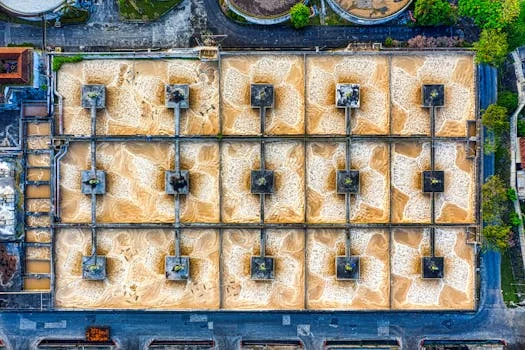
DAF systems consistently achieve high removal efficiencies for a range of pollutants, making them a cornerstone of effective industrial wastewater treatment. For the removal of fats, oils, and grease (FOG), DAF technology demonstrates exceptional performance; for instance, pretreating dairy effluent with DAF can remove virtually all fats (Fluence Corporation data). This capability is crucial for industries in Angola dealing with high FOG loads, such as food processing and abattoirs, preventing downstream pipe blockages and improving subsequent biological treatment stages.
Regarding Chemical Oxygen Demand (COD), DAF systems are capable of achieving significant reductions. In specific industrial applications, DAF can reduce COD by up to 70% (Fluence Corporation data), particularly when the COD is primarily associated with suspended or colloidal organic matter. Similarly, for Total Suspended Solids (TSS), DAF systems are designed for high removal rates, often exceeding 90% (Xylem Angola, Sigmadaf). This high TSS removal contributes directly to clearer effluent and reduces the load on subsequent treatment processes. Beyond these, DAF also aids in Biochemical Oxygen Demand (BOD) removal, which is vital for meeting discharge compliance standards (Xylem Angola). Its ability to effectively handle emulsified oils and grease, which are notoriously challenging for conventional sedimentation processes, further underscores its versatility and efficiency. The typical effluent quality parameters achievable with DAF pre-treatment are instrumental for industries striving for regulatory adherence.
| Parameter | Typical Influent Range | Typical DAF Effluent Range (Pre-treatment) | Removal Efficiency (Average) |
|---|---|---|---|
| Fats, Oils, Grease (FOG) | 100-10,000 mg/L | <10 mg/L | 95-99% |
| Chemical Oxygen Demand (COD) | 500-5,000 mg/L | 150-1,500 mg/L | 40-70% |
| Total Suspended Solids (TSS) | 200-5,000 mg/L | <50 mg/L | 80-95% |
| Biochemical Oxygen Demand (BOD) | 200-2,000 mg/L | 100-800 mg/L | 30-60% |
Types of DAF Systems and Their Ideal Applications in Angola
DAF technology is implemented in several configurations, each optimized for specific industrial wastewater characteristics and space constraints, ensuring versatility across Angola's diverse industrial landscape. The primary types include horizontal flow, vertical flow, and plate pack or lamella DAF systems. Horizontal flow DAF units are common for large flow rates, offering a long residence time for flotation. Vertical flow DAF systems are more compact, suitable for sites with limited footprints, where the water flows upwards through the flotation zone. Plate pack or lamella DAF systems incorporate inclined plates or tubes within the flotation tank, increasing the effective surface area for separation and further enhancing efficiency in a smaller physical space, making them ideal for high suspended solids flotation in constrained environments.
These diverse DAF configurations find widespread industrial applications in Angola where they excel. In the food & beverage processing sector, including meatpacking plants, dairies, and breweries, DAF systems effectively remove fats, oils, proteins, and suspended solids, significantly reducing the organic load. The Angolan oil & gas industry utilizes DAF for treating produced water and refinery effluent, efficiently removing hydrocarbons, emulsified oils, and suspended solids from their wastewater streams. The textile industry benefits from DAF's ability to remove dyes, fibers, and other suspended matter from dyehouse effluent, improving water clarity and reducing color. Pulp & paper mills employ DAF for fiber recovery and ink removal, enhancing resource efficiency and reducing effluent pollution. DAF can serve as a primary treatment, a pre-treatment stage for biological systems like integrated MBR systems, or for sludge thickening prior to dewatering. The benefits of compact DAF designs are particularly relevant for industrial facilities in Angola with limited space, offering efficient high-efficiency sedimentation tanks that minimize footprint.
| DAF System Type | Description | Ideal Applications in Angola | Key Benefit |
|---|---|---|---|
| Horizontal Flow DAF | Wastewater flows horizontally through a rectangular tank; ideal for large volumes. | Large-scale food processing, municipal pre-treatment, oil & gas facilities. | High throughput, long residence time. |
| Vertical Flow DAF | Wastewater flows upwards, often used for smaller footprints. | Smaller industrial plants, facilities with limited space. | Compact design, space-saving. |
| Plate Pack / Lamella DAF | Incorporates inclined plates or tubes to increase separation area. | High TSS loads, areas requiring enhanced separation efficiency in a small footprint. | Increased efficiency, minimal footprint. |
Selecting the Right DAF System for Your Angolan Industrial Facility
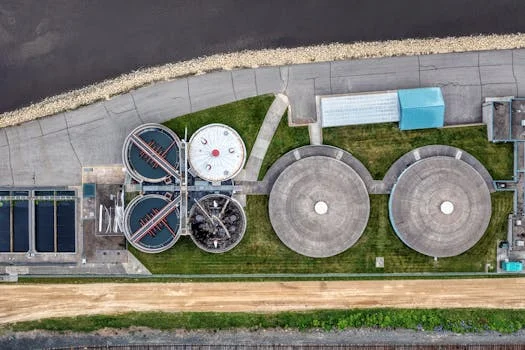
Selecting an appropriate DAF system for an industrial facility in Angola requires a detailed assessment of influent characteristics, desired effluent quality, and site-specific operational parameters. Critical selection factors include the influent wastewater's flow rate, which can range from 4–300 m³/h per HydropureWater's DAF models, the specific pollutant load (e.g., FOG, TSS, COD concentrations), and pH. The desired effluent quality, dictated by Angolan environmental regulations, will determine the required removal efficiencies. Space availability within the facility is also a significant consideration, as DAF units vary in their footprint. Energy consumption, primarily for pumps and compressors, should be factored into long-term operational costs.
For complex effluents, pilot testing is essential to determine optimal chemical dosing strategies (coagulants, flocculants) and to accurately size the DAF system, ensuring it meets performance guarantees under real-world conditions. Operational considerations include the desired level of automation; HydropureWater's DAF line, for example, features automatic skimming, reducing manual intervention. Maintenance requirements and the efficiency of sludge handling are also crucial, as the concentrated sludge from DAF systems typically requires further dewatering using equipment such as plate frame filter presses. When choosing a supplier, look for proven experience in similar industries, evidence of successful installations in challenging environments, and comprehensive after-sales service and local support where available. Adhering to DAF compliance standards in Angola is paramount, requiring systems that can consistently meet discharge limits for industrial effluent treatment.
HydropureWater's DAF Systems: Tailored Solutions for Angola
HydropureWater's Dissolved Air Flotation (DAF) systems are engineered to provide robust and efficient wastewater treatment solutions tailored to the diverse industrial needs of Angola. These systems are designed for high-efficiency removal of suspended solids, FOG, oil & grease removal, and colloidal matter, leveraging advanced micro-bubble technology to ensure superior separation performance. The DAF line offers a wide range of capacities, from 4 m³/h to 300 m³/h, across 13 standard models, providing exceptional flexibility to match various industrial scales and flow rates prevalent in Angolan operations. HydropureWater's DAF systems have proven effective in numerous applications relevant to Angola's economy, including food processing, pulp & paper, textile, metalworking, petrochemical industries, and municipal pre-treatment facilities. The system's robust design ensures durability and reliability in demanding industrial environments, while features like automatic skimming contribute to ease of operation and reduced labor costs. The DAF system is also engineered for seamless integration into existing or new wastewater treatment Angola plants, offering a cost-effective and highly efficient solution for compliance and environmental protection.
| Feature | Description |
|---|---|
| Model Series | HydropureWater Dissolved Air Flotation (DAF) |
| Flow Rate Range | 4 - 300 m³/h |
| Number of Standard Models | 13 |
| Key Pollutant Removal | Suspended Solids, FOG, Oil & Grease, Colloidal Matter |
| Skimming Mechanism | Automatic |
| Proven Applications | Food Processing, Pulp & Paper, Textile, Metalworking, Petrochemical, Municipal Pre-treatment |
For more detailed specifications and to find the ideal solution for your facility, explore the HydropureWater DAF system.
Frequently Asked Questions About DAF Systems in Angola
Industrial plant managers and environmental engineers in Angola frequently inquire about the practical implementation and benefits of Dissolved Air Flotation (DAF) systems for their specific operational challenges.
- What industries in Angola benefit most from DAF systems? Industries with high concentrations of fats, oils, grease (FOG), suspended solids, or colloidal matter, such as food & beverage processing, oil & gas, textiles, and pulp & paper, benefit significantly from DAF systems.
- How does DAF compare to traditional sedimentation for oil and grease removal? DAF is significantly more effective than traditional sedimentation for oil and grease removal because it actively floats contaminants using micro-bubbles, handling emulsified oils that sedimentation cannot effectively separate due to their specific gravity being close to water.
- What are the typical operating costs for a DAF system in an industrial setting? Operating costs primarily include energy consumption (for pumps and compressors), chemical dosing (coagulants, flocculants), and sludge disposal. These costs vary significantly based on influent characteristics, flow rate, and desired effluent quality.
- Can DAF systems handle variable flow rates and pollutant loads common in industrial operations? Yes, DAF systems are designed with flexibility to handle variable flow rates and pollutant loads, often incorporating equalization tanks and chemical dosing adjustments to maintain consistent treatment efficiency under fluctuating conditions.