
How Ahmedabad's Industrial Mix Shapes ETP Design
An Ahmedabad factory typically needs a multi-stage Effluent Treatment Plant (ETP) with a Dissolved Air Flotation (DAF) unit as the primary solids-removal step ahead of biological treatment. DAF generates 10–100 micron micro-bubbles that lift suspended solids, oil, and dye to the surface, and is sized between 4 and 300 m³/h for the 50–500 m³/day flows common in Gujarat's textile, chemical, and engineering clusters — with GPCB consent norms and Sabarmati discharge limits as the binding design constraint.
Gujarat's industrial geography forces specific ETP decisions that generic India-wide guides ignore. The textile processing belt around Naroda and the dye-intermediate units clustered near Vatva generate highly colored wastewater with reactive dyes, salts, and high chemical oxygen demand (COD) — typically 1,500–4,000 mg/L of COD and suspended solids (TSS) in the 400–1,200 mg/L range before any pre-treatment. Engineering and auto-ancillary operations in Naroda-Odhav add cutting-oil emulsions and heavy-metal-bearing rinse water (TSS 200–600 mg/L, oil & grease 50–300 mg/L). Pharmaceutical formulation plants around Sanand contribute biodegradable organics with BOD₃ in the 800–2,500 mg/L band but relatively low TSS. Specialty chemical units near Nandesari in the Vadodara cluster push the influent profile further with chlorinated streams and recalcitrant COD above 5,000 mg/L.
Ahmedabad's climate reshapes biological-stage sizing in ways that textbook designs miss. Summer ambient temperatures routinely exceed 40°C between March and June, and effluent leaving a DAF unit often arrives at the aeration tank at 38–42°C. Warmer water holds less dissolved oxygen — saturation drops from 8.1 mg/L at 25°C to roughly 6.4 mg/L at 40°C — which compresses the safety margin in activated-sludge and MBR designs. The result is that Ahmedabad ETP sizing typically oversizes aeration tank volume by 15–20% compared to a temperate-climate spec, and operators favor robust DAF pre-treatment (TSS removal >85%) so the downstream biology sees a stable, low-loading feed. The standard ETP train of preliminary screening, primary clarification, secondary biological treatment, and tertiary polishing still applies; what changes is the hydraulic retention time and the DAF cut that each sector requires. A useful starting point for matching a DAF unit to an Ahmedabad sector profile is the best DAF unit engineering and cost decision framework.
Where DAF Fits Inside the ETP Train
DAF sits between primary physical separation and the biological polishing stage, and removing it is the single most common reason Ahmedabad ETPs fail consent. The mechanism is straightforward: a side-stream of clarified effluent is pressurized to 4–6 bar, saturated with air in a saturation drum, then re-introduced into the flotation tank at atmospheric pressure. The pressure drop releases 10–100 micron micro-bubbles that attach to suspended solids, oil droplets, and dye flocs, reducing their effective specific gravity so they float to the surface within 3–5 minutes. A surface skimmer scrapes the floated layer into a sludge holding tank, while clarified water exits beneath an overflow weir.
The refinery analogy makes the protection argument concrete. In a refinery ETP, raw wastewater first passes through an API oil-water separator that relies on gravity to remove free-floating oil and heavy sediment. That separator cannot break tight oil-in-water emulsions or lift ultrafine solids. If those emulsions pass downstream, they coat the biomass in the biological reactor and suffocate the bacterial colony. DAF breaks the emulsion with coagulant dosing and then floats the destabilized oil out before it reaches biology (per Quora refinery-DAF explanation, 2026-04). Ahmedabad's textile and dye streams are not refinery-grade, but they carry the same fine suspended solids, color bodies, and emulsified matter that would overload an activated-sludge tank or an MBR membrane bioreactor system if fed raw. A DAF system placed ahead of biology is the practical answer.
For an Ahmedabad factory the operational outcome is a clarified stream with TSS typically under 30–50 mg/L and oil & grease under 10 mg/L leaving the DAF — well within the protective envelope that activated sludge or an MBR system needs to operate without shock loading. Float sludge is routed onward to a plate and frame filter press for dewatering to 18–22% dry solids, which simplifies disposal. The research also notes that efficient wastewater treatment and reuse lowers water procurement and disposal costs (per Quora India ETP overview, 2026-04) — a real consideration in Ahmedabad, where fresh industrial water tariffs in GIDC estates have climbed 8–12% per year since 2023. Treated effluent meeting consent can be reused for cooling-tower make-up, gardening, and floor washing, offsetting 40–60% of a 200 m³/day factory's freshwater draw. For a deeper look at the selection logic, the zero-risk DAF selection guide walks through the same micro-bubble mechanism and ties it to spec sheets.
Sizing a DAF for an Ahmedabad Factory: Flow, Load, and Footprint
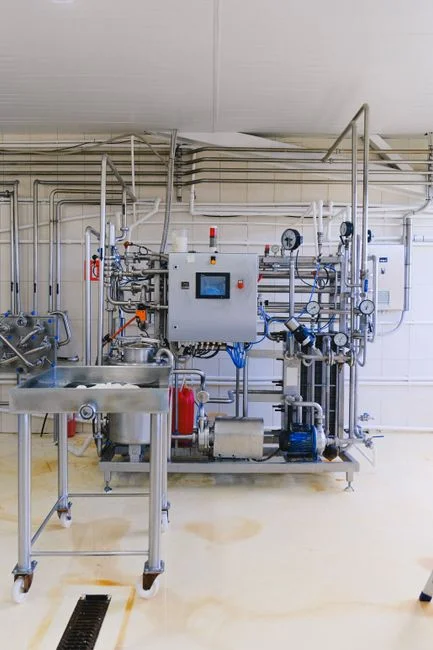
Translate a factory's daily discharge into a DAF model in three steps: divide by operating hours, apply a peaking factor, then match to the manufacturer's flow band. Peak hourly flow = (daily discharge m³ ÷ operating hours) × 1.3. A 200 m³/day two-shift textile unit (16 operating hours) gives 200 ÷ 16 × 1.3 = 16.3 m³/h peak, which lands in the 15–25 m³/h DAF model class. Standard DAF machines cover 4 to 300 m³/h across 13 catalog models — enough range for a single-line 50 m³/day engineering ancillary up to a 500+ m³/day integrated chemical park.
The table below maps typical Ahmedabad factory profiles to DAF model selection and the design parameters a vendor should be asked to quote in writing.
| Factory profile (Ahmedabad sector) | Daily discharge | Peak flow (×1.3) | DAF model flow band | Typical influent TSS | Hydraulic retention time |
|---|---|---|---|---|---|
| Small engineering ancillary / Odhav | 50–80 m³/day | 4–7 m³/h | 4–15 m³/h | 200–600 mg/L | 15–20 min |
| Textile/dye mid-size / Naroda | 150–300 m³/day | 12–25 m³/h | 15–50 m³/h | 400–1,200 mg/L | 20–25 min |
| Pharmaceutical formulation / Sanand | 300–500 m³/day | 24–40 m³/h | 50–150 m³/h | 150–400 mg/L | 20–25 min |
| Integrated chemical or textile park | 500–1,200 m³/day | 40–100 m³/h | 150–300 m³/h | 600–1,500 mg/L | 25–30 min |
Three design parameters must appear on every quotation. Hydraulic retention time (HRT) in the flotation tank should be 15–30 minutes depending on influent TSS — heavier TSS loads need longer residence for the bubble-particle aggregates to reach the surface. Recycle ratio (the saturated side-stream as a percentage of throughput) is typically 20–30%; below 20% bubble density is insufficient for high-TSS streams, above 30% the energy cost of re-pressurization outweighs the marginal TSS gain. Air-to-solids ratio (mass of air released per mass of TSS removed) is the third number — a well-designed DAF targets 0.02–0.06 kg air per kg TSS. PLC-controlled coagulant and flocculant dosing must be tuned jar-test-by-jar-test to the actual influent; polyaluminium chloride at 50–150 mg/L paired with anionic polyacrylamide at 1–5 mg/L is a typical starting band for Ahmedabad textile streams (HydropureWater field data, 2025-08).
Ahmedabad's hot summers force two adjustments. Dissolved-air carrying capacity drops at higher temperature, so the saturation pressure may need to rise from the standard 4–5 bar to 5–6 bar in May and June to maintain bubble flux — a vendor that quotes a single design point for the year is a red flag. Chemical dosing must also be re-tuned because reaction kinetics accelerate and the optimal coagulant pH window can shift. For comparison against other flotation technologies, see the DAF vs Swirltex, sedimentation, and other flotation alternatives breakdown.
Gujarat PCB Consent: Discharge Limits That Drive the Spec
The Gujarat Pollution Control Board (GPCB) issues consent to establish (CTE) and consent to operate (CTO) under the Water Act, 1974, and the discharge limits written into that consent are the binding design constraint — not vendor brochures, not textbook defaults. The general GPCB thresholds for inland surface water discharge that most Ahmedabad factories must hit are: TSS ≤100 mg/L, BOD₃ ≤30 mg/L, COD ≤250 mg/L, pH 6.5–8.5, and oil & grease ≤10 mg/L. Units discharging toward the Sabarmati riverfront or the Kharicut canal system face additional scrutiny on color (typically <100 Pt-Co units), TDS (often <2,100 mg/L for inland discharge), and sector-specific heavy metals — chromium, copper, zinc, and nickel limits drop into the 1–2 mg/L range for dye and metal-finishing streams. Operators should verify the exact figures from the latest GPCB consent order for their specific sector, since the board revises sector-specific schedules periodically (per EPA-style environmental authority compliance model, referenced in Quora ETP overview, 2026-04).
DAF is the technology that makes the oil & grease ≤10 mg/L limit achievable. Gravity settling in an API separator or lamella clarifier typically delivers 30–50 mg/L O&G on emulsified streams — well above consent. A properly dosed DAF unit, with polyaluminium chloride and anionic flocculant tuned to the influent, reliably drives O&G below 10 mg/L on textile and engineering effluents, and below 5 mg/L on refinery-adjacent streams. For factories whose consent also requires low color or low residual COD before discharge, the DAF effluent is the right feed for an MBR membrane bioreactor system or a WSZ underground integrated sewage treatment plant polishing stage. The reuse argument is concrete: a 200 m³/day Ahmedabad factory reusing 60% of treated effluent as cooling-tower make-up at a typical GIDC industrial-water tariff of ₹35–45/m³ saves roughly ₹15 lakh per year — over 44,000 m³ of freshwater purchase avoided annually (HydropureWater field data, 2025-11).
ETP vs. CETP: Choosing the Right Path in Ahmedabad
For a GIDC-area factory, the choice between an on-site ETP with DAF and a connection to a Common Effluent Treatment Plant (CETP) comes down to flow size, sector, and what the local CETP actually accepts. Ahmedabad's active GIDC estates with operational CETPs include Naroda, Vatva, Odhav, Sanand, and Nandesari. Textile and dye streams with high color, high COD, and reactive chemistry are typically either restricted or charged at a significant premium by these CETPs because the shared biological stage cannot tolerate the shock loads. Pharmaceutical and food-processing streams are generally welcome at most CETPs at standard tariff. Engineering and metalworking streams fall in between, often accepted with pretreatment requirements (typically an on-site oil-water separator and TSS trim).
The decision rule that fits Ahmedabad's tariff structure: for plants below 50 m³/day with biodegradable load and a CETP that accepts the stream, a packaged biological plant or direct CETP discharge is usually cheaper than building on-site biology — but on-site biology still needs primary treatment, and DAF is the right unit for it. For plants above 200 m³/day, or any plant with high color, emulsified oil, or recalcitrant COD, an on-site DAF plus biological train is usually required regardless of CETP availability, because the CETP cannot accept the load without pretreatment. The research notes that on-site treatment and reuse lowers water procurement and disposal costs (per Quora India ETP overview, 2026-04) — and that advantage is unique to on-site ETP, since CETP discharge does not unlock reuse.
One-line rule of thumb for the consent negotiation: if your CTO requires <30 mg/L BOD and <10 mg/L O&G, and your local CETP cannot guarantee those numbers at the point of discharge, build the ETP. If the CETP can guarantee them and your freshwater tariff is below ₹30/m³, the connection fee plus monthly tariff is the cheaper path. The plant engineer should ask the CETP operator for the last 12 months of treated-effluent analytical data before signing the consent, and the MBR membrane bioreactor system spec or a WSZ underground integrated sewage treatment plant spec should be requested in parallel so the on-site option is comparable.
Frequently Asked Questions
What size DAF system does a 200 m³/day Ahmedabad textile factory need?
A 200 m³/day two-shift textile unit generates a peak flow of roughly 16–25 m³/h after a 1.3 peaking factor, which lands in the 15–50 m³/h DAF model band. The DAF catalog covers 4 to 300 m³/h across 13 standard models, so this unit falls in the lower-mid range with HRT of 20–25 minutes and 20–30% recycle ratio.
Which Gujarat authority sets ETP discharge limits for factories in Ahmedabad?
The Gujarat Pollution Control Board (GPCB) issues consent to establish and consent to operate under the Water Act, 1974. Typical inland surface water thresholds in a GPCB CTO are TSS ≤100 mg/L, BOD₃ ≤30 mg/L, COD ≤250 mg/L, pH 6.5–8.5, and oil & grease ≤10 mg/L; operators should verify the exact figures from their current sector-specific consent order.
Can a DAF unit alone meet GPCB consent, or is biological treatment also required?
DAF handles TSS and oil & grease removal, but it does not reduce dissolved BOD or COD. For GPCB inland discharge limits of BOD₃ ≤30 mg/L and COD ≤250 mg/L, a biological stage (activated sludge, MBR, or MBBR) is required downstream of DAF. The DAF protects that biological stage by removing the oil, color, and suspended solids that would otherwise overload or poison the biomass.
How much floor space does a DAF system need for a mid-size Ahmedabad factory?
A 15–50 m³/h DAF unit typically occupies 12–20 m² of floor area, plus 4–6 m² for the saturation drum and skid. A 50–150 m³/h pharmaceutical-scale DAF needs 25–35 m² for the flotation tank and 8–10 m² for ancillaries. The full ETP train including DAF, equalization, biological stage, and sludge handling usually fits inside a 200–400 m² covered shed for a mid-size Ahmedabad factory.