Why Makati Industrial Dischargers Face Tighter Scrutiny in 2026
Three agencies regulate the same drain in Makati, and all three can fine you at the same time. DENR Administrative Order 2016-08 sets the technical floor: BOD ≤50 mg/L, COD ≤250 mg/L, TSS ≤70 mg/L, with fecal coliform ≤200 MPN/100 mL and residual chlorine ≥1 mg/L (per DENR DAO 2016-08). Makati City Ordinance 2019-001 layers administrative fines of ₱50,000–₱200,000 per violation for any facility operating without a functional sewage treatment plant (STP), and the City Environment and Natural Resources Office (CENRO) conducts annual compliance audits on high-risk generators. LLDA overlays a separate regime for any flow that reaches the Laguna de Bay basin: daily penalties up to ₱100,000, Cease and Desist Order risk, and permit revocation after repeat findings (per LLDA Discharge Permit rules cited in the HydropureWater Makati hospital guide, 2025-08).
The enforcement cadence is what changed in 2025–2026. DENR and LLDA now run joint sampling rounds twice a year for industrial generators, and CENRO cross-checks the results against the city's own database. For a chronic violator, the math is brutal: ₱1M+ in annual administrative penalties, on top of the ₱100,000/day LLDA exposure, on top of potential production stoppage. The cost of doing nothing is now the most expensive line item on a Makati plant's environmental ledger.
What Makati Industrial Wastewater Actually Looks Like
Before sizing a single tank, benchmark the influent. Published characterisations of slaughterhouse and wet-market wastewater show BOD 750–2,895 mg/L, COD 3,000–5,577 mg/L, and a COD:BOD ratio of approximately 4:1 (Yaakob et al. 2018, Chemical Engineering Transactions 63). Chicken slaughterhouse effluent runs even heavier: BOD 1,341–1,821 mg/L, COD 3,154–7,719 mg/L, TSS 378–5,462 mg/L (Yaakob et al. 2018). These are not Makati-specific numbers, but the wet-market and food-processing sub-sectors that feed Makati's commissaries, hotel kitchens, and central kitchens sit in the same envelope.
For the dominant Makati industrial mix — food-and-beverate, hospitality laundry, light metal finishing, and clinic or laboratory effluent from mixed-use buildings in Salcedo and Legazpi Village — the realistic bands are wider and more variable than the slaughterhouse literature. Hospital and lab streams can push BOD to 500–1,500 mg/L, well above the 200–300 mg/L of domestic sewage (HydropureWater, Makati hospital wastewater guide, 2025-08). FOG sits between 200–800 mg/L in food-service flows; laundry surges pH to 5–11; metal finishing adds free chlorine up to 5 mg/L and traces of nickel, copper and zinc. A COD:BOD ratio above 4 is the tell that non-biodegradable load (dyes, surfactants, solvents) is present and that DAF or advanced oxidation must precede the biological stage. Wet-season infiltration in Makati's older sewer laterals can dilute BOD by 30–50%, so design calculations should test the dry-weather case.
| Sub-sector (typical Makati generator) | BOD (mg/L) | COD (mg/L) | TSS (mg/L) | FOG (mg/L) | pH | Key stress on biological stage |
|---|---|---|---|---|---|---|
| Wet market / slaughterhouse (commissary) | 750–2,895 | 3,000–5,577 | 400–5,500 | 200–800 | 6.5–8.5 | High organic load, blood protein |
| Food & beverage / hotel kitchen | 800–2,500 | 1,500–4,500 | 500–2,000 | 300–1,000 | 5–9 | FOG fouling, peak flows at meal service |
| Hospital / laboratory (mixed-use tower) | 500–1,500 | 1,000–3,000 | 200–800 | <100 | 6–9 | Antibiotics, disinfectants inhibit biomass |
| Industrial laundry / linen | 300–1,200 | 800–2,500 | 200–600 | 50–300 | 5–11 | Surfactants, high pH surges, COD:BOD >4 |
| Metal finishing / electroplating | 50–300 | 200–800 | 50–500 | <50 | 2–11 | Heavy metals (Ni, Cu, Zn), free Cl₂ ≤5 mg/L |
| Domestic baseline (for comparison) | 200–300 | 400–600 | 200–400 | <100 | 6.5–8.5 | Reference only |
Sources: Yaakob et al. 2018 (slaughterhouse and wet-market); HydropureWater Makati hospital guide, 2025-08; HydropureWater field data, 2026.
The 2026 Process Train That Actually Passes DENR and LLDA
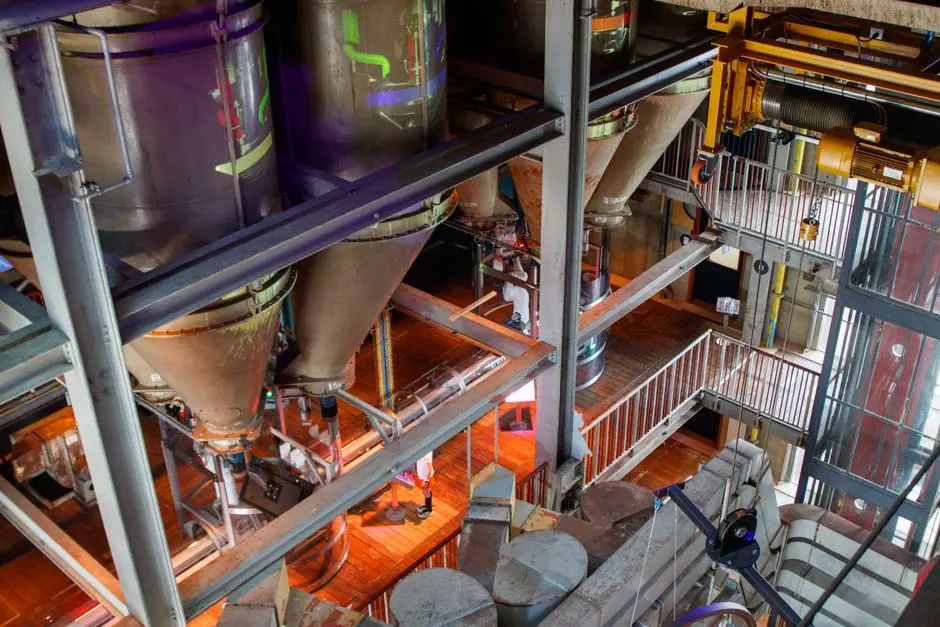
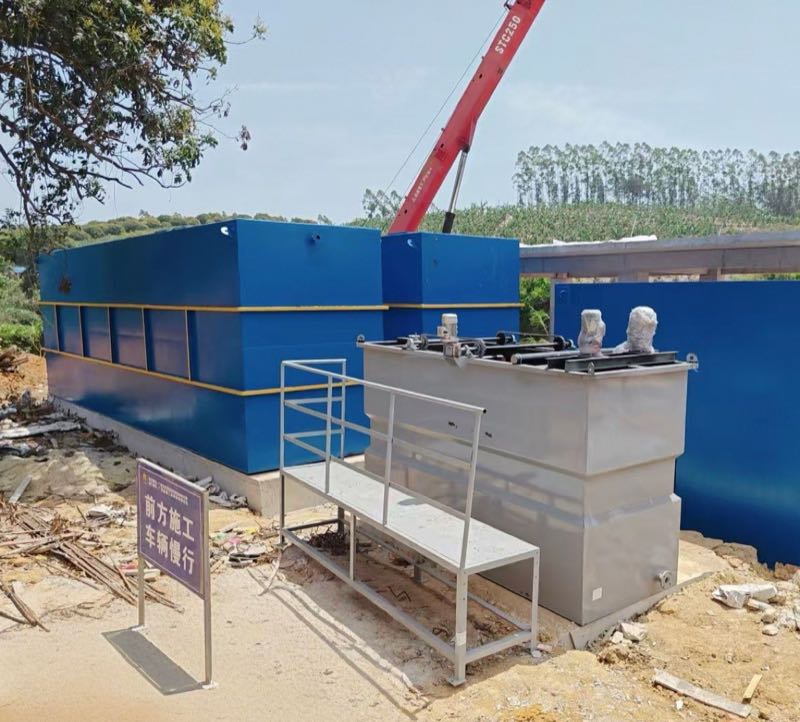
A compliant Makati train is built around six unit operations, each mapped to a permit deliverable. Stage 1 — headworks: a rotary mechanical bar screen with 3–5 mm aperture protects downstream pumps; the GX Series handles 1–2 m³/h per unit. Stage 2 — equalisation: a flow-and-pH balancing tank at 6–12 h HRT absorbs the batch discharges from food and laundry operations that produce 2× peaking in Makati. Stage 3 — DAF pre-treatment: a DAF pre-treatment unit strips 60–90% of FOG and 70–95% of TSS; the DAF range covers 4–300 m³/h. Stage 4 — biological treatment: an MBR membrane bioreactor system with submerged PVDF membranes at <1 μm delivers near-reuse quality in roughly 60% of the footprint of conventional activated sludge (per HydropureWater MBR product description).
Stage 5 — disinfection: a chlorine dioxide generator (50–20,000 g/h output) achieves a 99.9% kill rate against chlorine-resistant spores and produces no trihalomethanes (HydropureWater, Makati hospital guide, 2025-08). Stage 6 — sludge handling: a plate-and-frame filter press dewaters the 0.3–0.5 kg dry sludge generated per m³ treated to roughly 80% volume reduction, cutting hauling cost materially. The full flow reads: Screen → EQ → DAF → MBR → ClO₂ → Sludge press → treated effluent to sewer or Laguna Lake basin (LLDA permit boundary). For cooling-tower makeup, an optional RO polish can offset Makati City water bills by up to 30% (HydropureWater, Makati article, 2025-08).
MBR vs SBR vs DAF+MBR: Choosing the Right 2026 Configuration
Three configurations cover almost every Makati flow band from 10 to 100 m³/day. The right pick depends on FOG load, footprint constraints, and reuse intent. Compact 10 m³/day systems start at ₱2.5M, and a fully automated 100 m³/day plant lands at ₱10M–₱15M+ (HydropureWater, Makati article, 2025-08). OPEX runs ₱5–₱15 per m³ treated.
| Configuration | 10 m³/day CAPEX (₱) | 50 m³/day CAPEX (₱) | 100 m³/day CAPEX (₱) | Footprint (m², 50 m³/day) | OPEX (₱/m³) | Typical effluent BOD / COD (mg/L) | Best fit |
|---|---|---|---|---|---|---|---|
| SBR (sequencing batch reactor) | 2.5M–3.5M | 5.0M–7.0M | 9.0M–12.0M | ~80 | 5–10 | BOD ≤20 / COD ≤80 | Stable biodegradable influent, budget-constrained, 10–30 m³/day |
| MBR only (no DAF) | 3.0M–4.5M | 6.5M–9.0M | 11.0M–14.0M | ~45 | 8–14 | BOD ≤5 / COD ≤40 | Low FOG, basement retrofit, reuse-quality demand |
| DAF + MBR (recommended for Makati food, laundry, slaughterhouse, metal finishing) | 3.8M–5.0M | 7.5M–10.0M | 12.0M–15.0M+ | ~55 | 10–15 | BOD ≤5 / COD ≤30 | FOG >150 mg/L, TSS >500 mg/L, flow variability >2× |
Cost ranges compiled from HydropureWater Makati article (2025-08), HydropureWater MBR product page, and HydropureWater field data, 2026. Site-specific quotes vary with civil works and basement installation surcharges.
Decision rule for 2026: choose DAF+MBR when FOG exceeds 150 mg/L or when influent flow varies by more than 2× during a shift — the pre-treatment stage stops oil from coating the membranes. Choose SBR when CAPEX dominates and influent is consistently biodegradable, for example a small bakery commissary on a 10 m³/day budget. Choose standalone MBR when footprint or reuse drives ROI, such as a Legazpi Village mixed-use tower that wants RO-grade polishing. Payback lands at 5–7 years once chronic-violation fines (up to ₱1M+ annually) and the 30% municipal-water offset are included (HydropureWater, Makati article, 2025-08). For under-10 m³/day flows, a packaged WSZ underground integrated unit is often the lowest-cost option.
The 2026 Makati Permit Roadmap: DENR, LLDA and LGU in the Right Order
Sequencing kills more projects than technology does. The order below is the one that actually closes a 2026 file.
- Pre-design characterisation. Run composite sampling for 7 days covering both weekday and weekend operations. Without this, neither DENR nor LLDA will accept the design basis.
- Engage a Makati-registered environmental consultant to prepare the DENR Environmental Performance Report and Management Plan (EPRMP).
- File the DENR Permit to Operate (PTO) for the STP under the DAO 2003-30 series, with design flows and effluent targets tied to DAO 2016-08 (BOD ≤50, COD ≤250, TSS ≤70 mg/L).
- File the LLDA Discharge Permit in parallel if the discharge enters the Makati drainage network that feeds Laguna de Bay. This is the long-pole review — minimum 90 days, and missing it carries ₱100,000/day penalty exposure (HydropureWater, Makati article, 2025-08).
- Secure Makati City LGU endorsement through CENRO, including barangay clearance from the host barangay.
- Commissioning + 90-day compliance monitoring before commercial operation. LLDA renewal is annual.
Realistic timeline for a 50 m³/day industrial plant in Makati: 6–10 months from consultant engagement to a fully issued PTO. The most common pitfall is filing LLDA after DENR rather than in parallel — that single sequencing error adds three months to the schedule and exposes the project to back-fines.
How Much Does a Makati Industrial STP Cost in 2026?
For a 10 m³/day compact semi-automated skid, budget from ₱2.5M. For a 50 m³/day mid-range plant with DAF + MBR + ClO₂, the Philippine 2026 band is ₱6M–₱9M. For a 100 m³/day fully automated system with remote monitoring and on-site sludge dewatering, expect ₱10M–₱15M+ (HydropureWater, Makati article, 2025-08). OPEX lands at ₱5–₱15 per m³ of treated water, which for a 50 m³/day plant means ₱75,000–₱225,000 per month.
The cost lines most often missed in a 2026 business case: basement or parking-grade installation in Makati CBD adds 15–25% for civil works, noise control and confined-space handling. Sludge hauling via a DENR-accredited hazardous waste hauler runs ₱3,000–₱8,000 per ton wet — on-site dewatering with a plate-and-frame filter press cuts this materially by reaching roughly 80% volume reduction. The full payback picture is 5–7 years once the avoided Makati City Ordinance 2019-001 fines (up to ₱1M+ annually) and a 30% offset on municipal water bills are included. For a deeper equipment-cost breakdown, the MBR cost and sizing breakdown walks through the line items.
Frequently Asked Questions
What is the cheapest compliant industrial wastewater treatment system in Makati for 2026?
A packaged 10 m³/day semi-automated unit starts at ₱2.5M and meets DENR DAO 2016-08 effluent limits if the influent is biodegradable. For FOG above 150 mg/L, add a DAF pre-treatment unit and budget from ₱3.8M (HydropureWater, Makati article, 2025-08).
Do I need an LLDA Discharge Permit if my plant is in Makati but I discharge to the city sewer?
Yes if the sewer ultimately reaches the Laguna de Bay basin, which most Makati outfalls do. The LLDA review is at least 90 days, carries a ₱100,000/day penalty for unpermitted discharge, and must run in parallel with the DENR PTO rather than after it (HydropureWater, Makati article, 2025-08).
Which disinfection method is best for Makati industrial effluent — chlorine, UV or chlorine dioxide?
Chlorine dioxide (ClO₂) achieves a 99.9% kill rate against resistant spores, produces no trihalomethanes, and tolerates effluent variability better than UV. A chlorine dioxide generator scales from 50 to 20,000 g/h to match any Makati flow band.
Can a Makati factory reuse its treated wastewater for cooling towers or toilet flushing?
Yes, but only with tertiary treatment such as MBR followed by RO polishing, plus a separate DENR and DOH reuse permit. Treated effluent reused as cooling-tower makeup can offset Makati City water bills by up to 30% (HydropureWater, Makati article, 2025-08).
How do I handle fats, oils and grease from a Makati food or hospitality operation?
Install a DAF pre-treatment unit upstream of the biological stage. DAF removes 60–90% of FOG and 70–95% of TSS in a single pass and prevents oil from fouling downstream MBR membranes. For broader equipment-matching context, the industrial wastewater equipment selection guide covers sub-sector fit.