Why Washougal Discharges Run Through 40 CFR 403, Not an NPDES Permit
A facility discharging to a US sewer is not governed by an NPDES permit — it is governed by the Clean Water Act §307(b) pretreatment program at 40 CFR Part 403, which delegates enforcement to the local POTW through its sewer-use ordinance. Mining and metals operations along the Lower Columbia typically qualify as Categorical Industrial Users under 40 CFR Part 437 (Ore Mining and Dressing) for aggregate wash and metal mining, with plating or pickling lines additionally subject to 40 CFR Part 433 (Metal Finishing) where copper is capped at 3.38 mg/L daily-max / 2.07 mg/L monthly-average and total chromium at 2.77 / 1.71 mg/L (per 40 CFR 433.15). The receiving POTW's local limits almost always set a tighter ceiling than the federal floor — especially for zinc, copper, lead, and ammonia — and the local control authority enforces them independently (per EPA 40 CFR 403.5(c)).
Most plants in the Camas–Washougal corridor carry both authorizations in parallel because they have separate stormwater outfalls, but the sewer path is the binding constraint: the City of Camas and Washougal POTW local limits are tighter, the sampling cadence is more frequent, and the consequence of a single excursion is enforced. Conflating the two pathways is the most common reason a plant invests in the wrong train. NPDES surface-water limits are written around receiving-stream assimilation; pretreatment limits are written around protection of the POTW's biological process, its sludge, and its workers. The chemistry is the same; the numerical targets and the consequence of a single missed monthly-average are not.
Civil penalties under CWA §309 reach $25,000/day per violation, so the cost of one missed monthly-average excursion dwarfs a 2026 pretreatment skid CAPEX. For a side-by-side treatment of an adjacent corridor, the Brandon-area 2026 pretreatment compliance playbook walks the same Part 403/437/433 stack under a different POTW overlay.
The 2024–2026 EPA Trends Reshaping a Washougal Permit Cycle
Three regulatory shifts are pushing local limits lower in 2026, and any plant defending a capex request needs to spec defensively against them now. First, the Lead and Copper Rule Revisions (LCRR) are pushing lead action levels toward 10 µg/L and forcing PNW POTWs to re-derive local limits at much lower numbers than the categorical ceiling (per EPA LCRR finalization, 2024-10). For a Washougal-area finisher, that means the local lead ceiling on the sewer-use ordinance is the parameter most likely to tighten in the next permit cycle, not zinc.
Second, EPA's 2024 Multi-Sector General Permit (finalized 2024-09) added PFAS monitoring for PFOS, PFOA, PFHxS, and PFNA to metal mining, and the local control authority in the Lower Columbia is adopting the same analytical suite for sewer discharges — even where no PFAS process stream is present, the 24-hour composite sampling cost ($450–$900 per sample for the four-analyte suite, 2025–2026 commercial-lab pricing) shows up in the OPEX line. Third, the 2025 ore-mining BAT revisions (2025-03) are tightening the cost-benefit envelope on total recoverable metals, narrowing the gap between best-available and best-conventional for new sources.
Treat all three as the next permit-cycle risk in 2026 and size the multimedia polishing and sludge-handling line with margin for tighter future limits. A skid sized to today's 0.5 mg/L zinc ceiling but unable to drop to 0.2 mg/L with a sulfide-polishing slipstream is a one-cycle asset, not a two-cycle asset.
Lower Columbia Influent Profile and What the Numbers Look Like
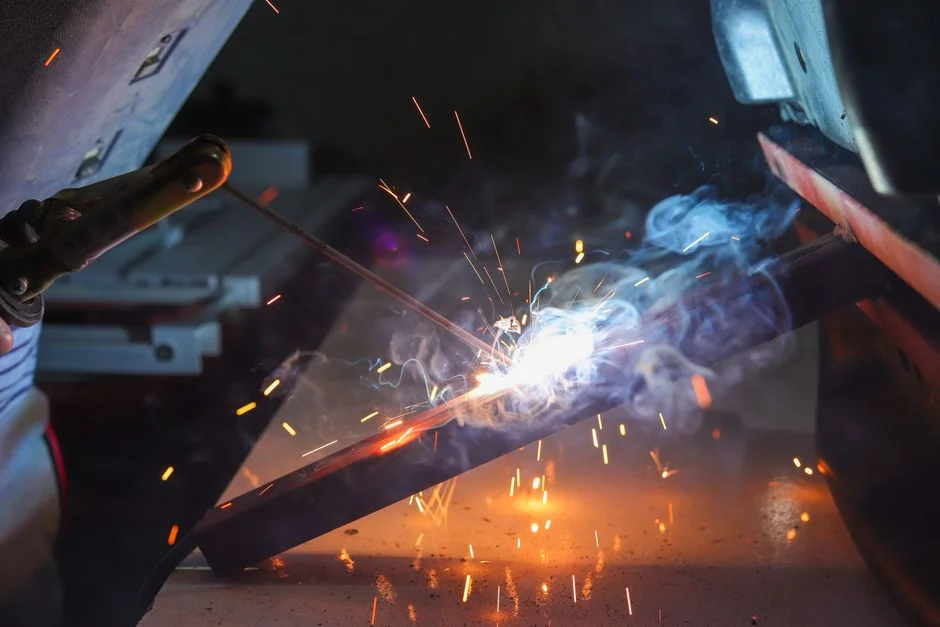
The chemistry a Washougal aggregate or nonferrous finisher actually has to treat is consistent across the sector: pH of 2–4 in raw acid mine drainage and spent process solutions, driven by sulfide oxidation in exposed pit walls and leach-pad runoff. Total suspended solids run in the hundreds to several thousand mg/L during dump-leach cycles and mill clean-outs. Dissolved heavy metals (Pb, Cu, Zn, Cd, Ni, As) and elevated sulfate and TDS appear in leach-pad runoff and brine streams, with sulfate commonly 1,500–4,000 mg/L and TDS 2,000–8,000 mg/L on a blended weekly composite (HydropureWater field data, 2025–2026 Lower Columbia installations).
The receiving POTW's local limits overlay a tighter ceiling than the federal categorical standard. Representative 40 CFR Part 437 subcategory limits for the parameters a mining/metals plant actually monitors are summarized below.
| Parameter | 40 CFR 437 Daily Max (mg/L) | 40 CFR 437 Monthly Avg (mg/L) | Typical Local POTW Limit (mg/L) |
|---|---|---|---|
| Total Suspended Solids | 45 | 30 | 20–30 |
| Copper (Cu) | 1.0 | 0.5 | 0.3–0.5 |
| Zinc (Zn) | 1.0 | 0.5 | 0.3–1.0 |
| Lead (Pb) | 0.6 | 0.3 | 0.1–0.3 |
| Cadmium (Cd) | 0.3 | 0.15 | 0.05–0.15 |
| pH (SU) | 6.0–9.0 | 6.0–9.0 | 6.0–9.0 |
Zinc at 0.3–1.0 mg/L monthly average and copper at 0.3–0.5 mg/L monthly average are realistic Camas/Washougal numbers; always confirm against the specific ordinance before sizing equipment, because the local number is the one the control authority enforces.
The Five-Stage Reference Train for a Lower Columbia Pretreatment Plant
The 2026 reference train for a Washougal aggregate, sand-and-gravel, or nonferrous finishing operation is a five-stage physical-chemical sequence sized to handle pH and flow spikes from haul-road runoff and dump-leach cycles. Each stage has a measurable job; the temptation to combine stages is where most undersized plants fail their first permit cycle.
Stage 1 — Equalization. The most undersized piece of equipment in most mining pretreatment plants — and the most expensive to retrofit. Spec the basin at 8–24 hours of average daily flow to dampen batch discharges from shift changes, dump-leach cycles, and mill clean-outs; a 4-hour basin will pass every spike from the upstream process straight into the clarifier and overwhelm it. Coarse solids settle here, and decanted supernatant is pumped forward.
Stage 2 — pH correction. Lime (Ca(OH)₂), caustic soda (NaOH), or magnesium hydroxide is dosed to a controlled setpoint of pH 6.5–9.0 with an online probe and a PLC-controlled chemical dosing skid at ±0.2 SU accuracy. Lime is cheaper per ton but generates 3–5× more sludge, so high-TDS mining streams often justify the higher reagent cost of NaOH. Stage the dosing in two reactors if the influent swings more than 2 pH units. The downstream consequence of sloppy pH control is severe: each 1 pH unit away from the metals-precipitation optimum can cut removal efficiency by an order of magnitude, sending zinc from <1 mg/L to 10+ mg/L with no other change to the chemistry. Metals-specific optimum windows are parameter-specific and must be locked in with jar testing, not vendor literature: Fe³⁺ drops out above pH 4; Mn²⁺ requires pH ≥ 9; Cu optimum 9.0–10.0; Pb 9.5–10.5; Zn 10.0–11.0; hold below pH 11.0 to avoid amphoteric re-solubilization (per standard hydroxide-precipitation chemistry references).
Stage 3 — Hydroxide precipitation and optional sulfide polishing. Hydroxide precipitation with NaOH or lime achieves 85–95% total metals removal in operating installations (HydropureWater field data, 2025–2026). A polymer coagulant aid dosed at 0.5–3 mg/L flocs the metal-hydroxide particles fast enough for the clarifier to operate at 20–40 m/h hydraulic loading without carryover. Sulfide precipitation (NaHS, FeS, Na₂S) on a slipstream drops residuals to 0.01–0.05 mg/L — roughly an order of magnitude lower than hydroxide — at 2–4× the reagent cost, and requires sealed reactors with H₂S scrubbing on the vent (per standard mining pretreatment practice).
Stage 4 — Solids separation. DAF or lamella; the decision is covered in the next section. A DAF system operating at 5–7 bar saturates the flocculated stream with air; on release, 20–80 µm micro-bubbles attach to the flocs and float them. Field removal in mining/metal-finishing service runs 90–98% TSS and 85–95% oil/grease, with 70–90% total-metals removal in similar applications (HydropureWater field data, 2025–2026).
Stage 5 — Multimedia polishing. An anthracite-silica-garnet multimedia filter (anthracite 0.8–1.2 mm SG 0.55 over silica 0.45–0.55 mm SG 2.65 over garnet 0.20–0.30 mm SG 4.0+) at 1–2 m/h filtration rate strips residual TSS to <10 mg/L and under 1 NTU before pH trim and discharge. Pair the filter with backwash triggered on differential pressure, not the average flow — that single sizing decision determines whether the safety net actually catches a bad day on the clarifier. The stage-by-stage parameter summary is below.
| Stage | Equipment | Operating Parameter | Typical Removal / Output |
|---|---|---|---|
| 1. Equalization | Concrete/earthen basin, mechanical mixer | 8–24 h HRT | Flow & pH smoothing |
| 2. pH adjustment | Ca(OH)₂ or NaOH dosing, PLC PID | pH 6.5–9.0, ±0.2 SU | Sets metals solubility |
| 3. Precipitation | Two-reactor hydroxide; optional sulfide slipstream | Jar-test-locked setpoint | 85–95% total metals |
| 4. Separation | DAF or lamella clarifier | 5–25 m/h (DAF) / 20–40 m/h (lamella) | 90–98% TSS, 85–95% O&G |
| 5. Polishing | Anthracite/silica/garnet vessel | 1–2 m/h filtration rate | TSS <10 mg/L, <1 NTU |
DAF or Lamella: The Decision a Lower Columbia Engineer Actually Faces
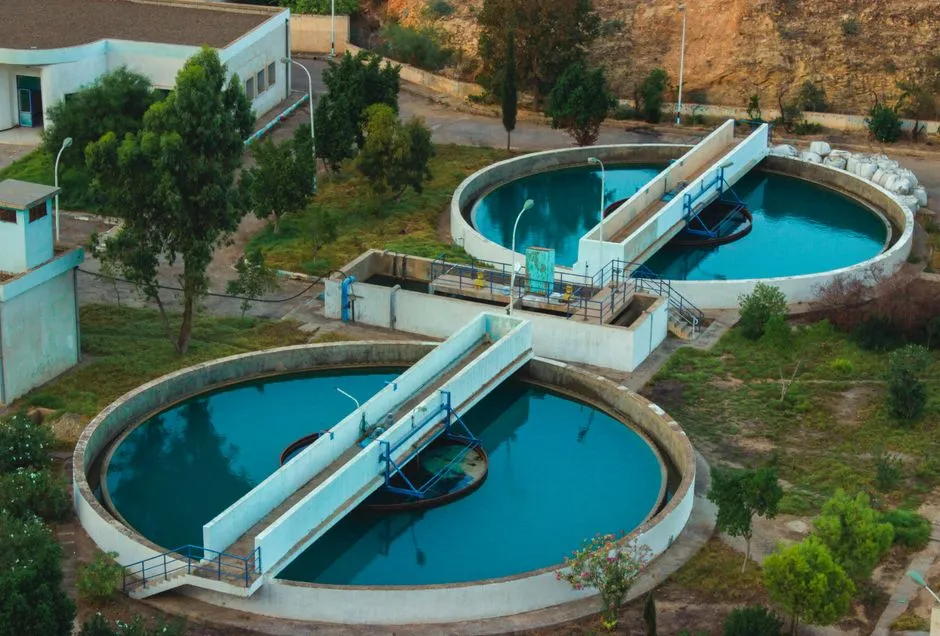
This is the decision most engineers actually face in a real project: DAF or lamella. Both work; neither is universally better. The DAF system operates at 5–25 m/h hydraulic loading, floats oil-coated and colloidal particles with microbubbles, and achieves 90–98% TSS removal and 85–95% oil/grease removal in mining/metal-finishing service. The standard DAF range covers 4–300 m³/h across 13 models, which fits most plant scales without civil redesign. A lamella clarifier operates at 20–40 m/h surface loading in roughly one-third the footprint of a conventional clarifier, has lower chemical consumption because the sludge blanket is denser, and handles heavy metal-hydroxide flocs very well. It does not remove free oil or colloidal fines as effectively as DAF.
The decision heuristic: DAF when the stream carries oil, grease, or fine colloidal metals — typical for metal-finishing rinse water, cutting-oil contaminated wash, or aggregate wash with floatable organics. Lamella when the stream is primarily a metal-hydroxide sludge at high flow and the footprint is constrained — typical for a large aggregate wash or a heap-leach operation where colloidal loadings are low. The side-by-side comparison is below.
| Parameter | DAF | Lamella Clarifier |
|---|---|---|
| Hydraulic loading | 5–25 m/h | 20–40 m/h |
| Footprint | Larger; needs skimmer access | ~1/3 of conventional clarifier |
| TSS removal | 90–98% | 80–95% |
| Oil & grease removal | 85–95% | Poor to moderate |
| Colloidal fines | Excellent (microbubble attachment) | Moderate |
| Chemical consumption | Moderate (polymer-driven) | Lower (denser sludge blanket) |
| Best-fit stream | Oil, colloidal fines, flow <200 m³/h | Metal-bearing sludge, flow >100 m³/h |
For a Washougal-area aggregate wash, lamella typically wins on footprint and chemical cost. For a nonferrous finishing line with cutting oils and colloidal nickel, DAF wins on oil/colloidal removal and is the only option that hits a 50 mg/L oil & grease ceiling without a separate coalescer.
Sludge, Disinfection, and the 2026 PNW Cost Picture
Sludge from the clarifier and DAF float becomes a regulated waste. Under RCRA 40 CFR 261.24, when a listed metal (Pb, Cd, or similar) exceeds its toxicity characteristic on a TCLP extract, the sludge is a F006 wastewater treatment sludge and must be managed accordingly. A lamella pre-thickener that brings the sludge to 5–8% dry solids cuts polymer demand 30–50% and shortens press cycle time; downstream, a plate-and-frame filter press dewateres the sludge to 25–35% dry solids, producing a stackable cake for Subtitle-D landfill disposal or, in the case of recoverable metals, smelter reintroduction. Filtrate returns to the head of the plant. The 10:1 volume reduction over as-produced sludge is the number that frames the avoided-haul-savings argument in the capex defense. For dewatering commissioning detail, the filter press installation and commissioning field guide walks the same RCRA pathway.
Disinfection shows up in the local sewer-use ordinance whenever the POTW's collection system has long force mains or siphons, or whenever the industrial discharge could plausibly carry pathogens. A chlorine dioxide generator dosed at 1–5 mg/L provides the residual the POTW asks for without forming the regulated trihalomethanes that chlorine produces. UV is the alternative when the local ordinance prohibits chemical residual; neither is free, and both should be scoped into the 2026 train if the local ordinance references BMRTF/CRT cycling.
The 2026 PNW cost band, in installed CAPEX, is summarized below. Drivers are flow rate (m³/h), the specific chemical constituents being removed, and whether sludge dewatering is included in the skid or scoped as a separate line item. Annual OPEX — chemical reagents at $1.10–$1.85/L for typical NaOH/NaHS/polymer blends, power at $0.18–$0.34/kWh PNW industrial rates, and F006 hauling fees running $185–$310 per wet ton in 2026 — typically lands at 15–25% of initial CAPEX. The penalty-avoidance arithmetic is what defends the spend: a single monthly-average zinc excursion at 0.5 mg/L over a 0.3 mg/L ceiling is a $25,000/day CWA §309 civil penalty until cured.
| Tier | Flow Band | Scope | 2026 PNW Installed CAPEX | Annual OPEX (% of CAPEX) |
|---|---|---|---|---|
| Modular skid | <25 m³/h | Equalization, pH adjustment, DAF, multimedia filter | $250,000–$500,000 | 15–20% |
| Mid-range automated | 25–100 m³/h | PLC-controlled dosing, on-site lab, equalization + DAF + filter | $500,000–$1,100,000 | 18–22% |
| High-capacity containerized | >100 m³/h | Full dewatering line, WET-ready, containerized | $1,100,000–$2,000,000+ | 20–25% |
Frame the spend as penalty avoidance plus avoided sludge-haul escalation: the F006 hauling market in the Lower Columbia has been climbing 6–9% year-over-year since 2023, and a 25–35% dry solids cake cuts hauled tonnage by an order of magnitude versus 1–3% as-produced sludge.
Frequently Asked Questions
Does a Washougal-area mining plant need an NPDES permit or a POTW pretreatment program?
NPDES permits govern direct discharge to surface water under Clean Water Act §402. Sewer discharge to a POTW is regulated under CWA §307(b) and 40 CFR Part 403, with categorical standards in 40 CFR Part 437 (Ore Mining and Dressing) and 40 CFR Part 433 (Metal Finishing) where applicable. Most plants carry both authorizations because they have separate stormwater outfalls, but the sewer path is the binding constraint for pretreatment because local limits, sampling cadence, and enforcement are tighter than NPDES self-monitoring.
When does sulfide precipitation beat hydroxide-only, and by how much?
Sulfide precipitation (NaHS, FeS) achieves residual metals of 0.01–0.05 mg/L versus 0.5–2.0 mg/L for hydroxide alone — roughly an order of magnitude lower, which matters when the local ceiling is below 0.3 mg/L or the LCRR-driven lead action level is pushing toward 10 µg/L. Reagent cost runs 2–4× higher, and the system requires sealed reactors with H₂S scrubbing on the vent. For most mining flows, hydroxide precipitation with sulfide polishing on a slipstream is the cost-effective compromise.
What is the typical DAF capacity range, and how do I choose between DAF and lamella?
Standard DAF units cover 4–300 m³/h across 13 models, with hydraulic loading of 5–25 m/h. Below 10 m³/h, packaged skid systems are common; above 100 m³/h, multiple DAF trains in parallel or a lamella clarifier typically becomes more economical. The selection rule: DAF when the stream carries oil, grease, or fine colloidal metals; lamella when the stream is primarily a metal-hydroxide sludge at high flow and the footprint is constrained.
What triggers F006 sludge classification, and what is the standard dewatering line?
The hydroxide sludge from the DAF float and multimedia backwash becomes a F006 wastewater treatment sludge under RCRA when a listed metal (Pb, Cd, or similar) exceeds its toxicity characteristic at 40 CFR 261.24 on a TCLP extract. The standard dewatering line is a lamella pre-thickener to 5–8% dry solids, followed by a plate-and-frame filter press producing 25–35% dry solids cake — a 10:1 volume reduction over as-produced sludge — then disposal at a Subtitle-D landfill or smelter reintroduction where freight economics justify.
What is the 2026 PNW CAPEX band, and what drives the cost tier?
For flow under 25 m³/h, a packaged modular skid runs $250,000–$500,000 installed; mid-range automated trains in the 25–100 m³/h band run $500,000–$1,100,000; high-capacity containerized trains above 100 m³/h with full dewatering run $1,100,000–$2,000,000+. Each tier roughly doubles the prior one. Cost drivers are flow rate, the specific chemical constituents being removed, and whether sludge dewatering is included in the skid or scoped as a separate line item. Annual OPEX runs 15–25% of CAPEX, with 2026 PNW reagent at $1.10–$1.85/L, power at $0.18–$0.34/kWh, and F006 hauling at $185–$310 per wet ton.