Why Santa Fe Springs Chemicals Plants Are Re-evaluating Biological Treatment in 2026
Three constraints collide for a Santa Fe Springs specialty-chemicals, pharma-intermediate, or adhesives site in 2026: a binding discharge envelope from the Los Angeles Regional Water Quality Control Board (LARWQCB) under the Basin Plan and 40 CFR 403 General Pretreatment Standards, a blower-energy ceiling imposed by South Coast AQMD Rule 1147, and a shrinking on-site footprint in an industrial corridor where land trades at a premium. Together they force the MBR-vs-CAS question out of the textbook and into the next capex memo.
Most Santa Fe Springs industrial discharges either flow to the San Jose Creek Water Reclamation Plant (PI) or to the Whittier Narrows WRP (LACSD), and both paths accept industrial waste only when the local limits are met. Industrial users on these trunks are routinely held to <10 mg/L TSS and <10 mg/L BOD consents — a bar that conventional secondary clarifiers approach but rarely sustain under shock load, which is why a 2026 head-to-head MBR vs CAS engineering comparison ranks clarifier performance as the typical bottleneck. Overlaying that, the 2014 LARWQCB Cleanup and Abatement Order for San Gabriel Valley groundwater contaminants keeps reuse-economics in the room, and the 0.04–0.2 μm MBR pore window is the same range that retains nearly all bacteria and viruses in the permeate (per Grasmick/Heran/Sarrafzadeh, 2012) — a relevant data point for chemicals sites near sensitive receptors and for any plant considering closed-loop process reuse.
How MBR and Conventional Activated Sludge Actually Work
Conventional activated sludge (CAS) is a two-stage process: an aeration tank where heterotrophic bacteria oxidize BOD to CO₂ and new biomass, followed by a secondary clarifier where gravity settling splits the mixed liquor into clarified effluent and return activated sludge (RAS). CAS operates at 2,000–5,000 mg/L mixed liquor suspended solids (MLSS) and an F/M ratio of 0.2–0.5 d⁻¹. The clarifier is the single point of failure — bulking sludge, rising sludge, denitrification float, and hydraulic overload all collapse the train (per HydropureWater 2026 MBR vs CAS engineering comparison).
A membrane bioreactor (MBR) eliminates the clarifier entirely. Mixed liquor is drawn through submerged 0.1–0.4 μm PVDF MF/UF membranes; permeate is pulled out under vacuum, and rejected biomass stays in the aeration basin. MBR runs at 8,000–12,000 mg/L MLSS and F/M 0.05–0.15 d⁻¹, with HRT decoupled from SRT — the same hydraulic decoupling that gives MBR its tolerance for shock loads and bulking biomass. Because rejection is on a defined pore size rather than on sludge volume index, a bulking sludge that would fail a clarifier is processed normally. The 0.04–0.2 μm cut-off retains bacteria and viruses almost completely (Grasmick/Heran/Sarrafzadeh, 2012), which is the engineering basis for the hygienic edge in reuse trains. The trade-off is mechanical: MBR adds membrane-scouring air, a clean-in-place (CIP) skid with NaOCl and citric/oxalic acid dosing, and cassette change-out logistics that CAS does not carry. A skid-packaged integrated MBR membrane bioreactor system collapses those auxiliaries into a single EPC scope for projects from 10 to 2,000 m³/day.
Chemicals-Wastewater Loading Profile and What It Does to Each System
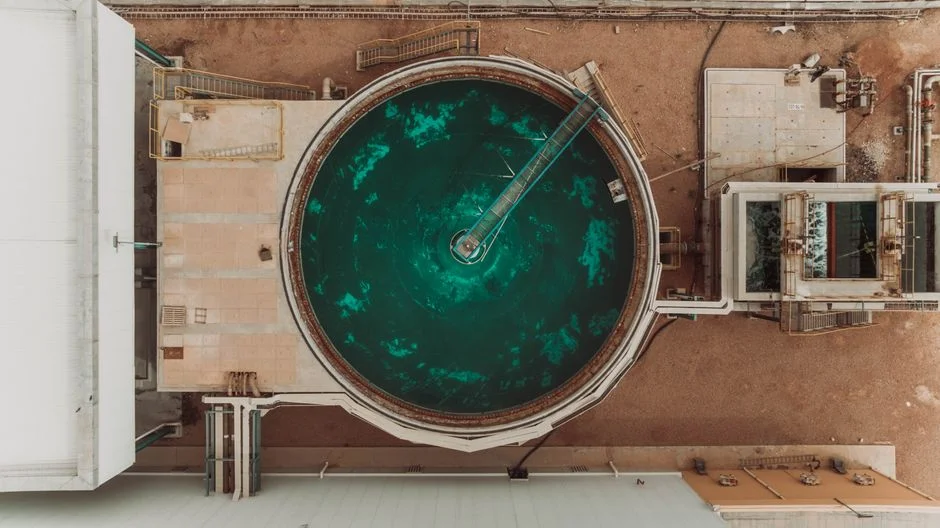
Typical Santa Fe Springs specialty-chemicals, pharma-intermediate, and adhesives influent is heavier and more variable than the municipal envelope that the top-ranking CAS-vs-MBR articles assume. Engineers should design against the following 2026 working envelope, drawn from typical chemicals-plant characterization and cross-checked against HydropureWater 2026 industrial influent data:
| Parameter | Typical Santa Fe Springs chemicals envelope | CAS impact | MBR impact |
|---|---|---|---|
| COD | 1,500–8,000 mg/L (peaks >10,000 mg/L) | F/M excursions, clarifier overload | Handled via long SRT; <5 mg/L effluent BOD |
| BOD₅/COD | 0.3–0.6 (moderate biodegradability) | Variable nitrification/clarifier load | High MLSS buffers variability |
| TDS | 2,000–15,000 mg/L | Salt-induced bulking, deflocculation | Tolerated; viscosity rises at >12,000 mg/L |
| pH | 2–12 excursions (batch discharges) | Nitrification collapse, biomass washout | Equalization tank + long SRT protect biomass |
| Temperature | 20–40 °C | Acceptable but variable | DF series PVDF flat-sheet membranes rated 5–40 °C |
| Trace organics | Solvents, phenols, glycols, formaldehyde | Inhibition at peaks, partial stripping | Long SRT supports acclimation; air emissions rise |
The mechanism difference is decisive. A clarifier separates biomass by settleability; MBR rejects it on a defined pore size. When TDS pushes sludge volume index above 200 mL/g or a solvent pulse strips the floc, a CAS clarifier loses its bed and the operator chases solids into the effluent. MBR is indifferent to settleability and only loses permeate flux when fouling accumulates — which is a controlled CIP event rather than a discharge excursion. Quantitatively, MBR produces 20–40% less waste activated sludge (WAS) than CAS at matched SRT (Banu et al., 2009, as cited in the HydropureWater 2026 comparison), and the high-MLSS operating envelope has been demonstrated stable at 77 LMH flux for 270 days in the same reference work. For a chemicals operator nervous about stability under salinity, that is the empirical floor to design against. The DF series PVDF flat sheet membrane module is rated for exactly this high-MLSS, long-SRT operating point.
Side-by-Side Operating Parameters: MBR vs CAS
The table below consolidates the operating envelope an engineer can paste into a design basis memo. Values are 2026 typical ranges for municipal and light-industrial service; chemicals-plant streams push MBR toward the upper MLSS and SRT limits (per HydropureWater 2026 MBR vs CAS engineering comparison).
| Parameter | CAS (activated sludge) | MBR (membrane bioreactor) |
|---|---|---|
| MLSS | 2,000–5,000 mg/L | 8,000–12,000 mg/L (up to 15,000 in chemicals service) |
| F/M ratio | 0.2–0.5 d⁻¹ | 0.05–0.15 d⁻¹ |
| SRT | 5–20 d | 20–60 d (decoupled from HRT) |
| HRT | 4–8 h (aeration) | 4–6 h (decoupled from SRT) |
| Solids separation | Gravity clarifier, SVI-dependent | 0.1–0.4 μm PVDF membrane, pore-defined |
| Effluent TSS | 10–30 mg/L (typical), <10 with polish | <5 mg/L |
| Effluent BOD | 10–30 mg/L | <5 mg/L |
| Turbidity | 5–15 NTU | <1 NTU |
| SDI (for RO feed) | 5–15 (RO needs tertiary polish) | <3 (RO-ready) |
| Footprint factor | 1.0× baseline | 0.4–0.6× (40–60% saving; DF series ≈ 60%) |
| OPEX driver | Aeration BOD + sludge hauling | 30–50% scouring air, CIP NaOCl 300–500 mg/L, membrane amort. |
| Asset life | Clarifier 30+ yr, no membranes | Membranes 5–8 yr; cassette change-out every 5–8 yr |
| CIP frequency | n/a | Every 1–4 weeks (recovery wash), longer at high SRT |
| Hygienic quality | Variable; coliform reduction modest | Bacteria and viruses nearly fully retained (0.04–0.2 μm) |
Two rows deserve attention. First, SDI: at <3, MBR permeate is a defensible direct feed to RO without multimedia filtration, which collapses the CAPEX line for any reuse train. Second, footprint: 40–60% smaller is not a marketing figure — it comes from three places, smaller aeration basins (high MLSS shrinks tankage), no secondary clarifier or RAS pumping station, and elimination of most tertiary filtration, and the DF series module is the packaged realization of that saving.
2026 CAPEX, OPEX and Payback for Santa Fe Springs Plants
For procurement and finance, the 2026 turnkey, EPC-scope numbers (per the HydropureWater 2026 MBR vs CAS comparison) are the floor of any defensible memo:
| Cost line | CAS (2026) | MBR (2026) | Notes |
|---|---|---|---|
| Turnkey CAPEX | $80–$220 per m³/d | $180–$420 per m³/d | Higher for stainless tanks, high-COD influent, seismic Zone 4 |
| OPEX (per m³ treated) | $0.10–$0.22 | $0.18–$0.42 | MBR premium is 20–35% per m³ |
| Membrane scouring air share of MBR energy | n/a | 30–50% of MBR electrical load | Cap by South Coast AQMD Rule 1147 blower ceiling |
| CIP chemicals | n/a | NaOCl 300–500 mg/L + citric or oxalic acid | Every 1–4 weeks |
| Membrane replacement | n/a | Amortized over 5–8 yr | Major OPEX line; budget it explicitly |
| WAS volume (offset) | Baseline | 20–40% lower than CAS at matched SRT | Partial OPEX offset (Banu et al., 2009) |
| CAS tertiary polish (reuse path) | Cloth-media disc, sand filter, or DAF | Not required (RO-ready permeate) | Often a hidden $40–$120/m³/d CAPEX line on CAS baselines |
| Typical CAS→MBR payback | — | 3–6 years | Triggered by reuse, <10 mg/L TSS consent, or high land cost |
The CAPEX gap narrows fast once a CAS baseline is forced to add a tertiary cloth-media disc or DAF to meet a <10 mg/L TSS consent or a reuse-grade SDI for RO polishing. Under those conditions the effective CAS CAPEX climbs into the $140–$320/m³/d band, and the MBR premium shrinks to the point where payback typically lands at 3–6 years (per HydropureWater 2026 MBR vs CAS engineering comparison). For Santa Fe Springs specifically, the three triggers are usually present simultaneously: industrial corridor land cost is high, the LARWQCB consent typically sits at <10 mg/L TSS, and the San Gabriel Valley groundwater pressure plus 2026 industrial-water rates make closed-loop reuse financially rational. Engineers building a defensible CAPEX line for the DF series PVDF flat sheet membrane module should request a flux warranty at the project's design MLSS and SRT, not at the catalog headline.
Which System to Specify: A Santa Fe Springs Decision Matrix
Use the matrix below against the three binding constraints for a Santa Fe Springs chemicals site — discharge consent, footprint, and reuse obligation — and the answer falls out in under a minute. Cross-checked against the 2026 industrial wastewater MBR vs CAS matrix:
| Site / driver | Recommended train | Why |
|---|---|---|
| Footprint-constrained urban infill | MBR | 40–60% smaller footprint; no clarifier, no RAS pump station |
| Reuse obligation (cooling tower, boiler feed, process rinse) | MBR + RO | SDI <3 permeate; RO-ready without tertiary polish |
| COD > 2,000 mg/L with shock loads | MBR | Long SRT, F/M 0.05–0.15 d⁻¹, tolerates bulking and spikes |
| High salinity (TDS > 5,000 mg/L) or solvent pulses | MBR | Defined-pore filtration is decoupled from sludge settleability |
| CAS retrofit where clarifier is the bottleneck | MBR retrofit | Repurpose aeration basin, add cassettes, remove clarifier |
| Discharge only, no reuse, ample land, <10 mg/L TSS consent tolerable | CAS + cloth-media polish | Lowest CAPEX-to-compliance for greenfield municipal-style loads |
| Large greenfield, no reuse, COD < 800 mg/L, land cheap | CAS | MBR premium not justified once tertiary filtration is priced out |
For a Santa Fe Springs chemicals plant, the chemicals-specific row (high salinity or solvent spikes → MBR) is usually the one that decides the matrix, because the clarifier fails first and the NPDES consent is unforgiving. Engineers who need a packaged EPC scope that pairs directly with RO polishing should look at the integrated MBR membrane bioreactor system as the path of least resistance through permitting. For a parallel read on a different industry envelope, the plastics and rubber MBR vs CAS guide and the winery wastewater MBR solution use the same decision framework with their own influent assumptions; a useful primer on F/M and SRT interactions for any biological train is in the COD to BOD ratio engineering guide.
Frequently Asked Questions
What is the main difference between MBR and conventional activated sludge for a chemicals plant?
MBR replaces the secondary clarifier with a 0.1–0.4 μm PVDF membrane and operates at 8,000–12,000 mg/L MLSS versus 2,000–5,000 mg/L for CAS, so MBR is indifferent to sludge settleability and tolerates the bulking events that fail a chemicals-plant clarifier under TDS and solvent swings (per HydropureWater 2026 MBR vs CAS engineering comparison).
How much does an MBR system cost in 2026 dollars per cubic meter of capacity?
2026 turnkey CAPEX for skid-integrated MBR runs $180–$420 per m³/d and OPEX runs $0.18–$0.42 per m³ treated, versus $80–$220 per m³/d and $0.10–$0.22 per m³ for CAS; once a CAS baseline is forced to add tertiary filtration to meet reuse or <10 mg/L TSS limits, the effective gap narrows enough to deliver a 3–6 year payback.
Is MBR worth it for a Santa Fe Springs chemicals plant that only needs to discharge to the POTW?
Discharge-only duty with ample land and an <10 mg/L TSS consent that a CAS + cloth-media polish can meet still favors CAS on CAPEX. The moment a reuse obligation, a strict <10 mg/L TSS consent, or a constrained site enters the project, MBR is usually the lower-cost-compliant option, and the 0.04–0.2 μm pore window gives a hygienic-quality edge that CAS cannot match (Grasmick/Heran/Sarrafzadeh, 2012).
Related equipment and engineering reading
- MBR Membrane Bioreactor Wastewater Treatment System
- MBR vs Conventional Activated Sludge for Mining Wastewater in Crystal Springs, United States: 2026 Engineering Guide
- MBR vs Conventional Activated Sludge for Chemicals Wastewater in Pedricktown, NJ (2026 Guide)
- MBR vs Conventional Activated Sludge for Chemicals Wastewater in Gulfport: 2026 Engineering Comparison
- MBR vs Conventional Activated Sludge for Chemicals Wastewater 2026: Central US Buyer's Guide