The Four-Stage Wastewater Train Heineken Runs at Its Breweries
Heineken treats brewery wastewater through a four-stage train: an influent (receiving) tank, an equalization basin, an upflow anaerobic sludge blanket (UASB) reactor, and an aeration tank. A 2024 performance evaluation of the Addis Ababa plant — the only peer-reviewed study of a Heineken facility — confirmed this exact unit-process sequence (PMC11648748, 2024). The same train is the company-wide minimum standard: 100% of Heineken's breweries treat wastewater before it returns to the local water cycle, per the 2025 corporate environmental page (theheinekencompany.com, 2025-12).
The equalization basin is not an afterthought. Brewery effluent is generated in batch spikes tied to brewing, cleaning-in-place, and bottling, so the raw stream swings wildly in COD and flow. Equalization dampens those swings so the UASB downstream sees a steady organic loading rate (OLR) and the granular sludge blanket stays intact. Without equalization, hydraulic surges would wash biomass out of the reactor and collapse methanogenic activity.
The anaerobic-first, aerobic-second sequence is deliberate. Brewery effluent is carbohydrate- and protein-rich, with raw BOD₅ commonly in the 1,500–4,000 mg/L range — far too concentrated for direct activated-sludge treatment without massive aeration energy. UASB strips the bulk carbon as methane-rich biogas before a smaller aerobic polishing stage finishes the job. This energy economics explains why almost every high-strength food-and-beverage plant built since the 1990s has adopted this train; the analogous logic is laid out in any review of resource recovery trends for industrial wastewater.
Site context influences system design. The Addis Ababa plant sits at roughly 2,355 m altitude, with an average ambient temperature of 15.9 °C, annual rainfall of 1,089 mm, and relative humidity of 60.7% (PMC11648748, 2024). The cooler ambient baseline means biological kinetics run slower than at sea-level breweries, and the design compensates with longer retention times or insulated reactor walls.
| Stage | Unit Operation | Primary Function | Heineken Documented Performance |
|---|---|---|---|
| 1 | Influent (receiving) tank | Flow buffering, grit removal | Receives batch-discharged brewery effluent |
| 2 | Equalization basin | Dampen COD/flow swings, protect downstream biology | Stabilises OLR into the UASB |
| 3 | UASB reactor | Anaerobic carbon removal, biogas generation | Bulk BOD₅/COD converted to methane |
| 4 | Aeration tank | Aerobic polishing, residual organics oxidation | Final effluent TSS averages 32.3 mg/L, DO 4.2 mg/L |
What Goes In and What Comes Out: Influent vs Effluent Numbers
The Addis Ababa influent and effluent envelope serves as a primary reference for engineers sizing a brewery treatment train. Raw wastewater enters at 29.4 ± 2.2 °C, 0.22 ± 0.08 mg/L DO, and 1,134.9 ± 268.25 NTU turbidity; final effluent exits at 30.8 ± 1.6 °C, 0.33 ± 0.07 mg/L DO, and 1,323.7 ± 519.6 NTU (PMC11648748, 2024). Temperature, DO, and turbidity rise slightly through the train — this is expected aerobic-stage behavior from biological floc breakup and air injection, not a process failure.
TSS is where the train earns its keep. Influent TSS ranges 290.0–1,448.0 mg/L; effluent TSS lands at 32.3–126.5 mg/L with a mean of 32.3 mg/L, below Ethiopia's brewery discharge standard and below the mean TSS values reported for peer breweries (PMC11648748, 2024). BOD₅ and COD removal efficiencies are significant, and the final effluent surpasses Ethiopian beverage industry discharge standards for BOD₅, COD, and TP — though the authors flag plant-level inefficiencies that prevent tighter residuals.
Effluent temperature stays between 18.6 and 33.6 °C across the sampling period, comfortably under the 40 °C National Environmental Quality Standard for brewery effluent (PMC11648748, 2024). DO in the aerated effluent averages 4.2 ± 0.6 mg/L, which is within the US EPA regulatory range for irrigation. Total nitrogen measures 16.9 ± 7.8 mg/L, below the EPA's 40 mg/L benchmark — providing context for engineers evaluating reuse thresholds.
| Parameter | Influent (Raw Wastewater) | Final Effluent (After UASB + Aeration) | Standard / Reference |
|---|---|---|---|
| Temperature | 29.4 ± 2.2 °C | 30.8 ± 1.6 °C (range 18.6–33.6) | < 40 °C Ethiopian NEQS |
| Dissolved Oxygen | 0.22 ± 0.08 mg/L | 0.33 ± 0.07 mg/L (aerated zone 4.2 ± 0.6) | EPA irrigation limits |
| Turbidity | 1,134.9 ± 268.25 NTU | 1,323.7 ± 519.6 NTU | — |
| TSS | 290.0–1,448.0 mg/L | 32.3–126.5 mg/L (mean 32.3) | Ethiopian brewery discharge |
| Total Nitrogen | — | 16.9 ± 7.8 mg/L | < 40 mg/L EPA |
Why UASB Is the Workhorse for Brewery Effluent
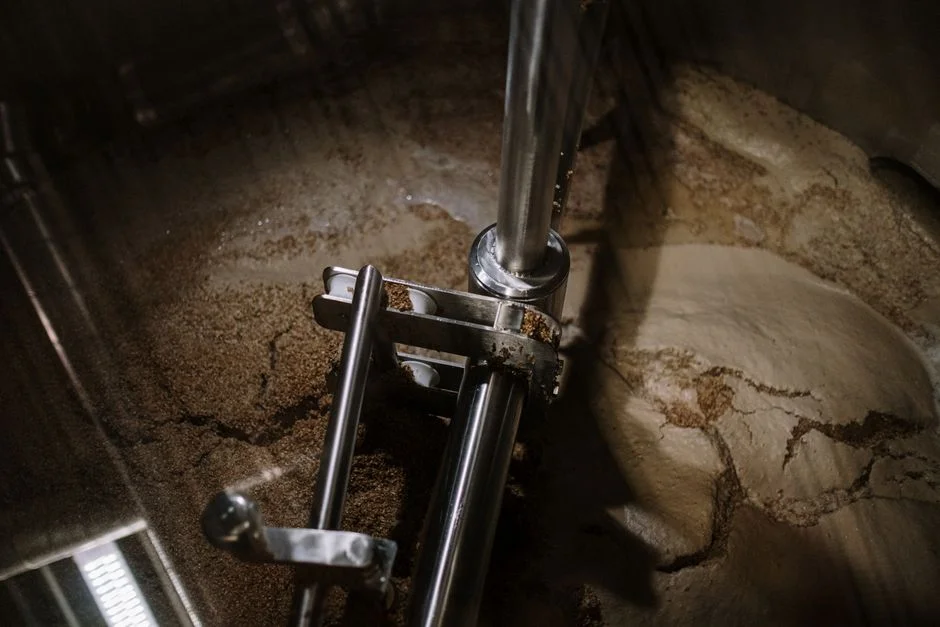
A UASB reactor is a high-rate anaerobic system in which influent flows upward through a granular sludge blanket, converting dissolved organic carbon to methane-rich biogas while solids are retained by the blanket itself. The Addis Ababa performance data is consistent with broader reported ranges for brewery wastewater treatment, providing a defensible benchmark for new builds (PMC11648748, 2024).
Three operational advantages explain why anaerobic pretreatment dominates new brewery plant design. First, low energy input: no aeration is required to strip the bulk COD, which in a high-strength stream like brewery effluent can be 60–80% of total plant electrical load under conventional activated sludge. Second, low sludge yield: anaerobic biomass yields are roughly one-fifth of aerobic yields, reducing sludge handling and dewatering costs. Third, the biogas is recoverable: methane from the UASB can offset thermal energy in the brewhouse, supporting the 28% scope 1+2 emissions reduction against the 2022 baseline that Heineken reports (theheinekencompany.com, 2025-12).
Two limitations are visible in the Addis Ababa data. TP and TN removal are insufficient for strict agricultural reuse, so the effluent is compliant as a discharge but not as a reuse stream without further polishing. Residual suspended solids in the 32–126 mg/L range require a downstream barrier before the water can be used for food crops or process water, setting up the upgrade train discussed below.
Where the Addis Ababa System Falls Short of Reuse Quality
Discharge compliance and reuse compliance represent different standards. The 2024 study notes that while BOD₅, COD, and TP meet Ethiopian national discharge limits, TP and TN in the final effluent exceed recommended agricultural reuse standards under FAO and EPA irrigation guidelines (PMC11648748, 2024). Coliform counts in the effluent are better than peer breweries, yet the study warns that local farmers reuse the effluent for irrigation without a comprehensive understanding of its composition — a risk that a 2026 upgrade should address.
A pragmatic 2026 polishing train layered onto the existing four-stage system would typically add: a DAF or lamella clarifier for residual TSS, an MBR or UF membrane stage for near-reuse quality on BOD, TSS, and microbial indicators, and a disinfection barrier — chlorine dioxide or UV — before any irrigation tie-in. For breweries with tighter water intensity targets (Heineken's 2025 global figure is 2.1 hl/hl), the same polishing train enables on-site process-water reuse rather than one-pass discharge, increasing water-cost savings.
| Parameter | Heineken Final Effluent | EPA Irrigation Limit | FAO Recommendation | Gap? |
|---|---|---|---|---|
| BOD₅ | Meets Ethiopian discharge standard | ≤ 10 mg/L (continuous irrigation) | — | Yes, for unrestricted reuse |
| COD | Meets Ethiopian discharge standard | — | — | Marginal for reuse |
| TSS | 32.3–126.5 mg/L | ≤ 30 mg/L (irrigation) | — | Yes, upper end exceeds |
| Total Nitrogen | 16.9 ± 7.8 mg/L | ≤ 40 mg/L (acute), ≤ 10 mg/L (chronic) | ≤ 5–10 mg/L for crop safety | Yes, for crop-safe reuse |
| Total Phosphorus | Above FAO reuse standard | ≤ 5 mg/L (irrigation) | ≤ 2 mg/L crop safety | Yes |
For a comparison of polishing chemistry options that target refractory brewery organics, see the engineering write-up on Fenton oxidation vs electrocoagulation for polishing refractory brewery effluent.
Translating Heineken's Train Into Equipment You Can Specify
Each unit operation in the Heineken train maps to a defined equipment class. For headworks protection, a rotary bar screen for brewery headworks removes rags, labels, and gross solids before they reach the equalization tank. For equalization combined with primary settling, a lamella clarifier for pre-UASB primary settling protects the UASB from hydraulic surges and settles a large fraction of suspended solids in a small footprint. For plants targeting on-site water reuse, an upgrade to a MBR membrane bioreactor for polishing brewery effluent to near-reuse quality — typically fitted with PVDF flat-sheet MBR modules — replaces or supplements the conventional aeration tank. Disinfection for any irrigation or reuse stream comes from a chlorine dioxide generator or a UV sterilizer, and the mixed aerobic/anaerobic sludge is dewatered with a filter press for dewatering combined UASB and aerobic sludge to a transportable cake. This engineering logic mirrors that of comparable battery plant wastewater treatment process trains, where UASB pretreatment similarly precedes polishing.
Frequently Asked Questions
What unit processes does Heineken use to treat brewery wastewater?
Heineken operates a four-stage train: influent tank, equalization basin, UASB reactor, and aeration tank (PMC11648748, 2024). The UASB strips the bulk carbon anaerobically as biogas, and the downstream aeration tank polishes residual organics. This sequence is the documented minimum at every Heineken brewery — 100% of which treat wastewater before returning it to the local water cycle (theheinekencompany.com, 2025-12).
How clean is the final effluent from a Heineken brewery?
At the Addis Ababa plant, final effluent averages 32.3 mg/L TSS, 4.2 mg/L DO, and 16.9 mg/L TN
Frequently Asked Questions
What wastewater treatment process does Heineken use at its breweries?
Heineken primarily employs a multi-stage process centered on Upflow Anaerobic Sludge Blanket (UASB) technology followed by aerobic polishing. The process begins with primary screening and equalization to balance pH and flow, followed by anaerobic digestion where specialized bacteria break down organic matter in the absence of oxygen. The final stage utilizes aerobic activated sludge systems or membrane bioreactors (MBR) to achieve stringent discharge standards and nutrient removal.
How effective is the UASB reactor at removing BOD and COD in brewery wastewater?
The UASB reactor is highly efficient, typically achieving a Chemical Oxygen Demand (COD) removal efficiency between 80% and 90% and a Biological Oxygen Demand (BOD) reduction of 85% to 95%. These reactors are particularly suited for high-strength brewery effluent, which often contains COD concentrations ranging from 2,000 to 6,000 mg/L, while simultaneously producing biogas that is captured for internal energy recovery.
What are the effluent quality limits for brewery wastewater discharge?
Effluent quality limits are governed by local environmental regulations and internal Heineken corporate standards, which often require BOD levels below 20-30 mg/L and Total Suspended Solids (TSS) under 30 mg/L. Nitrogen and phosphorus levels are strictly managed to prevent eutrophication, typically requiring total nitrogen concentrations to remain below 10-15 mg/L before discharge into municipal sewer systems or surface water bodies.
Can treated brewery wastewater be reused for irrigation?
Yes, treated brewery wastewater is frequently reused for agricultural irrigation, provided it meets local health and safety standards such as the ISO 16075 guidelines for treated wastewater use in irrigation. The effluent must undergo tertiary treatment, including advanced filtration and disinfection (such as UV or chlorination), to ensure the removal of pathogens and heavy metals, making it safe for non-edible crops or controlled agricultural applications.
Why does Heineken combine anaerobic and aerobic treatment for its wastewater?
The combination of anaerobic and aerobic treatment is used to maximize operational efficiency and energy recovery while ensuring environmental compliance. The anaerobic stage handles the bulk of the high-organic load, generating renewable biogas and minimizing sludge production, while the subsequent aerobic stage acts as a polishing step to remove residual organic matter and nutrients that anaerobic processes cannot effectively degrade, ensuring the final effluent meets regulatory discharge requirements.