
Why Cardiff Industrial Facilities Need Specialized Sewage Treatment Equipment
Industrial facilities in Cardiff require sewage treatment equipment that meets UK Urban Waste Water Treatment Directive (91/271/EEC) standards, with TSS removal ≥95% and BOD reduction ≥90% for sensitive areas. Leading suppliers offer three primary system types: Dissolved Air Flotation (DAF) for high-FOG wastewater (removal rates up to 99%), Membrane Bioreactors (MBR) for space-constrained sites (footprint 60% smaller than conventional systems), and package plants for flows 1–80 m³/h. Cardiff-specific costs range from £45,000 for basic package plants to £320,000+ for industrial DAF systems with full automation, per 2025 market data.
For procurement managers in South Wales, the regulatory environment is defined by the Environment Agency’s strict enforcement of discharge permits. In Cardiff, industrial effluent must typically adhere to limits of BOD <25 mg/L, COD <125 mg/L, and TSS <35 mg/L, as per the latest Environment Agency 2024 guidelines. Failure to meet these thresholds results in more than just environmental damage; it carries significant financial liability. A notable case involved a Cardiff food processing plant fined £85,000 in 2023 for repeated Fats, Oils, and Grease (FOG) violations that overwhelmed the local sewer network, demonstrating that legacy systems are no longer sufficient for modern production volumes.
The fundamental challenge for Cardiff’s industrial sector—ranging from breweries in the city center to hospitals and manufacturing hubs near the M4 corridor—is the inadequacy of domestic-grade equipment. Standard septic tanks or basic aerobic digesters often fail when subjected to hydraulic shock loads or high Chemical Oxygen Demand (COD) common in industrial processes. While a residential system manages consistent, low-strength greywater, a Cardiff factory might discharge thousands of liters of high-strength effluent in a single cleaning cycle. This necessitates specialized equipment designed for variable loading and specific contaminant removal.
Geographic factors also dictate equipment selection in the region. Many Cardiff industrial sites are located near the River Taff or the Severn Estuary, which are designated as sensitive areas. These locations require advanced nutrient removal, specifically targeting nitrogen and phosphorus, to prevent eutrophication. Compliance thresholds in these zones are significantly tighter, often requiring tertiary treatment stages that generic equipment suppliers cannot provide without extensive customization.
3 Industrial Sewage Treatment Systems for Cardiff Projects: How They Work & When to Use Each
Selecting the correct technology is critical in ensuring long-term compliance and operational efficiency. For Cardiff facilities, the choice usually narrows down to three industrial-grade technologies based on the specific waste stream characteristics and site constraints.
Dissolved Air Flotation (DAF) Systems: These are the gold standard for removing suspended solids and grease. The process involves a saturation tank where air is dissolved into water under pressure. When this water is released into the flotation cell, it creates microbubbles (20–50 μm) that attach to particles, buoying them to the surface for removal by a mechanical skimmer. A high-efficiency DAF system for Cardiff's high-FOG wastewater is essential for food processing and dairy applications, where FOG removal rates of 95–99% are required to meet trade effluent consents.
Membrane Bioreactors (MBR): For sites where space is at a premium, such as Cardiff’s urban industrial estates, MBR technology integrates biological degradation with membrane filtration. Using PVDF membranes with a pore size of approximately 0.1 μm, these systems maintain high Mixed Liquor Suspended Solids (MLSS) concentrations of 8,000–12,000 mg/L. This allows for a footprint reduction of up to 60% compared to conventional activated sludge systems. Implementing an MBR system for Cardiff sites with limited space ensures high-quality permeate that often exceeds even the strictest Environment Agency standards.
Package Sewage Treatment Plants (WSZ Series): These modular systems are ideal for decentralized facilities or sites with flows between 1 and 80 m³/h. Utilizing an A/O (Anaerobic/Oxic) biological contact oxidation process, these plants provide a reliable, "plug-and-play" solution. A compact package plant for Cardiff industrial sites offers hydraulic retention times of 6–12 hours and can be installed underground to preserve surface space. When deciding between technologies, facility engineers should follow a clear logic: if wastewater contains >500 mg/L FOG, use DAF; if space is the primary constraint, use MBR; if the flow is relatively low and consistent, a package plant is the most cost-effective choice.
| System Type | Primary Removal Target | TSS Removal Rate | Typical Footprint | Best For |
|---|---|---|---|---|
| DAF | FOG, Heavy Solids | 95% - 99% | Medium to Large | Food Processing, Slaughterhouses |
| MBR Integrated | BOD, Bacteria, Nutrients | >99% | Very Compact | Hospitals, Urban Factories |
| Package Plant (WSZ) | General Organic Load | 90% - 95% | Medium (Underground) | Small Industrial Parks, Hotels |
Engineers should consider MBR vs. MBBR for Cardiff industrial projects to determine if a biofilm-based approach might better suit their specific nitrogen removal needs. Additionally, for facilities struggling specifically with lipids, advanced FOG removal techniques for Cardiff facilities can be integrated into the primary treatment stage to protect downstream biological processes.
Cardiff Sewage Treatment Equipment Suppliers: Technical Comparison & Compliance Track Record
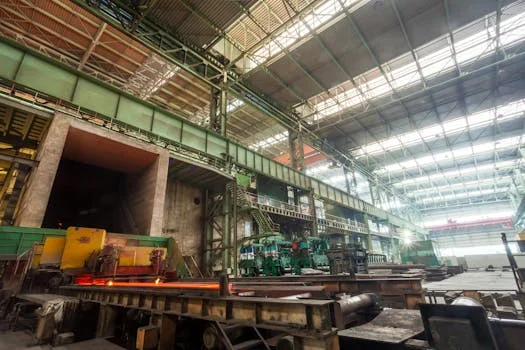
Evaluating a sewage treatment equipment supplier in Cardiff requires looking beyond the initial quote. Buyers must verify that the equipment is capable of meeting UK-specific regulatory markers. A supplier's track record with Environment Agency permit records is the most reliable indicator of performance. For instance, projects involving Cardiff hospitals or large-scale food production must demonstrate consistent compliance over multi-year periods, not just during initial commissioning.
A major red flag during the procurement process is a supplier's inability to provide UKAS-accredited laboratory reports for their equipment's performance. Industrial-grade systems must be backed by data showing their efficiency under peak hydraulic loads. In Cardiff, where heavy rainfall can lead to significant inflow and infiltration in older sewer networks, equipment must be rated for peak flows that may be 2-3 times the average daily volume. Local support is equally vital; choosing a supplier with a Cardiff-based service contract ensures that response times for critical spare parts or emergency repairs remain under the 24-hour benchmark required for continuous industrial operations.
| Supplier Criteria | Industrial Standard | Cardiff Market Average (2024) | Verification Method |
|---|---|---|---|
| Max Capacity (m³/h) | Up to 500 m³/h | 1 - 200 m³/h | Technical Datasheet |
| UK Compliance | BS EN 12566-3 / 91/271/EEC | Variable | CE/UKCA Certificate |
| Lead Time (Weeks) | 10 - 14 Weeks | 12 - 16 Weeks | Project Schedule |
| Warranty (Years) | 2 Years (Mechanical/Electrical) | 1 - 2 Years | Contract Terms |
| Service Response | <24 Hours | 24 - 48 Hours | SLA Agreement |
When reviewing potential partners, procurement officers should ask for specific Cardiff installation references. A supplier who has successfully navigated the discharge requirements for a project near the Cardiff Bay area will be familiar with the local water authority's specific demands regarding trade effluent meters and sampling points. This local expertise can save thousands of pounds in avoided redesigns during the permitting phase.
Cost Breakdown: Industrial Sewage Treatment Equipment in Cardiff (2025 Data)
Budgeting for an industrial sewage treatment project in Cardiff involves balancing initial capital expenditure (CAPEX) with long-term operating expenses (OPEX). Based on 2025 market surveys, a basic package plant for a small industrial site (treating 10–20 m³/h) starts at approximately £45,000. However, for complex industrial applications, costs scale quickly. An MBR system designed for 100 m³/h typically ranges between £120,000 and £250,000, while fully automated DAF systems for high-solid waste streams can exceed £320,000.
Operating costs are often overlooked but represent a significant portion of the total cost of ownership. Energy consumption for industrial aeration and pumping typically ranges from 0.3 to 0.8 kWh per cubic meter of treated water. Chemical costs, particularly for DAF systems requiring coagulants and flocculants, can range from £0.15 to £0.40 per cubic meter. For MBR systems, the eventual replacement of membranes—usually every 5 to 8 years—adds a periodic cost of £5,000 to £15,000 depending on the total surface area. Comparing these figures to global wastewater treatment plant cost benchmarks helps local managers understand the premium associated with UK-compliant engineering and local logistics.
| Cost Component | Package Plant (Small) | MBR System (Medium) | DAF System (Large) |
|---|---|---|---|
| CAPEX (Equipment) | £45k - £85k | £120k - £250k | £180k - £320k |
| Installation/Site Prep | £10k - £25k | £30k - £60k | £40k - £80k |
| Annual OPEX (Energy/Chem) | £3k - £7k | £12k - £25k | £20k - £45k |
| Permitting & Legal | £2k - £4k | £5k - £8k | £6k - £10k |
The Return on Investment (ROI) for these systems is primarily driven by the reduction in trade effluent charges. In Cardiff, water companies charge based on the Mogden Formula, which factors in the strength of the waste (COD and TSS). By treating sewage on-site to a high standard, a food processing facility can reduce its discharge costs by 60-80%. For a 50 m³/h system, the payback period is typically 3.2 years, assuming an energy cost of £0.12/kWh and chemical costs of £0.25/m³.
How to Evaluate Sewage Treatment Equipment Suppliers in Cardiff: 7 Critical Questions
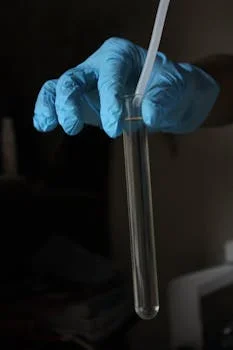
Vetting a supplier requires a structured framework. During site visits or RFP reviews, use these seven questions to separate high-quality manufacturers from generic resellers:
- Question 1: Can you provide Environment Agency discharge permit records for a similar Cardiff


