
Why Waynesboro Mining Sites Are Reopening the MBR vs CAS Question in 2026
Mining and metals wastewater in Waynesboro, US, has become a tight-fitting problem. A membrane bioreactor (MBR) outperforms conventional activated sludge (CAS) on footprint, dissolved reagent removal, and RO feed quality: MBR runs at 8,000–12,000 mg/L MLSS versus 2,000–4,000 mg/L for CAS, occupies ~60% of the equivalent CAS footprint at 1,000 m³/day, and removes 85–95% of residual xanthate and DTP with 70–95% removal of dissolved Pb, Zn, Cu, and Cd. CAS still wins on existing brownfields with 20+ years of clarifier life remaining, influent TDS under 5,000 mg/L, no downstream RO, and no membrane-CIP-trained operators.
Waynesboro sits in the central Appalachian zinc/lead and primary-metals corridor, and the brownfield plants most operators are trying to retrofit in 2026 were built in the 1990s or early 2000s with fixed aeration basins and one or two secondary clarifiers. The binding constraint is almost never the cubic metres per day of treatable flow; it is the square metres of civil footprint the older plant leaves behind. Bund walls, cable trenches, and chemical dosing skids leave no room to add a second clarifier or expand the aeration tank, so the real engineering question is whether a new technology fits inside the rectangle drawn by the existing civil.
Three forces are reopening the MBR vs CAS question in 2026. First, Virginia DEQ discharge limits under 9VAC25-31 for dissolved Pb, Zn, Cu, and Cd have tightened and now demand chemistry that an unaided CAS cannot reach reliably. Second, partial-reuse targets send effluent to a brackish-water RO for grinding dilution water, and the RO needs sub-1 mg/L TSS feed that CAS struggles to produce. Third, mining accounts for roughly 22% of the global industrial water share, and up to 60% in high-income economies (npj Clean Water, 2022) — so any capital that goes into a retrofit is also a reuse-infrastructure decision, not just a compliance decision. The 8,000–12,000 mg/L MBR MLSS range against 2,000–4,000 mg/L for CAS is the single largest physical gap, and it is what makes the footprint math close (HydropureWater integrated MBR field data, 2026).
What the Feed Actually Looks Like at a Waynesboro Brownfield Site
Technology comparisons fall apart when they assume the wrong feed envelope. On arid concentrators, mining influent TDS runs 0.5–5% (5,000–50,000 mg/L) because the plant already recycles process water and draws brackish makeup. Closed-loop Appalachian circuits run a tighter 2,000–15,000 mg/L band, and that is the operating envelope any Waynesboro upgrade has to survive (HydropureWater mining MBR field reference, 2026).
Residual flotation reagents matter as much as dissolved salts. The feed carries potassium ethyl xanthate, dithiophosphate (DTP) collectors, and frothers that pass through a clarifier essentially untouched. Appalachian ore bodies leave lower xanthate residuals than sulphide copper circuits, but the feed still sits at 1–10 mg/L of residual collectors, and the permeate target is below 1 mg/L if the downstream RO is going to survive. Dissolved Pb, Zn, Cu, and Cd round out the metal load at concentrations that vary with ore body and reagent scheme; MBR hits 70–95% removal, CAS only 30–60%, and the gap is the single biggest reason a metallurgist on the project team will press for the biological step in the first place (HydropureWater mining MBR field reference, 2026).
Three Appalachian-specific features change the engineering judgement. Mine drainage in the central Appalachian zinc/lead belt is low-alkalinity, so the biology has very little buffering and pH drift will hit nitrification hard without supplemental alkalinity dosing. Winter mixed-liquor temperature drops to 8–12 °C in uninsulated basins, which slows nitrification kinetics and pushes the design toward a longer SRT or a covered reactor. Iron and manganese co-occur in the feed at concentrations that foul aeration diffusers and stain downstream RO membranes if they are not oxidised or biologically removed in the aeration basin.
How MBR and CAS Differ Mechanically: MLSS, SRT, and the Biosorption Step
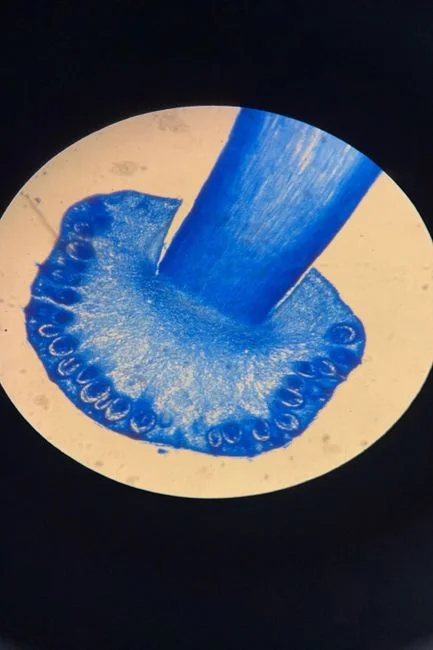
The mechanism story is what carries the Monday-morning review. An integrated MBR membrane bioreactor system runs at 8,000–12,000 mg/L MLSS versus 2,000–4,000 mg/L for CAS, and that ratio drives everything downstream. Higher MLSS means a smaller aeration basin at the same F:M, and it means the secondary clarifier disappears because the 0.1 µm PVDF membrane retains all biomass inside the bioreactor. The DF series flat-sheet MBR membrane module is the default for mining duty because flat-sheet geometry tolerates 500–5,000 mg/L influent TSS without fibre breakage (HydropureWater mining MBR field reference, 2026).
Sludge retention time is the second decisive gap. MBR sustains 30+ day SRT, which lets slower-growing degraders establish and drives 85–95% removal of residual xanthate and DTP. PEX feed at 5–20 mg/L leaves the permeate below 1 mg/L. CAS, held at 5–10 day SRT to keep settleability workable, lets the 2–4 day half-life organics pass through largely untouched, and the operators see a coloured, reagent-laden effluent that kills the downstream RO (HydropureWater mining MBR field reference, 2026).
Biosorption is where the heavy metals actually come out. In an MBR, dissolved Pb, Zn, Cu, and Cd adsorb onto the cake layer that builds on the membrane surface and onto the biomass itself, and this contributes 30–60% of total heavy-metal removal before any downstream chemistry. Combined with intracellular bioaccumulation, total removal lands at 70–95% when influent pH is held at 6.5–7.5. CAS relies on the same biosorption principle but only on wasted activated sludge, so removal is limited to 30–60% and the dissolved organics pass through. Chemical precipitation upstream of CAS can hit the metals target, but it generates 3–8 kg of dry hazardous solids per m³ treated and does nothing for the reagent load (HydropureWater mining MBR field reference, 2026). The clarifier disappears in MBR because the membrane is an absolute physical barrier — permeate sits below 1 mg/L TSS, while a polymer-aided CAS clarifier still discharges 5–15 mg/L TSS.
Aeration energy is the real operating-cost penalty. Aeration accounts for 36–68% of MBR operating expense, dominated by coarse-bubble scour across flat-sheet modules, which is 10–20× lower than the membrane-aeration energy of external cross-flow configurations (per the 2022-05 Global NEST pilot, DOI: 10.30955/gnj.004278; HydropureWater mining MBR field reference, 2026).
MBR vs CAS Parameter Comparison for a 1,000 m³/day Waynesboro Train
A single dense table is the fastest way to defend the technology choice in a CapEx review. All numbers below come from field reference data and scale to a 1,000 m³/day brownfield train (HydropureWater mining MBR field reference, 2026).
| Parameter | Conventional Activated Sludge (CAS) | Integrated Membrane Bioreactor (MBR) |
|---|---|---|
| MLSS | 2,000–4,000 mg/L | 8,000–12,000 mg/L |
| SRT | 5–10 days | 30+ days |
| Effluent TSS | 5–15 mg/L (polymer-aided clarifier) | <1 mg/L (0.1 µm membrane barrier) |
| Footprint fraction (1,000 m³/day) | 1.0× (baseline) | ~0.60× of CAS |
| Xanthate / DTP removal | Marginal (2–4 day half-life organics pass through) | 85–95% (PEX 5–20 mg/L → <1 mg/L) |
| Heavy-metal removal (Pb, Zn, Cu, Cd) | 30–60% | 70–95% (biosorption + bioaccumulation) |
| Total N removal (with supplemental C) | 30–50% | 75–90% |
| Membrane area per 1,000 m³/day | N/A | 1,800–3,200 m² (DF series cassettes) |
| Plant-wide direct GHG | 0.85 kgCO2eq/m³ | 0.91 kgCO2eq/m³ |
| Installed CAPEX per m³/day (2026) | USD 550–1,700 (with tertiary filter) | USD 800–2,500 (with cassettes + CIP) |
The CAPEX row already carries the trade the engineer is about to defend. CAS membrane-free CAPEX is 30–50% lower, but it assumes the site reuses existing clarifier volume and does not need a tertiary media filter ahead of any downstream RO. Once those civil and polishing items are priced in, the gap narrows by roughly half (HydropureWater mining MBR field reference, 2026). The plant-wide direct GHG figures — 0.85 kgCO2eq/m³ for CAS and 0.91 kgCO2eq/m³ for MBR — come from the Mannina et al. plant-wide modelling comparison and give the sustainability reviewer on the project team a real number rather than a hand-wave (Mannina et al., 2019).
Sizing a Waynesboro MBR Retrofit: DF Cassette Count, Footprint, and Civil Fit
The global "60% footprint" figure means nothing until it is translated into cassettes, square metres, and what that saves on a Waynesboro brownfield. The DF series flat-sheet MBR membrane module at 32–135 m³/day per cassette is the right building block for 500–10,000 m³/day mining duty, with flux 15–25 L/m²·h and target membrane area 1,800–3,200 m². At 1,000 m³/day, the cassette count comes out as follows:
| Design Flux | Per-Cassette Throughput | Cassettes Required | Total Membrane Area |
|---|---|---|---|
| 15 L/m²·h (conservative) | ~32 m³/day | 8–12 (design margin) | 1,800–2,200 m² |
| 20 L/m²·h (typical) | ~80 m³/day | 12–14 | 2,200–2,800 m² |
| 25 L/m²·h (high-flux) | ~135 m³/day | 7–9 | 2,800–3,200 m² |
Translate the 60% footprint figure into absolute m² and the case tightens. A typical Waynesboro CAS occupies roughly 250–320 m² of aeration basin plus secondary clarifier, and the equivalent MBR sits at 150–190 m². The 60–130 m² of saved civil footprint is enough to free real space for a BWRO skid, CIP chemical storage, and the polymer dosing skids that a CAS upgrade would otherwise need (HydropureWater mining MBR field reference, 2026).
Module selection follows the TSS band. Flat-sheet submerged PVDF is the default for 500–5,000 mg/L influent TSS because the geometry tolerates the abrasive, sharp-edged solids in flotation tail water. Hollow-fiber only wins when the feed is pre-filtered below 100 mg/L TSS, which a DAF upstream of the MBR will not always deliver on a mining feed. The 2026 Virginia DEQ 9VAC25-31 envelope for dissolved metals — Pb 0.1 mg/L, Zn 0.5 mg/L, Cu 0.1 mg/L, Cd 0.05 mg/L — is met by an MBR + RO polishing train; CAS alone requires chemical precipitation that generates 3–8 kg dry hazardous solids per m³ treated (HydropureWater mining MBR field reference, 2026).
The Three-Stage Train: DAF, MBR/CAS, and RO Polishing
The technology choice is rarely MBR or CAS in isolation; it is MBR or CAS as the middle of a three-stage train, and the upstream and downstream stages are nearly identical for both options.
Upstream, a dissolved air flotation unit in the 4–300 m³/h range removes 60–80% of influent oil and 30–50% of TSS, which extends MBR cleaning intervals from weekly to monthly and cuts CIP chemical consumption by 50–70%. The same DAF protects a CAS clarifier from sludge loss during shock loads, so the upstream choice does not move the needle between the two technologies. Automatic chemical dosing skids handle pH correction, anti-scalant, and the supplemental methanol or waste-process glycerol that an MBR needs to push denitrification past 75% on a low-C:N mining feed.
Downstream, an industrial RO system is where the choice starts to matter. MBR permeate at 5,000–20,000 mg/L TDS is the correct feed strength for a brackish-water RO at 70–85% recovery, and the RO brings permeate below 500 mg/L TDS for grinding dilution water or heap-leach makeup. CAS effluent at 5–15 mg/L TSS typically needs an additional sand or media filter before the RO to protect the membranes from fouling, and that filter partially erodes the CAS footprint advantage. For zero-liquid-discharge finishing, RO concentrate at 30,000–60,000 mg/L TDS feeds an evaporator or crystallizer, and this final stage is technology-agnostic between MBR and CAS (HydropureWater mining MBR field reference, 2026).
2026 Installed Cost and Five-Step Selection Checklist
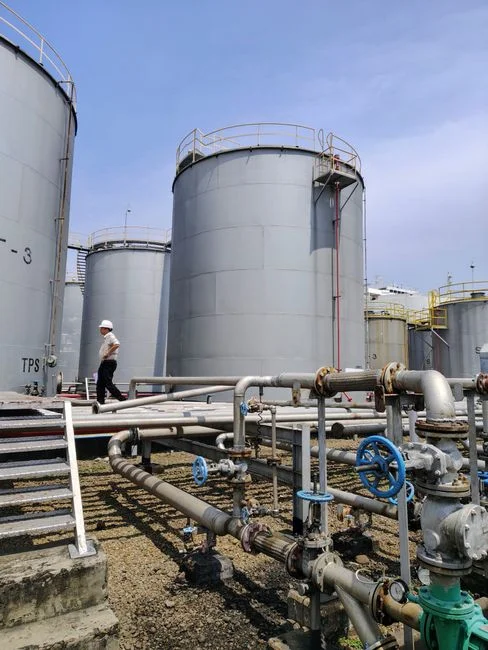
For a mining-grade integrated MBR sized to treat 500–10,000 m³/day of flotation tail water, total installed CAPEX in 2026 typically runs USD 800–2,500 per m³/day of capacity. The wide range is driven by influent variability, seismic class, automation scope, and containerized versus skid build (HydropureWater mining MBR field reference, 2026). A CAS upgrade on the same throughput typically runs 30–50% lower on membrane-free CAPEX, but adds clarifier civil works, polymer dosing skids, and a tertiary media filter ahead of any RO, which closes roughly half of the gap. The 2026 reverse osmosis reuse process and ROI reference is the right place to validate the downstream half of the train.
The five-step Monday-morning checklist is what gets the technology choice past a CapEx committee:
- Confirm existing clarifier service life. If the secondary clarifier has 20+ years left and flow is not increasing, a CAS upgrade is hard to beat on CAPEX alone.
- Measure influent TDS band. Below 5,000 mg/L with no closed-loop reuse target, CAS is still adequate. Above 5,000 mg/L or with a reuse target, MBR is the right call.
- Confirm downstream RO polishing is in scope. If a BWRO is being added for reuse, MBR permeate is the correct feed and the filter-before-RO cost disappears.
- Verify operator CIP training. Membrane-CIP-naive operators will burn membrane life in the first year; if no training pipeline exists, stay with CAS and add a maintenance protocol with TMP and CIP data review before committing.
- Score the site against the four CAS-win cases below before signing the requisition.
CAS still wins in four specific scenarios. First, where existing clarifier volume has 20+ years of remaining service life and there is no flow increase. Second, where influent TDS sits under 5,000 mg/L and the plant does not run a closed-loop reuse target. Third, where the operator pool has no membrane CIP training — the 36–68% aeration share of MBR OPEX is dwarfed by the cost of unplanned membrane-replacement events. Fourth, where there is no RO polishing downstream. In any of these four scenarios, upgrading the existing CAS with a selector zone, fine-bubble diffusers, and a polymer dosing skid delivers more value per dollar than a greenfield MBR (HydropureWater mining MBR field reference, 2026).
Frequently Asked Questions
Why does an MBR occupy ~60% of the equivalent CAS footprint at 1,000 m³/day?
The 8,000–12,000 mg/L MBR MLSS operating range versus 2,000–4,000 mg/L for CAS eliminates the large secondary clarifiers CAS requires and shrinks the aeration basin for the same F:M ratio. The 0.1 µm PVDF membrane is the absolute physical barrier that replaces gravity settling, so the civil envelope is dominated by the aeration basin and the cassette tank rather than a clarifier and a sludge recycle loop (HydropureWater integrated MBR field data, 2026).
Can MBR permeate go straight to reuse, or is an RO still required?
For TDS below 500 mg/L — required for grinding dilution water or for surface discharge under most 2026 mining-jurisdiction limits including Virginia DEQ 9VAC25-31 — a brackish-water RO must follow the MBR. The MBR delivers sub-1 mg/L TSS permeate, but it does not bring TDS down; the RO does (HydropureWater mining MBR field reference, 2026).
How well does an MBR actually remove residual xanthate and DTP?
A properly sized MBR running at 10,000 mg/L MLSS and 30+ day SRT removes 85–95% of residual xanthate and DTP, reducing potassium ethyl xanthate from 5–20 mg/L in the feed to below 1 mg/L in the permeate. CAS at 5–10 day SRT lets the 2–4 day half-life organics pass through largely untouched because the slower-growing degraders are washed out before they can establish (HydropureWater mining MBR field reference, 2026).
When does a flat-sheet MBR win over hollow-fiber?
Flat-sheet PVDF MBRs handle 500–5,000 mg/L TSS at flux 15–25 L/m²·h with monthly CIP cycles and are the default for mining duty. Hollow-fiber wins only when the feed is pre-filtered below 100 mg/L TSS — not the typical envelope for flotation tail water (HydropureWater mining MBR field reference, 2026).
What are the cases where CAS is still the correct 2026 answer?
CAS still wins when the site has existing clarifier volume with 20+ year service life, influent TDS stays under 5,000 mg/L, there is no downstream RO polishing, and the operator pool has no membrane-CIP training. In those four scenarios, upgrading the existing CAS with a selector zone, fine-bubble diffusers, and a polymer dosing skid delivers more value per dollar than a greenfield MBR (HydropureWater mining MBR field reference, 2026).