What a Packaged MBR STP Actually Does in a Hotel
A packaged MBR (Membrane Bioreactor) is a factory-built, skid- or tank-integrated unit that combines activated-sludge biology with submerged microfiltration or ultrafiltration membranes in a single vessel. Capacities in the 1–80 m³/h range cover everything from a 30-room boutique property to a 300-room five-star hotel, with the WSZ underground integrated sewage treatment plant range being a typical comparison baseline for below-grade installations. The standard process train runs in five stages: a 1–2 mm fine screen removes rags, hair, and lint; an equalization tank buffers the diurnal occupancy swings typical of hotel duty; an anoxic zone denitrifies the wastewater; an aerobic tank with submerged membrane modules delivers BOD removal and solids separation in one step; a permeate tank with chlorination or UV finishes the job before reuse or discharge (per CHARM Ltd. process description).
MBR suits hotels because raw sewage from guest rooms, kitchens, and laundries typically lands in the BOD 250–400 mg/L and FOG up to 100 mg/L range — well within MBR's working envelope. The system tolerates the intermittent loading that SBR and conventional activated-sludge plants handle poorly: a banquet hall dumping 8,000 L in three hours, or a near-empty Tuesday in low season. PVDF membrane pore size is typically 0.1 µm for flat-sheet modules and 0.03–0.1 µm for hollow fiber, which removes most bacteria and a large fraction of viruses without a dedicated tertiary disinfection step (per LiDing and DF series module specifications). A packaged unit is delivered as a single FRP or carbon-steel epoxy-lined tank with blowers, permeate pumps, and a control panel pre-wired — installation is largely plug-and-play at site, with civil work limited to the base slab and inlet/outlet pipe connections.
How to Size a Packaged MBR for a Dhaka Hotel
Vendor kL/day figures are not interchangeable, so a defensible sizing calculation matters more than the supplier's brochure. For a Dhaka 3- to 5-star hotel, use a per-room unit factor of 150–300 L per guest room per day, plus 30–50 L per restaurant cover, plus 50–80 L per kg of in-house laundry linen. Apply a peaking factor of 1.5–2.0 over the average daily flow to absorb banquet nights, conferences, and the Eid/Pohela Boishakh occupancy spikes that routinely push Dhaka hotels to 95–100% occupancy. Design the biological stage for FOG ≤100 mg/L with a grease trap upstream; if kitchen discharge runs hotter, add a DAF (Dissolved Air Flotation) pre-treatment using something like the dissolved air flotation system to protect the membranes.
Worked example: a 150-room Dhaka hotel with an 80-cover restaurant and in-house laundry produces roughly 45 m³/day on average; with a 1.5–2.0 peaking factor, the design flow lands at 70–90 m³/day. In low-lying Dhaka sectors — Mirpur, Mohammadpur, Badda, parts of Uttara — add 10–20% for groundwater infiltration if the collection network is aging. Cross-check the resulting sizing against Bangladesh DoE ECR 1997 Schedule-10 inland surface water discharge parameters: BOD ≤50 mg/L, COD ≤200 mg/L, TSS ≤150 mg/L, NH3-N ≤50 mg/L, pH 6–9. For hotels pursuing reuse, tighten the design targets to BOD ≤20 mg/L and TSS ≤10 mg/L from the outset — retrofitting reuse-grade polishing into a plant sized for discharge is an expensive lesson.
| Parameter | Design value (Dhaka hotel) | Source / basis |
|---|---|---|
| Per-room flow | 150–300 L/room/day | 3- to 5-star hotel occupancy norms |
| Restaurant cover | 30–50 L/cover | FOG-bearing kitchen waste |
| Laundry linen | 50–80 L/kg | Hotel in-house laundry |
| Peaking factor | 1.5–2.0 × ADF | Banquet, conference, Eid spikes |
| FOG design load | ≤100 mg/L (biological stage) | Grease trap upstream; DAF if higher |
| Infiltration (low-lying Dhaka) | +10–20% | Aging sewer network, high water table |
| Discharge target (BOD / TSS) | ≤50 / ≤150 mg/L | DoE ECR 1997 Schedule-10 |
| Reuse target (BOD / TSS) | ≤20 / ≤10 mg/L | BNBC 2020 reuse criteria |
Hollow-Fiber vs Flat-Sheet MBR Membranes for Hotel Duty

Hollow-fiber and flat-sheet are the two formats that dominate hotel-duty MBR bids, and the choice is not aesthetic. Hollow-fiber systems — STERAPORE™-type modules from Mitsubishi Chemical with 5,000+ global installations, or equivalent — pack the highest membrane area per cubic metre of tank volume, which keeps capex down for plants ≤200 m³/day. They are the default for budget-driven 3-star properties where pre-screening is well-designed. The trade-off is sensitivity to hair, fibrous lint from housekeeping, and long threads from laundry — a 1–2 mm fine screen is mandatory upstream, and a GX series rotary mechanical bar screen is a sensible add-on for hotels with on-site laundry.
Flat-sheet PVDF MBR modules — typified by the DF series flat-sheet PVDF MBR module with 0.1 µm pore size and 80–225 m² configurations producing 32–135 m³/day per cassette — tolerate higher FOG and suspended solids, and the rigid panel geometry allows individual element replacement when one panel fouls or is damaged. This matters in hotels where laundry lint or kitchen FOG excursions are routine. Flat-sheet modules with integrated aeration boxes use a fraction of the energy of external cross-flow designs, and cleaning is a relaxed-membrane chemical soak rather than a backwash cycle. The decision rule is straightforward: hollow-fiber for cost-sensitive 3-star hotels with disciplined pre-screening; flat-sheet for 4–5-star properties, resorts, and any hotel with on-site laundry. For a fully-integrated packaged skid in either format, the integrated MBR membrane bioreactor system is the typical turnkey reference.
| Criterion | Hollow-fiber PVDF | Flat-sheet PVDF |
|---|---|---|
| Pore size | 0.03–0.1 µm | 0.1 µm |
| Packing density | High — lowest tank volume | Moderate — larger footprint per m² |
| Capex (plants ≤200 m³/day) | Lower | 10–25% higher |
| FOG / lint tolerance | Lower — needs fine screening | Higher — tolerates routine excursions |
| Cleaning regime | Periodic chemical backwash (citric acid + NaOCl) | In-place soak with relaxed membrane |
| Element-level replacement | No — module-level swap | Yes — individual panel swap |
| Best fit | 3-star hotels, good pre-screening | 4–5-star hotels, on-site laundry, resorts |
Bangladesh Compliance, Reuse Targets, and Site Constraints
Bangladesh DoE ECR 1997 Schedule-10 sets the minimum bar for any Dhaka hotel discharging to inland surface water: BOD ≤50 mg/L, COD ≤200 mg/L, TSS ≤150 mg/L, NH3-N ≤50 mg/L, and pH 6–9. For hotels pursuing reuse, BNBC (Bangladesh National Building Code) 2020 Part 7 — Sanitation — tightens the targets to BOD ≤20 mg/L, TSS ≤10 mg/L, and fecal coliform ≤100 CFU/100 mL for non-potable end-uses. BNBC 2020 also requires on-site treatment for hotels above 20 rooms in the Dhaka metropolitan area; packaged MBR is an accepted compliance route, which is why buried or basement installations have become the default in Gulshan, Banani, and Dhanmondi.
Site constraints drive as much of the spec as the discharge limits do. A basement installation needs ≥1.5 m clear headroom over the tank, forced ventilation rated for H2S removal, and an odor control stage on the equalization tank. In flood-prone Dhaka zones — parts of Keraniganj, Kamrangirchar, and low-lying Uttara sectors — specify an above-grade FRP or skid-mounted unit on a raised plinth rather than a buried tank. Noise is a hotel-specific constraint: a packaged plant rated below 50 dB at 1 m (per PureLife BD spec) is suitable for podium or basement locations within 10 m of guest rooms, but anything louder forces an acoustic enclosure. Reuse end-uses that work cleanly for MBR permeate without RO polishing are toilet flushing (highest volume, ~30–40% of a hotel's total water demand), landscape irrigation, and cooling-tower make-up. For laundry reuse, plan a downstream RO polishing step — MBR permeate alone will not survive a hot commercial wash cycle without TDS reduction.
Cost Bands and Reuse Economics for a Dhaka Hotel
Budget numbers first: a 2026 packaged MBR with FRP tank, blowers, permeate pumps, control panel, and commissioning runs BDT 8–18 lakh per m³/day of installed capacity, with the per-m³ price falling as plant size increases. Opex lands at BDT 25–45 per m³ treated, dominated by electricity for blowers and permeate pumps, with membrane replacement amortized over a 5–7 year life. The reuse payback is what changes the conversation with a developer client. A 100 m³/day hotel reusing 50% of permeate for toilet flushing and cooling-tower make-up displaces roughly 18,000 m³ of Dhaka WASA fresh water per year. At the BDT 35–45/kL commercial tariff that applies to most 3-star-plus properties, that saving is BDT 6.5–8 lakh per year — enough to bring the MBR premium over a basic SBR to payback in 3–5 years for a 100+ room hotel in a high-tariff zone. For a deeper dive into MBR effluent quality and removal rates, the MBR Effluent Quality & Working Principle: 2026 Engineering Specs, Removal Rates & Selection Guide covers the parameter math.
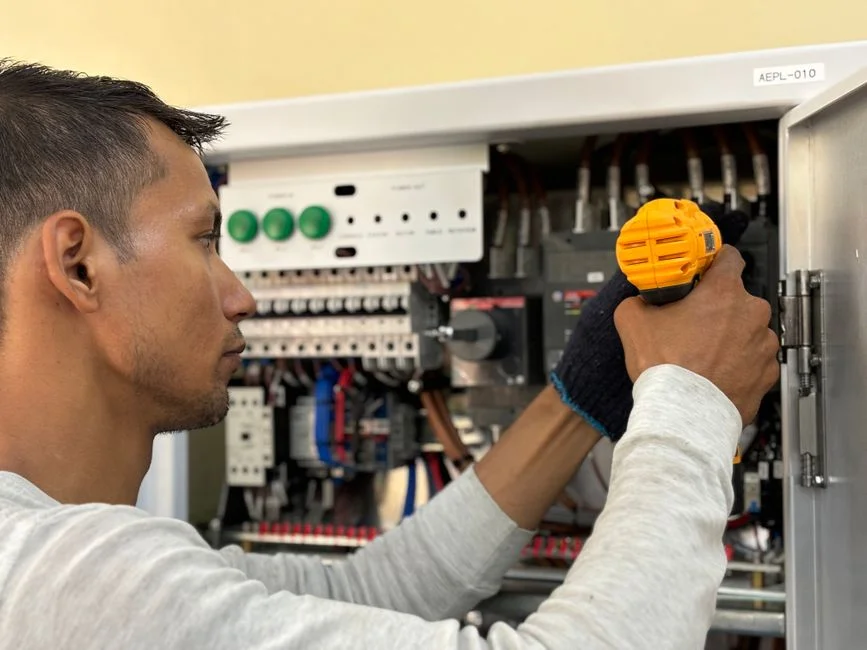
Cost lines that frequently get missed in vendor quotes — and that should be added to any apples-to-apples comparison — include civil works for tank burial or plinth, the grit chamber upstream of the screen, electrical cabling from the hotel's MV/LV room to the STP, a 2-year spares kit (membranes, diffusers, pump seals), and the first year's service contract. None of these belong in the headline kL/day figure, but together they typically add 20–35% to the turnkey cost. For a regional comparison of MBR cost structures and compliance drivers, the MBR Wastewater Treatment Systems in Spain: 2026 Engineering Guide with Costs, Compliance & ROI Data shows how the same economics shift under EU discharge rules.
| Cost / savings line | 2026 Bangladesh band | Notes |
|---|---|---|
| Capex (packaged MBR, turnkey) | BDT 8–18 lakh per m³/day | FRP tank, blowers, panel, commissioning |
| Opex (treatment cost) | BDT 25–45 per m³ | Power-dominated; membranes amortized 5–7 yr |
| Dhaka WASA commercial tariff | BDT 35–45 per kL | 3-star and above |
| Annual water saving (50% reuse, 100 m³/day) | ~18,000 m³/year | Toilet flush + cooling-tower make-up |
| Annual cost saving | BDT 6.5–8 lakh/year | At BDT 35–45/kL tariff |
| Reuse-driven payback vs SBR | 3–5 years | 100+ room hotel, high-tariff zone |
| Hidden cost adder (civil, cabling, spares) | +20–35% of headline | Often excluded from vendor quote |
7-Point Vendor Evaluation Checklist Before You Sign
Once the technical spec is locked, the procurement decision should run through a fixed list rather than a price spreadsheet. First, confirm the membrane type, brand, and country of origin in writing, with a 5-year membrane life warranty and a unit-price quote for replacement cassettes. Second, verify FRP or carbon-steel tank construction with an individual leak test certificate and an anti-corrosion specification rated for Dhaka humidity (FRP is the safer default). Third, check blower and pump brands — the major European and Japanese names are the right answer in 80% of opex and downtime risk; unbranded blowers are a false economy. Fourth, request a reference list of at least three installed hotel STPs in Bangladesh with contact details for the hotel engineering team; call them.
Fifth, confirm the PLC panel includes SMS or remote alert capability with a defined local service presence inside Dhaka metro. Sixth, get a written performance guarantee tied to BOD, COD, TSS, and reuse-quality parameters with liquidated damages for non-compliance — without this clause, a "guarantee" is a brochure. Seventh, lock in a 2-year comprehensive maintenance contract with a stated response time of ≤24 hours inside Dhaka metro. For an MBR vs conventional activated-sludge cost and compliance comparison that supports the spec, the MBR vs Conventional Activated Sludge for Plastics & Rubber Wastewater (2026 Engineering Guide) lays out the opex logic that justifies the membrane premium on a hotel project.
Frequently Asked Questions
What MBR capacity do I need for a 100-room hotel in Dhaka?
A 100-room Dhaka hotel with a typical restaurant and limited laundry produces ~15–30 m³/day average flow. Apply a 1.5–2.0 peaking factor for banquets and seasonal occupancy, which puts the design flow at 25–50 m³/day. Final sizing depends on the restaurant cover count, whether laundry is in-house, and the volume of banquet and conference events.
Can a packaged MBR STP be installed in a hotel basement?
Yes. Packaged FRP or skid-mounted MBR units are designed for basement installation with as little as 1.5 m clear headroom over the tank. The key constraints are a raised plinth for flood protection, forced ventilation for H2S control, and an odor management step on the equalization tank. Confirm all three with the vendor before signing.
How long do MBR membranes last in a hotel STP?
PVDF membranes in a properly operated hotel MBR last 5–7 years. Lifespan shortens sharply when upstream screening is inadequate (lint and hair fouling) or when grease removal fails (FOG blinding). A 1–2 mm fine screen, a working grease trap, and a documented CIP regime with citric acid and NaOCl are non-negotiable.
Is treated MBR water from a hotel safe for toilet flushing?
Yes. MBR permeate plus chlorination — with BOD ≤20 mg/L, TSS ≤10 mg/L, and fecal coliform ≤100 CFU/100 mL — meets Bangladesh BNBC 2020 reuse criteria for toilet flushing without RO polishing. For cooling-tower make-up, confirm the local hardness and TDS with the HVAC consultant; a side-stream polisher may be required.
What is the difference between packaged MBR and packaged MBBR for a hotel?
MBBR (Moving Bed Biofilm Reactor) uses free-floating plastic media for biological treatment and still needs a separate clarifier to meet reuse-grade TSS. MBR replaces the clarifier with a submerged membrane module, delivering higher effluent quality (typically TSS <5 mg/L vs 20–30 mg/L for MBBR) and a smaller footprint, at a 15–30% capex premium. For a hotel pursuing reuse or constrained on basement space, MBR is usually the right answer; for a discharge-only plant with generous civil space, MBBR remains a viable lower-cost option.