MBR systems in Spain typically deliver TSS below 1 mg/L and BOD5 below 5 mg/L at Mixed Liquor Suspended Solids (MLSS) of 8,000–12,000 mg/L, while meeting EU Directive 91/271/EEC discharge limits for agglomerations above 2,000 population equivalent (PE). Project CAPEX in the 2025–2026 budget window still ranges from about €200K for a 50 m³/day containerized wine-sector unit to €5M for a 2,000 m³/day municipal plant. Footprint cuts of 15–40% versus conventional activated sludge (CAS), plus reuse-ready effluent, drive most retrofit decisions on constrained Mediterranean sites.
What Engineers Should Expect from MBR systems in Spain
Membrane bioreactors combine biological treatment with ultrafiltration so secondary clarifiers are unnecessary. Typical Spanish installations report COD below 30 mg/L, BOD5 below 5 mg/L, and TSS below 1 mg/L at MLSS 8,000–12,000 mg/L. Specific energy for modern trains is commonly 0.6–1.2 kWh/m³ with advanced air scouring, while CAPEX stays near €1,500–€4,000 per m³/day by scale and membrane type.
Spain still applies Directive 91/271/EEC today. According to EUR-Lex summaries of Directive (EU) 2024/3019 (2024), that recast will replace 91/271/EEC from 1 August 2027, with national transposition due by 31 July 2027. Earlier guidance used the 2,000 PE collection threshold; the 2024 revision lowers collection and secondary-treatment obligations toward 1,000 PE on a phased schedule (EUR-Lex, 2024).
For industrial operators in Andalusia and Catalonia, regional authorities often tighten TSS, nitrogen, and phosphorus limits to protect sensitive water bodies. Catalonia’s reuse criteria historically referenced Royal Decree RD 1620/2007 for irrigation and cooling water quality. Membrane permeate from a well-run MBR usually meets those reuse solids and turbidity expectations without a separate tertiary sand filter. Near Doñana National Park and similar sensitive zones, Annex I phosphorus and nitrogen limits still push designers toward high-biomass MBR configurations with dedicated anoxic and anaerobic zones. Failure to comply can still expose operators to penalties under Spain’s Law 22/2011 on Waste and Contaminated Soils, with reported fine exposure reaching €2M in severe cases cited in prior enforcement summaries.
| Parameter | EU Directive 91/271/EEC Limit | Typical MBR Performance in Spain | Compliance Margin |
|---|---|---|---|
| Chemical Oxygen Demand (COD) | <125 mg/L | <30 mg/L | 76% |
| Biochemical Oxygen Demand (BOD5) | <25 mg/L | <5 mg/L | 80% |
| Total Suspended Solids (TSS) | <35 mg/L | <1 mg/L | 97% |
| Total Phosphorus (TP) | <2 mg/L (Sensitive areas) | <0.5 mg/L | 75% |
Beyond discharge limits, the 15–40% footprint reduction offered by membrane bioreactors lets Spanish municipalities avoid land acquisition in dense coastal corridors. Integrating filtration into the aeration tank with an MBR Membrane Bioreactor Wastewater Treatment System removes the secondary clarifier footprint and supports capacity upgrades inside existing plant boundaries. Most plants we size for Spanish industrial parks run at the lower end of the flux band during the first year until operators tune scouring and cleaning intervals.
MBR Budget Benchmarks for Wine, Poultry, and Municipal Projects
Capital expenditure (CAPEX) for MBR systems in Spain currently ranges from €4,000 per m³/day for small containerized units to €1,500 per m³/day for large-scale municipal installations. For a standard 500 m³/day municipal plant, procurement managers should budget between €1M and €3M, depending on automation level and the choice between flat-sheet or hollow-fiber membranes. In the wine sector, where seasonal peaks require robust systems, a 50–100 m³/day unit typically falls within the €200K to €500K range.
Operating expenditure (OPEX) in Spain is heavily influenced by energy prices, which averaged €0.12–€0.15/kWh in 2024 according to Eurostat. Energy consumption accounts for 40–50% of total OPEX, primarily driven by the air scouring required to prevent membrane fouling. Modern systems utilizing advanced aeration control have reduced this demand to 0.6–1.2 kWh/m³. Membrane replacement represents the second-largest OPEX component (20–30%), with high-quality PVDF flat-sheet DF Series membranes costing between €50 and €100/m², while hollow-fiber alternatives may range from €80 to €150/m².
| Sector | Capacity (m³/day) | Estimated CAPEX (2025) | Estimated OPEX (€/m³) | Primary Cost Driver |
|---|---|---|---|---|
| Wine / Boutique Industrial | 50 - 200 | €200K - €500K | €0.45 - €0.65 | Membrane Cleaning (Chemicals) |
| Poultry / Food Processing | 500 - 1,200 | €1.2M - €2.5M | €0.35 - €0.50 | Energy (Aeration) |
| Municipal (Large Scale) | 2,000+ | €3M - €5M+ | €0.25 - €0.40 | Labor & Sludge Disposal |
When evaluating lifecycle costs over a 20-year period, membrane bioreactors often present a competitive Net Present Value (NPV) versus conventional trains that still need tertiary polishing, despite higher initial costs. Elimination of separate tertiary steps and the option to sell reclaimed water for agricultural use improve the cash-flow case. Procurement teams should model the full train—including screens, equalization, and any polishing—rather than membrane CAPEX alone, and they should keep the reported 30% energy savings versus first-generation membrane plants as a sensitivity case, not an assumed base case.
What Do MBR and RO Units Cost Together?
Combined MBR and reverse osmosis (RO) trains are sized when the buyer needs demineralized water for boilers, process make-up, or high-purity reuse beyond irrigation-grade reclaim. The bioreactor stage supplies low-TSS, low-turbidity feed so RO recovery stays stable; without that barrier, RO foulants climb fast on wine and poultry COD spikes. For a 500 m³/day industrial reclaim train, owners commonly budget the MBR block at €1M–€3M and then add an RO skid whose CAPEX scales with recovery target, antiscalant strategy, and concentrate disposal route.
Unit-cost equations used by Spanish EPC estimators usually split three lines: biological/membrane CAPEX (€/m³/day), RO CAPEX (€/m³/day of permeate), and combined OPEX (€/m³). At municipal scale above 2,000 m³/day, MBR-specific CAPEX often falls near €1,500 per m³/day, while boutique wine units at 50–200 m³/day sit closer to €2,500–€4,000 per m³/day. RO OPEX is dominated by power and cartridge/antiscalant chemicals; bioreactor OPEX remains dominated by scouring air at 0.6–1.2 kWh/m³ for flat-sheet duty. Most plants we review keep RO offline during vendimia peaks until permeate COD is confirmed below the RO vendor’s feed limit.
Selection checklist before locking a dual-barrier budget:
- Confirm discharge permit versus reuse or process-water specification (TSS, COD, conductivity).
- Measure peak FOG and COD; if FOG approaches 1,500 mg/L, price DAF pre-treatment ahead of wine-sector membrane bioreactors into the CAPEX case.
- Choose flat-sheet versus hollow-fiber based on cleaning access and packing density.
- Set flux at 15–25 L/m²/h (flat sheet) or 12–20 L/m²/h (hollow fiber) with seasonal derating.
- Include membrane replacement at year 7–10 and chemical clean frequency in the NPV model.
- Map concentrate and sludge disposal fees under the local provincial tariff.
- Test NextGenEU or regional grant eligibility before finalizing debt sizing.
How Membrane Bioreactors Work: Types, Pore Sizes, and Process Parameters
Membrane bioreactor trains in Spanish industrial service typically operate at MLSS concentrations between 8,000 and 12,000 mg/L, roughly three times higher than conventional activated sludge systems. That high biomass concentration shortens Hydraulic Retention Time (HRT) and lengthens Solids Retention Time (SRT), which improves degradation of complex organics from wine, poultry, and food plants. The membrane module is the physical barrier that retains bacteria and suspended solids regardless of sludge settleability.
Engineers must choose between two primary membrane geometries: flat sheet and hollow fiber. Flat sheet modules, such as the DF Series, utilize PVDF material with a nominal pore size of 0.1 μm. These are favored in the Spanish wine and poultry sectors because they resist fouling from Fats, Oils, and Grease (FOG) and allow easier manual cleaning. Hollow fiber membranes offer higher packing density and smaller pore sizes (approx. 0.04 μm), which suits large municipal plants where footprint is the absolute priority.
| Technical Parameter | PVDF Flat Sheet (DF Series) | Hollow Fiber (Standard) |
|---|---|---|
| Nominal Pore Size | 0.1 μm | 0.04 μm |
| Operating Flux (LMH) | 15 - 25 L/m²/h | 12 - 20 L/m²/h |
| Specific Energy Demand | 0.6 - 1.2 kWh/m³ | 0.8 - 1.5 kWh/m³ |
| Cleaning Protocol | In-situ / Manual possible | In-situ (Backpulse required) |
| Typical Application | Wine, Poultry, Small Municipal | Large Municipal, Reuse |
Fouling mitigation remains the central operational challenge on Spanish food-industry feeds. Systems must be designed with robust membrane scouring (typically 0.3–0.5 Nm³/m²/h) and automated chemical cleaning cycles using Sodium Hypochlorite (200–500 ppm) and Citric Acid (1–2%). For high-strength wastewater, DAF pre-treatment ahead of the bioreactor reduces organic load and protects membranes from rapid flux decline. Specifying PVDF flat sheet modules adds reliability against FOG levels up to 1,500 mg/L in food-processing effluents when screening and equalization are also correctly sized.
Case Studies: Wine, Poultry, and Municipal Installations
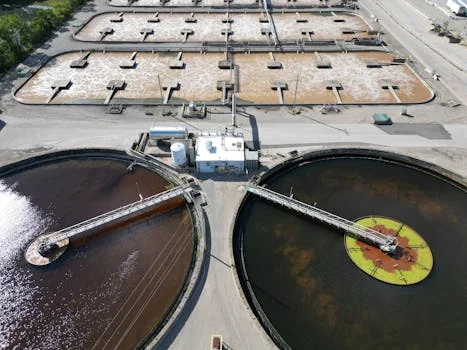
Industrial membrane installations in Spain, such as the 1,200 m³/day system at the Procavi poultry plant, have demonstrated a 30% reduction in specific energy consumption compared to first-generation membrane systems. That project was commissioned to handle increased production without expanding the plant footprint. It achieved a 15% reduction in total area while doubling treatment capacity. Effluent COD stayed well below the 125 mg/L threshold even during peak processing hours.
In the wine sector, a notable installation in Ronda (Málaga) has been operational since 2011. The system handles high-strength influent with COD levels reaching 3,000 mg/L. Using an MBR configuration, the winery achieves 98% COD removal and produces effluent with <50 mg/L COD. CAPEX for this 3 m³/h system was approximately €250K. The primary lesson was the necessity of robust screening; early issues with grape skins and seeds were resolved by upgrading pre-treatment to fine 1 mm screens.
Municipal upgrades in Spanish cities have shown similar value under urban densification pressure. A project serving 50,000 PE replaced traditional clarifiers with MBR cassettes, allowing the city to improve water quality to reuse standards suitable for park irrigation without purchasing adjacent land. The capital cost of €1.2M for the membrane upgrade was offset by avoided land acquisition and by a reliable non-potable water source for the municipality.
When to Choose MBR over CAS or DAF on Spanish Sites
Membrane bioreactors require 15% to 40% less physical footprint than conventional activated sludge plants because they eliminate secondary clarifiers. While initial investment is typically 20–30% higher than CAS, superior effluent quality often removes the need for tertiary sand filtration, UV, or ultrafiltration that would otherwise be required to meet RD 1620/2007 reuse standards. For industrial sites with limited space or those discharging into sensitive zones, MBR is often the only viable technical path to permit compliance plus reclaim.
The technology is not the universal choice for every Spanish project. In large municipal settings where land is abundant and discharge limits are standard, conventional activated sludge remains more cost-effective due to its lower energy demand (0.3–0.8 kWh/m³ vs. MBR’s 0.6–1.5 kWh/m³). In food processing applications with extremely high oil and grease content, a Dissolved Air Flotation system may stand alone when only pre-treatment for sewer discharge is required. A detailed comparison of MBR and activated sludge systems shows that membrane value peaks when high-quality water for reuse is the primary objective.
| Feature | MBR System | Activated Sludge (CAS) | DAF (Pre-treatment) |
|---|---|---|---|
| Effluent Quality | Ultra-pure (Reuse ready) | Standard Discharge | Pre-treatment only |
| Footprint | Minimal | Large (Clarifiers needed) | Small |
| Energy Use | High (0.6 - 1.5 kWh/m³) | Medium (0.3 - 0.8 kWh/m³) | Low (0.1 - 0.3 kWh/m³) |
| CAPEX | Highest | Medium | Lowest |
| Best Use Case | Sensitive areas, reuse | Large municipal plants | High FOG removal |
Technology selection should rest on the written discharge permit, water-stress risk, and whether reclaim offsets freshwater purchases. An engineering guide to selecting membrane bioreactors for industrial sewage should start from those three constraints, then compare flux, scouring air, and sludge yield—not brochure removal percentages alone.
Calculating ROI: Payback Periods and Lifecycle Costs
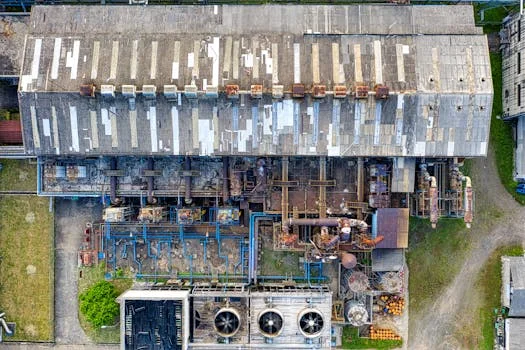
Payback periods for membrane investments in Spain can be reduced by up to 40% through NextGenEU water efficiency grants and regional industrial modernization subsidies. A typical ROI calculation for an industrial MBR must account for three primary factors: avoided fines for non-compliance, savings from water reuse, and reduced sludge disposal costs. Because these plants operate at higher SRTs, they produce significantly less sludge than CAS systems, often reducing disposal fees by 20–30%.
For an industrial poultry processor in Andalusia installing a €1.2M membrane bioreactor, annual savings might include €30K in energy efficiency versus older membrane trains, €20K in reclaimed water for facility wash-down, and €15K in reduced sludge handling. Without incentives, payback might extend to 15–18 years. With a 40% NextGenEU grant (reducing CAPEX to €720K), payback drops to approximately 9–11 years. Sensitivity analysis shows that if energy prices rise to €0.20/kWh, ROI accelerates because efficient membrane scouring becomes more valuable.
| Cost Component | MBR (500 m³/day) | CAS + Tertiary (500 m³/day) |
|---|---|---|
| Initial CAPEX | €1,500,000 | €1,200,000 |
| Annual OPEX | €85,000 | €70,000 |
| Annual Water Reuse Value | €25,000 | €15,000 |
| 20-Year NPV (5% Disc.) | €2,247,000 | €1,885,000 |
While the NPV line for membrane bioreactors is often higher on a pure cash basis, Spanish procurement managers also weight regulatory compliance margin and the ability to expand production without land acquisition. Those avoided costs rarely appear cleanly in a 20-year NPV table but frequently decide the bid. Pair the financial model with a side-by-side process comparison of MBR and activated sludge before board approval. Coastal plants facing both land scarcity and reuse targets usually shortlist membrane bioreactors when CAS cannot meet RD 1620/2007 reclaim quality without extra tertiary stages.
Who This Is For and Next Step
This guide is for plant engineers, EPC contractors, and procurement managers sizing wine, poultry, food-processing, or constrained municipal upgrades where reuse quality or footprint limits rule out simple CAS expansions. Buyers with abundant land, lenient sewer permits, and no reclaim duty should price CAS or DAF-only options first. If your flow, COD, and reuse targets are defined, request a sized MBR quotation with design flow and effluent limits so CAPEX and OPEX can be checked against the benchmarks above.
Frequently Asked Questions
What are the main disadvantages of membrane bioreactors?
Higher initial CAPEX and higher specific energy use than conventional activated sludge are the main drawbacks on Spanish projects. Operators also need tighter process control and scheduled chemical cleans to manage fouling, especially on hard water or high-FOG food effluents. Membrane replacement every 7–10 years adds a recurring capital spike that must sit inside the lifecycle model, not only in year-one OPEX.
Which Spanish regions have the strictest wastewater discharge limits?
Andalusia, Murcia, and the Balearic Islands apply some of the strictest limits because of sensitive marine receptors and chronic water scarcity. These regions often require “sensitive area” nutrient standards under EU Directive 91/271/EEC Annex II even for smaller municipal plants. Coastal industrial dischargers there should assume phosphorus and nitrogen polishing will be written into the permit, not treated as optional.
How does EU Directive 91/271/EEC still shape Spanish MBR design?
Directive 91/271/EEC still sets the binding COD, BOD5, and TSS removal framework Spain uses today for urban agglomerations above 2,000 PE. Designs hold MLSS at 8,000–12,000 mg/L so those limits are met with margin during peak loads. According to EUR-Lex (2024), Directive (EU) 2024/3019 will replace 91/271/EEC from 1 August 2027, so long-life assets should leave headroom for stricter nutrient and micropollutant stages.
What energy use should wine-sector membrane plants expect?
Modern wine-sector membrane plants in Spain typically consume 0.8–1.2 kWh per cubic meter of treated water under normal duty. During harvest (vendimia), specific energy per m³ often falls as the plant runs near design flow, while low-season periods keep a fixed scouring load that raises kWh/m³. Designers should model both seasons separately when comparing bids.
How do I calculate payback for a Spanish MBR project?
Use (Total CAPEX − Government Incentives) ÷ (Annual Water Reuse Savings + Reduced Sludge Disposal Costs + Avoided Fines − net Annual OPEX impact). In Spain, NextGenEU and regional subsidies can cover up to 40% of eligible water-reclamation CAPEX and must be confirmed before financing closes. Re-run the sheet at €0.12/kWh and €0.20/kWh energy to test sensitivity.