Why Bayou La Batre Food & Beverage Wastewater Breaks the Generic MBR vs CAS Conversation
MBR and conventional activated sludge (CAS) both treat Bayou La Batre food and beverage wastewater, but MBR typically wins on footprint (30–50% smaller per the lamella-clarifier commercial comparison), effluent suspended solids (<1 mg/L vs 10–30 mg/L for CAS), and tolerance of seasonal shrimp-processing surges — at the cost of 30–50% higher energy use and 20–50% higher capex, plus mandatory FOG pretreatment with a DAF to protect the membrane.
Three wastewater stressors define the Alabama Gulf-coast seafood processor and rarely appear in generic MBR-vs-CAS literature: brackish intake water with chlorides typically 1,000–5,000 mg/L, seasonal flows that swing 3–4× between brown shrimp season peaks and winter lows, and high-protein, high-FOG streams from heading, peeling, and cooking lines. The EPA's 2008 baseline found ~37% of U.S. municipal WWTPs discharging above the secondary-treatment minimum, and many Mobile County plants sit in that band with rising reuse pressure from neighbouring industry. Conventional activated sludge clarifiers in this segment routinely fail in summer when FOG and salinity rise together — bulking sludge, loss of solids capture, and ADEM excursions follow. Cyclic, underutilized winter operation means any coastal plant spec must justify capex against a process train that runs near nameplate only 4–5 months a year, which is exactly the operating profile an integrated MBR membrane bioreactor system is sized for and a greenfield CAS basin is not.
How Each Technology Actually Treats the Water
A conventional activated sludge system pairs an aeration basin with a gravity secondary clarifier. Microbes oxidize dissolved organics in the mixed liquor, then the biomass settles by gravity in the clarifier; settled sludge is returned to maintain 2,000–4,000 mg/L MLSS while clarified water overflows to disinfection. CAS is mature, simple, and forgiving — but constrained by settling, which sets the ceiling on biomass concentration and the floor on effluent TSS.
Transitioning from gravity settling to membrane separation changes the fundamental efficiency of the process. An MBR runs the same biology in the aeration tank but replaces the secondary clarifier with submerged PVDF flat-sheet or hollow-fibre membranes with nominal pore size 0.04–0.2 μm (per the Montpellier membrane-viability thesis, S4). The membrane physically retains virtually all biomass and most bacteria/viruses, which is why MLSS in an MBR routinely runs 8,000–15,000 mg/L. Higher SRT in MBR lets slow-growing nitrifiers and recalcitrant-degraders establish, which the plant-wide Mannina et al. modelling study (S3) cites as the reason MBR effluent total nitrogen and COD hold steadier when influent swings. The trade-off is fouling: relaxation cycles, continuous air-scour, and periodic chemical clean-in-place are what drive the MBR energy premium.
Side-by-Side Parameter Comparison for Bayou La Batre Conditions
This table consolidates the parameters a coastal plant engineer will weigh at the spec stage. Values are drawn from the lamella-clarifier commercial comparison (S5) and the Mannina et al. plant-wide modelling study (S3); membrane pore sizes and salinity behaviour are corroborated by the S4 thesis on activated-sludge viability in MBR.
| Parameter | CAS | MBR | Bayou La Batre implication |
|---|---|---|---|
| Footprint (same loading) | Baseline | 30–50% smaller (S5) | Critical on waterfront parcels where land costs are high |
| MLSS / biomass | 2,000–4,000 mg/L (S5) | 8,000–15,000 mg/L (S5) | Higher MBR biomass absorbs shrimp-season shock loads |
| Effluent TSS | 10–30 mg/L (S5) | <1 mg/L (S5, S6) | Only MBR supports water reuse for wash-down or boiler feed |
| FOG tolerance | Tolerates swings, carries FOG into clarifier | Requires upstream DAF; FOG breakthrough = irreversible flux loss (S5) | DAF is mandatory for seafood MBR retrofits |
| Salinity tolerance | Handles brackish with acclimated biomass | Higher SRT (S3) gives halophiles more residence time | Meaningful at 3,000+ mg/L chloride seen locally |
| Energy | Baseline | 30–50% more kWh/m³ (S5) | Direct GHG 0.91 vs 0.85 kgCO₂eq/m³ (S3) |
| Capex | Baseline | 20–50% higher initial investment (S5) | Partially offset by eliminated clarifier and smaller basin |
| Membrane life | N/A | 7–12 years (S5) | Single largest MBR opex line; CAS has no equivalent reserve |
| Modularity | Cast-in-place concrete basins | Containerized / skid-mounted packages 10–2,000 m³/day (S5, S6) | Direct fit for small coastal plants and seasonal loads |
For a 200 m³/day shrimp processor on the Bayou La Batre waterfront, that footprint delta typically frees 80–150 m² of process space — enough to add a finished-product cold room or a second peeling line.
When CAS Is Still the Right Answer in 2026
CAS remains a viable option for coastal Alabama facilities. Plants with sufficient land, steady year-round loading, no reuse requirement, and an experienced operator are still better served by CAS — Karim & Mark (cited in S3) found CAS better on economics for short payback horizons, and Bertanza et al. (also S3) confirmed better cost results for CAS where social and reuse drivers are absent. CAS handles FOG, grit, and high TSS swings that would blind a membrane; the membrane is the brittle point in the MBR train, and any plant that cannot commit to disciplined relaxation and CIP cycles will shorten membrane life well below the 7–12 year window. If the discharge is to a municipal sewer (POTW) and reuse is not in scope, paying the MBR premium is hard to defend in a CAPEX review.
For a deeper read on packaged versus cast-in-place construction for this same waste stream, the packaged vs cast-in-place concrete STP comparison for high-BOD FOG plants lays out the build-cost trade-off.
The MBR Train That Actually Works for Coastal Seafood Plants
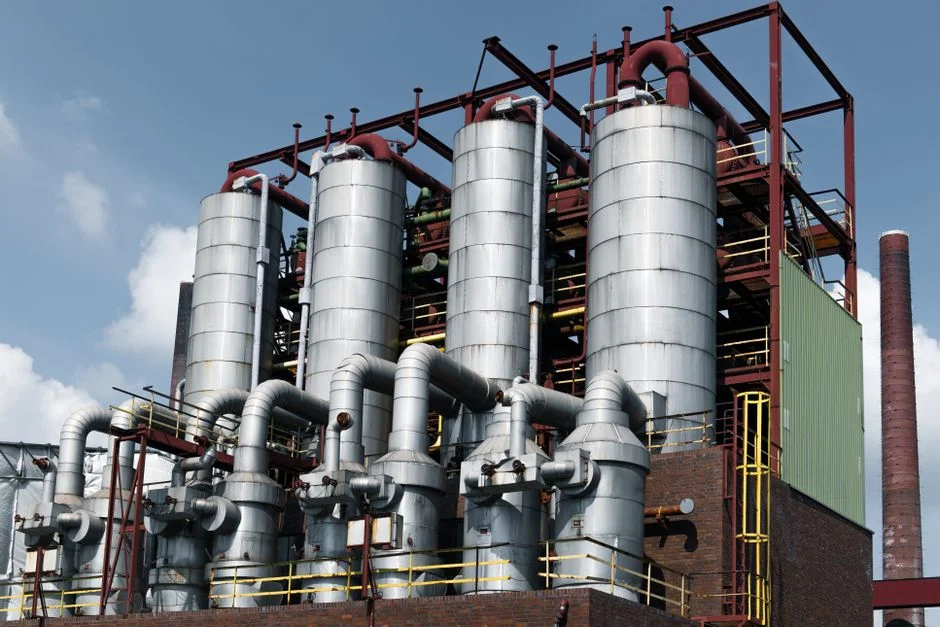
An MBR is only as good as the three unit processes upstream of it. A coarse screen or rotary mechanical bar screen for headworks protects pumps and the membrane cassette from debris. A DAF system for FOG and suspended solids removal then strips fats, oils, and floatable solids before they reach the membrane — the lamella-clarifier comparison (S5) explicitly recommends DAF upstream of MBR for food processing, citing fouling and irreversible flux loss as the consequences of any FOG breakthrough.
Equalization is non-negotiable in Bayou La Batre: an EQ basin sized for at least 24 hours of peak flow absorbs the 3–4× seasonal swing and lets the MBR run at constant loading, which is the single biggest lever for membrane life. The membrane stage itself uses submerged PVDF flat-sheet or hollow-fibre modules at ~0.1 μm nominal pore, housed in an air-scour tank; integrated MBR membrane bioreactor systems now ship in 10–2,000 m³/day packages, and PVDF flat sheet MBR membrane modules are the most common retrofit cassette for food plants. Effluent polishing with UF or RO is straightforward after MBR because TSS is already <1 mg/L — opening a clear path to process water reuse. The one operator-side risk: poor membrane management is the dominant cause of premature replacement inside the 7–12 year window (S5). Relaxation intervals, recovery cleans, and CIP chemistry have to be in the SOP, not in the operator's head.
For a closer look at the polishing-train choices once MBR effluent is in hand, the UF vs DAF as RO pretreatment for food and beverage process water guide covers the next decision downstream.
2026 Decision Framework: MBR, CAS, or Hybrid
The right answer for a 50–500 m³/day Mobile County plant fits on one page:
- Choose MBR when the plant has constrained land, targets water reuse (wash-down, boiler feed, or RO pretreatment), or runs a variable seasonal load that a clarifier cannot ride out. Containerized MBRs sized to shoulder-season loading (rather than peak) cut capex by 15–25% versus a basin built for peak — a common Bayou La Batre optimization.
- Stay with CAS when land is available, discharge is to POTW, and the operator base is comfortable with conventional activated sludge. Add a DAF if FOG swings are already triggering clarifier upsets, but do not pay for membranes you do not need.
- Choose hybrid (CAS + DAF + UF / MBR polishing) for large, stable plants that need to retrofit reuse without scrapping existing aeration tanks — common in legacy Mobile County processors that already run CAS well and want to add a reuse sidestream without a full rebuild.
For 50–500 m³/day coastal plants, an integrated or containerized MBR typically beats greenfield CAS on 10-year total cost of ownership once reuse credit is included (Karim & Mark, S3). The cost crossover is sensitive to Mobile County industrial electricity rates and to whether the MBR effluent displaces purchased municipal water for wash-down — both of which a 2026 spec should model explicitly.
What a 2026 OPEX Lens Looks Like for a 200 m³/day Coastal Plant
Translating the comparison into a number the procurement or general manager can use to defend the capex requires four line items.
- Energy delta: MBR is roughly 30–50% more kWh/m³ than CAS (S5). At 200 m³/day and a Mobile County industrial rate near $0.09/kWh, the energy delta alone runs in the $8,000–$15,000/year band.
- Membrane replacement reserve: amortize membrane cost over 10 years (midpoint of the 7–12 year service life per S5). This is the line item CAS does not carry and the one most often missing from optimistic MBR proposals.
- Sludge hauling savings: lower MBR yield partially offsets the energy and membrane lines (S3). For a 200 m³/day shrimp processor, hauling savings typically run $3,000–$6,000/year.
- Reuse credit: if MBR effluent feeds wash-down, boiler, or RO pretreatment, water purchase displacement typically closes the OPEX gap inside 5–7 years for plants in the 100–500 m³/day band.
For a fuller build-cost versus operating-cost view on this waste stream, the 2026 footprint guide for MBR vs CAS on high-BOD FOG wastewater works the same comparison from a different angle.
Frequently Asked Questions
Does an MBR really need a DAF upstream for shrimp and oyster processing wastewater?
Yes. The lamella-clarifier comparison (S5) explicitly recommends DAF before MBR for food and oily wastewater, citing irreversible flux loss and shortened membrane life when FOG reaches the cassette. For a Bayou La Batre processor running heading, peeling
Frequently Asked Questions
Is MBR or conventional activated sludge better for shrimp processing wastewater in Bayou La Batre?
MBR is generally superior for shrimp processing wastewater in coastal areas due to the high variability in organic loading and the stringent discharge limits required for sensitive marine environments like Bayou La Batre. While conventional activated sludge (CAS) systems often struggle with sludge bulking and solids carryover during high-season production peaks, MBR systems maintain a high mixed liquor suspended solids (MLSS) concentration of 8,000 to 12,000 mg/L, consistently producing high-quality effluent with turbidity below 0.2 NTU.
Do I need a DAF before an MBR for food and beverage wastewater?
Yes, a Dissolved Air Flotation (DAF) unit is strongly recommended as a pretreatment step for seafood processing wastewater. Given the high concentrations of fats, oils, and grease (FOG) typical of shrimp processing, a DAF is essential to reduce the organic load and prevent membrane fouling; failing to remove FOG can cause rapid pore blocking, leading to unsustainable trans-membrane pressure (TMP) increases and frequent chemical cleaning cycles.
How long do MBR membranes last in a seafood plant with high FOG?
With proper pretreatment and routine maintenance, MBR membranes in a seafood processing application typically have an operational lifespan of 5 to 8 years. High FOG environments accelerate fouling, which necessitates rigorous clean-in-place (CIP) protocols using sodium hypochlorite and citric acid; if pretreatment fails, membrane life can be reduced to under 3 years due to irreversible pore scaling and organic fouling.
Can an MBR handle brackish or salty wastewater from coastal plants?
MBR systems are highly effective for coastal applications, provided the biomass is acclimated to the specific salinity levels of the influent. While high salt concentrations can inhibit traditional nitrifying bacteria, specialized halotolerant microbial populations can be developed within the MBR to achieve biological nutrient removal, even at salinity levels reaching 10,000 to 15,000 mg/L of total dissolved solids (TDS).
Is MBR worth the higher cost for a small food and beverage plant in 2026?
For small plants, the higher capital and energy costs of MBR—typically 20% to 40% higher than CAS—are often offset by the significantly smaller footprint, which can be 50% to 70% less than conventional systems. In 2026, with tightening environmental regulations and increasing discharge fees, the MBR’s ability to produce high-quality effluent suitable for potential water reuse often provides a faster return on investment through reduced water sourcing costs and lower regulatory non-compliance risk.