Why Delta Junction Mining Trains Hit a Footprint Wall Before a Biology Wall
On a brownfield placer or polymetallic site in the Delta Junction / Interior Alaska corridor, the binding constraint on a tail water upgrade is almost never influent treatability — it is the square metres of civil footprint a 1990s-era aeration basin and one or two secondary clarifiers leave behind. Bund walls, cable trenches, and chemical dosing skids crowd the rectangle so that adding a second clarifier or a larger aeration tank is not a paper exercise but a poured-concrete problem with seasonal frost-depth implications. Industries consume roughly 22% of the global water supply and up to 60% in high-income economies, with mining among the heaviest per-tonne users (npj Clean Water, 2022; per S4 mining MBR field reference, 2026), which is why per-m³/day efficiency matters before biology does.
The feed envelope a Delta Junction engineer inherits is site-specific but follows a recognizable shape. Placer mills and copper or polymetallic concentrators see roughly 0.05–0.5% TDS (500–5,000 mg/L) in the summer freshet and concentrate through closed-loop reuse to higher values by late winter, while residual flotation reagents — potassium ethyl xanthate, dithiophosphate (DTP) collectors, and frothers — pass through with the tail water alongside dissolved Pb, Zn, Cu, and Cd at concentrations that vary with ore body and reagent scheme. The running example for the rest of this guide is a 1,000 m³/day flotation tail water or thickener overflow train; every footprint, MLSS, and CAPEX number below scales to that envelope. Conventional activated sludge (CAS) is the legacy biological step that relies on gravity settling in a secondary clarifier to separate biomass from treated water, while an integrated membrane bioreactor (MBR) replaces that clarifier with a submerged ultrafiltration membrane that retains all biomass inside the aeration basin (HydropureWater integrated MBR field data, 2026).
Conventional Activated Sludge: The Baseline Delta Junction Engineers Inherit
CAS is the technology most Delta Junction operators inherited with their 1990s civil works, and it remains a defensible baseline for a 1,000 m³/day train when the civil envelope is generous and the discharge target is not reuse. A well-tuned CAS operates at 2,000–4,000 mg/L mixed liquor suspended solids (MLSS) and a sludge retention time (SRT) of 5–10 days — long enough to nitrify but short enough that the slower-growing reagent degraders wash out before they can establish a steady population (HydropureWater mining MBR field reference, 2026). Effluent TSS lands at 5–15 mg/L even with polymer aid, which is workable for controlled discharge but expensive to feed directly to reverse osmosis.
On the chemistry that matters to a metallurgist, CAS at 5–10 day SRT leaves 2–4 day half-life residuals of potassium ethyl xanthate and DTP in the effluent because the slow-growing degraders cannot hold population under that washout rate. Heavy-metal removal in CAS depends on biosorption onto wasted activated sludge, which caps dissolved Pb, Zn, Cu, and Cd removal at 30–60%; chemical precipitation upstream can hit the metals target but generates 3–8 kg of dry hazardous solids per m³ treated and does not address the dissolved reagent load at all (HydropureWater mining MBR field reference, 2026). In Interior Alaska's -30 to -40 °C winter envelope, fine-bubble diffuser oxygen transfer efficiency drops and basin surface cooling shifts biology, reducing effective food-to-microorganism (F/M) ratio compared with a temperate reference site. CAS is still the right call in four specific scenarios: existing clarifier volume with 20+ years of remaining service life and no flow increase, influent TDS under 5,000 mg/L with no closed-loop reuse target, no downstream RO polishing, and an operator pool with no membrane clean-in-place (CIP) training (HydropureWater mining MBR field reference, 2026).
How an Integrated MBR Re-engineers the Same Train
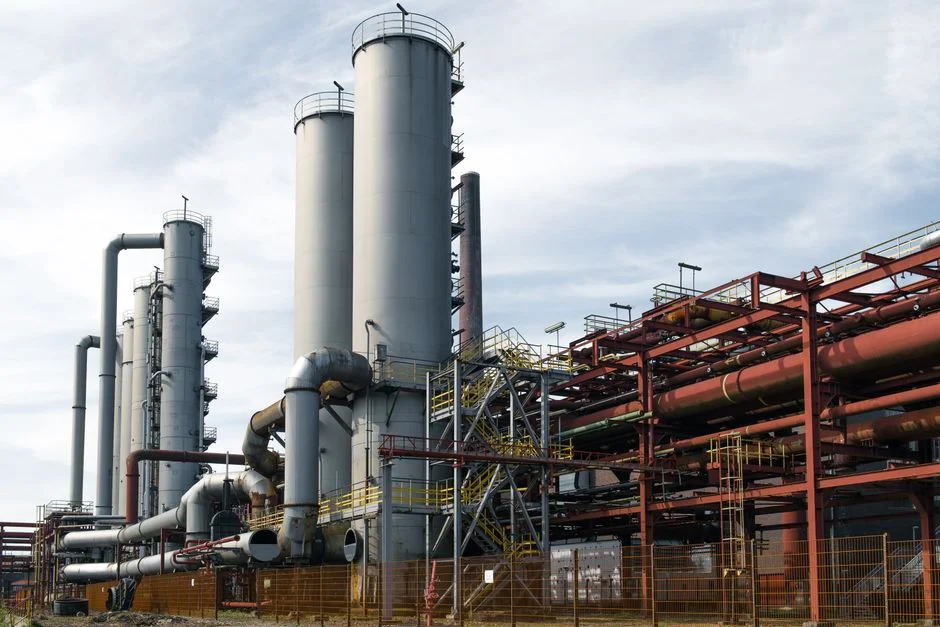
An integrated MBR wastewater treatment system re-engineers the same biological step by running 8,000–12,000 mg/L MLSS at 30+ day SRT, retaining all biomass inside the bioreactor via a submerged ultrafiltration membrane and eliminating the secondary clarifier entirely. The first engineering consequence is footprint: on a 1,000 m³/day train the integrated MBR occupies roughly 60% of the equivalent CAS footprint, with the savings coming from the absence of clarifiers and the reduced aeration basin volume at higher MLSS (HydropureWater integrated MBR field data, 2026).
Effluent quality follows the same logic — MBR permeate sits below 1 mg/L TSS because the 0.1 μm PVDF flat-sheet membrane is an absolute physical barrier, not a settleability-dependent separation. A DF series flat-sheet MBR membrane module at 32–135 m³/day per cassette is the default building block on mining duty because influent TSS of 500–5,000 mg/L is often abrasive; hollow-fiber only wins when feed is pre-filtered below 100 mg/L TSS (HydropureWater mining MBR field reference, 2026). On reagent and metal removal, the 30+ day SRT drives 85–95% removal of residual xanthate and DTP, taking potassium ethyl xanthate from 5–20 mg/L in the feed to below 1 mg/L in the permeate, while dissolved Pb, Zn, Cu, and Cd land at 70–95% removal at pH 6.5–7.5 via biosorption on the membrane cake layer plus bioaccumulation inside the cells. Supplemental methanol or waste-process glycerol pushes total N past 75% on mining feeds with an unfavourable C:N ratio. Aeration accounts for 36–68% of MBR OPEX, dominated by coarse-bubble scour across flat-sheet modules — 10–20× lower than the membrane-aeration energy of external cross-flow configurations (per the 2022-05 Global NEST pilot, DOI 10.30955/gnj.004278, cited in S4).
MBR vs CAS for the Delta Junction Train: A Head-to-Head Matrix
The matrix below is sized to the 1,000 m³/day tail water envelope so a process engineer can lift the membrane-area row linearly to a different design flow. The general MBR advantage on complex wastewaters is well documented in the 2022 MDPI review of MBRs for produced water treatment, but that review addresses oil & gas PW, not mining flotation tail water — the chemistry and CIP regime are different (MDPI Membranes, 2022-02; per S3).
| Parameter | Conventional Activated Sludge (CAS) | Integrated Membrane Bioreactor (MBR) | Delta Junction Overlay |
|---|---|---|---|
| MLSS (mg/L) | 2,000–4,000 | 8,000–12,000 | MBR's wider biology envelope absorbs winter MLSS loss |
| SRT (days) | 5–10 | 30+ | MBR 30+ day buffer tolerates -30 to -40 °C surface cooling |
| Effluent TSS (mg/L) | 5–15 (with polymer aid) | <1 (absolute physical barrier) | MBR permeate feeds BWRO directly; CAS needs media filter |
| Heavy-metal removal (Pb, Zn, Cu, Cd) | 30–60% (biosorption onto WAS) | 70–95% (biosorption + bioaccumulation) | MBR holds removal at higher winter TDS |
| Residual xanthate / DTP removal | 2–4 day half-life residuals (washout) | 85–95% (30+ day SRT) | MBR meets reuse targets for grinding dilution water |
| Total N removal (with supplemental C) | 40–60% | >75% (with methanol or glycerol) | Supplemental C must be winter-stored in Interior Alaska |
| Footprint vs CAS at 1,000 m³/day | 1.0× (baseline) | ~0.6× | MBR fits inside brownfield bund walls |
| Membrane area per 1,000 m³/day | — | 1,800–3,200 m² (DF series cassettes) | Cassettes sized 32–135 m³/day each |
| Installed CAPEX 2026 (USD per m³/day) | USD 550–1,700 (with tertiary filter) | USD 800–2,500 | CAS gap narrows once DAF, media filter, and RO are added |
| Aeration share of OPEX | 30–50% | 36–68% (per 2022 Global NEST pilot) | Higher in MBR; coarse-bubble scour dominates |
The Sub-arctic Overlay: Temperature, TDS Swing, and Permitting in Delta Junction
No top-ranking MBR-vs-CAS article for mining wastewater addresses Interior Alaska's sub-arctic envelope, and that gap is the single largest reason a Delta Junction engineer has to re-derive the comparison rather than lift it. Winter ambient air in the Delta Junction corridor reaches -30 to -40 °C, and the standard mitigations on biological trains are basin covers, fine-bubble diffuser redundancy, and indoor MBR skids that keep mixed-liquor temperature inside a range the biomass can still metabolize. The MBR's 30+ day SRT is more forgiving than CAS at 5–10 day SRT because the longer retention buffers a slower cold-season reaction rate, but the CIP frequency on the membrane still tightens because of higher winter viscosity and lower mixed-liquor temperature.
Seasonal TDS swing matters as much as temperature. Placer mills see 0.05–0.5% TDS in summer freshet and concentrate through closed-loop reuse to higher values by late winter, which favours the MBR's wider biology envelope and dictates that any RO polishing be sized as a brackish-water unit (5,000–20,000 mg/L feed, 70–85% recovery) rather than a seawater unit. On the permitting side, the train touches three Alaska Department of Environmental Conservation (ADEC) instruments: 18 AAC 72 mixing-zone and effluent limits for discharges to the Tanana River drainage, the Multi-Sector General Permit AKG570000 for metal mining, and an NPDES antidegradation review for any reuse flow that returns to surface water. The dissolved air flotation unit upstream of the biological step removes 60–80% of influent oil and 30–50% of TSS, which extends MBR cleaning intervals and cuts CIP chemical use 50–70% (HydropureWater mining MBR field reference, 2026). Cold-climate CIP is supplied by an automatic chemical dosing skid sized for heated chemical storage. For zero-liquid-discharge finishing, RO concentrate at 30,000–60,000 mg/L TDS feeds an evaporator or crystallizer, and this final stage is technology-agnostic between MBR and CAS — do not mis-attribute ZLD CAPEX to the biology choice.
2026 CAPEX, Footprint, and the Five-Step Monday-Morning Selection Checklist
An integrated MBR sized for 500–10,000 m³/day of flotation tail water or thickener overflow runs USD 800–2,500 per m³/day of installed capacity in 2026, with the wide range driven by influent variability, seismic class, automation scope, and containerized versus skid build (HydropureWater mining MBR field reference, 2026). A CAS upgrade on the same throughput typically runs 30–50% lower on membrane-free CAPEX, but adding clarifier civil works, polymer dosing skids, and a tertiary media filter ahead of any RO closes roughly half of that gap. The table below is the procurement-ready view; the industrial RO system row is brackish-water sized (5,000–20,000 mg/L feed, 70–85% recovery) because Delta Junction winter TDS does not reach seawater strength.
| Train Stage | 2026 Installed CAPEX (USD per m³/day) | Footprint Note at 1,000 m³/day |
|---|---|---|
| MBR integrated (biology + membrane) | USD 800–2,500 | ~0.6× of equivalent CAS train |
| CAS upgrade (selector, diffusers, polymer) | 30–50% lower membrane-free | 1.0× baseline; plus media filter if RO downstream |
| DAF pre-treatment (4–300 m³/h) | Add to upstream of either train | Removes 60–80% oil, 30–50% TSS |
| Brackish-water RO polishing | Add downstream of either biology | CAS needs media filter first; MBR permeate feeds RO directly |
The five-step selection checklist for a Monday-morning review:
- Confirm the brownfield civil envelope and remaining clarifier service life before sizing any new basin.
- Confirm the influent TDS envelope and the seasonal summer-to-winter swing before choosing a biology or an RO.
- Confirm whether the downstream step is an industrial RO system for reuse, a controlled discharge, or a ZLD finishing train.
- Confirm operator CIP training depth, because aeration share of OPEX at 36–68% (per the 2022 Global NEST pilot) is dwarfed by unplanned membrane-replacement cost when CIP discipline is poor.
- Confirm 2026 CAPEX per m³/day including DAF, biology, and RO polishing rather than biology alone.
CAS still wins where existing clarifier volume has 20+ years of service life, influent TDS stays under 5,000 mg/L, there is no downstream RO polishing, and the operator pool has no membrane-CIP training (HydropureWater mining MBR field reference, 2026). The earlier MBR vs SBR engineering comparison and the broader MBR engineering guide with costs and ROI are the supporting reads for a 2026 design basis memo, and the diffused aeration vs surface aeration comparison is the right reference when the aeration energy line item is being defended.
Frequently Asked Questions
What footprint savings does an integrated MBR deliver versus CAS at 1,000 m³/day in Delta Junction?
On a 1,000 m³/day tail water train, an integrated MBR occupies roughly 60% of the equivalent CAS footprint because 8,000–12,000 mg/L MLSS eliminates the secondary clarifier and shrinks the aeration basin volume (HydropureWater integrated MBR field data, 2026).
How does the MBR perform on residual xanthate and DTP at sub-arctic temperatures?
A properly sized MBR at 30+ day SRT removes 85–95% of residual xanthate and DTP, taking potassium ethyl xanthate from 5–20 mg/L in the feed to below 1 mg/L in the permeate; the 30+ day SRT buffer is more forgiving than CAS at 5–10 day SRT under -30 to -40 °C ambient air (HydropureWater mining MBR field reference, 2026).
What is the 2026 installed CAPEX for an integrated MBR on a Delta Junction mining train?
Integrated MBR installed CAPEX in 2026 runs USD 800–2,500 per m³/day for 500–10,000 m³/day mining duty; a CAS upgrade is typically 30–50% lower on membrane-free CAPEX, but once DAF, tertiary media filter, and RO polishing are priced in, roughly half of that gap closes (HydropureWater mining MBR field reference, 2026).
What CIP regime applies to flat-sheet PVDF MBRs in Interior Alaska?
Flat-sheet PVDF MBRs handle 500–5,000 mg/L TSS at flux 15–25 L/m²·h with monthly CIP cycles on standard sites; in Delta Junction the interval typically shortens in winter because of higher mixed-liquor viscosity and lower temperature, and chemistry is supplied via a heated automatic chemical dosing skid (HydropureWater mining MBR field reference, 2026).