MBR Wastewater Treatment System Cost Mozambique
The MBR wastewater treatment system cost Mozambique buyers should carry is $1,200–$2,500/m³/day in CAPEX and $0.20–$0.40/m³ in OPEX. A 0.1 μm membrane reaches 92–97% COD removal and 99.9% pathogen reduction. Footprint is 60% smaller than a clarifier train. Most plants we size for Maputo reuse sit at the lower end of that CAPEX band.
Water Law 16/91 is still the parent statute. Earlier design notes set effluent BOD < 30 mg/L and TSS < 30 mg/L. Decree 52/2023, published on 30 August 2023, now fixes the numeric discharge table under that law.
Payback comes from reuse, not from a cheaper power bill. Textile and food sites that stop buying the same cubic metres see the return. The sections below split process, compliance, and the CAPEX and OPEX build-up.
mbr effluent reuse maputo water scarcity
MBR effluent reuse under Maputo water scarcity starts from a hard supply gap: the World Bank (2025) classes the Maputo and Limpopo basins as water-stressed, below 1,700 m³ per person per year. Earlier project notes cited 40% of urban areas, including Maputo and Beira, in critical scarcity (World Bank, 2023). The 2025 diagnostic does not repeat that 40% share.
According to the World Bank Water Security Diagnostic (2025), Mozambique faces economic water scarcity even though natural runoff is large. Safe-water access is 66.6% nationally and sanitation access is 38.5%. Flood and drought losses are put at 6.7% of GDP a year, and 58% of the population is at risk.
The same diagnostic puts the funding need to hit 2030 water targets at US$14.3 billion. It estimates that US$1 million in urban water infrastructure returns US$1.2 million on a discounted basis. Every US$1 spent on water supply and sewerage is tied to US$0.82 of value added.
Poor sanitation is costed at about US$125 million per year, of which US$75 million is urban. Maputo province is named with Gaza and Inhambane among the most drought-exposed provinces. A municipal plant path is set out in Municipal Sewage Treatment Plants in Mozambique: 2026 Engine.
Mean surface air temperature rose 0.14°C per decade from 1951 to 2020, according to that diagnostic. Local design notes still use 25–35°C as the operating air band, plus seasonal flooding. Most plants we size for Maputo keep the bioreactor above the known flood line and the screen accessible in the wet season.
mbr system for textile wastewater mozambique
An MBR system for textile wastewater in Mozambique can cut fresh-water use by 40% when the filtrate returns to non-contact cooling and general washing. A Maputo textile factory did that on colored, organic-rich effluent (HydropureWater field data, 2025). The membrane, not a clarifier, is what made the water fit to send back to the mill.
Screening at 1–3 mm, then grit and oil removal where the waste needs it, comes before the biology. Dye and loose fiber will blind a 0.1 μm sheet, and particle removal is quoted down to <1 μm only if those solids never reach the tank. Where oil drives the load, compare DAF vs. sedimentation before you lock pretreatment.
Food plants carry a different organic load, including fats, oils, and grease. The organic discharge rules for that duty are set out under mozambique environmental quality standards water effluent organic pollution bod cod. Do not copy a textile flux onto a cannery or a slaughter line without a new pilot.
Textiles, food processing, and mining, including Mozal and the Maputo Port industrial zone, are the demand centers named in the source notes. A textile MBR is the pick when color and reuse matter more than the lowest kilowatt-hour. A conventional plant often needs a large tertiary stage before the same filtrate is usable.
How MBR Systems Work: Process Flow and Technical Specifications
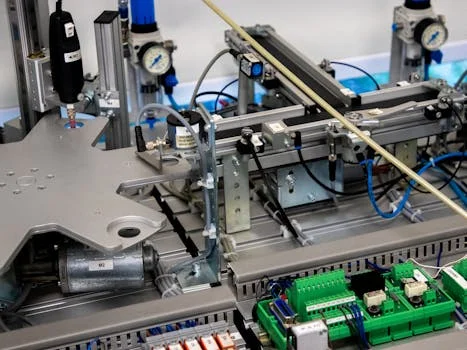
An MBR treats wastewater in Mozambique by holding MLSS at 6,000–12,000 mg/L and filtering mixed liquor through a submerged PVDF membrane with a nominal pore of 0.1 μm. Conventional activated sludge usually runs at 2,000–4,000 mg/L and then relies on a clarifier. The higher MLSS is why the tank volume can drop.
Flow order is screening at 1–3 mm, a grit chamber, oil removal if the waste carries it, an anoxic tank for denitrification, then an aerobic tank. Mixed liquor is drawn through the membrane. That step replaces the secondary clarifier and the tertiary filter. UV or chlorine still follows when reuse is direct, because a 99.9% pathogen cut is a barrier, not a residual disinfectant.
SRT is typically 15–30 days, which keeps slow-growing organisms and cuts sludge mass. HRT is generally 4–10 hours and follows the influent. The F/M ratio is held at 0.05–0.2 kg BOD/kg MLSS·day. Most plants we size for steady Maputo loads sit inside that 4–10 hour HRT band, toward the longer end when COD spikes.
Energy is typically 0.4–0.8 kWh/m³, against 0.2–0.4 kWh/m³ for a conventional plant that excludes tertiary power. Aeration for biology and membrane scour is 60–70% of MBR energy. PVDF life is 5–10 years. Chemical cleaning with sodium hypochlorite or citric acid runs every 3–6 months.
High air temperature and seasonal floods upset a clarifier more than they upset a sheet. The biology stays in a mixed tank at a set SRT, and separation does not depend on sludge settleability. Most wet-season failures we see start at a blocked 1–3 mm screen, not inside a cleaned membrane tank.
The packaged train usually specified for this duty is the MBR Membrane Bioreactor Wastewater Treatment System. Effluent TSS from an intact sheet is <1 mg/L. That is the number to write into the reuse specification, not a qualitative claim.
- MLSS (Mixed Liquor Suspended Solids): 6,000–12,000 mg/L, enabling smaller reactor volumes.
- SRT (Sludge Retention Time): Typically 15–30 days, promoting the growth of slow-growing microorganisms and reducing sludge production.
- HRT (Hydraulic Retention Time): Generally 4–10 hours, depending on influent characteristics.
- F/M Ratio (Food-to-Microorganism Ratio): Maintained at 0.05–0.2 kg BOD/kg MLSS·day for optimal biological activity.
| Parameter | Typical MBR Range | Conventional Activated Sludge | Benefit of MBR |
|---|---|---|---|
| MLSS Concentration | 6,000–12,000 mg/L | 2,000–4,000 mg/L | Smaller bioreactor footprint, higher treatment efficiency |
| Membrane Pore Size | 0.05–0.4 μm (typically 0.1 μm) | N/A (relies on sedimentation) | Superior solid-liquid separation, pathogen barrier |
| Effluent TSS | <1 mg/L | 10–30 mg/L | High-quality effluent, suitable for reuse |
| Energy Consumption (Aeration & Membranes) | 0.4–0.8 kWh/m³ | 0.2–0.4 kWh/m³ (excluding tertiary) | Higher, but offset by water reuse & footprint savings |
| Membrane Lifespan (PVDF) | 5–10 years | N/A | Durable, but requires periodic replacement |
mbr vs conventional activated sludge mozambique
An MBR versus conventional activated sludge in Mozambique produces BOD < 5 mg/L and TSS < 1 mg/L, against 20–30 mg/L for a clarifier plant. Pathogen removal across the sheet is over 99.9%. That filtrate is often fit for non-potable reuse without a large extra filter.
Footprint is up to 60% less than conventional activated sludge with secondary clarifiers. An MBBR is often 30–50% less than conventional, and its effluent is often 10–20 mg/L BOD and 10–20 mg/L TSS unless a filter follows. Land-tight plots in Maputo and Beira are where the 60% figure earns its keep.
Energy is 0.4–0.8 kWh/m³ for MBR, 0.2–0.4 kWh/m³ for a clarifier, and 0.3–0.6 kWh/m³ for MBBR. OPEX in the local notes is $0.20–$0.40/m³, $0.15–$0.25/m³, and $0.18–$0.30/m³ in that same order. CAPEX follows at $1,200–$2,500/m³/day, $800–$1,500/m³/day, and $1,000–$1,800/m³/day.
At 25–35°C, clarifiers in this climate often bulk and settle poorly. The membrane does not depend on that settleability. For the front end, the usual comparison is DAF versus sedimentation. Most hot-season plants we review fail at the clarifier blanket, not in the aerobic tank.
An MBR holds a high biomass and takes complex organics that a short MBBR contact often leaves in the effluent. MBBR can still be the compact biological step when a filter will polish TSS. It is the wrong last step when the spec is TSS < 1 mg/L.
Textile, food, and pharmaceutical waste is where the gap shows in Mozambique. Color, oil, and a swinging COD load upset a clarifier blanket. MLSS at 6,000–12,000 mg/L absorbs that swing if grit and free oil were removed first. Most comparisons we run on energy alone pick the clarifier, then miss the reuse spec.
| Feature | MBR System | Conventional Clarifier | MBBR System |
|---|---|---|---|
| Effluent Quality (BOD/TSS) | <5 mg/L BOD, <1 mg/L TSS | 20–30 mg/L BOD, 20–30 mg/L TSS | 10–20 mg/L BOD, 10–20 mg/L TSS (often needs post-filtration) |
| Footprint Reduction | 60% less than conventional | Large footprint required | 30–50% less than conventional |
| Energy Use (approx.) | 0.4–0.8 kWh/m³ | 0.2–0.4 kWh/m³ | 0.3–0.6 kWh/m³ |
| OPEX (approx. in Mozambique) | $0.20–$0.40/m³ (higher energy, lower sludge disposal) | $0.15–$0.25/m³ (lower energy, higher sludge/tertiary) | $0.18–$0.30/m³ (moderate energy) |
| CAPEX (approx. in Mozambique) | $1,200–$2,500/m³/day | $800–$1,500/m³/day | $1,000–$1,800/m³/day |
| Suitability for Mozambique | Excellent (water reuse, compact, climate resilient) | Moderate (large footprint, climate sensitive, lower reuse potential) | Good (compact, but effluent quality may need polishing for reuse) |
mbr membrane bioreactor mozambique compliance
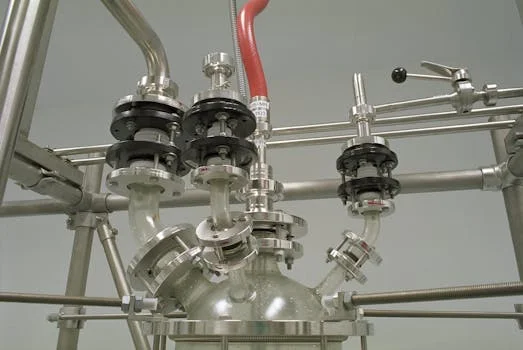
An MBR membrane bioreactor in Mozambique meets Decree 52/2023 on the organic and solids lines: Annex II sets DBO5 at 30 mg/L, SST at 50 mg/L, and DQO at 150 mg/L. Typical MBR filtrate at BOD < 5 mg/L and TSS < 1 mg/L clears both the older TSS note of 30 mg/L and the 2023 SST cap of 50 mg/L. The membrane does not, by itself, clear every row in that annex.
Earlier guidance treated Water Law 16/91 as if the statute itself fixed BOD < 30 mg/L, TSS < 30 mg/L, and fecal coliforms < 1,000 CFU/100 mL. According to the Boletim da República of 30 August 2023, Decree 52/2023 was made under articles 54 and 75 of Law 16/91 and took effect 120 days after publication. Annex II keeps DBO5 at 30 mg/L and pH at 6–9, which matches the older 6.0–9.0 band, but SST is 50 mg/L rather than 30 mg/L.
Annex II also sets oil and grease at 10 mg/L, a temperature rise of +3 °C, and coliforms at 400 moléculas/100 mL. Keep the older fecal figure of < 1,000 CFU/100 mL as background only. The admissible coliform number printed in the 2023 table is 400 per 100 mL.
At 92% COD removal, influent COD must be under about 1,875 mg/L to finish below the 150 mg/L DQO cap. At 97% removal that ceiling is about 5,000 mg/L. Measure the real influent before you lock that cap. Most plants we size ask for that COD grab on the actual waste, not a textbook mill profile.
WHO drinking-water guidance (4th edition) is a general reference, not the discharge permit. The WHO 2006 reuse guidelines are the ones cited for restricted irrigation, at BOD < 10 mg/L, TSS < 10 mg/L, and fecal coliforms < 1,000 CFU/100 mL in the table below. Unrestricted irrigation in that table is shown at turbidity < 2 NTU. Typical MBR filtrate in the same table is BOD < 5 mg/L, TSS < 1 mg/L, fecal coliforms < 1 CFU/100 mL after disinfection, pH 6.5–8.0, and turbidity < 0.5 NTU.
Municipal limits in Maputo and Beira can be tighter on metals and still expect pH between 6 and 9. The World Bank diagnostic (2025) notes a 2024 Water and Sanitation Services Law now being implemented, and it places urban sanitation with elected municipalities. That reform does not replace Annex II. A discharge that differs from Annex II still needs authorization from ARA, IP, plus an opinion from the environmental authority.
The permit file needs identity, a PGA, and an environmental license for sites of at least 100 ha or for activities that pollute by their nature, plus the outfall and the plant. Artigo 6 says the dispatch is due in 15 business days. Southern Mozambique files with ARA-Sul, and the Beira region files with ARA-Centro.
A Beira food plant met ARA-Centro on BOD, TSS, and fats, oils, and grease. MBR effluent there stayed below 5 mg/L BOD and below 1 mg/L TSS. The permit came through on a 9-month timeline (HydropureWater project data, 2024). Most conventional files we have seen slip when the clarifier result will not hold still long enough to sign.
Free ammonia in Annex II is 0.1 mg/L as NH4+, with azoto (NH4) at 10 mg/L and urea ammonia at 0.6 mg/L. A membrane does not strip dissolved ammonia. Most plants we size for a nitrogen cap add the anoxic zone and prove the 0.1 mg/L figure in the pilot. Metals and toxics in the same annex need their own pretreatment.
- Submission of an environmental impact assessment (EIA) or simplified environmental study.
- Detailed engineering designs of the proposed treatment facility.
- Analysis of influent and projected effluent quality.
- Application form and payment of associated fees.
- Regular monitoring and reporting of effluent quality post-commissioning.
| Parameter | Mozambican Water Law 16/91 (Discharge Limit) | WHO Guidelines (Non-Potable Reuse Example: Irrigation) | Typical MBR Effluent Quality |
|---|---|---|---|
| BOD5 | <30 mg/L | <10 mg/L (for restricted irrigation) | <5 mg/L |
| TSS | <30 mg/L | <10 mg/L (for restricted irrigation) | <1 mg/L |
| Fecal Coliforms | <1,000 CFU/100 mL | <1,000 CFU/100 mL (for restricted irrigation) | <1 CFU/100 mL (after disinfection) |
| pH | 6.0–9.0 | 6.0–9.0 | 6.5–8.0 |
| Turbidity | N/A (implied by TSS) | <2 NTU (for unrestricted irrigation) | <0.5 NTU |
industrial mbr system capex opex mozambique
Industrial MBR system CAPEX and OPEX in Mozambique run $1,200–$2,500/m³/day and $0.20–$0.40/m³, above a conventional plant at $800–$1,500/m³/day and $0.15–$0.25/m³. The premium is membranes and controls. Civil works often fall because the plot is smaller, which gives part of that premium back.
Use the MBR wastewater treatment system cost Mozambique band of $1,200–$2,500/m³/day only after you separate membrane supply from civil works. A quote that mixes both into one lump hides the lever you can actually negotiate. Most budgets we open are high on sheet area and low on concrete, or the reverse.
OPEX averages $0.20–$0.40/m³ of treated wastewater. The local split is energy $0.10–$0.20/m³, membrane replacement $0.05–$0.10/m³, labor and maintenance $0.05–$0.10/m³, and chemicals $0.02–$0.05/m³. Conventional OPEX in the same notes is $0.15–$0.25/m³, with energy $0.07–$0.12/m³, labor $0.05–$0.10/m³, and chemicals $0.01–$0.03/m³.
- Energy: $0.10–$0.20/m³, mainly aeration blowers and membrane scour. Earlier notes used $0.12–$0.18 USD/kWh for industrial consumers. Solar-assisted runs are described as cutting energy cost by 30–40% where the array is actually built.
- Membrane replacement: $0.05–$0.10/m³. PVDF sheet in these notes is about $50–$100/m² on a 5–10 year life. Influent quality, pretreatment, and the 3–6 month clean decide which end of that life you get.
- Labor and maintenance: $0.05–$0.10/m³. Automation cuts routine rounds, but membrane work needs a trained operator, not a general fitter.
- Chemicals: $0.02–$0.05/m³, mainly cleaning and disinfection.
ARENE’s bulletin for the fourth quarter of 2025, issued in February 2026, records no tariff change in that quarter. Medium voltage is 5.28 MZN/kWh, high voltage is 5.19 MZN/kWh, and large low-voltage users (GCBT) are at 6.35 MZN/kWh (ARENE and EDM). Convert those metical prices on the invoice date before you freeze the $0.10–$0.20/m³ energy line. Most plants we cost in Maputo still show scour and process air as the dominant kilowatt-hour, so a VFD on the blower moves OPEX more than a slogan about solar.
A worked textile case uses 500 m³/day, CAPEX of $1.5M, and OPEX of $0.30/m³. If reused water offsets purchases at $0.50/m³ (HydropureWater analysis, 2025), the note shows a 3.5-year payback before discharge-fee effects. Treat that payback as valid only while the $0.50/m³ purchase price is real.
Annex II also prints a discharge fee, including 0.7 MT/L per parameter per discharge period for industrial parameters other than toxics and metals. Metal parameters are listed at 3.75 MT/L and toxic parameters at 4.31 MT/L on that same unit. Confirm the assessment base with ARA, IP before you add the fee to OPEX, because a literal per-litre reading would swamp the $0.20–$0.40/m³ band. A site that meets the standards for 12 consecutive months draws a 25% discount, and small polluters may see 50% off in the first 3 years.
The World Bank and the African Development Bank are the financiers named in the source notes for water and reuse projects. The 2025 diagnostic adds that national water targets need US$14.3 billion by 2030, so concessional money is a procurement path, not a footnote. For a neighboring benchmark, review wastewater treatment plant costs in Durban next to these Mozambican bands.
| Cost Category | MBR System (Typical Range in Mozambique) | Conventional System (Typical Range in Mozambique) | Notes |
|---|---|---|---|
| CAPEX ($/m³/day) | $1,200–$2,500 | $800–$1,500 | Higher for MBR due to membranes & controls; lower civil works for MBR |
| OPEX ($/m³) | $0.20–$0.40 | $0.15–$0.25 | MBR has higher energy & membrane replacement; conventional has higher sludge disposal & tertiary treatment |
| Energy ($/m³) | $0.10–$0.20 | $0.07–$0.12 | Influenced by Mozambique's tariffs ($0.12–$0.18 USD/kWh) |
| Membrane Replacement ($/m³) | $0.05–$0.10 | N/A | PVDF membranes ($50–$100/m², 5–10 year lifespan) |
| Labor ($/m³) | $0.05–$0.10 | $0.05–$0.10 | Similar, but MBR requires more specialized skills |
| Chemicals ($/m³) | $0.02–$0.05 | $0.01–$0.03 | For membrane cleaning and disinfection |
Choosing an MBR System for Mozambique: Decision Framework for Engineers and Procurement Managers
Choosing an MBR for Mozambique starts with flow, influent COD, and whether the effluent must meet Decree 52/2023 or a reuse spec tighter than that. Write average and peak flow in m³/day first. Then BOD, COD, TSS, nutrients, metals, and pH. Site power, flood level, and footprint close the brief.
- Define the duty. Average and peak flow in m³/day, influent BOD, COD, TSS, nutrients, and specific pollutants, effluent limits under Decree 52/2023 and any WHO reuse goal, plus power and access.
- Pick the sheet. Flat-sheet PVDF is more robust and easier to clean on high-solids waste. Hollow fiber packs more area and fouls faster on fiber and hair. Pore size is typically 0.1 μm, inside 0.05–0.4 μm.
- Price the kilowatt-hours. Low transmembrane pressure, VFDs on blowers and pumps, and fine-bubble diffusers. Aeration is 60–70% of the 0.4–0.8 kWh/m³.
- Compare offers on lifecycle cost. Membrane life warranty, performance warranty, spare parts in Mozambique, operator training, and an integrated dosing skid. Ignore a low CAPEX that is silent on the 5–10 year sheet replacement.
- Run a 3–6 month pilot on variable industrial waste. Match full-scale steps and the membrane type. Record flux, cleaning interval, and effluent against Annex II under local 25–35°C conditions.
Flat-sheet PVDF is the default we use when solids and hair are high. Hollow fiber wins only when the tank must be very small and pretreatment is already strict. Specify the pore at 0.1 μm unless a tested sheet in the 0.05–0.4 μm band has a better clean record. Module options are covered by Learn about HydropureWater’s PVDF flat-sheet membrane modules.
Chemical cleaning needs a dosed hypochlorite and citric line, not a bucket brigade. The matching skid is Discover HydropureWater’s chemical dosing systems for MBR pretreatment. Put VFDs on the aeration blowers before you add solar. Most plants we commission keep one spare cassette and a three-month chemical stock, because import delay is the usual failure, not the biology.
What drives the cost on a Mozambique MBR?
- Membrane area at $50–$100/m² and a 5–10 year replacement inside the $0.05–$0.10/m³ line.
- Power at 0.4–0.8 kWh/m³, priced from the current ARENE metical tariff, not from an old dollar guess alone.
- Civil works, which fall when the footprint is up to 60% less than a clarifier plant.
- Sludge mass, which drops when SRT is 15–30 days.
- Chemicals at $0.02–$0.05/m³ for cleaning and disinfection.
- Reuse credit, tested in the notes at $0.50/m³ of avoided fresh water.
- Freight, spares, and whether a technician can reach Maputo or Beira inside a few days.
| Decision Criteria | Key Considerations for Mozambique | Evaluation Metrics |
|---|---|---|
| Influent Characteristics | High organic load, specific industrial pollutants (e.g., dyes, heavy metals) | BOD/COD variability, TSS, oil & grease, pH, specific toxins |
| Effluent Requirements | Water Law 16/91 compliance, WHO reuse guidelines, local municipal limits | BOD, TSS, Fecal Coliforms, Turbidity, Nutrient removal targets |
| Membrane Technology | Flat-sheet (robust, easier cleaning) vs. Hollow-fiber (compact) | Fouling resistance, cleaning efficiency, lifespan, ease of replacement |
| Energy Efficiency | High electricity costs in Mozambique, potential for solar integration | Specific energy consumption (kWh/m³), VFDs, blower efficiency |
| Vendor Support | Local presence, technical expertise, spare parts availability | Service response time, training programs, warranty terms, compliance certifications |
| Site Constraints | Limited land availability in urban/industrial zones | Footprint (m²/m³/day), modularity, ease of expansion |
Who Should Specify an MBR in Mozambique
An MBR fits a Mozambique site that is short of land, must reuse water, or cannot hold solids with a clarifier alone. Textile mills and food plants in Maputo and Beira are the usual fit when a 40% cut in fresh water pays for the sheet. A municipal tank with no room for a new clarifier is the other fit.
Look elsewhere if the only limit is DBO5 at 30 mg/L and land is cheap. A conventional plant at $800–$1,500/m³/day can be the lower CAPEX. Look elsewhere if the goal is drinking water. The sheet is not a potable process.
Also look elsewhere if the site cannot support 0.4–0.8 kWh/m³ and has no VFD or a real solar plan. The 30–40% energy cut from solar exists only where the array is built and maintained. A reuse claim without a named user for the filtrate will not deliver the 3.5-year payback in the textile note.
Send average flow in m³/day, influent COD, oil and grease, and the reuse or discharge target with your request a quote. Size the duty before tender, with the pollutant parameters attached. Include the Annex II lines you must hit, because a 10 mg/L oil cap changes the front end.
Frequently Asked Questions
What is the typical lifespan of MBR membranes in Mozambique's climate?
PVDF membranes on an MBR in Mozambique typically last 5–10 years when chemical cleaning runs every 3–6 months. Air at 25–35°C speeds biological fouling if scour air is short, so sodium hypochlorite and citric acid stay on the routine. Textile dye and oil push life toward 5 years if flux is held high. Most plants we size for Maputo keep flux at the low end of the supplier curve so the $50–$100/m² replacement stays inside the $0.05–$0.10/m³ allowance.
How do MBR system costs in Mozambique compare to other African regions?
MBR CAPEX and OPEX in Mozambique sit in the same band as other Southern African industrial plants, at $1,200–$2,500/m³/day and $0.20–$0.40/m³. Labor, import freight, and the power price move the total more than the membrane brand. ARENE’s Q4 2025 bulletin lists medium voltage at 5.28 MZN/kWh and high voltage at 5.19 MZN/kWh, unchanged that quarter. Earlier notes used $0.12–$0.18 USD/kWh, and the spread matches other industrial wastewater treatment solutions in Southern Africa once freight is added.
Does Mozambique have sufficient infrastructure for MBR system support and maintenance?
Specialist MBR support in Mozambique is still thin, so the vendor’s local spare-parts plan matters more than the nameplate. ARA, IP inspects discharge, but it does not stock membranes or train your operators. A practical spec asks for a Maputo or Beira technician visit within days, a chemical-clean kit on site, and operator training before handover. Most plants we commission keep one spare cassette and a three-month chemical stock because import delays are common.
Can MBR treated water be used for drinking water in Mozambique?
MBR effluent in Mozambique is not drinking water on its own. The membrane cuts TSS below 1 mg/L and, after disinfection, fecal coliforms below 1 CFU/100 mL, which suits non-potable reuse. Potable reuse still needs reverse osmosis or an equivalent barrier, plus sign-off against WHO drinking-water guidance and the local health authority. Decree 52/2023 governs discharge to water bodies, not a tap standard, and most Maputo plants we see stop at cooling, washing, or irrigation.
What specific permits are needed for MBR wastewater discharge in Mozambique?
An MBR discharge in Mozambique needs an effluent-discharge authorization from the Regional Water Administration, ARA, IP, for that river basin. Southern plants file with ARA-Sul and Beira-area plants with ARA-Centro. Decree 52/2023, made under Law 16/91, requires the file to show identity, the outfall, the treatment plant, and an environmental license where the activity pollutes or the site is at least 100 ha. Artigo 6 gives 15 business days for the dispatch.