The Scott City Constraint: Brownfield Civil, Brackish TDS, and Closed-Loop Reuse
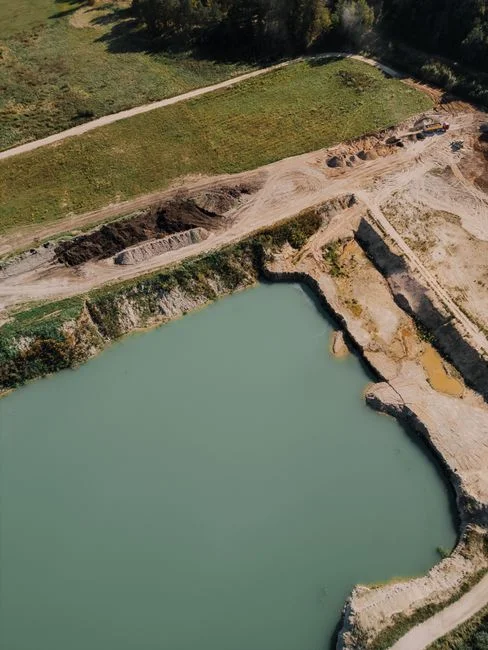
Western Kansas mining and aggregate sites draw makeup water from the High Plains aquifer, where total dissolved solids (TDS) routinely sits between 0.5% and 5% (5,000–50,000 mg/L) on arid concentrators that already recycle process water and pull brackish makeup. That is the operating envelope any 2026 upgrade has to survive (HydropureWater mining MBR field reference, 2026). On a brownfield site, the binding constraint is almost never cubic metres per day of treatable flow — it is the square metres of civil footprint an older conventional activated sludge (CAS) plant leaves behind. A typical retrofit inherits a fixed aeration basin and one or two secondary clarifiers from the 1990s or early 2000s, and the surrounding bund walls, cable trenches, and chemical dosing skids leave no room to add a second clarifier or a larger aeration tank. Engineers who arrive at this constraint with a 500–10,000 m³/day flotation tail water reuse target quickly learn that the real question is not whether the biology can cope, but whether a new technology fits inside the rectangle drawn by the existing civil.
Winter air temperatures in Scott City drop below 0°C for extended periods, and any MBR biology on that duty has to be either enclosed, buried, or otherwise insulated to keep mixed liquor suspended solids (MLSS)活性 and avoid viscosity-driven flux loss; CAS clarifier performance is also cold-affected, but with shorter hydraulic retention time (HRT) exposure and a larger footprint that absorbs the temperature penalty. The 2026 financial driver is process-water recycling for grinding dilution and dust suppression, not compliance alone — and that single shift in design intent is what tilts the trade toward an MBR operating cost 2026 OPEX breakdown that has to be defended against the CAS retrofit counter-budget.
Mining Influent Chemistry the Biology Has to Survive
The flotation circuit upstream of the wastewater train leaves the biological step with a feed that is not generic industrial effluent. Residual reagents include potassium ethyl xanthate at 5–20 mg/L, dithiophosphate (DTP) collectors, and alcohol or MIBC frothers carried over from the conditioning cells (HydropureWater mining MBR field reference, 2026). The dissolved metal load — Pb, Zn, Cu, Cd — varies with ore body and reagent scheme, but on a copper-lead-zinc concentrator the dissolved fraction is the part that the clarifier cannot drop into the underflow.
Conventional activated sludge held at 5–10 day sludge retention time (SRT) to keep settleability workable leaves 2–4 day half-life residuals of those reagents in the effluent, because the slower-growing degraders wash out before they can establish (HydropureWater mining MBR field reference, 2026). Upstream chemical precipitation can hit the dissolved-metals target, but it generates 3–8 kg of dry hazardous solids per cubic metre treated and does not address the dissolved reagent load at all. An MBR running at 30+ day SRT and 8,000–12,000 mg/L MLSS keeps the degraders in the system long enough to biodegrade xanthate and DTP while the high biomass concentration biosorbs and bioaccumulates dissolved metals, provided the bioreactor pH is held at 6.5–7.5 (HydropureWater mining MBR field reference, 2026). That pH window is the operating constraint that decides whether the metals removal lands in the 70–95% band or falls back to 30–60%.
MBR vs CAS: Side-by-Side Engineering Parameters
For a 500–10,000 m³/day Scott City mining or metals wastewater train, an integrated MBR runs at 8,000–12,000 mg/L MLSS and 30+ day SRT, removing 85–95% of residual xanthate and 70–95% of dissolved Pb, Zn, Cu, and Cd, while delivering <1 mg/L TSS permeate at roughly 60% of the equivalent CAS footprint and USD 800–2,500 per m³/day installed CAPEX in 2026. CAS still wins when existing clarifier volume has 20+ years of life, TDS stays under 5,000 mg/L, and no BWRO polish is planned.
The table below is the single most useful artifact in this article — a parameter set an engineer can lift directly into a P&ID or RFQ. Values are anchored to the 500–10,000 m³/day flotation tail water envelope.
| Parameter | Conventional Activated Sludge (CAS) | Integrated Membrane Bioreactor (MBR) |
|---|---|---|
| MLSS | 2,000–4,000 mg/L | 8,000–12,000 mg/L |
| SRT | 5–10 days | 30+ days |
| HRT | 4–8 h | 3–10 h |
| Effluent TSS | 5–15 mg/L (with polymer) | <1 mg/L |
| Footprint at 1,000 m³/day | 100% baseline | ~60% of CAS |
| Xanthate / DTP removal | 30–60% (residual half-life 2–4 days) | 85–95% (below 1 mg/L permeate) |
| Pb, Zn, Cu, Cd removal (pH 6.5–7.5) | 30–60% | 70–95% (biosorption + bioaccumulation) |
| Membrane area per 1,000 m³/day | N/A (settling-based) | 1,800–3,200 m² (DF series cassettes) |
| Installed CAPEX (2026 USD/m³/day) | USD 550–1,700 (with tertiary filter) | USD 800–2,500 |
| Dominant OPEX line | Polymer dosing + sludge hauling | Aeration 36–68% of OPEX + membrane replacement |
Flat-sheet submerged MBR energy sits at roughly 0.3 kWh/m³ for modern side-stream variants and carries a 10–20× aeration-energy advantage over first-generation cross-flow configurations, which is why coarse-bubble air scour across flat-sheet modules is the default rather than the exception on brownfield retrofits (HydropureWater mining MBR field reference, 2026; per the 2022-05 Global NEST pilot, DOI: 10.30955/gnj.004278). The integrated MBR wastewater treatment system sized to this envelope is the default configuration that delivers the numbers in the table above on a fixed-footprint Scott City site.
The Three-Stage Train: DAF, MBR or CAS, BWRO
The MBR-vs-CAS decision is the middle-box decision, and the upstream and downstream boxes are nearly identical for both options. Upstream, a dissolved air flotation unit in the 4–300 m³/h range removes 60–80% of influent oil and 30–50% of TSS, which extends MBR clean-in-place (CIP) interval from weekly to monthly and cuts CIP chemical consumption by 50–70% (HydropureWater mining MBR field reference, 2026). The same DAF protects a CAS clarifier from sludge loss during shock loads, so the upstream choice does not move the needle between the two technologies — it is the chemistry layer that sits in front of whatever biology you pick.
The downstream stage is where the trade tilts. MBR permeate at 5,000–20,000 mg/L TDS is the correct feed strength for a brackish-water reverse osmosis (BWRO) unit running at 70–85% recovery, and an industrial RO system bringing permeate below 500 mg/L TDS is suitable for grinding dilution water or dust-suppression reuse. CAS effluent at 5–15 mg/L TSS typically needs an additional sand or media filter before the RO to protect the membranes from fouling, and that filter partially erodes the CAS footprint advantage. For zero-liquid-discharge (ZLD) finishing, RO concentrate at 30,000–60,000 mg/L TDS feeds an evaporator or crystallizer, and this final stage is technology-agnostic between MBR and CAS (HydropureWater mining MBR field reference, 2026).
2026 CAPEX and OPEX: What the Budget Actually Looks Like
For a mining-grade integrated MBR sized to treat 500–10,000 m³/day of flotation tail water or thickener overflow, total installed CAPEX in 2026 typically runs USD 800–2,500 per m³/day of capacity, with the wide range driven by influent variability, seismic class, automation scope, and containerized versus skid build (HydropureWater mining MBR field reference, 2026). A CAS upgrade on the same throughput runs 30–50% lower on membrane-free CAPEX, but it must add clarifier civil works, polymer dosing skids, and a tertiary media filter ahead of any RO — and those line items close roughly half of the headline gap before the first dollar is spent (HydropureWater mining MBR field reference, 2026).
| Cost line | CAS upgrade (per m³/day, 2026 USD) | Integrated MBR (per m³/day, 2026 USD) |
|---|---|---|
| Membrane-free equipment and tanks | USD 350–1,000 | USD 400–1,100 (without membrane cassettes) |
| PVDF membrane cassettes (DF series) | N/A | USD 250–700 |
| Clarifier civil works / new build | USD 100–400 | USD 0–100 (retrofit pockets only) |
| Polymer dosing skid + tertiary media filter | USD 100–300 | USD 0–100 (permeate TSS <1 mg/L) |
| Automation, electrical, installation | USD 100–300 | USD 150–500 |
| Total installed CAPEX | USD 550–1,700 | USD 800–2,500 |
| Dominant OPEX line | Polymer + sludge hauling | Aeration 36–68% + membrane replacement every 5–8 years |
The DF series flat-sheet cassette — 80–225 m² per element and 32–135 m³/day per cassette — is the cost-efficient building block for this envelope (HydropureWater DF series product specification, 2026). Engineers who need the field reference should consult the MBR operating cost 2026 OPEX breakdown for design flowsheets and per-m³ energy lines.
Module Selection and Fouling Control on Mining Duty
Flat-sheet submerged PVDF is the default for mining duty because influent TSS of 500–5,000 mg/L is often abrasive to hollow fibers; the flat-sheet geometry handles that feed at flux 15–25 L/m²·h with monthly CIP cycles when paired with an upstream DAF (HydropureWater mining MBR field reference, 2026). Hollow-fiber UF/MBR has higher packing density and only wins when the feed is already pre-filtered to under 100 mg/L TSS — which is rarely the case on a brownfield flotation tail water train without a dedicated media stage ahead of it.
The fouling-control stack has four layers: coarse-bubble air scour across the flat-sheet modules, periodic permeate-side backwash, chemical CIP, and HRT/flux optimization. The 10–20× aeration-energy advantage of submerged flat-sheet over external cross-flow is what keeps the OPEX line defensible (HydropureWater mining MBR field reference, 2026; per the 2022-05 Global NEST pilot). One non-negotiable: the operator pool must have membrane CIP training. Without it, unplanned membrane-replacement events on a 5–8 year cycle erase the OPEX advantage and bring the total cost of ownership above the CAS upgrade line (HydropureWater mining MBR field reference, 2026).
When CAS Is Still the Right Call in 2026
An honest 2026 guide has to name the cases where CAS is still the correct call, and four recur on operating mining and metals sites:
- Existing clarifier volume with 20+ years of remaining service life and no flow increase — a CAS upgrade is hard to beat on CAPEX alone (HydropureWater mining MBR field reference, 2026).
- Influent TDS under 5,000 mg/L with no closed-loop reuse target — a well-tuned CAS meets discharge consent and the heavy-metal and reagent removal advantages of MBR are not yet needed (HydropureWater mining MBR field reference, 2026).
- Operator pool with no membrane CIP training — the 36–68% aeration share of MBR OPEX is dwarfed by unplanned membrane-replacement events when CIP discipline is poor (HydropureWater mining MBR field reference, 2026).
- No downstream RO polishing — the <1 mg/L MBR TSS advantage is wasted if the effluent goes to a polishing pond or controlled discharge rather than back into the process (HydropureWater mining MBR field reference, 2026).
In any of those four scenarios, upgrading the existing CAS — adding a selector zone, fine-bubble diffusers, and a polymer dosing skid — delivers more value per dollar than a greenfield MBR.
Scott City Monday-Morning Selection Checklist
- Confirm influent envelope: TDS, reagent residuals, and target reuse quality. 0.5–5% TDS and a BWRO polish target point to MBR (HydropureWater mining MBR field reference, 2026).
- Confirm brownfield civil rectangle: if the existing clarifier can be repurposed and the MBR cassette train fits in the remaining footprint, MBR wins on reuse (HydropureWater mining MBR field reference, 2026).
- Confirm operator capability: the team must be able to run monthly CIP discipline on flat-sheet modules; without it, walk back to CAS (HydropureWater mining MBR field reference, 2026).
- Size the cassette train: the DF series flat-sheet MBR membrane module at 32–135 m³/day per cassette covers the 500–10,000 m³/day envelope with an integer cassette count.
- Price the full train: DAF + integrated MBR + BWRO against the CAS upgrade counter-budget including tertiary media filter, polymer dosing skids, and any new clarifier civil works (HydropureWater mining MBR field reference, 2026).
For a procurement manager defending a 2026 budget, the comparison collapses to two numbers: integrated MBR at USD 800–2,500 per m³/day installed versus a CAS upgrade that starts 30–50% lower on membrane-free CAPEX but closes roughly half that gap once the tertiary media filter, polymer dosing, and downstream RO feed conditioning are priced in. The membrane technology market size 2026 industrial wastewater outlook confirms that mining and metals reuse is the segment pulling the most new MBR capacity online, but the trade only goes one way if your site has the reuse target, the cold-weather envelope, and the CIP-trained operator pool to absorb it.
Frequently Asked Questions
Does MBR actually remove xanthate and DTP on a mining feed?
A properly sized MBR running at 10,000 mg/L MLSS and 30+ day SRT removes 85–95% of residual xanthate and DTP, reducing potassium ethyl xanthate from 5–20 mg/L in the feed to below 1 mg/L in the permeate (HydropureWater mining MBR field reference, 2026).
Can MBR handle high TDS and brackish water?
Yes. The design envelope is 0.5–5% TDS; MBR permeate at 5,000–20,000 mg/L TDS feeds a 70–85% recovery BWRO that polishes the stream below 500 mg/L TDS for grinding dilution or dust suppression reuse (HydropureWater mining MBR field reference, 2026).
How often does an MBR membrane need CIP on mining duty?
Monthly with flat-sheet submerged modules and an upstream DAF protecting the cassette train; weekly CIP is the default without DAF, and the chemical consumption roughly doubles (HydropureWater mining MBR field reference, 2026).
What is the 2026 installed CAPEX for a mining MBR?
USD 800–2,500 per m³/day for 500–10,000 m³/day flotation tail water or thickener overflow, with the wide range driven by influent variability, seismic class, automation scope, and containerized versus skid build (HydropureWater mining MBR field reference, 2026).
When should a Scott City site keep CAS instead of switching to MBR?
When existing clarifier life exceeds 20 years, TDS stays under 5,000 mg/L, no BWRO polish is planned, and the operator pool has no CIP training. In any of those four cases, a CAS upgrade — selector zone, fine-bubble diffusers, polymer dosing skid, tertiary media filter — delivers more value per dollar than a greenfield MBR (HydropureWater mining MBR field reference, 2026).
Related Equipment
- automatic chemical dosing system — specifications, capacity range, and technical data