
The Decision That Has to Be Made Before the Concrete Is Poured
A 2026 textile dyeing mill producing high-color, high-TDS reactive/sulfur/direct dye effluent alongside factory domestic sewage, with a combined flow of 50–500 m³/day, sits in the band where a packaged MBBR or MBR STP co-treats both streams in 2–6 weeks of on-site work and meets CPCB inland surface water norms (BOD 30 mg/L, COD 250 mg/L, pH 5.5–9.0) after upstream dye-bath equalization and decolorization. Cast-in-place RCC concrete only earns its 6–12 month build when flow exceeds 500 m³/day or a 25-year design life is a board-level capex criterion (per HydropureWater 2026 pharma comparison).
The two streams a dyeing mill actually produces are different beasts. The process stream runs from desizing, scouring, bleaching, dyeing, and printing — heavy on color, salt, surfactants, sulfide (for sulfur dyes), and reducing agents (for vat dyes), with high COD and a pH that swings from 2 to 12 across batches. The domestic stream is the worker housing, canteen, and toilet flow at 100–250 mg/L BOD with no color, no TDS spike, and a steady hydraulic profile. The mill manager's decision question, stated in one line, is: which STP architecture jointly treats a color- and TDS-laden dye stream and the plant domestic stream to CPCB consent limits in 2026?
The 500 m³/day threshold is the rule of thumb at which cast-in-place RCC enters the conversation; below it, packaged wins on speed, footprint, and 20-year OPEX. The legacy assumption that "concrete is more robust" deserves scrutiny: Elias (San José State University, 2007) documented heat-of-hydration micro-cracking in mass concrete pours at the aggregate-paste interface, which becomes a preferential pathway for chemical attack on rebar — a failure mode most vendor decks leave out.
Color, TDS, and Salinity: Why Dyeing Effluent Is Not Pharma or F&B Wastewater
Pharma and F&B effluent is defined by BOD, FOG, and solvent load. Dyeing effluent is defined by color, TDS, and salinity — and the four major dye classes stress the STP in different ways. Reactive dyes generate deep color (typically 2,000–10,000 Pt-Co units on raw liquor), a heavy electrolyte load from NaCl/Na₂SO₄ exhaustion (TDS 5,000–30,000 mg/L), and moderate COD 800–2,500 mg/L. Sulfur dyes are black, with high BOD/COD and residual sulfide that demands upstream oxidation; TDS from Na₂S and salt runs 8,000–25,000 mg/L. Disperse dyes are lower-solubility, applied at 130°C under pressure, with residual surfactants and carriers; color is reported in ADMI units and routinely reads 1,000–5,000 ADMI on spent liquor. Vat dyes leave residual reducing agents, require re-oxidation, and after oxidation behave like a reactive-dye stream.
The domestic stream baseline is 100–250 mg/L BOD, ~250–500 mg/L COD, no color, no TDS spike. It sits well inside any MBBR/MBR design window and merges at the common EQ tank. The rule that follows: a packaged MBR with 0.1 µm PVDF membranes retains biomass and decolorizes more consistently under salt shock than a suspended-growth RCC basin; an RCC basin's larger volume buffers color shocks but cannot remove color without a coagulant or oxidation step either. Both architectures depend on upstream polishing for color — the membrane is not a decolorizer, it is a barrier that holds biomass while the biology plus coagulant does the work.
| Dye class | Color (raw liquor) | TDS (mg/L) | COD (mg/L) | Special stress |
|---|---|---|---|---|
| Reactive | 2,000–10,000 Pt-Co | 5,000–30,000 | 800–2,500 | Salt shock to nitrification |
| Sulfur | Black, opaque | 8,000–25,000 | 1,500–4,000 | Sulfide toxicity (H₂S) |
| Disperse | 1,000–5,000 ADMI | 2,000–6,000 | 600–1,500 | Hot liquor (>80°C), carriers |
| Vat | 2,000–8,000 Pt-Co (post-oxidation) | 3,000–8,000 | 700–1,800 | Reducing agent residue |
| Domestic (baseline) | None | <500 | 250–500 | Hydraulic peak only |
Upstream Pretreatment That Both STPs Require (and Cannot Replace)
Comparing packaged vs RCC on raw reactive or sulfur effluent is the wrong question; the comparison only becomes meaningful once both streams have been pretreated to a comparable, biologically treatable envelope. Equalization is the first non-negotiable: 6–10 hours of combined flow to absorb batch dye-bath discharges, consistent with the F&B EQ rule. A buried modular WSZ STP package with a built-in EQ chamber absorbs that buffer; a cast-in-place RCC basin sized at 8–24 h of plant flow does the same job at three to four times the pad area.
pH correction follows. NaOH or H₂SO₄ dosing to 6.5–8.5 (per the pharma envelope in S1) is mandatory before the biological stage because reactive baths swing 10–12 alkaline and sulfur baths swing strongly alkaline after Na₂S addition. Sulfide oxidation and sulfide stripping for sulfur dyes are next; without them, the A/O/MBR biology fails on H₂S toxicity to nitrifiers.
Color polishing before biology is the third step. A coagulant dose of FeSO₄ or polyaluminium chloride (PAC) plus polyDADMAC at the head of the bio stage, or a DAF polish with a DAF pretreatment unit for high-surfactant streams, removes 60–80% of color and a large fraction of suspended solids upstream. This polishing is delivered by an automatic coagulant and pH dosing system sized to your actual color and phosphorus loads, not the brochure default. The point is explicit: a DAF unit and the dosing skid sit ahead of either STP; they are upstream of the comparison, not part of it.
Packaged STP: What 'Modular' Means for a Dyeing Mill in 2026
The 1990s mental image of a packaged plant as a 5 m³/day plastic box is obsolete. Current skid-mounted and buried modular units run reliably from 1 to 500 m³/h with footprints as small as 0.5 m²/m³/h (per HydropureWater 2026 prefabricated WWTP specifications). A buried modular WSZ STP handles 1–80 m³/h A/O + sedimentation + disinfection with no full-time operator required and reclaims the entire plant yard above it.
The process logic is a three-zone A/O train. Zone 1 separates solids with anaerobic digestion that reduces volatile solids by 40–60% before periodic desludging. Zone 2 is the aeration zone, fitted with submerged plastic media that provide 150–300 m² of surface area per m³ of tank volume for biofilm attachment; air from blowers keeps DO at 1.5–2.5 mg/L and continuously sloughs biomass so MLSS holds at 3,000–5,000 mg/L. Zone 3 is final sedimentation; settled sludge is returned to Zone 1 as return-activated sludge. The attached-growth biofilm buffers the system against influent variability — a 3× COD spike that would wash out a conventional MLSS culture only partially suppresses a biofilm reactor, which is the reason packaged MBBR is the dominant 2026 architecture for shock-prone streams.
The MBR variant is the configuration that meets tight color + reuse limits. An integrated MBR package plant replaces Zone 3 with ultrafiltration membranes, delivering a tighter effluent suitable for cooling-tower makeup or toilet flushing. The membrane element is a DF-series 0.1 µm PVDF flat-sheet membrane module in 80–225 m² sizes delivering 32–135 m³/day per module, with replaceable elements. One honest caveat: at TDS above roughly 6,000–8,000 mg/L, nitrification is suppressed in a packaged MBBR unless chloride-tolerant seeding is specified. The engineer should set the TDS ceiling in the inquiry RFQ, not assume it.
Cast-in-Place Concrete STP: What the Mill Actually Inherits
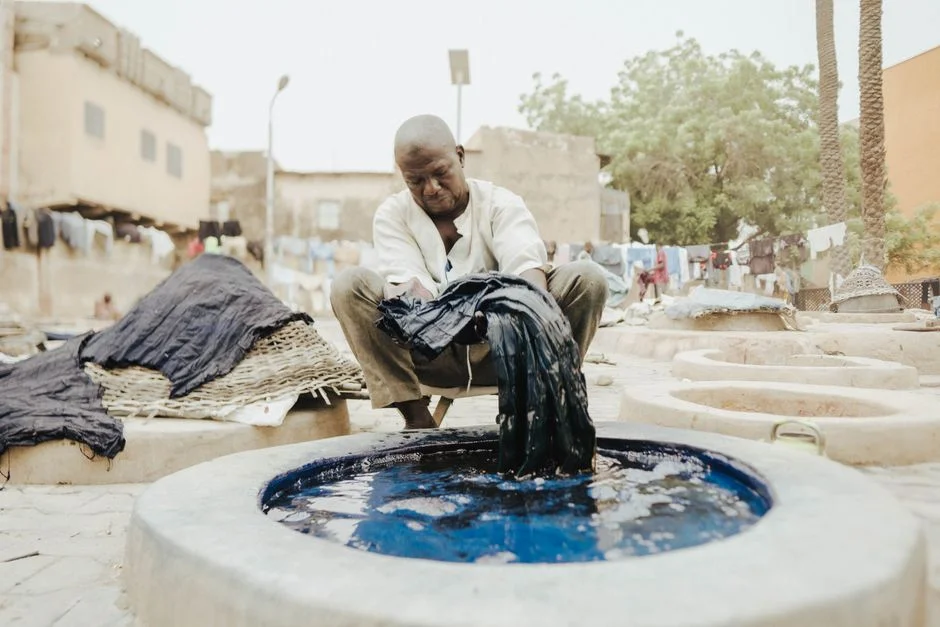
Cast-in-place RCC is defensible in 2026, and the case is not a strawman. RCC design service life is 25–30 years, equalization volume can be sized at 8–24 h of plant flow to absorb shock loads, and the structural mass tolerates high-temperature effluent and aggressive chemistry that would degrade welded steel or FRP. For hot disperse-dye liquor above 80°C, RCC is the rational choice over a HDPE/FRP skid because the wall mass keeps downstream biology at a stable temperature profile.
The on-site model requires 6–12 months of construction (per the pharma comparator) or 4–8 months for a 50–500 m³/day plant (per the F&B comparator), with a 28-day concrete cure before hydro-test. The honest failure mode that vendor decks leave out is heat-of-hydration micro-cracking in mass pours. Elias (San José State University, 2007) documented internal temperature gradients in thick concrete sections that produce micro-cracking at the aggregate-paste interface even when external curing is controlled. For a tank that will later hold low-pH dye-bath effluent, those micro-cracks become preferential pathways for chemical attack on rebar, accelerating the failure mode the concrete was specified to prevent. That risk belongs in the project risk register, not the sales brochure.
Packaged vs RCC STP: Textile-Specific Comparison Table
The table below is the single artifact most readers will forward to procurement and to the State Pollution Control Board file. It assumes a combined dye + domestic stream in the 50–500 m³/day range discharging to inland surface water under CPCB norms. Costs are framed as 2026 vendor-band drivers, not single quotes, because state tariff, civil cost, and PLC integration vary sharply.
| Parameter | Packaged STP (MBBR or MBR) | Cast-in-Place RCC STP |
|---|---|---|
| Install time on site | 2–6 weeks (skid delivered, crane-set, piped) | 6–12 months (excavation, rebar, pour, 28-day cure) |
| Civil works | Equipment + freight; minimal civil | Rebar, formwork, contractor markup, curing |
| Footprint at 100 m³/h | 50–200 m² (50–60% less with buried WSZ) | 200–400 m² |
| Color removal (pre-bio) | Coagulant/DAF polish upstream — 60–80% color cut | Same chemistry, larger EQ volume, same ceiling |
| Color removal (post-bio) | A/O + coagulant typically <400 Pt-Co; MBR <100 Pt-Co with downstream polish | Similar effluent envelope; consistency depends on operator skill |
| TDS handling | No TDS removal (membrane barrier only); requires bleed stream or salt-tolerant biology above 6,000–8,000 mg/L | Same — RCC adds volume, not salt removal |
| COD removal (influent 800–2,500 mg/L) | 85–92% with sufficient HRT; biofilm tolerates 3× spikes | <250 mg/L achievable with good sludge return control |
| Effluent vs CPCB inland surface water | A/O meets BOD 30, COD 250, pH 5.5–9.0; MBR undercuts all three | Same discharge envelope; same pretreatment required |
| OPEX driver | Blower kWh + membrane replacement (MBR only) | Civil inspection, rebar exposure repair, larger blower duty |
| Design life | HDPE/FRP 20–30 years; replaceable elements | 25–30 years; heat-of-hydration micro-crack risk per Elias (SJSU, 2007) |
| Modularity / expansion | Add a parallel skid; tie into common manifold | Drain, retrofit, or build adjacent basin — high disruption |
Factory Domestic Sewage: Why It Tips the Decision
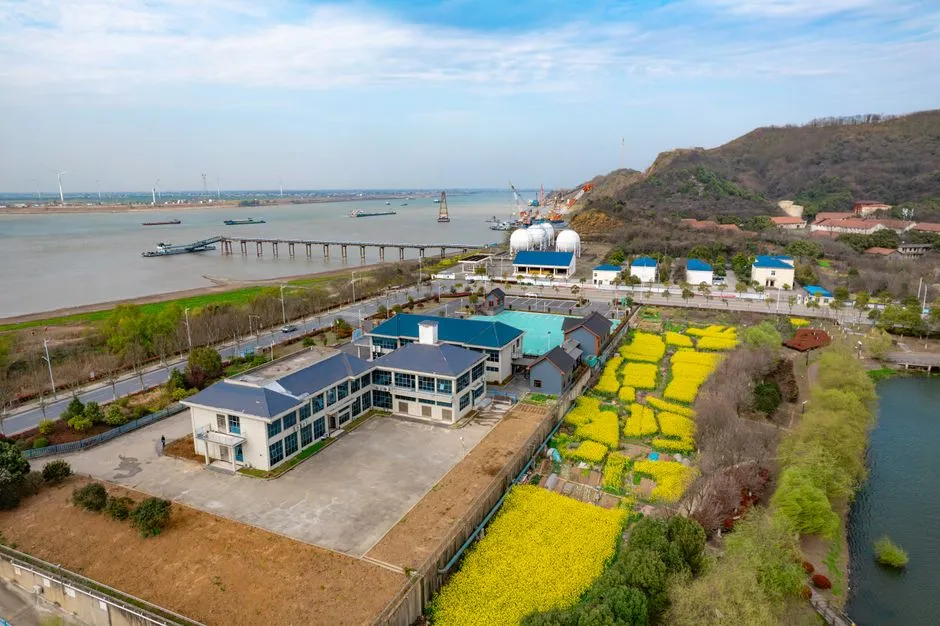
Domestic at 100–250 mg/L BOD is biologically trivial; it is the hydraulic buffering and operator-side routine that drive the choice. Two design rules apply. First, size for 1.2× peak wet-weather flow on the domestic stream — the single most common packaged-STP under-design error. The biology can handle 1.2× for 24 hours; it cannot handle 2× for a week. Second, the buried buried modular WSZ STP architecture keeps the domestic stream out of the dyed-stream EQ tank, so canteen and shift-change peaks do not push the bio stage into short-circuiting.
Operator burden is the second-order argument. A cast-in-place RCC STP with multiple basins typically requires a full-time operator plus on-call civil maintenance; a packaged A/O unit needs 1–2 hours per day of operator attention for MLSS checks, scum removal, and blower inspection; an MBR package plant adds 30 minutes per week for membrane integrity testing. Across a 20-year horizon, that operator-hour differential is the single largest OPEX line — and it is the line that packaged MBBR/MBR is roughly 70% lower on vs conventional activated sludge (per Arvind FRP-PSTP field data).
CAPEX and OPEX for 50–500 m³/day Indian Dyeing Mills (2026)
Absolute INR figures vary by state, civil cost, and PLC integration; the table below cites 2026 vendor-band patterns, not a single quote, and converts the USD bands from the F&B comparator at a planning rate of roughly ₹80/USD for 2026 procurement cycles. At 100 m³/h, packaged steel MBBR sits at ₹1.2–3.6 cr (USD 150K–450K), packaged precast MBR at ₹2.4–7.2 cr (USD 300K–900K), and cast-in-place RCC at ₹4–12 cr including civil, rebar, and fit-out (USD 500K–1.5M per the F&B comparator). At smaller flows (50 m³/day) the band compresses; at 500 m³/day it stretches toward the upper end because of additional EQ volume and civil work.
| Flow band (m³/day) | Packaged steel MBBR (₹ cr) | Packaged precast MBR (₹ cr) | Cast-in-place RCC (₹ cr) |
|---|---|---|---|
| 50 | 0.6–1.6 | 1.2–3.2 | 2.0–5.5 |
| 100 | 1.2–3.6 | 2.4–7.2 | 4.0–12.0 |
| 250 | 2.4–7.0 | 4.8–14.0 | 8.0–24.0 |
| 500 | 4.0–12.0 | 8.0–24.0 | 14.0–40.0 |
20-year cumulative OPEX on packaged MBBR/MBR is roughly 70% lower than conventional activated sludge (per Arvind FRP-PSTP data, S3), driven by sludge removal every 18–24 months instead of monthly and by lower blower duty. Payback is 3–5 years for packaged MBBR and 6–9 years for RCC at 100 m³/h, before counting 4–8 months of delayed production on the RCC path. The 20-year TCO framing (covered in detail in the packaged vs RCC STP for high-BOD FOG wastewater comparison) flips the apparent CAPEX advantage of concrete — once operator hours, civil inspection, and rebar repair are loaded in, packaged wins for sub-500 m³/day textile sites.
Decision Rule for a Dyeing Mill Buying an STP in 2026
The four-step rule below maps roughly 95% of textile-mill STP decisions to a configuration the mill can procure. The remaining 5% — a 2,000 m³/day plant with 40% solvent load, or a board-mandated 30-year design life — needs a bespoke feasibility study and is outside the packaged-vs-concrete frame.
Step 1 — Size the combined stream. If average daily flow is ≤500 m³/day and peak wet-weather flow on the domestic side is ≤1.2× average, packaged wins. If average flow exceeds 500 m³/day or a 25-year design life is a board-level capex criterion, cast-in-place RCC enters. The threshold holds for the textile case as it does for the packaged vs RCC STP for pharmaceutical wastewater comparator.
Step 2 — Check the discharge target. If effluent goes to inland surface water under CPCB (BOD 30 mg/L, COD 250 mg/L, pH 5.5–9.0), a standard A/O packaged unit is sufficient. If reuse is the target (cooling-tower makeup, gardening, toilet flushing), specify an MBR package with a DF-series 0.1 µm PVDF flat-sheet module — the membrane barrier is what makes reuse defensible to an EHS auditor. For the color-specific consent envelope, the color discharge compliance and treatment guide outlines the ADMI/Pt-Co measurement logic that maps to CPCB and State PCB norms.
Step 3 — Set the salt ceiling. If TDS from reactive/sulfur dyeing routinely exceeds 6,000–8,000 mg/L, specify chloride-tolerant seeding in the inquiry RFQ and confirm the bio stage can hold the nitrification rate. Otherwise, move the salt load to a separate brine stream ahead of the STP — a brine concentrator or RO reject line is cheaper than rebuilding the bio stage around halophiles.
Step 4 — Pretreat the dye stream upstream. pH 6.5–8.5, sulfide oxidation, coagulant and DAF polish, then route to the bio stage. This is non-negotiable for both packaged and RCC; it is upstream of the comparison. The DAF, the dosing skid, and the bar screen are prerequisites, not options.
Frequently Asked Questions
Which STP architecture wins for a 50–500 m³/day Indian dyeing mill in 2026?
A packaged MBBR or MBR STP wins for the 50–500 m³/day band, with 2–6 weeks of on-site installation, a 50–200 m² footprint at 100 m³/h, and CPCB inland surface water compliance (BOD 30, COD 250 mg/L) after upstream dye-bath equalization and DAF polishing. RCC only earns the 6–12 month build when flow exceeds 500 m³/day or a 25-year design life is a board-level capex criterion (per HydropureWater 2026 packaged-vs-RCC comparators).
How is color removed in a textile STP — and does the membrane help?
Color is removed upstream of the biology, not by the membrane. Coagulant (FeSO₄ or PAC) plus polyDADMAC, often paired with a DAF unit, cuts 60–80% of Pt-Co/ADMI color before the aeration zone. The MBR membrane is a barrier that holds biomass and produces a clear effluent; it is not a decolorizer on its own. Typical post-MBR color is <100 Pt-Co with a downstream coagulant polish — defensible to a State PCB auditor for the inland surface water envelope.
What TDS level is the limit for a packaged MBBR on reactive or sulfur dye effluent?
Nitrification is suppressed above roughly 6,000–8,000 mg/L TDS in a standard packaged MBBR unless chloride-tolerant seeding is specified. Reactive dyeing at 5,000–30,000 mg/L TDS and sulfur dyeing at 8,000–25,000 mg/L both exceed that ceiling. The defensible move is to set the TDS ceiling in the RFQ and either route the salt load to a separate brine stream or specify halotolerant biomass in the bio stage.
Can factory domestic sewage and dyeing effluent be treated in one STP?
Yes — co-treatment is the standard architecture for the 50–500 m³/day band, with the domestic stream merged into the common EQ tank. The packaged A/O train handles the combined stream reliably up to ~80 m³/h; above that, an MBR package plant is the configuration of choice for tighter effluent. Size for 1.2× peak wet-weather flow on the domestic side to avoid the most common under-design error in packaged STP procurement.
Related Equipment
- GX-series rotary bar screen — specifications, capacity range, and technical data