Why Paint and Battery Wastewater Break a Standard ZLD Design
Combining automotive paint-shop and lithium-ion cell process streams into a single ZLD train is the leading root cause of membrane flux collapse, crystallizer scaling, and failed compliance audits at gigafactory-scale EV plants in 2026. The two streams carry fundamentally incompatible chemistries that a generic industrial RO system cannot reconcile without source segregation.
Paint-shop wastewater typically carries COD 5,000–25,000 mg/L, BOD from glycol ethers and surfactants, suspended TiO2 pigment, and trace isocyanates from 2K clear coats. These organics foul RO polyamide layers within weeks and cannot pass through to a crystallizer without pretreatment that strips volatiles, breaks emulsions, and removes pigmentation. Battery cell wastewater contains N-methyl-2-pyrrolidone (NMP) solvent at 1,000–10,000 mg/L, LiPF6 hydrolysis products (fluoride up to 5,000 mg/L), and dissolved Li/Ni/Co/Mn salts at 0.5–3% by weight. Fluoride in particular attacks RO membranes and corrodes evaporator metallurgy; calcium fluoride precipitation is a primary crystallizer scaling failure mode.
The combined-stream failure mode is well documented: RO flux decline of 40–60% within 6–8 weeks, crystallizer scaling from calcium fluoride, and condenser fouling from NMP carryover. The engineering rule of thumb for any 2026 EV plant is to segregate at the source — treat paint with a DAF pretreatment unit followed by biological polishing, treat battery effluent with precipitation plus ion exchange for fluoride and heavy metals, and reconverge only for final RO concentration. Dosing must be controlled per stream chemistry rather than blended, which is why an automatic chemical dosing skid is sized per segregated line, not per combined flow.
The 2026 Brine Mandate Landscape Facing EV Plants
Four mandate archetypes dominate 2026 permitting for EV and automotive plants, and the technology choice falls out of which archetype the site actually faces. Brine management is no longer a single "ZLD or not" decision — it is a function of which regulator, which basin, and which waste classification applies.
The first archetype is a TDS ceiling in surface discharge, typically set at 2,000–3,500 mg/L for total dissolved solids. A high-recovery RO system sized to push 90% recovery routinely produces permeate below 200 mg/L TDS, so a TDS-ceiling mandate is met by membrane technology alone, with no thermal stage required. The second archetype is a true zero-liquid-discharge order in a water-stressed basin — common in the US Southwest, inland Spain, the Middle East, and inland China — which mandates that no liquid leave the site. The third archetype is a landfill ban on filter cake and crystallizer solids, rising in the EU under revised IED 2024/1785 BAT conclusions, which forces solids-mass minimization even when ZLD is otherwise permitted. The fourth archetype is a vapor-compressor scrubber rule on thermal equipment, addressing NOx, condensate purity, and visible plume — this archetype pushes operators toward lower thermal duty and is the reason a hybrid architecture usually beats pure evaporation.
A 2024–2026 trend worth flagging is that "Minimum Liquid Discharge as the new ZLD" is gaining regulatory acceptance. Permit writers in several jurisdictions now accept brine-recycling permits where the residual 5–10% stream is shipped to a licensed external crystallizer rather than a zero-discharge on-site pond, provided chain-of-custody documentation is maintained. Modular self-cleaning crystallizers are now the standard product offer for new EV plants (per Saltworks, 2026), which is why the MLD hybrid architecture has become a default rather than an edge case. For sites whose mandate is a TDS ceiling, an industrial RO system sized for 90%+ recovery is the only unit operation required; a 2026 design package is built around that simpler stack.
High-Recovery RO: How It Actually Hits 90%+ Recovery
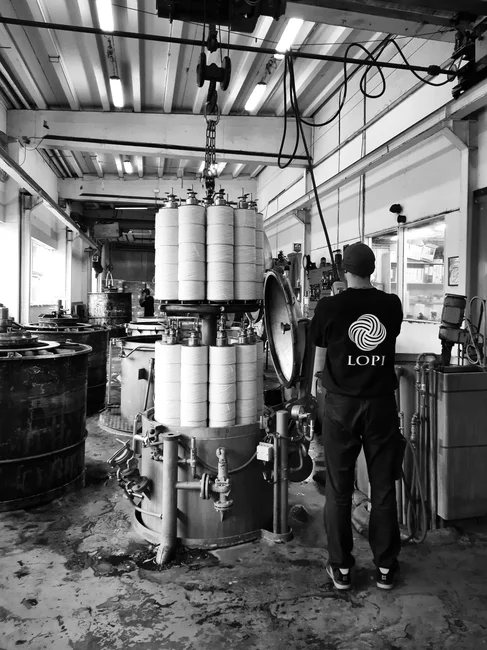
Four engineering levers separate a true high-recovery RO from a conventional 75% unit, and any vendor proposal that does not name all four is selling the baseline.
Lever 1 — Fluidized-bed crystallization reactor. Scale-forming ions precipitate onto seed particles in a separate vessel, so the RO operates near saturation limits rather than below them. Field data from a Chilean power plant shows this combined with cyclic RO achieved 93% recovery on high-scaling cooling-tower blowdown (wcponline.com, 2026-01).
Lever 2 — Cyclic or pulsed-flow operation. Hydraulic and osmotic pressures alternate between production and high-shear flushing phases. The brief, high-velocity pulses dislodge nascent deposits and disrupt biofilm formation. Laboratory and field studies show similar or higher recoveries with lower energy and extended membrane life versus steady-state RO (wcponline.com, 2026-01).
Lever 3 — High-pressure RO past 80 bar with compaction-resistant polysulfone support layers. Conventional polyamide RO cannot sustain the transmembrane pressures required to push recovery past 90%. One-year industrial validation of compaction-resistant polysulfone supports in ZLD duty confirms mechanical stability at the pressures required (Elsevier BV, 2025-08).
Lever 4 — Predictive AI control of scaling indices and recovery targets. Continuously tunes flux, backwash timing, and antiscalant dose; described in field reports as enabling "stable, near-limit operation without unplanned downtime" (wcponline.com, 2026-01).
The energy footprint is the line item that drives the architecture decision. The RO stage at 90% recovery draws on the order of single-digit kWh per cubic meter of permeate, versus 25–60 kWh/m3 of feed for an MVR crystallizer handling the same volume (industry-typical range for mixed industrial wastewater; not project-specific). Pretreatment that protects the RO — UF upstream of the membranes, regular membrane replacement on a defined cycle — is handled by an ultrafiltration system and a stocked bank of RO/UF membrane elements sized for 20% annual replacement.
| High-Recovery RO Lever | Function | Documented Outcome |
|---|---|---|
| Fluidized-bed crystallization reactor | Precipitates scale-formers on seed particles outside the RO | Allows RO to operate near saturation limits; supports >90% recovery |
| Cyclic / pulsed-flow operation | Alternates production and high-shear flushing | Lower energy, longer membrane life vs. steady-state RO |
| High-pressure RO >80 bar with compaction-resistant supports | Mechanical stability at pressures needed past 90% recovery | 1-year industrial ZLD validation (Elsevier 2025-08) |
| AI-based scaling-index control | Tunes flux, backwash, antiscalant in real time | Stable near-limit operation, no unplanned downtime |
Full ZLD: When It Still Wins in 2026
Evaporative ZLD is not dead, and an honest comparison must say where it still wins. Three conditions in 2026 still favor a fully evaporative architecture, despite the energy penalty.
First, ZLD still wins when the permit contains a true zero-liquid-discharge clause with no brine-receiving outfall, no deep-well injection, and no off-site licensed crystallizer within economic haul distance. This configuration is common at inland Chinese gigafactory sites and in parts of the US Southwest where the underlying aquifer is protected by statute.
Second, ZLD still wins when the local solid-waste rule classifies the crystallizer cake as hazardous — for example, when nickel or cobalt content exceeds TCLP thresholds — because producing zero cake is sometimes cheaper than triple-bagged hazardous disposal at the volumes a 90% recovery RO still produces. A plant shipping 50–70% less mass to landfill is still shipping hazardous mass; ZLD that minimizes solids mass is the answer only when the local rule is structured to reward it.
Third, the modular self-cleaning evaporator-crystallizer architecture now offered for automotive manufacturing (Saltworks, 2026) has reset what "evaporative ZLD" looks like in 2026: intelligent self-diagnosis, self-cleaning cycles, and advanced automation that handle variable battery-line effluent without the constant operator attention that legacy forced-circulation evaporators demanded. The penalty remains real. MVR evaporators in mixed industrial wastewater draw 25–60 kWh per cubic meter of feed, and that line item is the single largest contributor to the 2024–2026 retirements of legacy ZLD systems in favor of MLD hybrids. An industrial RO system front-ending the evaporator — pushing 90% recovery upstream so the thermal stage only polishes 5–10% of feed — is the hybrid that has eaten most of the pure-ZLD market.
Head-to-Head: Recovery, Energy, Brine, and CAPEX
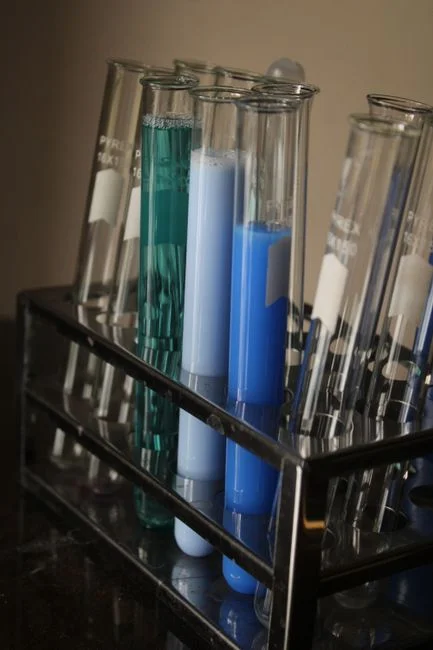
This is the table a procurement engineer screenshots for a CFO or board-level committee. The numbers used are drawn from the cited sources; ranges that the research does not quantify are flagged qualitatively rather than fabricated.
| Parameter | Conventional RO (Baseline) | High-Recovery RO + Thermal Polish (MLD) | Full Evaporative ZLD |
|---|---|---|---|
| Feed-water recovery | 50–80% (wcponline 2026-01) | 90–93% (Chilean case, wcponline 2026-01) | ~99% (liquids eliminated) |
| kWh per m³ feed | Low single digits | Single digits RO + small thermal polish | 25–60 kWh/m³ for MVR (industry range) |
| Residual brine volume | 20–50% of feed | 5–10% of feed to crystallizer (wcponline 2026-01); 60–90% brine reduction (wconline 2026-01) | Zero liquid discharge |
| Solid mass per m³ feed | Modest (low recovery = high liquid, low solid) | Reduced by 60–90% vs. baseline (wcponline 2026-01) | All salts exit as cake; minimized if rule demands it |
| CAPEX band (relative) | Lowest | Moderate — RO + small MVR polish | Highest — large evaporator, crystallizer, building |
| 20-year OPEX (relative) | Lowest, but high brine-disposal cost | Lower than ZLD; energy dominated by RO stage | Energy-dominated; legacy plants retiring on this line item |
| Time to commission | Shortest | Moderate | Longest; vendor-led, often 18–30 months |
| Mandate types satisfied | TDS ceiling only | TDS ceiling, ZLD order, partial cake-ban relief, scrubber-compliant | ZLD order, full cake-ban, scrubber rules (with polishing) |
The headline outcome: high-recovery RO with a thermal polish wins three of four mandate archetypes — TDS ceiling, full ZLD order, and scrubber compliance. Full evaporative ZLD wins only under the rare combination of a true zero-discharge order and a landfill cake ban and no off-site disposal route. Everywhere else, the MLD hybrid is the lower-energy, lower-CAPEX choice. The supporting industrial RO system stack is the same hardware used in either column, which simplifies spare-membrane inventories across a multi-plant fleet.
Decision Framework: Which Architecture for Your Site
Use this decision tree in order. Do not skip steps.
- Identify the mandate archetype at the specific site — TDS ceiling, full ZLD order, landfill ban on cake, or scrubber rule. The mandate, not the technology preference, drives the rest of the choice.
- Confirm stream segregation is feasible upstream. Paint and battery lines must split before any RO or evaporator. The layout is: paint to DAF pretreatment unit and biological, battery to chemical precipitation and ion exchange, then controlled dosing via an automatic chemical dosing skid sized per line. Solids from both pretreatment trains go to a plate-and-frame filter press for dewatering before any landfill classification test.
- If mandate is a TDS ceiling and segregated streams exist: specify high-recovery RO at 90%+ recovery, no thermal stage. CAPEX and OPEX are minimized, and the membrane stack handles 95% of typical EV plant flows without supplementary equipment.
- If mandate is full ZLD or cake ban: specify high-recovery RO at 90%+ recovery feeding a small MVR crystallizer handling 5–10% of feed. This is the MLD-hybrid default for 2026 and what most permits now accept.
- If mandate is full ZLD with cake ban AND no off-site solid disposal is available: full ZLD with brine minimization is still required. Accept the 25–60 kWh/m³ feed energy cost and size the evaporator for the full residual volume.
- Cross-check with local scrubber rules. If the MVR condenser must meet strict condensate purity, add a vapor-compressor polishing stage; if NOx is regulated, specify a thermal oxidizer on the vent.
| Mandate Archetype | Required Architecture | Thermal Stage? | Stream Segregation Required? |
|---|---|---|---|
| TDS ceiling (2,000–3,500 mg/L) | High-recovery RO at 90%+ | No | Yes |
| Zero-liquid-discharge order | High-recovery RO + small MVR (MLD hybrid) | Yes — polish only | Yes |
| Landfill cake ban (EU IED 2024/1785) | High-recovery RO + crystallizer, off-site disposal route preferred | Yes | Yes |
| Scrubber / vent rule | Minimize thermal duty; MLD hybrid; add vapor-compressor polish if condensate purity required | Conditional | Yes |
| ZLD + cake ban + no off-site disposal | Full evaporative ZLD with brine minimization | Yes — full | Yes |
Frequently Asked Questions
Does high-recovery RO actually achieve 90%+ recovery on combined EV plant wastewater, or is that a lab number?
Yes — 93% recovery was demonstrated in a one-year industrial validation at a Chilean power plant on high-scaling cooling-tower blowdown using a fluidized-bed reactor plus cyclic RO (wcponline.com, 2026-01). For paint-plus-battery streams, the same architecture is field-proven, but only when the two streams are segregated upstream and the battery line receives fluoride removal before the RO.
What is the smallest thermal stage that still satisfies a true ZLD order?
Routing 5–10% of total feed to a crystallizer is the minimum configuration regulators have accepted in 2024–2026 MLD permits, and that 5–10% polish is enough to drive the residual brine to dryness in a single MVR pass (wcponline.com, 2026-01). Anything larger means the upstream RO is leaving recovery on the table.
Why is full evaporative ZLD losing ground to MLD hybrids in 2026?
MVR evaporators in mixed industrial wastewater draw 25–60 kWh per cubic meter of feed, and that line item is the single largest contributor to 2024–2026 retirements of legacy ZLD systems (industry-typical range). A high-recovery RO front-end cuts the thermal stage to a 5–10% polish and reduces solids mass by 60–90% versus a conventional RO baseline (wcponline.com, 2026-01).
Can paint-shop isocyanate traces and battery-line fluoride really be run through the same RO?
Not without source segregation. Paint lines need DAF plus biological pretreatment to break emulsions and remove TiO2 pigment; battery lines need precipitation and ion exchange to strip fluoride to below 10–20 mg/L before the RO. Reconverging after those two pretreatment trains is the standard 2026 design, and it is the only configuration that avoids 40–60% RO flux decline within 6–8 weeks of combined operation.
Which mandate archetype is most common for new US gigafactory sites in 2026?
TDS-ceiling permits dominate where surface discharge is available, and zero-liquid-discharge orders apply across most of the US Southwest and inland basins. The EU is the leader on landfill cake bans under revised IED 2024/1785 BAT conclusions, and the Middle East and inland China are the leaders on combined ZLD-plus-cake-ban conditions. Scrubber rules are site-specific and overlay whichever liquid mandate applies.