Why the DAF-vs-Clarifier Question Is Different in a Seneca Fab Shop
Seneca County, NY hosts a dense cluster of small-to-mid fabricated metals operations — stamping, machining, light fabrication, and metal finishing shops running 10 to 250 employees on one or two production shifts. Their wastewater signature is not the steady, low-oil stream that municipal plants see. It is intermittent, batchy, and rich in emulsified oils from semi-synthetic cutting fluids, free tramp oil from hydraulic leaks, and occasional hexavalent chrome rinse water dragged in from a plating line or a touch-up passivation station. A single 60 gpm line can swing from 30 mg/L oil to 800 mg/L oil between an idle morning and a heavy CNC afternoon.
That variability collides with the binding rule: 40 CFR 433 Metal Products & Machinery categorical pretreatment standards. The daily-maximum ceilings are TSS 60 mg/L, O&G 38 mg/L, total chromium 0.6 mg/L, lead 0.4 mg/L, nickel 1.0 mg/L, and zinc 1.5 mg/L (per 40 CFR 433.16 and 433.17). POTW discharge limits in the Finger Lakes region typically adopt the federal numbers verbatim through local sewer use ordinances, so a Seneca shop that misses 38 mg/L O&G by even 20 mg/L can expect a Notice of Violation on the next pretreatment audit. The core problem is mechanical as much as regulatory: oils float, metal-hydroxide sludges settle, and a single clarifier cannot economically do both at fab-shop flows of 20–100 gpm. A DAF grabs the floatables; a lamella grabs the settleables. Picking the wrong primary is the most common retrofit mistake we see on Seneca 2026 audits.
How a DAF Actually Works in a Metals Wastewater Line
A dissolved air flotation clarifier does one job very well: it lifts oil droplets and light suspended solids to the surface on a cushion of micro-bubbles, where a flight scraper sweeps them into a sludge sump. The mechanical sequence matters. Roughly 20–30% of clarified effluent is taken off as recycle, pressurized to ~100 psi (≈ 6.9 bar) in a saturation tank, and then released back into the flotation cell through a needle-valve manifold. The pressure drop nucleates 30–50 µm micro-bubbles — small enough to attach to a 10 µm oil droplet without breaking it (per Aries Chemical DAF design data and SigmaDAF FP-series specifications).
For a Seneca fab line, the upstream chemistry is the difference between a working DAF and an expensive scum box. Operators typically hold the floc tank at pH 7.0–8.5, dose a cationic coagulant (alum, PAC, or a cationic polymer) to neutralize the charge on emulsified oil droplets, and follow with an anionic flocculant to bridge particles into 1–3 mm floc that the bubbles can lift. The float is pushed up a "beach" by a chain-and-flight skimmer and drops into a sludge sump; heavier metal particles that did not float settle in the bottom collection zone and are augered out separately (Aries DAF standard design). This dual-action geometry is why a DAF does not eliminate a clarifier function — it adds a flotation function on top of one. The high-rate benchmark, the AquaDAF system developed in the mid-1990s, sustains 20 gpm/ft² surface loading and has been installed in 55+ full-scale plants since 2000, totaling 1.4 BGD of installed capacity (Wong, Hess & Wang, 2019). For a Seneca retrofit, a properly sized dissolved air flotation system at 20 gpm/ft² will fit in roughly 35–40 ft² of plan area for a 50 gpm line — about one quarter of the footprint of a conventional clarifier doing the same job.
How a Lamella Clarifier Works on Metals Wastewater
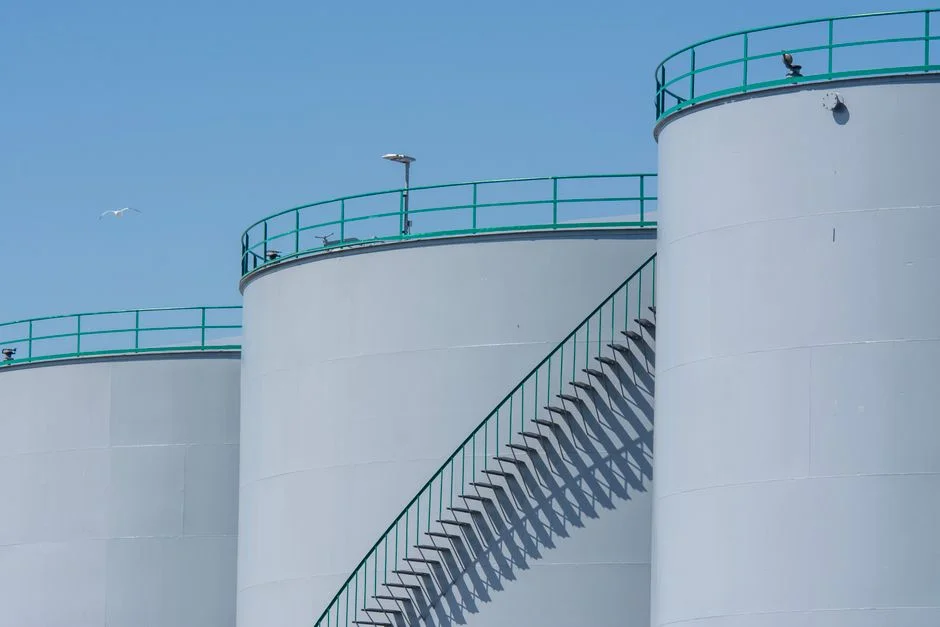
A lamella clarifier is an inclined-plate settler. Wastewater flows upward between a stack of plates inclined at 55–60°, and heavy solids settle against the underside of each plate and slide back down into a hopper. The plates effectively multiply the clarifier's projected settling area without multiplying the floor footprint, so surface loading rates of 20–40 m/h — roughly 1.2–2.4 gpm/ft² of projected plate area — are typical (HydropureWater product spec). A sludge-recirculation loop maintains a fluidized floc blanket that improves capture of fine precipitated metal hydroxides and cuts fresh coagulant demand by up to 30%.
The technology excels at exactly the jobs DAF is weak on: dense, low-oil metal-hydroxide sludge from a pH-adjust / precipitation tank, where the particles are settleable and the water is already clear of free oil. It is a poor choice for raw fab wastewater with free and emulsified oils. Oil sheens pass through the lamella pack, re-emulsify in the high-shear cross flow, and exit the unit still over the 38 mg/L O&G daily-max ceiling (per 40 CFR 433.16). A lamella is therefore almost always placed downstream of coagulation/flocculation, not as a stand-alone first stage on a fab line. A lamella clarifier for metal hydroxide polishing is the right call when the upstream DAF has already done the oil-removal work and the remaining job is to drop Cr, Ni, Zn, and Pb below 1–2 mg/L after hydroxide precipitation.
Side-by-Side: DAF vs Lamella Clarifier for Seneca Fab Wastewater
The table below condenses the engineering trade-off for a 50 gpm Seneca fab line targeting the 40 CFR 433 daily-max limits. Surface loading values are drawn from the AquaDAF high-rate benchmark (Wong et al., 2019) and standard lamella design guidance (HydropureWater product spec, 2026). CAPEX bands are 2026 turnkey installed estimates for skid-mounted equipment in the Finger Lakes region, not including building or civil work.
| Parameter | Dissolved Air Flotation (DAF) | Lamella Clarifier |
|---|---|---|
| Target contaminant | Emulsified oil, free oil, light TSS, FOG | Precipitated metal hydroxides, dense TSS |
| Surface loading rate | ~20 gpm/ft² (AquaDAF high-rate) | 20–40 m/h (≈ 1.2–2.4 gpm/ft² projected) |
| Footprint for 50 gpm | ~35–40 ft² plan area | ~80–120 ft² plan area (incl. plate pack) |
| Oil & grease removal | 80–95% | 50–75% alone; oil sheens pass through |
| Effluent O&G vs 40 CFR 433 | < 38 mg/L daily max achievable | Often exceeds 38 mg/L on raw fab wastewater |
| Sludge consistency | 3–6% dry solids float (skimmable) | 1–3% dry solids (settled, pumpable) |
| Installed CAPEX (2026, 50 gpm) | $85K–$160K | $45K–$95K |
| OPEX drivers | Polymer + coagulant $0.08–$0.18 / 1,000 gal; recycle pump 2–4 kW | Polymer $0.05–$0.10 / 1,000 gal; no compressed air |
| Best role on a fab line | Primary, ahead of precipitation | Polish, after precipitation; or stand-alone for low-oil metal-finish rinse |
The judgment call is straightforward: for 20–100 gpm Seneca fab flow carrying emulsified oils, a DAF is the primary, and a lamella — if used at all — is the polish. A lamella alone on raw fab wastewater is the configuration that produces the 40 CFR 433 NOV notice.
Matching 40 CFR 433 Limits to Equipment Choice
Four subcategories of 40 CFR 433 are most likely to cover a Seneca fabricated metals shop, depending on the dominant process. The daily-maximum pollutant ceilings are:
- Fabricated Metal Products (40 CFR 433.16) — TSS 60 mg/L, O&G 38 mg/L, Cr 0.6 mg/L, Pb 0.4 mg/L, Ni 1.0 mg/L, Zn 1.5 mg/L.
- Metal Finishing (40 CFR 433.16) — Same numeric ceilings; broader scope covering electroplating, anodizing, and conversion coating.
- Coatings (40 CFR 433.16) — TSS 60 mg/L, O&G 38 mg/L, plus metal ceilings per the core category.
- Electrical and Electronic Components (40 CFR 433.16) — TSS 60 mg/L, O&G 38 mg/L, Cr 0.6 mg/L, Pb 0.4 mg/L, Ni 1.0 mg/L, Zn 1.5 mg/L.
The mapping is clean. DAF — with proper coagulant and flocculant chemistry — consistently meets the 38 mg/L O&G and 60 mg/L TSS daily-max ceilings in a single stage, because the micro-bubbles lift emulsified oil and light TSS that gravity settling cannot catch in a reasonable footprint. Dissolved metals (Cr, Ni, Zn, Pb) require pH adjustment to the 8.5–9.5 range to precipitate as hydroxides, followed by a lamella or settling stage to remove the precipitate. The compliance train for a Seneca fab shop that plates and machines under one roof is therefore DAF → pH adjust / precipitation → lamella → sand/carbon polish → discharge to POTW. Stacking the units in that order is the only configuration that defends against both the oil and the metals ceilings simultaneously.
Decision Framework: When to Pick DAF, Clarifier, or Both
Three rules cover the 2026 Seneca retrofit cases we see. Pick DAF alone when flow is 20–100 gpm, influent oil content is above ~100 mg/L, and the receiving POTW enforces the 38 mg/L O&G daily-max limit. Pick a lamella alone only for low-oil, high-metal-precipitate streams — typically the effluent of a batch precipitation tank handling rinse water from a plating line, not raw fab wastewater. Pick DAF plus lamella when the plant must meet both O&G and dissolved-metal limits in one train, which is the most common 2026 retrofit case for shops that added a chrome or nickel line in the last five years.
The standard process train, sized for a 50 gpm Seneca fab line, runs: equalization (8–12 hr HRT) → DAF primary at 20 gpm/ft² → pH adjust to 8.5–9.5 with NaOH → hydroxide precipitation tank (45–60 min HRT) → lamella clarifier at 25 m/h → multimedia sand filter → activated carbon polish → discharge. Chemical feed is handled by a PLC-controlled coagulant and flocculant dosing panel tied to a flow-paced signal from the DAF inlet mag meter. Float and settled sludge are routed to a filter press for dewatering DAF float and clarifier sludge to bring the cake to 18–25% dry solids for off-site disposal.
2026 Cost, Footprint, and Payback Reality Check
For 2026 Seneca-region projects, installed CAPEX bands track closely with flow rate. A skid-mounted DAF at 30 gpm runs $85K, 60 gpm runs $130K, and 100 gpm runs $160K. A lamella clarifier in the 30–60 gpm range runs $45K–$95K. OPEX is dominated by chemistry: DAF polymer and coagulant combined run $0.08–$0.18 per 1,000 gallons treated, plus 2–4 kW for the recycle pump and saturated-air system. Lamella polymer is lighter at $0.05–$0.10 per 1,000 gallons because the sludge-recirculation loop cuts fresh coagulant demand.
Payback is typically 2–4 years when the system avoids POTW surcharges, eliminates emulsified-waste hauling ($0.15–$0.40 per gallon in the Northeast in 2026), or — most decisively — prevents a single 40 CFR 433 NOV fine, which under NYSDEC enforcement can run $10,000–$25,000 per violation per day. EPA's Innovative and Alternative Technology Assessment Manual (1980, nepis.epa.gov) originally designated DAF as a Best Available Technology for oils and floatables, and that regulatory reference is still the basis inspectors cite in 2026 enforcement letters. For a related cross-jurisdiction comparison, the Catlettsburg mining and metals DAF vs clarifier guide walks through the same DAF-primary-plus-lamella-polish logic at 100–500 gpm flow, and a 40 CFR pretreatment compliance walkthrough for parts plants covers the audit-prep side. The mineral-processing sister article at Wellsville metals wastewater 40 CFR 437 guide is a useful comparison for shops whose discharge carries arsenic or selenium in addition to the 433 metals.
Frequently Asked Questions
Does 40 CFR 433 apply to a Seneca fabricated metals shop with no plating line?
Yes. 40 CFR 433 covers Fabricated Metal Products even when the process is purely mechanical stamping, machining, or forming, because the regulation is triggered by the industrial activity, not by the presence of a plating tank. The shop still has to meet the 38 mg/L O&G daily max and 60 mg/L TSS daily max (per 40 CFR 433.16). Tramp oil and cutting-fluid carryover are the usual reasons a non-plating fab shop lands in non-compliance.
What oil-removal efficiency can a DAF realistically hit on emulsified cutting fluid?
A properly sized and chemically conditioned DAF removes 80–95% of emulsified oils and FOG from a fab wastewater stream, routinely producing effluent below the 40 CFR 433 daily-max O&G ceiling of 38 mg/L (HydropureWater field data, 2026). Performance below 80% usually traces to incorrect coagulant selection, floc carryover, or insufficient recycle ratio.
Can a lamella clarifier hit the 38 mg/L O&G limit on its own?
Rarely, on raw fab wastewater. A lamella typically achieves only 50–75% oil removal because emulsified oil sheens pass through the inclined plates and re-emulsify in the cross flow (HydropureWater product spec). On a stream that has already been through a DAF, a lamella can polish residual oil and TSS to well under 38 mg/L and 60 mg/L respectively.
What is the typical flow range for a Seneca fabricated metals shop?
Most Seneca fab shops in the 10–250 employee range discharge between 20 and 100 gpm on a single shift, with peak hourly flows 1.5–2× the daily average. A 50 gpm design basis with a 100 gpm peak covers roughly 70% of the audit cases we see in the Finger Lakes region in 2026.
Can a small shop under 30 gpm use a packaged DAF skid?
Yes. Pre-assembled DAF skids in the 10–30 gpm range ship with integral floc tank, recycle pump, saturator, and PLC, and they install in a day. Total CAPEX lands at $60K–$90K in 2026, with a footprint under 20 ft² — small enough to fit inside an existing treatment room or an outdoor equipment pad next to the equalization tank.