The 2026 Pretreatment Rule Chain for Augusta Industrial Dischargers
Transportation equipment plants near Augusta must meet EPA pretreatment requirements under 40 CFR Part 403 and the General Pretreatment Regulations, layered with state permits (MEPDES in Maine or NPDES in Georgia) and the local POTW's Local Limits — including the City of Augusta's 500 mg/L FOG ceiling for grease-bearing streams and 40 CFR Part 433 metal finishing categorical standards for plating and coating lines. Compliance is achieved by source separation followed by oil/water separation, dissolved air flotation, chemical precipitation, and pH equalization before discharge.
Before any equipment is specified, the rule chain has to be drawn cleanly. The Clean Water Act (CWA) — enacted as the Federal Water Pollution Control Act of 1948, reorganized and expanded in 1972, and further revised in 1981 and 1987 — establishes the federal structure for controlling pollutant discharges to U.S. waters (Greater Augusta Utility District, ME, n.d.). Under the CWA, EPA's National Pollutant Discharge Elimination System (NPDES) program sets pollutant standards on wastewater discharges. Sitting beneath the CWA, 40 CFR Part 403 — the General Pretreatment Regulations — requires every POTW to enforce Local Limits on industrial users, including categorical standards where applicable (40 CFR 403.1 et seq.).
State permits sit one layer up from the POTW. In Maine, the MEPDES permit is jointly issued by EPA Region 1 and the Maine Department of Environmental Protection (per GAUD's published ordinance). In Georgia, NPDES is administered by Georgia EPD through delegation. The City of Augusta's Utilities Department adds its own Sewer Use Ordinance, including the FOG program administered by the Assistant Director of Wastewater (Augusta, GA Utilities, FOG Program).
Two different Augustas appear in any search for "Augusta pretreatment," and they are not interchangeable:
| Jurisdiction | POTW | State Permit | Key Local Rule |
|---|---|---|---|
| Augusta, Maine | Greater Augusta Utility District (GAUD) | MEPDES (EPA + Maine DEP) | Grease Trap & Interceptor Standards; Sewer Use Ordinance |
| Augusta, Georgia | Augusta Utilities Department (Sewer Use Ordinance) | Georgia NPDES | FOG ceiling 500 mg/L; 180-day interceptor installation window |
All industrial users discharging to either POTW must obtain an Industrial Wastewater Discharge Permit and reapply at least 90 days before expiration (Augusta Water, n.d.; GAUD). The rest of this article focuses on the Georgia corridor — the rail and automotive parts cluster that drives most of the local NAICS 336 activity — but the Maine sections still apply to any plant that maps to GAUD's service area.
Why Transportation Equipment Plants Trigger Categorical Pretreatment Standards
Transportation equipment manufacturing under NAICS 336 covers auto parts, rail rolling stock, and aerospace components — and its process mix routinely crosses the threshold of EPA's categorical pretreatment standards. Three categoricals matter most: 40 CFR Part 433 (Metal Finishing), 40 CFR Part 465 (Coil Coating), and 40 CFR Part 467 (Aluminum Forming). A plant with a plating tank, a phosphate conversion coating line, or a chromate conversion bath is in scope for Part 433 — regardless of how small the line is — because the standard is process-based, not flow-based (40 CFR 433.10).
40 CFR Part 433 sets daily maximum ceilings the plant must hit before discharge. The key ceilings a transportation parts plant typically has to control (per 40 CFR 433, Table 1):
| Pollutant | Daily Maximum Ceiling (mg/L) | Source Stream |
|---|---|---|
| Total Cadmium | 2.38 | Plating rinse, conversion coating |
| Lead | 1.71 | Solder/lead-bearing alloy rinse |
| Total Copper | 4.54 | Electroplating, e-coat |
| Nickel | 0.65 | Plating, decorative chrome |
| Total Chromium | 0.43 | Conversion coating, plating |
The streams that generate these wastewaters are the same ones driving the production schedule. Alkaline and acid parts-washing tanks produce high-metal, high-pH swing streams. Machining coolant emulsions carry tramp oil, dissolved metals, and COD loads above typical domestic limits. Phosphate conversion coating rinses pull iron, zinc, and phosphate into solution. E-coat paint booth water carries paint solids and a separate VOC/TSS load. Assembly floor wash picks up hydraulic oil and metal fines. Boiler blowdown — often overlooked — adds high-pH, high-TDS slug loads that violate categorical pH limits if discharged untreated.
For the cafeteria and floor-wash streams, the City of Augusta (GA) FOG program imposes a 500 mg/L FOG ceiling on all discharges from a grease interceptor to the POTW (S3 §1.10). Any existing food service establishment — and a manufacturing plant cafeteria qualifies — that has been flagged as contributing significant FOG must install a properly sized grease interceptor within 180 days of notification (S3 §1.6). FOG-bearing discharges exceeding the 500 mg/L ceiling trigger pass-through enforcement under the Sewer Use Ordinance, with a graduated penalty schedule (S3 §1.16). Discharge of waste removed from the interceptor back to the sewer is prohibited (S3 §1.3). Any discharge, overflow, or spill from the interceptor must be reported to the FOG Section within 24 hours; damage must be reported within 72 hours of discovery (S3 §1.13).
How Source Separation Sets Up a Compliant Treatment Train
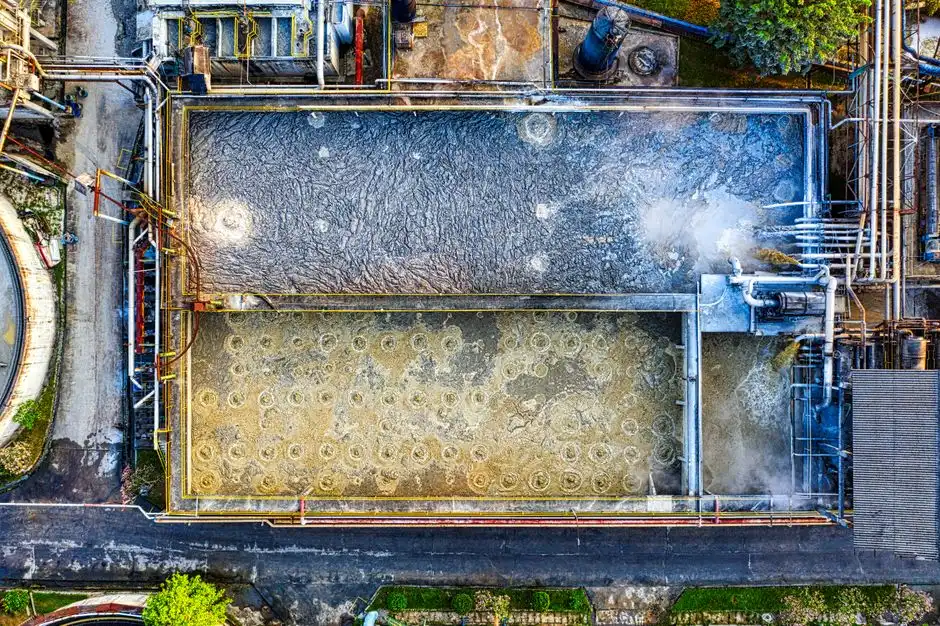
Source separation is the single most consequential engineering decision in the entire treatment train. The principle is to keep metal-bearing rinse water — regulated by 40 CFR Part 433 categorical ceilings — physically separate from oil- and FOG-bearing shop wastewater until each stream has been pre-treated for its own parameters. A shared header upstream of treatment defeats the design, because hydroxide precipitation raises pH outside the optimal 6.5–8.5 band for biological or chemical FOG destruction.
GAUD explicitly warns that oil or grease can create "major, expensive clogs" in the collection system, which is why GAUD enforces strict grease trap and interceptor standards on any grease-bearing stream (Greater Augusta Utility District, n.d.). Augusta's GA program requires kitchen Best Management Practices and FOG pretreatment for any grease-bearing discharge, and food service establishments that contribute significant FOG must install an interceptor within 180 days of notification (S3 §1.5, §1.6, §1.9). The author recommends the following segregation layout for a typical transportation equipment plant in 2026:
- Parts wash & machining coolant → oil/water separator → equalization tank
- Plating & conversion-coating rinse → pH adjustment → chemical precipitation for heavy metals
- Cafeteria & floor wash → grease interceptor (sized to peak hourly flow, not average)
- Combined equalized flow → dissolved air flotation system for residual oil and FOG → pH polish → discharge sampling manhole
- Headworks — install a GX series rotary mechanical bar screen upstream to remove rags, plastics, and fibrous debris before the DAF or biological stage; this protects downstream pumps and prevents rag carry-over into the chemical treatment stage
Discharge of waste removed from grease interceptors to the sewer is prohibited (S3 §1.3), so the interceptor must be pumped by a licensed hauler and manifests retained for five years per the City's recordkeeping requirement (S3 §1.14).
The 2026 Equipment Train Transportation Plants Are Specifying
Translating the rule chain into an equipment train, the 2026 specification a Tier-1 or Tier-2 transportation parts plant is most commonly issuing reads as follows. Each unit operation is tied to a specific compliance number, not a general "treatment" claim.
| Unit Operation | Equipment | Compliance Number Tied to It |
|---|---|---|
| Headworks | GX series rotary mechanical bar screen, typically 5–10 mm bar spacing | Protects downstream units, prevents SSOs at the sampling manhole |
| Primary O&G / FOG removal | Dissolved air flotation system, 4–300 m³/h, micro-bubble 20–80 µm | 500 mg/L FOG ceiling (Augusta GA), GAUD grease trap standards (ME) |
| Metal precipitation | PLC-controlled automatic chemical dosing system for coagulant, flocculant, NaOH/H₂SO₄ pH control | 40 CFR Part 433 daily max ceilings (Cd 2.38, Pb 1.71, Cu 4.54, Ni 0.65, Cr 0.43 mg/L) |
| Final pH equalization & sampling | Equalization tank with flow-paced composite sampler at the sampling manhole | pH 5.0–12.0 SIU limits (40 CFR 403), MEPDES/NPDES permit conditions |
| Sludge dewatering | Plate and frame filter press for DAF float and metal hydroxide sludge | Reduces landfill haul-off volume; maintains sludge disposal compliance under 40 CFR 503 |
Most 2026 RFQs from the Augusta transportation corridor pair the dissolved air flotation system with a packaged chemical precipitation reactor, because the DAF's micro-bubble contact zone (20–80 µm) carries the FOG and oil load to the surface as float while the chemical reactor drives the dissolved metals out as hydroxide sludge. The float and the hydroxide sludge are then co-dewatered on a plate and frame filter press to roughly 25–35% dry solids, which is the practical limit before landfill disposal. The DAF influent is preceded by a GX series rotary mechanical bar screen to keep fibrous debris out of the DAF recycle pump.
The DAF is sized to peak hourly flow, not average — typically 1.5–2× the average design flow — because the categorical ceilings are evaluated against instantaneous mass loads and a slug that exceeds the ceiling for even one shift can be cited as a permit violation. For plants with 24-hour composite sampling, a flow-paced auto-sampler at the sampling manhole is now standard; some sites are adding telemetry that pushes the DMR file to the POTW's pretreatment coordinator on a 24-hour delay.
For background on how this equipment train compares to other sectors, see the how petroleum plants near Lynchburg meet 2026 pretreatment limits blueprint and the related how mining and metals plants near North Little Rock meet 2026 pretreatment limits coverage. For troubleshooting biological stages downstream of DAF polish, the AAO process troubleshooting field guide for operators is a useful operational reference.
Local Limits, Reporting, and Penalties Augusta Plants Must Budget For
All industrial users discharging to either Augusta POTW must obtain an Industrial Wastewater Discharge Permit, and reapply at least 90 days before expiration (Augusta Water, n.d.; Greater Augusta Utility District, n.d.). The Greater Augusta Utility District publishes monthly Discharge Monitoring Reports on request — a useful baseline for plants trying to calibrate their own DMR data against the receiving plant. Augusta GA's FOG program enforces penalties under section 5-3-13-(f)(1) of the Sewer Use Ordinance for any pass-through event, and the schedule is graduated, escalating with repeat violations (Augusta, GA Utilities, FOG Program §1.16).
For 2026 enforcement reviews, the three audit items consistently cited across EPA Region 1 and Region 4 pretreatment audits are: (1) DMR data integrity, (2) slug load prevention plans, and (3) BMP documentation. A compliant slug load plan has four required elements — a list of potential slug sources (tank dumps, batch dumps, hydraulic line breaks), prevention measures, a notification procedure, and a routine inspection schedule — and a missing or stale plan is one of the most common drivers of a Notice of Violation.
Frequently Asked Questions
Which EPA categorical standard applies to a transportation equipment plant with a paint pretreatment line?
If the line includes plating, chromate conversion, or e-coat, the plant is in scope for 40 CFR Part 433 (Metal Finishing). Coil coating triggers Part 465; aluminum forming triggers Part 467. Part 433 is the most common fit for transportation parts plants with a phosphate pretreatment line.
How long does a transportation equipment plant have to install pretreatment equipment after a Local Limit violation near Augusta?
Under Augusta GA's FOG program, an existing food service establishment — including a manufacturing cafeteria — that is deemed a significant FOG contributor has 180 days from notification to install a properly sized grease interceptor (S3 §1.6). For categorical ceiling exceedances, a 90-day compliance schedule is typical, and a Corrective Action Plan is required within 30 days.
Does the City of Augusta (GA) FOG program apply to a manufacturing plant cafeteria?
Yes. The program applies to any FOG-bearing discharge to the City sewer, including a manufacturing cafeteria. A FOG Wastewater Discharge Permit is required, and the discharge from the grease interceptor must meet the 500 mg/L FOG ceiling.
What is the cheapest pretreatment technology a small transportation parts shop can install in 2026?
For a small NAICS 336 shop, the typical minimum is an oil/water separator followed by a packaged DAF unit, sized to peak hourly flow, with a composite sampler at the sampling manhole. This configuration handles oil and FOG at typical shop loads, but does not on its own meet 40 CFR Part 433 categorical ceilings for metal-bearing streams — those require chemical precipitation.
Do Augusta-area transportation plants need a slug load prevention plan?
Yes. EPA and most POTW pretreatment programs require a slug load plan with four elements: identification of potential slug sources, prevention measures, notification procedure, and routine inspection schedule. A missing or stale plan is a common driver of enforcement actions in 2026 audits.