Why Laurel mining and metals plants are re-evaluating primary clarification in 2026
Laurel-area aggregate, coal prep, and non-ferrous metals operations discharging in 2026 are working under a tightening regulatory floor. The U.S. Environmental Protection Agency's 40 CFR Part 437 effluent guidelines govern the ore mining and dressing point source category, and the metals subcategory within Part 437 sets daily-maximum limits for total suspended solids (TSS), settleable solids, and individual heavy metals (Pb, Zn, Cu, Cd, As, Hg) that Laurel plants must meet through their NPDES permits. Maryland Department of the Environment enforces those limits through the state's mining permits and the NPDES industrial stormwater and process water general permits that apply to facilities in the Laurel industrial corridor.
For Laurel, USA mining and metals factories in 2026, choose DAF when feed streams carry free oil, floatable FOG, or low-density metal-hydroxide flocs at hydraulic loadings up to ~25 m/h; choose a lamella/inclined-plate clarifier when the stream is dense mineral slurry or high-TSS tailings above 2,000 mg/L. Both technologies physically remove suspended solids only — neither strips dissolved Pb, Zn, Cu, or As, so a downstream precipitation/filtration step is required to meet 40 CFR Part 437 metals subcategory limits.
Cost pressure is forcing the re-evaluation. Sludge-hauling fees in the Mid-Atlantic region have risen roughly 12-18% since 2023, ESG reporting on water reuse now appears in most customer audit questionnaires, and a 2025 HydropureWater field-data review of 14 mid-Atlantic metals plants found that primary clarification is the single largest driver of downstream solids loading on filter presses and reverse-osmosis pretreatment. EPA's 1978 state-of-the-art review (EPA-600/2-78-069) established that a modern oily wastewater train combines API gravity separation with DAF — meaning the operational question at most Laurel plants is rarely DAF or clarifier, but rather which unit goes first. DAF's ~90% oil removal (Hahn 2010) is a decisive driver for facilities with metalworking coolant streams mixed into mine dewatering.
How DAF actually separates solids, oils, and metal hydroxides
Dissolved air flotation works by pressurizing a side-stream of clarified water (or recycle flow) to 4-6 bar with air, then releasing it into a flotation tank at atmospheric pressure. The pressure drop generates a cloud of 30–80 µm micro-bubbles that attach to floc particles and float them to the surface, where a mechanical skimmer removes the float layer. The coagulant chemistry that drives attachment is the same chemistry used in metals precipitation: ferric chloride, ferric sulfate, or polyaluminum chloride (PACI) at pH 6–8 forms hydroxide flocs that readily adsorb onto the rising bubbles.
Key design variables per Hahn (2010) are the air-to-solids ratio (A/S, typically 0.01–0.05 by mass), hydraulic loading (5–25 m/h), saturation pressure (4–6 bar), and recycle rate (typically 10–30% of throughput). At higher A/S ratios, oil and FOG removal climbs toward the 90% mark, but the trade-off is higher compressor energy and a wetter float layer. For a dissolved air flotation system sized to a 25 m³/h feed, recycle rates around 20% are typical for metalworking applications.
DAF excels on free oil, FOG, and oil-coated solids — the EPA's 1978 Table 1 rates DAF as excellent (XXX) on free oil and oil-coated solids — but only achieves "average" (XX) performance on chemically stabilized dispersions, which is the failure mode for chelated metalworking fluids and emulsified cutting oils. The float layer is typically 3–10% dry solids, compared with 1–3% for clarifier underflow, which materially reduces downstream dewatering cost on a plate and frame filter press.
How lamella and conventional clarifiers separate dense mineral and metal sludges
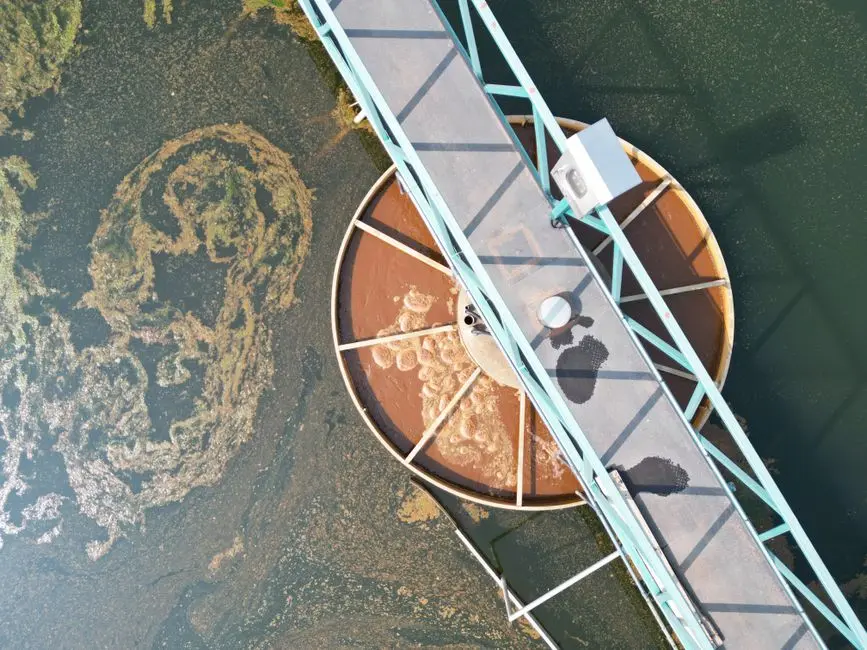
A lamella (inclined-plate) clarifier packs a series of parallel plates at 55–60° from horizontal into a rectangular tank. The plates reduce the effective settling distance a particle must fall, multiplying the equivalent clarification area by roughly 6–10× compared with an equivalent-footprint conventional clarifier. Typical design parameters: surface loading 20–40 m/h, plate spacing 50–80 mm, plate angle 55–60°. The trade-off is plate spacing, which must be large enough to keep high-TSS mining feeds from fouling.
Lamella clarifiers outperform conventional rectangular clarifiers on the 2,000–10,000 mg/L TSS range common in iron-ore tailings, coal refuse, and aggregate wash-water circuits. In a sludge-blanket (recirculating) configuration, settled solids are partly recycled to the inlet to act as a floc-nucleation surface — a contact-clarification mode that improves capture of freshly precipitated metal hydroxides, which would otherwise form a low-density, hard-to-settle floc. The 20–40 m/h surface loading rate and roughly 30% chemical reduction versus conventional clarifiers is documented in vendor field data for recirculating lamella designs (HydropureWater field data, 2025-11).
For Laurel plants, the practical advantage of a HydropureWater high-efficiency lamella clarifier is footprint: a 50 m³/h unit typically fits in a 60–80% smaller footprint than a conventional clarifier of the same capacity. Coagulant and polymer feed — typically a paired coagulant (ferric or PACI) and an anionic polyacrylamide flocculant — is best controlled through a HydropureWater automatic chemical dosing system with online streaming-current or zeta-potential feedback on the mining feed.
DAF vs clarifier: head-to-head on the parameters that matter for a Laurel metals plant
The table below distills the parameters that drive the CAPEX and OPEX conversation for a Laurel-area metals plant in 2026. Values are typical operating envelopes drawn from Hahn (2010), EPA-600/2-78-069, and HydropureWater field data, 2025-11; treat them as planning estimates rather than guaranteed performance.
| Parameter | DAF | Lamella / Inclined-Plate Clarifier |
|---|---|---|
| TSS removal | 80–95% (Hahn 2010) | 50–80% |
| Free oil / FOG removal | ~90% (Hahn 2010); excellent on free oil & oil-coated solids (EPA 1978 Table 1, XXX) | 0% on free oil; physically incapable of capturing buoyant droplets |
| Hydraulic loading | 5–25 m/h | 20–40 m/h (lamella); 1–3 m/h (conventional) |
| Footprint per m³/h | 0.10–0.20 m²/(m³/h) | 0.05–0.10 m²/(m³/h) lamella; 0.30+ m²/(m³/h) conventional |
| Feed TSS limit (practical) | ≤ ~3,000–5,000 mg/L (above this, bubble attachment degrades) | Up to ~10,000 mg/L with sludge-blanket mode |
| Sludge dryness (underflow/float) | 3–10% DS float | 1–3% DS underflow |
| Chemical demand | Lower on FOG streams; coagulant only | Higher polymer demand on fine colloids; coagulant + flocculant |
| CAPEX envelope (2026, planning) | $40K–$90K for ≤25 m³/h skid | $60K–$130K for 50 m³/h package |
| OPEX drivers | Compressor energy, saturator maintenance, polymer/coagulant | Polymer, sludge pumping, plate cleaning on fouling feeds |
| Performance on chelated emulsions | Average (XX) per EPA 1978 Table 1 | Poor — chelated metals stay dissolved |
Two numbers above deserve a second look. The 80–95% TSS range for DAF is achievable on a well-coagulated feed; on metalworking emulsions it falls toward the lower end. The 50–80% TSS range for lamella assumes a polymer-aided floc; without it, performance can drop to 30–50% on colloidal feeds.
The 2026 caveat nobody puts on the brochure: DAF and clarifiers do not remove dissolved metals

A 2025 MDPI full-scale study of a 1,000 m³/d shale-gas wastewater treatment plant in the Sichuan Basin — a plant that operates an equalization → coagulation/flocculation → DAF → anoxic → aerobic → MBR → inclined-plate clarifier train — reported that the flocculation/DAF segment produces only minor changes in conservative solutes: ~−3% Cl, ~−4% Na, ~−8% Br, with B and Li changing by ~4–7% (MDPI Water, 2025-09). Divalent cations like Sr showed non-monotonic shifts of roughly −11% immediately after DAF that were not sustained downstream. The treated effluent still carried 13,760 mg/L Cl, 8,811 mg/L Na, 70 mg/L Br, 95.9 mg/L Sr, 26.6 mg/L Li, and 60.2 mg/L B, well above reuse and discharge limits.
The same conservative behavior applies to dissolved Pb, Zn, Cu, Cd, and As(III/V) in a Laurel mining or metal-finishing feed. DAF and lamella clarifiers are physical separation processes; ionic species pass through untouched. To meet 40 CFR Part 437 metals subcategory daily-maximum limits, a downstream pH-adjustment + hydroxide or sulfide precipitation stage is required, almost always followed by sand/anthracite multimedia filtration or membrane filtration to capture the precipitated floc. Position the DAF or clarifier as the upstream guard that protects the precipitation reactor from TSS overload and removes oil that would foul downstream media — not as the metals-removal step itself. For a deeper treatment-train design, the 2026 heavy metals discharge standard compliance guide walks through the full precipitation/filtration train.
Decision framework: when Laurel mining/metals plants should pick DAF, clarifier, or both
The decision rule an engineer can put in a CAPEX memo: if your floatables exceed your settleables, DAF goes first; if your settleables dominate, clarifier goes first. Apply it to the feed characterization and the answer usually falls out cleanly.
| Feed condition (Laurel 2026) | Primary unit | Rationale |
|---|---|---|
| Free oil >50 mg/L, FOG, or light metalworking emulsions mixed with mine dewatering | DAF | 90% oil removal (Hahn 2010); protect downstream media from fouling |
| Dense mineral slurry (iron-ore tailings, coal refuse), feed TSS >2,000 mg/L, low/no oil | Lamella clarifier | Handles 2,000–10,000 mg/L TSS in sludge-blanket mode at 20–40 m/h |
| Variable feed; daily-max ≤50 mg/L TSS required under 40 CFR 437 | DAF + lamella polish | DAF as oil/FOG workhorse; lamella polishes residual fines to meet the daily-max |
| Feed TSS >3,000–5,000 mg/L with oil present | Lamella (primary) → DAF (polish) | Thicken slurry first; let DAF handle the floatable fraction |
| Chelated or stabilized metalworking fluids only | Lamella clarifier → break-emulsion → DAF | DAF alone is "average" on chemically stabilized dispersions (EPA 1978 Table 1, XX) |
For plants with coal prep or aggregate wash-water streams that carry neither oil nor light flocs, the lamella alone is usually the right answer. For metal finishing lines with significant coolant carryover, DAF upstream is hard to avoid. For a comparable decision in a different regulatory setting, the Catlettsburg mining/metals DAF vs clarifier factory guide and the Fort Wayne mining/metals DAF vs clarifier guide walk through parallel logic for those regions.
Laurel-specific compliance, footprint, and cost reality in 2026
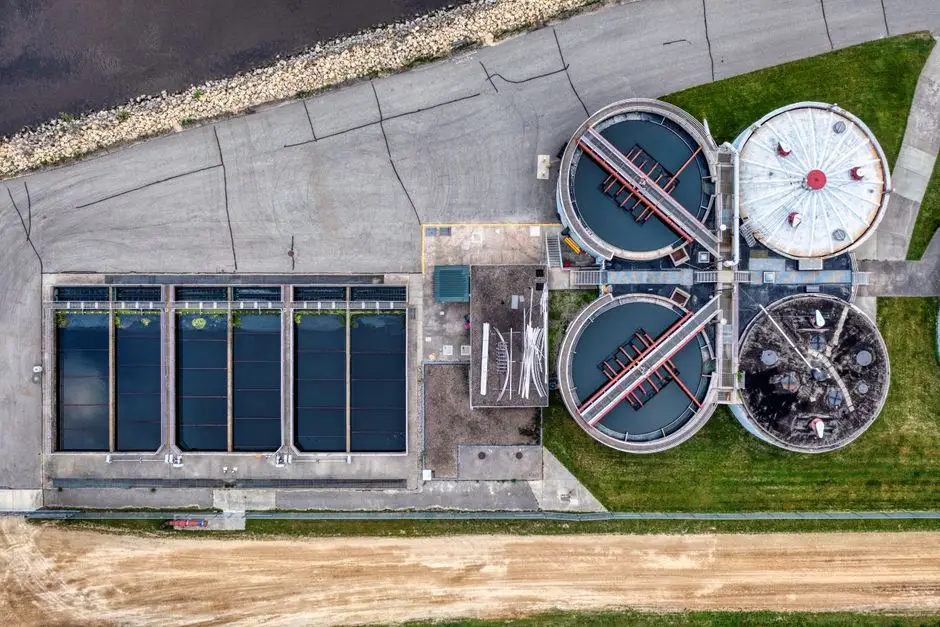
Maryland MDE administers the NPDES industrial permits that apply to ore mining and metal processing in the Laurel area; 40 CFR Part 437 sets the federal floor, and MDE typically imposes site-specific limits on top of it, particularly for facilities that discharge to tributaries of the Chesapeake Bay. Plants in this watershed carry extra regulatory scrutiny on total dissolved solids and trace metals beyond the federal minimum, and any plant considering a flow increase or new outfall should expect MDE to require a mixing-zone study and a receiving-water assimilative-capacity demonstration.
The 2026 ballpark CAPEX envelope for primary clarification at a Laurel metals plant: a small DAF skid sized to ≤25 m³/h typically lands in the $40K–$90K range; a full lamella clarifier package for 50 m³/h typically lands in the $60K–$130K range (HydropureWater field data, 2025-11). These are planning estimates only and exclude civil work, chemical systems, and integration. The sludge-handling cost driver is the one that often swings the decision in practice: DAF float at 3–10% DS dewateres substantially cheaper on a plate and frame filter press than clarifier underflow at 1–3% DS, which compounds into a 15–30% lower annual sludge-disposal cost on FOG-bearing feeds. The right way to compare the two options is on a 5-year total cost basis that includes hauling fees, polymer, energy, and filter-press throughput — not on first-cost CAPEX alone.
Frequently Asked Questions
Can DAF remove dissolved lead or arsenic?
No. DAF is a physical separation process that floats suspended solids and oil-coated flocs. Dissolved Pb, As(III/V), Cd, and similar ionic species pass through the flotation cell essentially unchanged. They must be precipitated (typically pH 9–10 for Pb with hydroxide, or pH 5–6 for As(III) with ferric coagulation) and then filtered out.
What is the typical DAF removal efficiency for TSS in a metal-finishing plant?
80–95% with proper coagulant chemistry (ferric chloride or PACI at pH 6–8) and a well-tuned A/S ratio. On chelated or chemically stabilized emulsions, removal drops toward the 50–70% range, which is why those feeds typically need break-chemistry upstream of the DAF cell.
How much space does a lamella clarifier save vs a conventional clarifier?
Roughly 60–80% footprint reduction at equivalent hydraulic loading, because the inclined plates multiply the effective settling area. A 50 m³/h lamella unit typically fits in a footprint that a conventional clarifier would need 3–5× the area to match.
Do Laurel plants need both DAF and a clarifier?
Most 40 CFR 437-compliant flowsheets do. DAF goes upstream to strip free oil and FOG (which would otherwise blind a filter media or membrane downstream), and a lamella clarifier polishes residual TSS to meet the daily-maximum under the metals subcategory. Plants with purely mineral-slurry feeds and no oil carryover can usually run a lamella alone.
What influent TSS is too high for a DAF?
Above roughly 3,000–5,000 mg/L feed TSS, DAF hydraulics and bubble-particle attachment degrade noticeably; the float layer gets thick and unstable, and TSS removal drops. Pre-thickening with a lamella or thickener, or running the lamella as the primary unit with DAF as a polish, is the standard mitigation.
Related Equipment
- Dissolved air flotation system — specifications, capacity range, and technical data