Why Houston Mining and Metals Plants Are Rethinking DAF vs Clarifier in 2026
Houston's industrial wastewater profile is unlike any generic treatment comparison. The Houston Ship Channel and Galveston Bay watershed concentrate aggregate washing, frac sand processing, and metal-finishing operations within roughly 50 miles of one another, and most of those facilities discharge under the TCEQ TPDES multi-sector general permit (MSGP) while also meeting the EPA's 40 CFR 437 effluent limits for ore mining and dressing (per EPA 40 CFR 437). After Hurricane Beryl flooded the old settling pond at our reference Ship Channel site in 2024, the operations team learned what regional storm data had already suggested: legacy pond-based systems cannot absorb a hurricane-season peak wet-weather flow event, and 2025 repeated the lesson.
Three converging forces are driving the 2026 rethink. First, tightened metals limits under 40 CFR 437 subcategories — including active ore mining and ore dressing — push daily-maximum TSS and total metals ceilings lower than the legacy settling pond design basis. Second, the TCEQ TPDES MSGP requires benchmark monitoring, corrective-action triggers, and narrative condition compliance, which favors continuous automated solids removal over quiescent ponds. Third, the brownfield footprint pressure along the Ship Channel and Galveston Bay makes 5–10 acre pond expansions effectively impossible; the new equipment has to fit on a 200–400 m² pad inside an existing tank farm. The premise of this article is that the realistic answer for most Houston mining and metals sites in 2026 is not DAF or clarifier alone but a hybrid lamella + DAF train, and the rest of the build supports that conclusion. To anchor the mechanism, DAF floats light particles, oils, and greases to the surface; clarifiers rely on gravity sedimentation to settle heavier solids (per Ecologixsystems.com, 2026 update) — but those generic definitions must be mapped onto the actual Houston mining wastewater matrix of silica fines, sulfide precipitates, residual flotation reagents, and low FOG.
How DAF and Clarifiers Actually Work on Mining/Metals Wastewater
A DAF unit removes suspended solids, FOG, and non-soluble organics by dissolving air into pressurized recycle water at typically 5–6 bar saturation, then releasing that stream into the flotation tank through proprietary air-release nozzles to generate 20–40 micron micro-bubbles (per DAF Corp engineering data). On a Houston mining stream, the process runs through five stages: coagulant/flocculant dosing forms larger particles; pressurized recycle is contacted with the flocculated stream; micro-bubbles attach to the flocs and float them to the surface; a counter-current surface scraper skims the float layer; clarified underflow exits the bottom and a fraction is recycled back to the saturator. A properly designed DAF in mining service achieves 92–97% TSS removal and 60–80% COD removal on heavy-metal-bearing effluents (per Wastewatermachinery.com mining DAF specifications, 2025-12).
A gravity clarifier — rectangular, circular, or inclined-plate (lamella) — removes settleable solids by allowing particles to fall to the sludge blanket under quiescent conditions. A lamella clarifier runs at a surface loading of 20–40 m/h, roughly 30% lower chemical use than a conventional clarifier, because the inclined plates multiply the effective settling area inside a much smaller footprint (per HydropureWater high-efficiency sedimentation tank product catalog). Sludge is withdrawn from the bottom cone, while clarified overflow exits through peripheral weirs. On heavy Houston mining solids, a lamella clarifier delivers about 90% settleable-solids reduction (per Ecologixsystems.com, 2026 update).
The mechanistic difference matters when matched to the actual particle population. Fine silica below 50 µm, metal-hydroxide flocs, and residual flotation reagents carry low settling velocities and respond poorly to gravity alone — they need bubble attachment to overcome their near-neutral density. Coarse sand, ore tailings, and sulfide precipitates settle readily under gravity and do not need the air-flotation energy. This is also why a DAF handles 95% of incoming FOG versus about 70% for a clarifier on the same stream (per Ecologixsystems.com, 2026 update) — bubble attachment lifts oil droplets that would otherwise pass through a clarifier's overflow weirs. The decision comes down to which particle population dominates your influent.
DAF vs Clarifier Side-by-Side: Removal, Footprint, Cost, Sludge
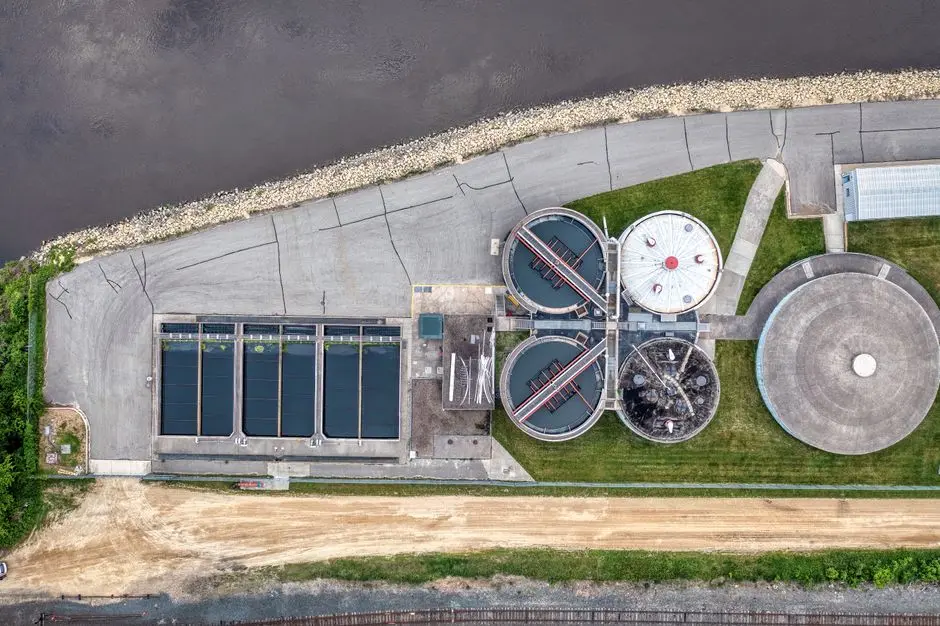
The table below consolidates the published parameters from the research data. Footprint and capex/opex bands are described qualitatively because the scraped sources do not publish numeric price points; readers should treat the bands as relative guidance, not quotes.
| Parameter | DAF | Lamella / Gravity Clarifier |
|---|---|---|
| TSS removal (fine solids) | 92–97% (Wastewatermachinery.com; DAF Corp FC Maximizer) | 85–90% (DAF Corp RC UniMax) |
| TSS removal (heavy sediment) | 90%+ (Ecologixsystems.com) | 90% (Ecologixsystems.com) |
| FOG / oil removal | ~95% (Ecologixsystems.com) | ~70% (Ecologixsystems.com) |
| COD removal | 60–80% (Wastewatermachinery.com) | Lower; mainly particulate COD |
| Hydraulic residence time | ~20–30 min (typical DAF contact zone) | ~2–4 hours (gravity settling) |
| Footprint per m³/h | Compact; vertical recycle saturator included | Lamella = small (20–40 m/h loading); circular clarifier = large |
| Sludge dryness | 2–4% solids (DAF Corp) | 1–2% solids (typical clarifier underflow) |
| Capex band | Higher upfront; skidded packages available | Lower upfront; especially for lamella |
| Opex band | Higher energy (saturator pump, air compressor); lower sludge-handling cost | Lower energy and chemical cost; higher downstream dewatering cost |
| Hydraulic surge tolerance | Higher — short HRT buffers peak flow | Lower — long HRT washes out settleable solids |
The two parameters that tend to drive the Houston decision are sludge dryness and surge tolerance. DAF sludge at 2–4% solids filters efficiently in a downstream plate-and-frame press, shortening cycle time; clarifier sludge at 1–2% extends press cycle and increases polymer demand. The 20–30 minute DAF contact time also absorbs a 3–5× hurricane-season peak flow event more gracefully than a 2–4 hour clarifier, which is a critical point given Houston's Gulf Coast climate.
Houston-Specific Drivers: 40 CFR 437, TCEQ, Climate, and Footprint
40 CFR 437 (Ore Mining and Dressing Point Source Category) divides Houston-relevant operations into subcategories such as active ore mining, ore dressing, and mineral processing; each carries daily-maximum TSS and total metals ceilings that apply to the discharge, not just the suspended fraction. A clarifier handles the settleable fraction of TSS, but colloidal and dissolved metals typically require a downstream chemical precipitation stage (lime, caustic, sulfide) or a DAF polishing stage to reach the published limits (per EPA 40 CFR 437 framework, HydropureWater mining buyer's guide context).
The TCEQ TPDES MSGP layers benchmark monitoring, corrective-action triggers, and narrative condition compliance on top of the federal rule. Together, those conditions push plants toward continuous, automated solids removal rather than pond-style settling where TSS can swing ±40% across a single shift. The MSGP also requires visible monitoring of stormwater discharges, which on a brownfield Ship Channel site with limited equalization volume means the primary treatment train has to handle wet-weather blending without bypassing.
| Houston Driver | Effect on DAF vs Clarifier Choice |
|---|---|
| 40 CFR 437 metals + TSS daily-max limits | Drives need for polishing stage; clarifier alone rarely meets colloidal-metals fraction |
| TCEQ TPDES MSGP benchmark monitoring | Favors automated, instrumented primary treatment over passive ponds |
| Gulf Coast heat (30–35°C ambient summer) | Accelerates biological growth in open ponds; enclosed DAF and covered clarifier tanks unaffected |
| Hurricane-season peak flow (3–5× design) | Clarifier HRT is too long to absorb surge; DAF contact zone buffers peak more effectively |
| Brownfield footprint (200–400 m² typical pad) | Lamella clarifier at 20–40 m/h and DAF fit; large circular clarifier does not |
| Industrial reuse demand (process water, dust suppression) | Reuse target typically ≤50 mg/L TSS, achievable with DAF polishing after clarifier primary |
Climate deserves a specific callout: ambient temperatures of 30–35°C in July and August accelerate biological growth in any open basin, and algal biomass then becomes a secondary TSS load on the downstream train. Enclosed or covered DAF and lamella clarifier tanks sidestep that loading entirely. The footprint pressure is equally binding — a conventional 30 m diameter circular clarifier consumes roughly 700 m², which is larger than the entire pad available on most Houston Ship Channel brownfield retrofits.
Decision Framework: Which One Should Your Houston Plant Choose?
The honest answer for most Houston mid-size mining and metals plants (4–300 m³/h design flow) is a hybrid train, but the four-question test below lets you score your own site before you commit to a specification. Run each question against your influent characterization, not your wish list.
- Is your influent FOG above 50 mg/L, or are residual flotation reagents present in the stream? If yes, you need a DAF somewhere in the train.
- Are particles mostly settleable (above 100 µm, e.g. coarse silica, ore tailings, sulfide precipitates) or colloidal (below 50 µm, e.g. metal-hydroxide flocs)? If settleable, a lamella clarifier handles the bulk; if colloidal, a DAF is required.
- Is your primary-tank footprint constrained to under 200 m²? If yes, exclude conventional circular clarifiers and concentrate on lamella clarifier or DAF options.
- Is your downstream discharge or reuse target 50 mg/L TSS or lower? If yes, a single-stage primary is rarely enough; you need a polishing step regardless of the technology you start with.
Mapping the answers: yes on (1) and (4) points to a DAF-led train; yes on (2) and no on (1) points to a lamella clarifier primary; yes on (3) eliminates large circular tanks; mixed answers across all four questions — which is the common case in Houston — point to a hybrid. The recommended hybrid sketch is: a HydropureWater high-efficiency lamella clarifier as primary (delivering 90% settleable-solids reduction at 20–40 m/h surface loading, lowest opex of the three options), followed by a DAF system as polishing (handling residual fines, FOG, and colloidal-bound metals down to the 50 mg/L TSS reuse target or TCEQ discharge ceiling), with a HydropureWater automatic chemical dosing system feeding coagulant and flocculant between the two stages. The 13 standard DAF models span 4–300 m³/h, which covers most Houston mid-size mining plants on a single skid, and the lamella clarifier is documented to fit brownfield sites where a circular clarifier would not. For comparison, the DAF Corp product line scales from 48 gpm (≈11 m³/h) up to 11,000 gpm (≈2,500 m³/h), so the upper end of Houston demand is well within available commercial equipment. Procurement teams comparing the same question in other U.S. basins can cross-reference the Wellsville mining/metals 2026 buyer's guide and the Catlettsburg mining/metals DAF-vs-clarifier guide for regional context, and refer to the DAF sizing engineering guide for hydraulic selection detail. Downstream sludge dewatering, which is a major opex line on any Houston mining train, is covered in the mining wastewater sludge dewatering cost guide.
Frequently Asked Questions
Can a clarifier meet 40 CFR 437 metals limits on its own?
For most Houston mining streams, no. The 40 CFR 437 daily-maximum ceilings target total metals in the discharge, including the colloidal and dissolved fractions that a clarifier cannot capture. A lamella clarifier handles the settleable-solids load effectively, but a downstream DAF polishing stage or a chemical precipitation step is normally required to drive the colloidal-bound metals below the limit (per EPA 40 CFR 437 framework).
What flow range can a single DAF unit handle for a Houston mining plant?
The DAF product line covers 4–300 m³/h across 13 standard models, which fits most Houston mid-size mining and metal-finishing plants on a single skid (per HydropureWater product catalog). At the upper end, DAF Corp units go up to 11,000 gpm (≈2,500 m³/h) for very large facilities, so there is no gap in commercially available capacity for the Houston market.
Is DAF or clarifier cheaper to operate?
Clarifiers generally have lower day-to-day operating cost because they use less energy and fewer chemicals (per Ecologixsystems.com, 2026 update). However, DAF sludge thickens to 2–4% solids versus 1–2% from a typical clarifier, which reduces downstream plate-and-frame press cycle time and polymer consumption. Net opex depends on what share of total cost is sludge handling — on a high-solids Houston mining stream that share is large, which is why hybrid trains are often the lowest total-cost-of-ownership option.
Can DAF and clarifier be used together?
Yes. Hybrid DAF + clarifier systems are explicitly confirmed as a viable approach for complex wastewater streams, combining DAF's oil and fine-solids removal with a clarifier's bulk sedimentation capability (per Ecologixsystems.com, 2026 update). The Houston-specific recommendation in this article — lamella clarifier primary plus DAF polishing — is one of the most common hybrid configurations in practice.
What sludge handling equipment pairs with each?
Both DAF and clarifier sludge are commonly dewatered with a HydropureWater plate and frame filter press. DAF sludge at 2–4% solids filters more efficiently, which shortens press cycle time and reduces polymer demand — a meaningful advantage on the heavy-solids streams typical of Houston mining and metals operations.