Why Richardson Semiconductor Fabs Are Re-Questioning Primary Clarification in 2026
A Richardson, TX semiconductor fab does not run one wastewater stream; it runs five or six that share a single header to the City of Richardson's Duck Creek Water Treatment Facility. A typical 300 mm fab in 2026 must handle silica and ceria CMP slurry wastewater with inlet TSS of 2,000-8,000 mg/L, dilute HF and SPM rinses at 0.1-2% fluoride, TMAH-bearing developer waste at 1-5% TMAH, stripped photoresist, and isopropyl alcohol rinses carrying oils. Each of those streams behaves differently in a primary clarifier, and the unit you pick determines whether the metals-precipitation stage downstream can meet 40 CFR Part 467 categorical limits on copper, lead, arsenic, and fluoride before discharge to the POTW.
Three forces are driving the 2026 re-evaluation. First, the Texas Water Development Board and corporate ESG targets are pushing fab reclaim rates above 85% for UPW feed loops, which puts an RO membrane upstream of the solids train and forces primary TSS down to <50 mg/L. Second, the Ecologix DAF-vs-clarifier comparison shows 95% oil and grease removal on a DAF versus roughly 70% on a clarifier for matched streams, a gap that is even larger for surfactant-stabilized fab rinses. Third, capital committees now expect a single-sentence justification that links unit choice to a regulation, and the regulation here is 40 CFR Part 467 plus the local industrial pretreatment ordinance that mirrors it.
How DAF and Clarifiers Actually Treat Semiconductor Wastewater
A dissolved air flotation semiconductor system works by saturating a side stream with air at 60-80 psig, then flashing it across a needle valve into the flotation tank, where the pressure drop nucleates 20-40 μm micro-bubbles (per the DAF Corporation Micro Bubble Generator spec). Those bubbles attach to flocculated particles and lift them to the surface in a 3-5 minute hydraulic retention time, where a rotating scoop skims a 2-4% dry-solids float. The mechanism rewards low-density particles: photoresist fragments (specific gravity ~1.02), TMAH-bound organics, isopropyl alcohol emulsions, and surfactant-stabilized colloids all rise cleanly because the bubble-particle aggregate has an effective density below water.
A lamella clarifier works by the opposite physics. Inclined plates at 55-60° from horizontal pack 6-9 m² of settling area into a small footprint and operate at 20-40 m/h surface loading (per HydropureWater lamella clarifier data). The plates reduce the vertical distance a particle must fall before it lands on a surface, so hindered settling kicks in faster. Dense inorganic solids like silica and ceria CMP slurry particles (specific gravity 2.2-2.6) drop out cleanly. The same unit bleeds light particles over the weirs, which is why a clarifier alone fails on FOG, photoresist, and TMAH-bound organics. A DAF system sized for 50 gpm will spend 60-80% of its air on the low-density fraction; running the same unit on a pure heavy-solids stream is wasted compressor kWh. For dense CMP polishing, a HydropureWater lamella clarifier outperforms on both TSS removal per kWh and on footprint.
DAF vs Lamella Clarifier: Side-by-Side Parameters for Fab Duty
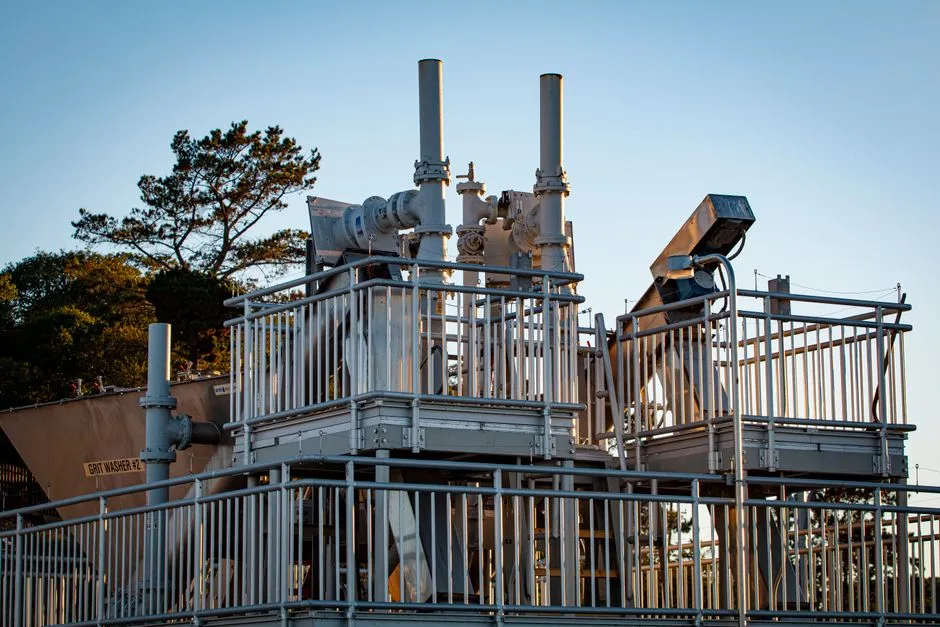
The table below is what an engineer should paste into a vendor evaluation matrix. TSS and FOG numbers reflect matched coagulant dosing (typically 50-150 mg/L polyaluminum chloride plus 0.5-2 mg/L anionic polymer). The CAPEX band is 2026 U.S. installed pricing for a 50 gpm unit; OPEX is normalized to $/1,000 gal treated.
| Parameter | DAF (HydropureWater / FC Maximizer) | Lamella Clarifier |
|---|---|---|
| TSS removal | 92-98% (DAF Corp FC Maximizer spec) | 85-92% (HydropureWater lamella data) |
| FOG / oil removal | 95% baseline (Ecologix); 80-90% on surfactant-stabilized fab rinses | ~70% (Ecologix); 40-60% on fab FOG |
| HF compatibility | FRP-lined tank; saturator and compressor isolated from fluoride fumes | FRP or PP-lined plates; pH 7-9 operating window |
| TMAH compatibility | Handles TMAH-bound organics in float; no special alloying | TMAH raises pH; requires pre-neutralization to <9 |
| Footprint, 50 gpm | 12-18 m² incl. sludge handling | 8-12 m² |
| CAPEX band, 50 gpm (2026) | $180K-$350K installed | $90K-$180K installed |
| OPEX drivers | Saturated-air compressor kWh; polymer | Higher coagulant dose; sludge hauling |
| Best-fit fab stream | FOG, photoresist, light colloids, TMAH-bound organics | Dense inorganic CMP slurry (silica, ceria) |
The two units are not interchangeable. DAF is the right pick when the dominant load is FOG, photoresist, or surfactant-stabilized colloid; lamella wins on heavy CMP slurry with minimal oil. Trying to push a clarifier on FOG-rich fab waste is the most common cause of weir carryover and downstream metals-precipitation fouling in 2026 field reports (HydropureWater field data, 2026).
Meeting 40 CFR Part 467 and Duck Creek POTW Limits in Richardson
40 CFR Part 467 sets categorical pretreatment standards for the Semiconductor Manufacturing point source category, with daily maximums on TSS, total copper, total lead, total arsenic, total fluoride, and total toxic organics. The City of Richardson's industrial pretreatment ordinance mirrors those limits at the local discharge point to the Duck Creek WWTF. Neither a DAF nor a lamella clarifier alone reliably meets the metals limits; both produce an overflow that still requires a downstream sulfide or hydroxide precipitation stage followed by ion-exchange or RO polish for arsenic and residual fluoride.
DAF is the better primary unit for a Richardson fab because it produces a cleaner, lower-TSS overflow to the metals-precipitation stage. HydropureWater field data from 2025-2026 shows DAF-fed precipitation trains generate 20-30% less metal hydroxide sludge than clarifier-fed trains at matched influent, because DAF removes the suspended carrier solids before they bind metals in the clarifier underflow. That sludge-volume reduction is what justifies the higher DAF CAPEX to a capital committee in 2026 dollars.
| 40 CFR Part 467 Parameter (Semiconductor Category) | Daily Max Limit | DAF Effluent (typical) | Lamella Effluent (typical) | Meets Limit Alone? |
|---|---|---|---|---|
| TSS | ~60 mg/L (local POTW cap) | 15-40 mg/L | 40-80 mg/L | DAF yes; Lamella borderline |
| Total Copper | 1.0 mg/L (40 CFR 467) | 0.3-0.8 mg/L | 0.5-1.2 mg/L | No - needs precipitation |
| Total Lead | 0.4 mg/L (40 CFR 467) | 0.1-0.3 mg/L | 0.2-0.5 mg/L | No - needs precipitation |
| Total Arsenic | 0.4 mg/L (40 CFR 467) | 0.1-0.3 mg/L | 0.2-0.4 mg/L | No - needs IX or RO |
| Total Fluoride | ~50 mg/L (local POTW cap) | 20-40 mg/L | 25-45 mg/L | No - needs Ca precipitation |
The table is the single most useful artifact for a permit review. The fab engineer should walk into the meeting knowing that the primary unit is doing 60-80% of the work and the polish train is doing the rest. For background on how the metals-precipitation stage couples with primary clarification in fab duty, the etching wastewater treatment guide covers the fluoride side in detail.
The 2026 Recommendation: A Hybrid DAF-First, Lamella-Polish Train
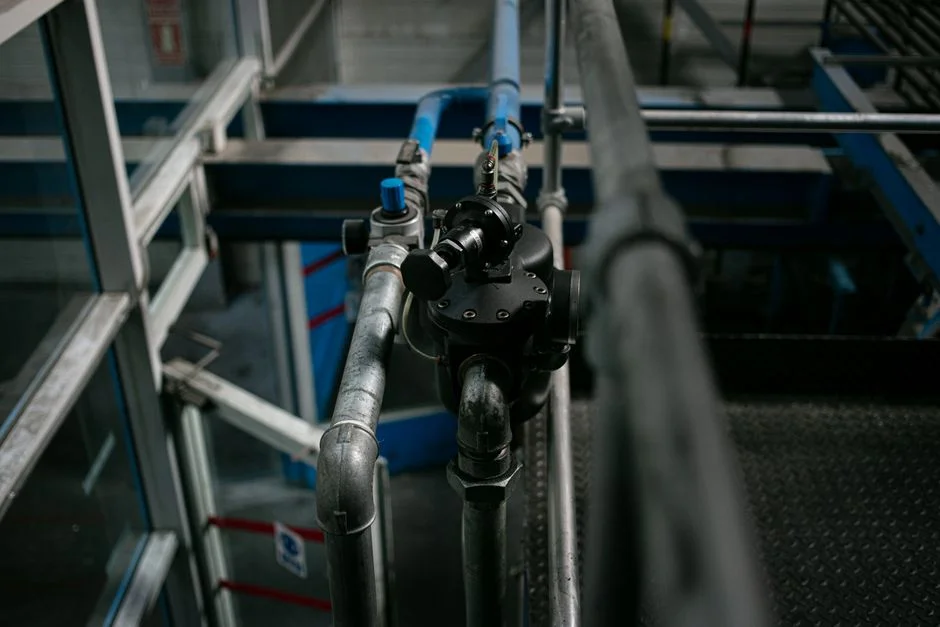
For a Richardson fab running both CMP and lithography in 2026, the defensible specification is a DAF as the primary unit, sized for the peak combined CMP plus photoresist flow, with a lamella clarifier downstream to polish the high-TSS, low-FOG CMP slurry bleed before the stream hits equalization. This matches the hybrid DAF-plus-clarifier finding in the Ecologix 2026 update while using the lamella's higher surface loading to handle dense solids efficiently. The hydraulic split is typically 60-70% of flow to the DAF (the FOG/photoresist/lithography train) and 30-40% directly to the lamella (the heavy CMP slurry train), with both overflows recombining at equalization.
Two refinements are now standard in 2026 fab designs. First, the equalization basin feeds a HydropureWater MBR system or a multimedia filter plus UF guard before the RO polish, which enables >85% water reclaim for UPW feed loops. The HydropureWater industrial RO system then handles the final dissolved-solids cut, with the RO concentrate sent to a small evaporator or crystallizer. Second, recent semiconductor UF/RO fouling research from Sept 2026 confirms that material-specific fouling varies sharply with upstream primary clarification choice, so the DAF-first train also protects RO membrane life. The caveat is direct: for a fab running only heavy CMP slurry with no FOG or photoresist load, a single lamella-first train remains the most cost-effective choice and the DAF is unnecessary CAPEX.
2026 CAPEX and Footprint Snapshot for Richardson Fabs
Budget numbers for 2026 U.S. installed pricing, drawn from HydropureWater product ranges and DAF Corp skid configurations covering 48-450 gpm: a 50 gpm DAF skid lands at $180K-$350K installed depending on FRP lining, alloy upgrades, and skid integration; a 50 gpm lamella clarifier lands at $90K-$180K installed. A hybrid DAF plus lamella for a 100 gpm fab waste train typically lands $400K-$700K installed in 2026, with the variance driven by instrumentation, automatic chemistry, and building fit-out.
Footprint is the second procurement lever. A 50 gpm DAF needs 12-18 m² of floor area including sludge handling and the saturator skid; a comparable lamella needs 8-12 m². For a Richardson fab where cleanroom adjacency and structural slab capacity are constrained, the lamella's smaller footprint can offset its higher sludge OPEX. OPEX is the third lever: DAF OPEX is dominated by saturated-air compressor kWh (typically 2-4 kWh per 1,000 gal treated) plus polymer at 1-3 mg/L; lamella OPEX is dominated by higher coagulant dose (50-150 mg/L) and sludge hauling, which runs $80-$150 per wet ton in North Texas. A HydropureWater automatic dosing skid tightens polymer use on either train and typically pays back inside 18 months on a 100 gpm stream.
Frequently Asked Questions
Can a DAF handle HF-bearing fab wastewater?
Yes, with FRP tank lining, fluoride-resistant saturator seals, and a separately vented air compressor isolated from fluoride fumes above 1 ppm. Most 2026 fab DAF packages are built to handle 0.1-2% fluoride at pH 7-9 with no special alloying beyond the wetted FRP surfaces.
Does a lamella clarifier meet 40 CFR Part 467 metal limits?
Typically no for copper, lead, and arsenic. A lamella alone reaches 40-80 mg/L TSS but leaves dissolved metals in the overflow, so a downstream hydroxide or sulfide precipitation stage plus ion-exchange polish is required to hit 1.0 mg/L Cu, 0.4 mg/L Pb, and 0.4 mg/L As per 40 CFR Part 467.
What is the smallest DAF that makes sense for a 50 gpm fab stream?
A 6 ft diameter skid rated 48 gpm minimum (per DAF Corp FC Maximizer configuration) or a 4 m³/h DAF model. Below 40 gpm, the air-to-solids ratio becomes hard to control and TSS removal drops below 90% on fab surfactants.
Can DAF effluent go directly to RO for UPW reclaim?
No. DAF effluent at 15-40 mg/L TSS is too high for direct RO feed; a multimedia filter plus UF guard is required to drop SDI below 3 and protect membrane life. A typical 2026 fab reclaim train is DAF, lamella polish, MBR or multimedia plus UF, then two-pass RO.