An etching wastewater treatment system design for PCB plants combines DAF pretreatment, MBR biology, and RO polishing to cut influent copper of 50–500 mg/L to below 0.5 mg/L while recovering over 95% of rinse water. Copper removal reaches 99.9%.
Etching Wastewater Treatment System Design: What Works in 2026
A working design pairs DAF pretreatment (85–92% copper and TSS removal), MBR biosorption for COD, and RO polishing at 15–25 L/m²/h flux. Hybrid trains hold effluent copper below 0.1 mg/L, recover more than 95% of water, and regenerate spent acids on-site, cutting chemical costs by 40% under EPA 40 CFR Part 433 and EU IED 2010/75/EU limits. Coagulants are reused to Class I drinking water standards (per ScienceDirect 2025), and the closed loop eliminates hazardous sludge disposal fees.
Why Etching Wastewater Treatment Fails: A PCB Plant's $250K Compliance Mistake
A 150 m³/day PCB fabrication facility in Texas incurred $250,000 in EPA fines and legal fees in 2024 after consistently exceeding copper discharge limits by as little as 1.1 mg/L. The plant's conventional hydroxide precipitation unit failed because it was never designed for the complexed copper carried by modern alkaline etchants. Influent copper measured 280 mg/L, yet treated effluent stayed stuck at 3.2 mg/L—well above the EPA's 2.07 mg/L monthly average limit for metal finishing operations.
Engineering post-mortems reveal three recurring failure points. First, copper complexation is underestimated: chelating agents in etchants keep copper in solution at standard precipitation pH of 8.5–9.2. Second, pH swings go unmanaged—etching baths run at pH 1–2, and sudden dumps overwhelm automated dosing, letting acidic, metal-heavy slugs bypass treatment. Third, plants skimp on pretreatment, trusting simple sedimentation where high-efficiency flotation is required.
The hidden costs extend past fines. Hazardous copper sludge disposal runs $300 to $600 per ton, so a plant producing 5 tons per month carries an annual bill of up to $36,000—excluding the acid and copper value a closed loop would have recovered. Once permit-violation downtime is counted, an under-engineered system can burn through the CAPEX of a hybrid train within 18 months.
Etching Wastewater Composition: What's in Rinse Water and Spent Baths
Etching rinse water carries copper between 50 and 500 mg/L, which forces a minimum 99% removal efficiency just to meet federal discharge standards. According to US EPA, about 44,000 facilities perform metal finishing operations and discharge process wastewater directly to surface waters or indirectly through POTWs, so local limits vary widely across those receivers. The wastewater is never just copper and water: ferric chloride etchants contribute iron (Fe³⁺), organic acids such as citric or acetic acid dissolve in, and photoresist residues push Chemical Oxygen Demand (COD) upward.
Influent TSS can reach 800 mg/L during peak production, and that solids load fouls membranes fast if the primary stage misses it. Copper stays the compliance bottleneck because thresholds keep tightening globally. EPA 40 CFR Part 433 allows 2.07 mg/L, the EU Industrial Emissions Directive (IED 2010/75/EU) typically requires below 0.5 mg/L, and sensitive regions in Germany or China may demand under 0.1 mg/L. Those levels require tertiary membrane filtration, not just secondary chemistry.
| Parameter | Spent Etchant Bath | Rinse Wastewater (Influent) | Target Effluent (EPA/EU) |
|---|---|---|---|
| pH | 0.5 – 2.0 | 1.5 – 3.5 | 6.0 – 9.0 |
| Copper (Cu²⁺) | 15,000 – 40,000 mg/L | 50 – 500 mg/L | <0.5 – 2.07 mg/L |
| COD | 5,000 – 15,000 mg/L | 200 – 1,500 mg/L | <120 mg/L |
| TSS | 1,000 – 3,000 mg/L | 100 – 800 mg/L | <30 mg/L |
| Iron (Fe³⁺) | High (if Ferric Etch) | 10 – 50 mg/L | <2.0 mg/L |
PCB Etching Wastewater Copper Removal Compliance: EPA, EU, and Local Limits
PCB etching wastewater copper removal compliance is governed by EPA 40 CFR Part 433 in the United States, which sets a monthly average copper limit of 2.07 mg/L for metal finishing operations. Many municipal pretreatment programs impose stricter local limits to protect the biological stage of city plants. In Europe, the Industrial Emissions Directive 2010/75/EU sets the benchmark at 0.5 mg/L; its 2024 revision (IED 2.0) entered into force on 4 August 2024, permits are granted by national authorities, and best available techniques play a key role (European Commission). Local direct-discharge permits often go lower still to protect aquatic life.
Round-the-clock compliance needs online monitoring, not daily lab samples. Online copper analyzers ($15,000–$30,000) using colorimetric or X-ray fluorescence methods return real-time data, letting the system divert non-compliant water to a holding tank before discharge. Zero-discharge is increasingly the default for new semiconductor fabs because it bypasses NPDES permitting entirely by recycling the full treated-water flow to cooling towers or rinse lines. You can see hybrid DAF-RO systems achieving zero-discharge in rinse water treatment for the ROI mechanics of that strategy.
Treatment Technologies Compared: DAF vs. RO vs. MBR vs. Hybrid Systems
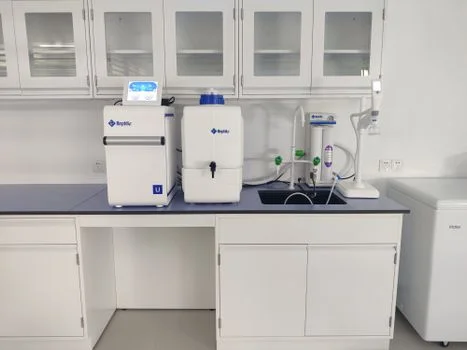
Hybrid DAF-RO-MBR systems achieve water recovery above 95% while holding effluent copper below 0.1 mg/L, far beyond what standalone sedimentation delivers. Among wastewater treatment systems for metal finishing, the choice comes down to balancing first cost against operating savings and compliance security. Each stage earns its place: flotation strips solids, biology stabilizes organics, and membranes polish ions.
Dissolved Air Flotation (DAF) is the pretreatment workhorse. HydropureWater's DAF system for pre-treatment of etching wastewater removes up to 92% of TSS and 85% of copper by floating metal hydroxides to the surface. DAF alone cannot meet the sub-0.5 mg/L copper limits many permits now carry. To reach those levels, MBR systems for achieving <0.5 mg/L copper effluent handle organic COD and provide biosorption of residual metals.
Plants targeting zero liquid discharge or high-purity reuse need RO systems for copper removal and water recovery in etching plants. RO membranes form a physical barrier to ions and deliver 99% copper removal. Fouling from organics is the catch, which is why pairing DAF solids removal with MBR COD stabilization became the 2025 engineering standard for semiconductor fabs. The same multi-barrier logic works in hybrid treatment strategies for CMP wastewater, another high-copper stream in semiconductor fabs.
| System Type | Copper Removal % | Water Recovery % | OPEX ($/m³) | Best Use Case |
|---|---|---|---|---|
| DAF Only | 70% – 85% | 0% (Discharge only) | $0.15 – $0.30 | Pre-treatment for small PCB shops |
| RO Only | 99%+ | 75% – 85% | $0.30 – $0.50 | Rinse water polishing (requires pre-treat) |
| MBR Only | 98% | 0% – 50% | $0.40 – $0.60 | High COD/Organic etchants |
| Hybrid (DAF-RO-MBR) | 99.9% | 95%+ | $0.45 – $0.85 | Zero-Discharge / Strict Compliance |
Design Parameters and Thresholds: Flux, Loading, and Chemical Dosing
Etching system design fixes three numbers early: an RO membrane flux of 15–25 L/m²/h to prevent irreversible copper sulfate scaling, a DAF surface loading rate of 5–10 m/h, and a DAF recycle ratio of 20–30% to keep enough micro-bubbles available for dense copper-hydroxide flocs. Sizing outside those bands shows up later as either fouled membranes or a sinking float layer.
Coagulant dosing is the critical chemical variable. Polyaluminum Chloride (PAC) is typically dosed at 20–50 mg/L, followed by an anionic polymer (PAM) at 1–2 mg/L, with PLC control throughout—over-dosing fouls downstream RO membranes. MBR stages should run a Mixed Liquor Suspended Solids (MLSS) concentration of 8,000 to 12,000 mg/L to sustain biomass for organic degradation and biosorption of trace metals.
| Component | Design Parameter | Standard Value (2025) | Engineering Note |
|---|---|---|---|
| DAF System | Surface Loading Rate | 5 – 10 m/h | HydropureWater DAF design standard |
| RO Membrane | Design Flux | 15 – 25 L/m²/h | Polyamide thin-film composite |
| MBR System | Aeration Rate | 0.5 – 1.0 m³/m²/h | Prevents membrane cake buildup |
| Chemical Dosing | PAC Dosage | 20 – 50 mg/L | Requires PLC-controlled dosing |
| Acid Recovery | Recovery Efficiency | >99% Copper | Closed-loop ion exchange or diffusion |
CAPEX and OPEX: What an Etching Wastewater System Costs
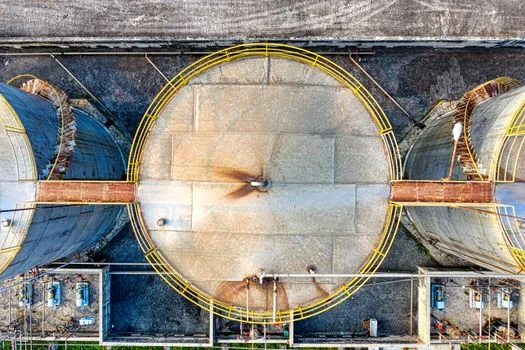
Total OPEX for a multi-stage etching system typically runs $0.40 to $0.85 per cubic meter of treated water. A hybrid DAF-RO-MBR train carries higher CAPEX—often $300,000 to $800,000 for a 100 m³/day plant—and its ROI is driven by water reuse, chemical recovery, and sludge avoidance. Energy is the largest operating line at roughly 40% of cost, mostly RO high-pressure pumps and MBR aeration blowers.
Closed-Loop Acid Regeneration for Etching Wastewater: Payback Math
Closed-loop acid regeneration for etching wastewater pays for itself in 18 to 24 months for plants processing more than 50 m³/day, by cutting sulfuric or hydrochloric acid consumption 40–60%. Recovering copper as high-purity metal or a concentrated sulfate solution converts a hazardous waste stream into a sellable byproduct, neutralizing the $300–$600 per ton sludge bill. Most plants we quote recover the full regeneration CAPEX inside two budget cycles.
| Cost Category | Estimated Cost ($/m³) | Percentage of OPEX |
|---|---|---|
| Electricity (Pumping/Aeration) | $0.15 – $0.35 | 40% |
| Chemicals (NaOH, PAC, Anti-scalant) | $0.10 – $0.25 | 25% |
| Membrane Replacement (3-5 yr cycle) | $0.05 – $0.15 | 15% |
| Maintenance & Labor | $0.10 – $0.15 | 20% |
| Total Estimated OPEX | $0.40 – $0.90 | — |
Troubleshooting Etching Wastewater Systems: 5 Common Problems and Fixes
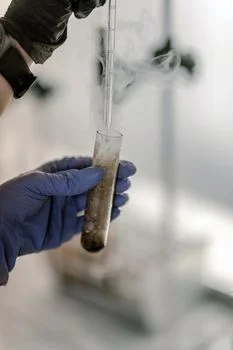
Membrane flux declines beyond 20% in etching systems trace mostly to inadequate pretreatment—specifically failing to hold TSS below 50 mg/L. When DAF underperforms, metal hydroxides carry into the RO membranes and scale them within weeks. Work the five fixes below in order before calling a membrane supplier.
- Problem 1: RO Membrane Fouling. If flux declines rapidly, check the DAF effluent turbidity. Fix: Increase coagulant (PAC) dose to 40–50 mg/L and ensure the PLC-controlled chemical dosing for pH adjustment and coagulant addition holds a stable pH of 8.5–9.0.
- Problem 2: Copper Sludge "Leaching." If sludge fails TCLP tests, suspect poor pH control during precipitation. Fix: Calibrate pH probes weekly and use NaOH instead of lime for more consistent metal hydroxide stability.
- Problem 3: High COD in MBR Effluent. That usually indicates organic overload from photoresist stripping, covered in depth in How to Treat Photoresist Wastewater: 2026 Engineering Specs. Fix: Dose Powdered Activated Carbon at 50–100 mg/L into the MBR tank to adsorb non-biodegradable organics.
- Problem 4: Corrosion in Heat Exchangers. Acid regeneration loops face chloride stress cracking. Fix: Replace standard stainless components with Hastelloy C-276 or titanium in the evaporation and recovery stages.
- Problem 5: DAF Float Layer Collapse. If the sludge blanket sinks, the air-to-solids ratio is too low. Fix: Verify saturator pressure at 4.5–6.0 bar and confirm the recycle pump delivers 25% of total flow.
Next Steps for Etching Plant Teams
Plants below 50 m³/day with a single etchant chemistry often start with DAF plus dosing controls; multi-line fabs with reuse mandates should price the hybrid train from the start. For a second opinion on the same stream, our companion guide How to Treat Etching Wastewater: 2026 Engineering Specs, Hybrid Systems walks the design sequence step by step. Bring flow rate, etchant chemistry, and your discharge permit to the conversation, then request a quote for an etching wastewater system with sizing and budget numbers.
Frequently Asked Questions
What is the best treatment system for a 100 m³/day PCB plant?
A hybrid DAF-RO-MBR train is the 2025 standard for a 100 m³/day PCB plant, holding copper effluent below 0.5 mg/L and recovering over 95% of water. Typical CAPEX lands at $400,000–$500,000 with OPEX near $0.45/m³. DAF pretreatment protects the RO membranes, while the MBR stage handles organic load from photoresist stripping.
How can I reduce my copper sludge disposal costs?
Install a closed-loop acid regeneration system and recover copper as metal or a concentrated sulfate byproduct. Closed-loop recovery cuts hazardous sludge volume by up to 80% and eliminates most disposal fees, which run $300–$600 per ton. At 5 tons per month, savings approach $36,000 annually before any byproduct credits.
What is the typical lifespan of RO membranes in these systems?
RO membranes last 3 to 5 years when DAF pretreatment holds TSS below 50 mg/L and anti-scalant dosing runs continuously. Without that pretreatment, membranes can fail in under 6 months as copper hydroxide scales the surface. Budget membrane replacement at 15% of OPEX, or $0.05–$0.15 per cubic meter treated.
Can treated etching wastewater be reused in the production line?
Yes, hybrid systems produce reuse water with COD below 50 mg/L and copper below 0.1 mg/L, suitable for cooling towers and initial rinses. Ultra-pure semiconductor rinses need additional DI polishing to reach conductivity under 10 µS/cm. Recovery above 95% lets most plants close the rinse loop almost completely.
What permits are required for an etching wastewater system?
US plants need an EPA NPDES permit for direct discharge or a local POTW pretreatment permit for sewer discharge. Permits typically specify copper at 2.07 mg/L monthly average, pH 6.0–9.0, and COD at 120 mg/L, with local programs often stricter. Zero-discharge designs sidestep NPDES permitting by recycling the treated flow on-site.
What does zero discharge etching wastewater treatment cost?
Zero discharge etching wastewater treatment costs $300,000–$800,000 in CAPEX for a 100 m³/day plant and $0.45–$0.85 per cubic meter to operate as a hybrid DAF-RO-MBR train. Payback runs 18–24 months for plants above 50 m³/day through acid recovery, water reuse, and avoided sludge disposal. Brine and concentrate handling add the residual cost line.