What 2026 Looks Like for Mining and Metals Wastewater in Alva
Alva sits in eastern Lee County, Florida, on the divide between the Myakka River and the Caloosahatchee watershed, and the wastewater profile in 2026 reflects that geography. Aggregate washing, limestone quarrying, and a growing metals-finishing sector around Fort Myers and LaBelle all discharge to the same receiving waters and limited POTW capacity. The 2026 compliance frame is federal-first, local-second: 40 CFR Part 436 governs metal mining effluent, 40 CFR Part 440 covers ore mining and dressing, and any flow sent to a POTW triggers a local pretreatment program that typically layers metals, oil & grease, and pH limits on top of the NPDES permit. Streams are typically high-TSS (often 1,500-5,000 mg/L), abrasive, modestly oily from equipment wash, and carry iron, aluminum, and manganese at concentrations that can exceed the local industrial surcharge threshold. Historically, mining facilities have leaned on gravity clarifiers for heavy sediment loads at lower cost, with the Ecologix 2026 mining-facility example showing 90% solids reduction in that mode. The remainder of this article refines that default for Alva's specific mix of fines, FOG, and metals.
How DAF and Clarifiers Actually Separate Solids
Gravity clarifiers use sedimentation tanks where heavier particles fall through a quiescent water column to a sludge bed, and clarified liquid exits over a peripheral weir. A lamella or inclined-plate clarifier inserts parallel plates at 55-60° to shorten the effective settling path, raising surface loading 3-5x over a conventional basin. A DAF works in the opposite direction. A pump pressurizes 10-25% of the clarified recycle with air at 4-6 bar; when the saturated recycle is released into the flotation tank at atmospheric pressure, it forms a cloud of 20-40 micron micro-bubbles (per DAF Corp's micro-bubble generator spec) that attach to floc, oil droplets, and fine particles and lift them to the surface, where a rotating skimmer removes them as a 2-4% solids float. This physics is why DAF wins on light, fine, or oily fractions that settle poorly, and why clarifiers win on coarse, dense grit. Both technologies usually require coagulant and flocculant dosing ahead of the separator; a HydropureWater automatic chemical dosing system can be specified on either train to keep jar-test-derived dose points stable across flow swings. The downstream solids story is similar in both cases: a 2-4% DAF float or a 1-3% clarifier underflow still needs a press to reach a stackable cake.
DAF vs Clarifier: Side-by-Side Parameters for Mining/Metals Streams
The table below provides data for a procurement committee to hand to vendors and for process engineers to verify against cut sheets. Numbers are pulled from DAF Corp's published performance (FC Maximizer 92-98% TSS removal, RC UniMax 85-90% TSS removal, 2-4% float solids), the Ecologix 2026 selection guide (oil & grease 95% on DAF vs 70% on clarifier, 90% TSS on mining clarifier), and HydropureWater product data (lamella surface loading 20-40 m/h). Capex and opex are planning-estimate bands, not unit quotes.
| Parameter | DAF (dissolved air flotation) | Gravity / Lamella Clarifier |
|---|---|---|
| TSS removal | 85-98% (FC Maximizer 92-98%; RC UniMax 85-90%) | 80-90% on mining streams (Ecologix mining case: 90%) |
| Oil & grease removal | Up to 95% (Ecologix food-stream benchmark, transferable to mining equipment wash) | <70% on emulsified oil (Ecologix) |
| Metals (Fe, Al, Mn) as co-precipitate | Effective on light hydroxide floc; faster rise rate | Effective on dense oxide or sulfide sludge; chemistry-driven |
| Surface / hydraulic loading | 5-25 m/h typical for mining feeds | 20-40 m/h on lamella (HydropureWater product data); 1-3 m/h conventional |
| Sludge concentration | 2-4% float (DAF Corp) | 1-3% underflow |
| Polymer / flocculant demand | Moderate; 1-10 mg/L typical with polymer aid | Lower on coarse grit; higher on colloidal fines |
| Footprint | Compact skid; HydropureWater DAF system covers 4-300 m³/h in a small envelope | Large civil footprint unless lamella; HydropureWater lamella clarifier reduces basin area 3-5x |
| Capex (planning band) | Higher equipment cost, lower civil cost (Ecologix 2026) | Lower equipment cost, higher civil/structural cost |
| Opex (planning band) | Air compressor + saturator energy; polymer; skimmer flights | Lower energy; lower polymer on coarse feeds; more blowdown labor |
| Operator skill | Moderate; chemical dose control dominates | Lower on conventional; moderate on lamella rake torque |
| Flow swing tolerance | Fast start, tolerates batch dumps and storm surges | Risk of washout at >2x design hydraulic loading |
Matching the Technology to Your Contaminant Profile
Translate the table to your own analytical results in four steps. Step 1 — coarse TSS, low oil: a primary lamella clarifier is the economic choice; add a polishing DAF only if you need to drive below 20 mg/L TSS or hit a tight 40 CFR 440 subcategory limit. Step 2 — oils, grease, or hydraulic fluid from equipment wash: DAF is the correct primary; a clarifier alone will leave emulsified oil in the overflow (Ecologix shows ~70% removal versus ~95% on a DAF on the same stream). Step 3 — metals as precipitates: both devices work, but the chemistry dominates the outcome. DAF floats light ferric or aluminum hydroxide floc faster; a clarifier handles dense manganese oxide or sulfide sludges without the air-saturator overhead. Step 4 — variable flow or batch dumps from haul-truck wash or storm surges: DAF starts in minutes and absorbs swings; a large conventional clarifier risks washout and resuspension. For space-constrained retrofits, a skid-mounted HydropureWater DAF system at 4-300 m³/h fits where a new clarifier basin cannot be excavated.
Cost, Footprint, and Operating Reality in 2026
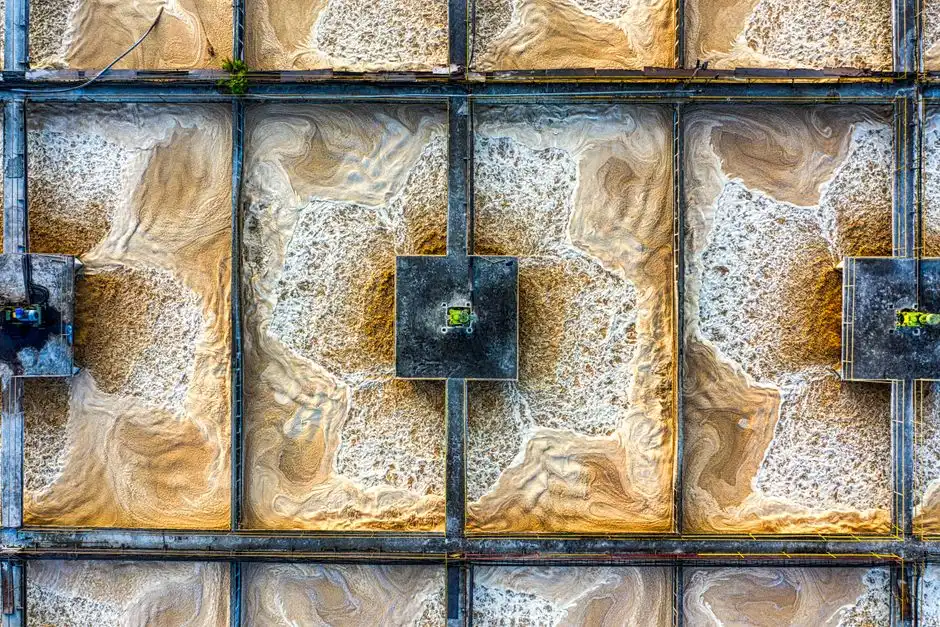
The 2026 Ecologix comparison provides the clearest public frame: DAF carries higher upfront cost than a basic clarifier, but a lamella clarifier trades that for higher civil and structural spend. Plan capex as a band, not a unit price — for procurement, model the DAF skid plus civil tie-in against the lamella basin plus rake/underflow piping, and weight them against your 2026 throughput target. On opex, clarifiers generally win on energy and polymer when the feed is coarse; DAF needs an air compressor and saturator but recovers more water for reuse, which can offset opex in water-stressed sites and reduce the volume sent to a downstream HydropureWater plate and frame filter press. Operator load is similar in steady state; both are skimmable, but a DAF with automatic skimmer flights and a 2-year-warranty-class unit (per the VanAire DAF reference) reduces manual sludge blowdown compared to a conventional clarifier. The 2-4% DAF float or 1-3% clarifier underflow both end at the press, where cake dryness determines your landfill or backfill cost.
Recommended Train for a Typical Alva Mining or Metals Plant
For a 200-500 m³/h aggregate or limestone wash stream that must meet 40 CFR 440 ore-mining effluent limits and a local POTW surcharge, the defensible 2026 train is: equalization → grit removal → HydropureWater lamella clarifier → HydropureWater DAF system polish → multimedia filtration, with combined sludge routed to a plate and frame press. The clarifier takes out the abrasive coarse load (the 90% solids step in the Ecologix mining case), and the DAF polishes the fines and any residual FOG to keep TSS and oil & grease under the NPDES permit ceiling. For a metals-finishing or equipment-wash stream under 40 CFR 436 with emulsified oil as the dominant issue, reverse the priority: equalization → pH/coagulation → DAF primary → multimedia filter → RO or discharge, with the DAF as the workhorse. A hybrid train is increasingly the 2026 default in mill circuits because it satisfies both the suspended-solids and the oil/grease sides of the permit. For tight footprints, integrate both on a single skid via a HydropureWater JY integrated water purification system, sized against your peak hourly flow, and tie every step to a specific 40 CFR 436/440 analyte plus the local POTW's TSS, oil & grease, and metals surcharge triggers to ensure the investment survives an audit.
Frequently Asked Questions
Can a DAF replace a clarifier in a mining plant?
Yes, but only when the stream is dominated by fines, oil, or emulsion. On coarse abrasive grit, a DAF is mechanically punished and a lamella clarifier delivers 80-90% TSS removal at lower cost (per Ecologix 2026).
What TSS removal can a DAF realistically hit on mining wastewater?
Plan for 85-98%. DAF Corp's FC Maximizer publishes 92-98% and the RC UniMax 85-90% on 2,000 ppm feed streams, with clarified overflow below 20 ppm achievable at optimized dose.
Do clarifiers work for oily mining or metals wastewater?
Not well. Clarifiers average under 70% removal on emulsified oil versus up to 95% on a DAF on the same stream (Ecologix 2026), so a clarifier alone will fail most oil & grease permit limits.
Is a hybrid DAF + clarifier train common in 2026?
Yes. The dominant 2026 mill circuit is a lamella clarifier ahead of a DAF polish (or a DAF primary plus multimedia filter for oily streams), because one device rarely satisfies both the TSS and the oil & grease sides of a 40 CFR 436 or 440 permit.
What 40 CFR part governs metal mining effluent limits?
40 CFR Part 436 governs metal mining effluent, and 40 CFR Part 440 covers ore mining and dressing. Both flow through the NPDES permit, with POTW pretreatment programs often adding metals, oil & grease, and pH limits on top (per EPA 40 CFR 436).