Why Mankato Fabricated Metals Plants Are Asking DAF-vs-Clarifier Again in 2026
For any fabricated metals plant in Mankato, MN discharging to the City of Mankato Water Reclamation Facility, the binding constraint in 2026 is no longer equipment preference — it is 40 CFR 433, the EPA's Metal Finishing categorical pretreatment standard, paired with the City of Mankato's Industrial User (IU) discharge program. The categorical standard sets daily-maximum ceilings that most standalone clarifiers cannot meet on the O&G side, and most standalone DAF units cannot meet reliably on the TSS side during flow surges. The EPA 2024 PFAS Strategic Roadmap has added a second pressure: even shops that historically flew under the radar are now auditing their waste streams for PFAS inputs from machining coolants, defoamers, and rinse aids, which raises the cost of a failed compliance event (EPA, 2024-10).
Fabricated metals in the Mankato County area is not one waste stream. Structural steel fab shops running laser cutting and stamping generate high TSS with moderate tramp oil. Agricultural equipment manufacturers add welding flux slugs and powder-coat overspray. Medical device component shops run low-oil, high-purity rinse streams. Each of these produces a different TSS-to-O&G ratio, and each of those ratios points to a different primary device. That is the practical question this article answers: for a given Mankato fab waste profile, which device — or which combination — is the right primary clarifier to keep the plant under 40 CFR 433 daily-max limits.
DAF vs Lamella Clarifier: How Each Technology Actually Works
A dissolved air flotation (DAF) unit is a buoyancy device, not a settling device. Pressurized recycle water is saturated with air in a saturation tank, then released at atmospheric pressure inside the flotation cell. The pressure drop nucleates 30–50 µm micro-bubbles that attach to chemically conditioned floc and float oils, fats, and suspended solids to the surface, where a paddle skimmer scrapes the float mat into a hopper. Heavier solids that do not attach settle to the bottom cone and are augered out (per Clearwater/SigmaDAF technical literature, 2026-04). DAF is the standard workhorse for streams with free and emulsified oils, tramp oils from CNC coolant baths, and variable solids loads.
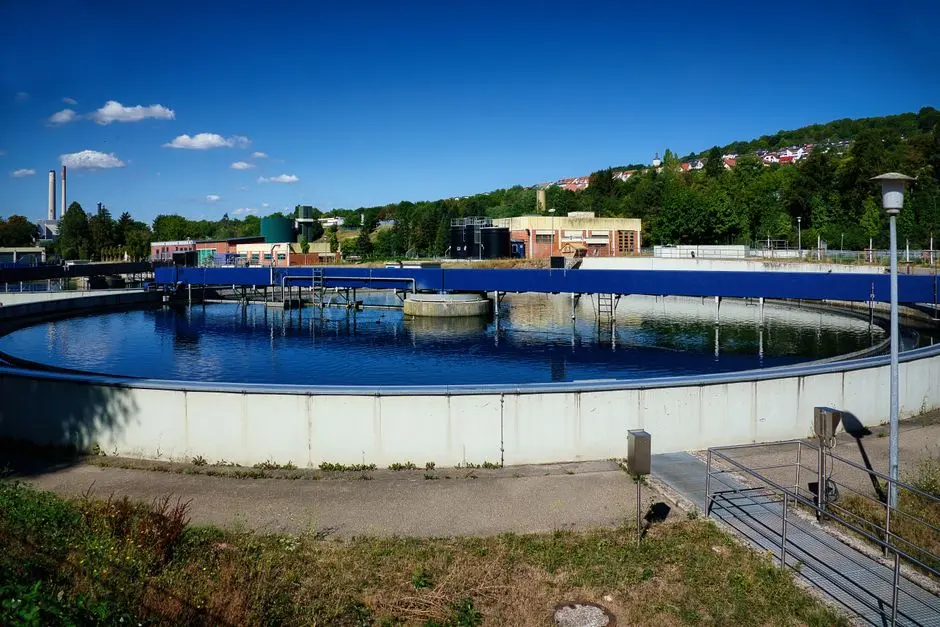
A lamella clarifier — sold as a high-efficiency sedimentation tank — uses inclined parallel plates set at 55–60° to shorten the effective settling distance. Solids settle onto the plate surfaces, slide down, and consolidate in a sludge hopper at the base, while clarified water rises through the plate pack. Surface loading rates for industrial lamellas typically run 20–40 m/h (HydropureWater catalog). Lamella units are mechanically simple, footprint-efficient, and effective on streams where the contaminant is settleable TSS rather than floatable FOG.
Neither device works without chemical conditioning. Coagulant (PAC, alum, or ferric chloride) neutralizes surface charge, and an anionic polyacrylamide flocculant builds the microfloc that micro-bubbles or settling plates can actually capture. Skipping the chemistry step is the single most common reason a DAF or lamella clarifier fails a 40 CFR 433 compliance test, regardless of how well the hardware was specified. A HydropureWater automatic chemical dosing skid is typically paired with either primary to hold dose rates stable through flow and concentration swings.
Materials of construction matter in fabricated metals because the influent is rarely neutral. Standard 304SS is adequate for most machining and stamping rinse streams. 316SS is specified for high-chloride coolant baths and acid-bearing rinse streams. Polypropylene construction is used for acidic pickling rinses and some anodizing waste streams (per Clearwater/SigmaDAF, 2026-04). For a Mankato fab shop running a mix of parts, the material decision is usually driven by the worst stream the unit will see, not the average.
Side-by-Side Comparison: DAF vs Lamella Clarifier for Fabricated Metals
The table below is the working document a Mankato engineer can pull up in front of a plant manager to drive a primary-clarifier decision. Data anchors are the DAF flow range (4–300 m³/h) and lamella surface loading (20–40 m/h) from the HydropureWater catalog, plus the DAF mechanism description from Clearwater/SigmaDAF (2026-04).
| Parameter | DAF | Lamella Clarifier (high-efficiency sedimentation tank) |
|---|---|---|
| Mechanism | Buoyancy — 30–50 µm micro-bubbles lift FOG and TSS to surface (per Clearwater/SigmaDAF, 2026-04) | Gravity — inclined plates shorten settling distance; surface loading 20–40 m/h |
| Best for Oil/FOG | Yes — primary design target | Marginal — free oil may pass; emulsified oil passes |
| Best for TSS | Yes — bulk removal, sensitive to flow spikes | Yes — steady-state settleable solids |
| Typical Removal | High removal of FOG, oils, and suspended solids (per Clearwater/SigmaDAF product literature, 2026-04) | High-efficiency sedimentation of settleable TSS (HydropureWater catalog) |
| Hydraulic Loading / Flow | DAF 4–300 m³/h band | Surface loading 20–40 m/h on plate projected area |
| Footprint | Larger — needs skimmer reach, sludge auger, float hopper | Compact — vertical plate pack reduces floor area 50–80% vs. conventional clarifier |
| Sensitivity to Flow Shocks | More tolerant — skimmer/paddle speed adjustable via PLC | More sensitive — needs equalization upstream |
| CAPEX Range (qualitative) | Moderate–high (vessel, saturation tank, skimmer, compressor) | Low–moderate (tank, plates, sludge hopper) |
| OPEX Drivers | Compressed air, polymer, skimmer maintenance | Polymer, plate cleaning, sludge pumping |
| 40 CFR 433 Suitability as Standalone | Meets O&G 38 mg/L daily max reliably; can spike on TSS during surges | Meets TSS 60 mg/L daily max reliably; can fail O&G when tramp oil is present |
| Winter (Mankato) Operating Note | Saturation tank must be enclosed/heat-traced; cold water reduces air solubility and micro-bubble yield | More cold-tolerant mechanically, but viscosity rise reduces plate efficiency below ~40 °F |
Sources for the table: Clearwater/SigmaDAF (2026-04) on DAF mechanism; HydropureWater catalog on DAF flow range and lamella surface loading. The standalone-suitability row is the most important column for a 40 CFR 433 shop — it is the column that drives the hybrid answer in the next section.
The 40 CFR 433 Compliance Reality: Why One Device Rarely Does the Job
The Metal Finishing categorical standard at 40 CFR 433 sets daily-maximum effluent limits that are tight for a primary clarifier. The two limits that govern fabricated metals pretreatment are total suspended solids (TSS) and oil and grease (O&G), each with a daily-max ceiling and a monthly-average ceiling. For a fabricator whose waste includes cutting fluids, stamping lubricants, and quench oils, the O&G ceiling is the harder of the two to meet; for a shop with high inorganic TSS from grinding or shot blasting, the TSS ceiling is the harder one. Neither device is a universal answer.
A lamella clarifier alone typically meets the TSS ceiling when flow is steady and chemistry is dialed in, but it does not capture emulsified tramp oil. A DAF alone typically meets the O&G ceiling and removes the bulk of TSS, but it can spike on TSS during batch discharges — a single floor wash, a coolant tank dump, or a shift changeover can carry a slug of fines through the flotation cell. The 2026 industry answer for 40 CFR 433 in fabricated metals is therefore a hybrid train: DAF as the primary device to remove FOG and bulk TSS, followed by a lamella polish to catch the TSS fines and provide redundancy. The lamella also acts as a buffer when the DAF is taken offline for skimmer or auger service.
| 40 CFR 433 Daily-Max Limit | Value | DAF Alone | Lamella Alone | DAF + Lamella Polish |
|---|---|---|---|---|
| TSS | 60 mg/L daily max | Often meets; spikes on flow surges | Typically meets under steady flow | Consistently meets with margin |
| O&G | 38 mg/L daily max | Typically meets | Often fails when tramp oil present | Consistently meets with margin |
If the 2026 goal is water reuse rather than just compliant discharge, the polish step can be extended with a multimedia filter for residual fines, or an MBR (membrane bioreactor) stage for organic polishing and reuse-quality effluent. Chemical conditioning remains non-optional in any of these configurations — skipped chemistry is failed compliance regardless of hardware choice.
Mankato-Specific Siting and Operating Considerations
Mankato's climate is the first design constraint any DAF supplier has to address in writing. Ambient temperatures of -20 to -30 °F are normal from late December through February, and unconditioned saturation-tank water loses air solubility rapidly as it cools. A cold saturation tank produces larger, fewer bubbles — exactly the wrong direction for DAF performance, which depends on dense clouds of 30–50 µm micro-bubbles. The fix is straightforward: enclose the DAF in a heated equipment room, heat-trace the recycle line, or oversize the saturator to compensate for reduced gas transfer. A lamella clarifier is mechanically more cold-tolerant because it has no compressed-air system, but water viscosity rise below ~40 °F still drags plate efficiency down and the operator should expect a winter derate on surface loading.
Footprint is the second Mankato-specific constraint. Many of the area's fabrication shops sit in older industrial parks — North Mankato, Belle Haven, the Riverfront Drive corridor — where floor space is leased by the bay and ceiling height is fixed. A lamella's vertical plate pack often wins the footprint tiebreaker on its own, which is why some shops lead with lamella and add DAF upstream only when oil loads justify it. Conversely, a greenfield build on a clean lot usually starts with DAF and accepts the larger footprint in exchange for oil-handling capability.
The permit pathway runs through the City of Mankato Water Reclamation Facility's industrial user program. Shops whose discharge exceeds categorical thresholds are designated Significant Industrial Users (SIUs) and carry self-monitoring, reporting, and inspection obligations; smaller fabricators may be non-SIU but are still subject to local discharge limits and the same 40 CFR 433 ceilings. The practical implication for equipment selection is the same either way: spec to the 40 CFR 433 ceilings, because local limits only get tighter over a permit cycle, not looser.
Sludge handling closes the loop. A DAF float mat and a lamella underflow both have to be dewatered before disposal, and a small-plate-and-frame filter press is the standard match for a single-shift fab shop's sludge volume. Power and instrumentation should run on a PLC with a small HMI — the compact DAF and the lamella both ship this way and suit a plant that does not have a full-time wastewater technician on staff.
Selection Decision Framework: Pick the Right Train in 5 Steps
This is the workflow a Mankato process engineer can run with their own influent data and walk into a vendor meeting with.
- Quantify influent O&G and TSS. If O&G is consistently above 50 mg/L, or if flow varies by more than 2:1 across a shift, lead with DAF. If O&G is below 30 mg/L and flow is steady, lead with lamella.
- Check 40 CFR 433 categorical status. Electroplating, anodizing, and other core metal-finishing operations are fully categorical; other fab operations may be non-core but should still design to the 40 CFR 433 ceilings, since local limits trend toward the categorical values over a permit cycle.
- Match flow to unit size. Use the DAF 4–300 m³/h band and the lamella 20–40 m/h surface loading to shortlist models. For a single-shift fab shop with batch flows, the smaller end (e.g., 4–25 m³/h) is the typical fit.
- Bundle chemical conditioning and sludge dewatering into the same scope. Never specify a primary clarifier without specifying the chemistry skid and the dewatering press on the same drawing. The chemistry is what makes the clarifier work; the press is what keeps the float or sludge from becoming a separate compliance problem.
- Default to a hybrid train when flow is above ~20 m³/h and oil is present. DAF primary + lamella polish is the 2026 default for 40 CFR 433 in fabricated metals. The lamella polish is cheap insurance against a DAF spike and gives the operator a unit to run on while the DAF is in scheduled service.
For a deeper dive on a parallel selection problem in heavy industry, the Catlettsburg mining/metals DAF-vs-clarifier guide walks through the same framework for higher-solids, higher-flow streams.
Frequently Asked Questions
What CAPEX range should a Mankato fab shop budget for a DAF or lamella primary clarifier in 2026?
CAPEX scales with flow and material of construction. For a single-shift fab shop in the 4–25 m³/h band, a packaged DAF with chemical conditioning skid typically lands in the low-to-mid five figures USD in 304SS, with a 30–50% adder for 316SS or polypropylene construction. A HydropureWater lamella clarifier at the same flow typically lands 20–40% below the DAF CAPEX because there is no saturator, compressor, or skimmer mechanism. Site work, PLC integration, and the sludge dewatering press are separate line items and often add another 30–60% on top of the primary unit.
How does a Mankato winter affect DAF saturation tank performance?
Colder water holds less dissolved air, which means the saturator produces fewer and larger micro-bubbles — the opposite of the 30–50 µm cloud a DAF needs. The standard fix is an enclosed, heated equipment room or heat-traced recycle lines; some operators also oversize the saturator retention time to compensate. A lamella clarifier is mechanically unaffected by cold but loses plate efficiency as water viscosity rises below ~40 °F, so a winter derate on surface loading should be planned in.
Do I need both a DAF and a lamella clarifier to comply with 40 CFR 433?
For a single-shift fab shop with steady flow and oil consistently below 30 mg/L, a lamella alone can meet 40 CFR 433 if chemistry is dialed in. For any shop with tramp oil, emulsified coolant, or variable flow, a DAF primary is the safer answer on the O&G side, and adding a lamella polish is cheap insurance against TSS spikes. Above roughly 20 m³/h with oil present, the DAF + lamella hybrid is the 2026 default for fabricated metals under 40 CFR 433.
How long does the Mankato IU permit process take for a new primary clarifier install?
Permit timing depends on whether the shop is a new SIU or a modification at an existing IU, but plan on 60–120 days from formal submittal to first discharge for a non-SIU modification, and longer for a new SIU designation. The practical lever is to submit engineering drawings and the 40 CFR 433 compliance narrative early, and to have the chemistry and sludge-handling scopes locked before the permit reviewer asks — these are the items that most often bounce a submittal.
What sludge dewatering step pairs with a DAF or lamella in a small fab shop?
A small plate-and-frame filter press is the standard match for either primary. It handles the DAF float mat and the lamella underflow at the cake-dryness level haulers and waste-to-energy facilities expect, and it is sized correctly for the sludge volume a single-shift fab shop generates. For an existing system showing premature wear, the industrial water purification system maintenance guide covers inspection intervals and replacement parts for the press feed pump and cloth media.
Related Equipment
- DAF system — specifications, capacity range, and technical data
- HydropureWater lamella clarifier — specifications, capacity range, and technical data
- HydropureWater automatic chemical dosing skid — specifications, capacity range, and technical data
- plate-and-frame filter press — specifications, capacity range, and technical data