
Why Plastics and Rubber Wastewater in New Paris Needs a Different Decision
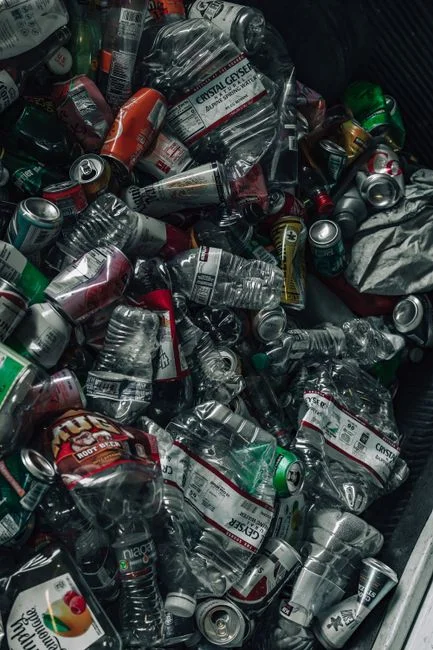
Plastics extrusion, injection molding, and rubber compounding/molding facilities in and around New Paris, Indiana generate a specific contaminant profile that standard dissolved air flotation (DAF) vs clarifier comparisons often overlook. The dominant classes are release agents and mold lubricants (silicone emulsions, petroleum-based parting fluids), latex overspray from dipped rubber goods, polymer dust and pellet fines, calcium carbonate and talc filler wash-off, and surfactant-stabilized emulsions from cleaning operations. These streams are routinely policed under 40 CFR 433 categorical pretreatment standards for NAICS 326 (Plastics and Rubber Products Manufacturing), with daily-maximum limits of 57 mg/L TSS, 38 mg/L O&G, and 227 mg/L COD and monthly averages of 31 mg/L TSS, 21 mg/L O&G, and 153 mg/L COD at the regulated discharge point. A 2021 review in Reviews in Environmental Science and Bio/Technology (doi:10.1007/s11157-021-09609-6) documents that microplastics are a measurable wastewater pollutant requiring active unit-process removal rather than incidental capture. New Paris sits inside the Elkhart County / northern Indiana recreational-vehicle and rubber-products manufacturing corridor, and local POTW pretreatment programs are actively enforcing those categorical limits in 2026; therefore, the wrong primary clarifier decision leads directly to a discharge violation.
How a DAF System Removes Contaminants vs How a Clarifier Does It
A dissolved air flotation system works by saturating a pressurized recycle sidestream — up to 30% of the influent flow per the MDPI 2024 review of DAF phases — at 4–6 bar (≈60–90 psig) and then releasing that stream through needle valves into the flotation cell. The pressure drop generates 10–80 μm micro-bubbles that attach to oil droplets, latex particles, and fine suspended solids, lifting them to the surface where a skimmer removes the float blanket. A HydropureWater high-efficiency lamella clarifier works on the opposite principle: denser particles settle under gravity through inclined plate packs, with surface loading rates of 20–40 m/h (per HydropureWater lamella product data) and sludge recirculation improving floc density. The mechanism split matters because oils, FOG, latex, and microplastics all have specific gravity near or below 1.0; they physically cannot settle in a clarifier regardless of retention time, so DAF is the only realistic primary unit process for those contaminant classes. Conversely, calcium carbonate, talc, glass fiber, and metal fines settle readily and produce a thicker, easier-to-dewater sludge blanket under gravity, where lamella units win on operational cost and solids handling.
DAF vs Clarifier: Side-by-Side Performance for Plastics and Rubber Streams
The table below is built around the actual contaminant classes a plastics or rubber plant sees, not generic "suspended solids" language. Use it as the screening tool for any New Paris 2026 capital project or NPDES permit renewal.
| Parameter | DAF (with polymer) | Lamella Clarifier (with polymer) | Plastics/Rubber Implication |
|---|---|---|---|
| TSS removal | 80–95% on a single pass | 50–75% on the same feed | DAF gives margin against 40 CFR 433 daily-max spikes |
| FOG / O&G removal | 90–95% (per Ecologix 2026 guide) | 50–70% — emulsified oils do not settle | Clarifier alone cannot reliably hit 38 mg/L daily max |
| Latex & microplastic capture | Effective via bubble attachment on 10–80 μm bubbles | Largely ineffective below ~50 μm | DAF is the defensible 2026 ESG choice for microplastic capture |
| Footprint per m³/h | ~0.05–0.08 m² | ~0.20–0.35 m² | DAF frees up to 70% of floor area in tight plant rooms |
| Float / underflow %DS | Float 2–4% DS | Underflow 3–6% DS | Clarifier sludge is denser and smaller in volume |
| 2026 installed CAPEX band | $28,000–$55,000 per m³/h (carbon-steel) | $16,000–$32,000 per m³/h | Clarifier runs 30–45% cheaper, but only if the feed allows it |
The headline numbers in the rows above are the same ones a peer engineer will request during a review meeting: 80–95% TSS, 90–95% O&G, and 10–80 μm bubble size. The microplastic row is the one your 2026 ESG report will reference, as DAF is the only unit process that actively removes sub-50 μm particulates by float attachment.
Matching the Technology to Your New Paris Plant Profile
The decision involves determining which unit process fits the contaminant mix coming off specific production lines. Three New Paris archetypes cover most of the corridor:
- Rubber molder (high release-agent and O&G load): choose DAF as primary. Emulsified mold lubricants and silicone release agents carry a specific gravity below 1.0 and will not settle; a clarifier alone will not meet the 40 CFR 433 O&G daily maximum of 38 mg/L consistently. Spec the DAF ahead of equalization, then route to biological polishing.
- Plastics extrusion line (filler wash-off, minimal FOG): a lamella clarifier can work as primary if the biological train downstream is sized to take the residual COD, and if microplastic capture is not a 2026 corporate ESG deliverable. If your sustainability report calls out a microplastic reduction target, specify DAF even on a low-FOG feed.
- Mixed-profile contract manufacturer (both FOG and dense inerts): a hybrid DAF → lamella clarifier train is the 2026 best practice. DAF takes out the oils, latex, and microplastics; the lamella polishes residual settleables and reduces the TSS load on the biological step. Use the 40 CFR 433 effluent thresholds as the design gate, because most plants over-engineer when they forget the standard applies to the discharge, not the waste stream leaving the line.
For any of the three profiles, an automatic polymer dosing skid upstream is mandatory. Emulsion-breaking polymer is what makes DAF hit 90%+ on O&G; without it, the bubble attachment step is unreliable and the float blanket re-shears.
Pretreatment, Sludge Handling, and Downstream Integration
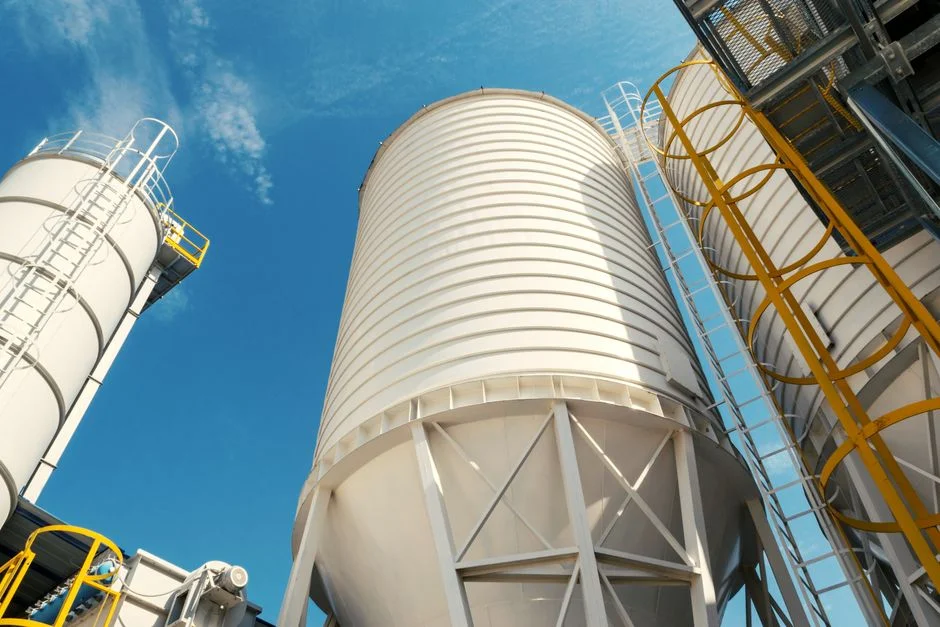
Each unit process only performs as designed when the upstream and downstream lines are correctly specified. Spec a GX series rotary mechanical bar screen at the headworks to remove fibrous polymer, rag, and pellet carry-over before it reaches the flotation cell or lamella pack — bar spacing of 3–5 mm is the typical 2026 spec for plastics/rubber service. DAF float at 2–4% dry solids dewaters well on a HydropureWater plate and frame filter press, reaching a 25–35% DS cake that hauls to landfill or is suitable for thermal recovery; lamella underflow at 3–6% DS is denser and smaller in volume, which is one operational reason some plants favor it on filler-heavy feeds. A 2024 SSRN study on combining DAF with modified moving bed biofilm reactors (MMBBR) for synthetic oily wastewater (doi:10.2139/ssrn.4731382) is relevant for any 2026 capacity expansion that needs to drop residual COD below 153 mg/L on the monthly average. Plants running multiple product families on one equalization tank should budget for jar-test-driven polymer tuning every 6–12 months, as the dose that flocculates a silicone-rich release-agent wash will over-treat a calcium-carbonate-rich extrusion line and waste polymer.
2026 Cost and Footprint Comparison for a New Paris Plant
For procurement, the defensible 2026 numbers to bring into a CAPEX meeting are:
| Cost / Footprint Item | DAF Train (50 m³/h reference) | Lamella Clarifier Train (50 m³/h reference) | Notes |
|---|---|---|---|
| Installed CAPEX ($/m³/h) | $28,000–$55,000 (carbon steel; higher for SS or full automation) | $16,000–$32,000 | Clarifier runs 30–45% lower |
| Footprint (m²) | 2.5–4.0 | 10–17.5 | DAF uses 60–75% less floor area |
| OPEX drivers | Polymer 5–25 mg/L + compressed air | Sludge pumping + lower polymer dose | DAF air ≈ 0.04–0.06 kWh/m³ |
| Total installed train (50 m³/h) | $1.4M–$2.7M | $0.8M–$1.6M | HydropureWater field data, 2026 |
| 40 CFR 433 O&G compliance | Reliable single-pass | Marginal on rubber-rich feed | Drives selection when FOG > 100 mg/L |
The hybrid DAF → lamella clarifier train for a 50 m³/h New Paris plastics line lands at roughly $2.2M–$4.0M installed in 2026, depending on stainless content, building envelope, and automation scope. The clarifier-only train is cheaper, but it will not reliably hit the 38 mg/L O&G daily-max on a rubber-molding feed, and the lower CAPEX disappears the first time the POTW issues a Notice of Violation. For ESG-driven microplastic capture commitments, the DAF leg is the only defensible primary unit process in 2026.
Frequently Asked Questions
Which is better for a rubber molding plant in New Paris — DAF or clarifier?
A DAF system is the correct primary unit process for a rubber molding plant because emulsified release agents and silicone mold lubricants have specific gravity near or below 1.0 and will not settle under gravity. DAF with polymer conditioning typically removes 90–95% of FOG/O&G in one pass, which is required to consistently meet the 40 CFR 433 daily-maximum O&G limit of 38 mg/L for NAICS 326.
Can a lamella clarifier meet 40 CFR 433 categorical pretreatment limits on a plastics extrusion line?
It depends on the contaminant mix. A lamella clarifier with polymer dosing can deliver 50–75% TSS removal and is often adequate on an extrusion feed with low FOG and no latex carry-over, provided the downstream biological train is sized to absorb the residual COD load. If the feed contains emulsified oils, latex overspray, or a corporate microplastic capture target, a clarifier alone is not defensible and a DAF should be specified as the primary unit.
What is the 2026 installed cost of a DAF system for a 50 m³/h plastics or rubber line?
A carbon-steel DAF train in 2026 runs roughly $28,000–$55,000 per m³/h of hydraulic capacity, putting a 50 m³/h reference installation in the $1.4M–$2.7M range. Stainless construction, full automation, and a building envelope typically push that figure into the upper half of the band; a hybrid DAF → lamella clarifier train for the same flow lands at roughly $2.2M–$4.0M installed.