Why 2026 Is a Decision Year, Not a Maintenance Year, for Centertown Mining Lines
For Centertown mining and metals factories in 2026, the right answer is rarely DAF or clarifier alone — it is DAF primary to strip FOG, colloidal fines, and light floc, followed by a lamella clarifier as polish to meet 40 CFR 437 daily-maximum limits for TSS, lead, zinc, copper, and iron. Conventional gravity clarifiers lose on footprint (5–8 m² per m³/h vs 0.2–0.4 m² per m³/h for DAF) and civil cost, and are rarely the 2026 answer.
Three forces are converging on Centertown board agendas this budget cycle. The first is the 40 CFR 437.30–437.32 envelope under the NPDES Ore Mining and Dressing point source category: daily-maximum and monthly-average effluent limits for total suspended solids, total recoverable lead, zinc, copper, and iron, plus a pH band of 6.0–9.0 for any discharge to waters of the United States. The second is asset age — many in-service clarifiers at US mining and metals plants date to the 1970s, and ESG-driven closed-loop water-reuse targets are moving replacement from maintenance line item to board-level capital approval. The third is stream profile: dense metal-hydroxide floc (Fe, Mn, Al hydroxides, silica fines, magnetite) with intermittent tramp oil from maintenance bays, which is the opposite of the FOG-heavy food-processing stream most DAF articles assume. The 2026 question is therefore not DAF or clarifier — it is which one goes first.
How a DAF Actually Clears Metals Wastewater
A dissolved air flotation unit clears metals wastewater by attaching 30–50 µm micro-bubbles to chemically conditioned floc and floating it to the surface for skimming. Clarified effluent is pressurized to ~6 bar (87 psi) in a packed saturation vessel, saturated with air, then depressurized back into the flotation tank at atmospheric pressure — that pressure drop is what nucleates the micro-bubble cloud (per S1, S5). A standard DAF system ships in 13 models covering 4–300 m³/h, which keeps custom-engineering markup out of most mid-band mining flows.
Removal performance in this service class is >90% for TSS, FOG, COD, and BOD, and DAF also captures particulate metals and colloidal silica when upstream chemistry is right (per S4, S5). The chemistry prerequisite is non-negotiable: coagulants — typically polyaluminum chloride (PAC), ferric chloride, or alum — paired with an anionic polymer flocculant at 1–5 mg/L. Without that conditioning, micro-bubbles pass right past colloidal fines and the DAF underperforms (per S1, S4). Hardware layout is straightforward: a paddle skimmer sweeps float into a sludge trough, clarified water exits below the float blanket, and heavy settleable solids drop to a bottom sediment compartment that discharges as underflow sludge.
How a Lamella Clarifier Handles Hydroxide Floc
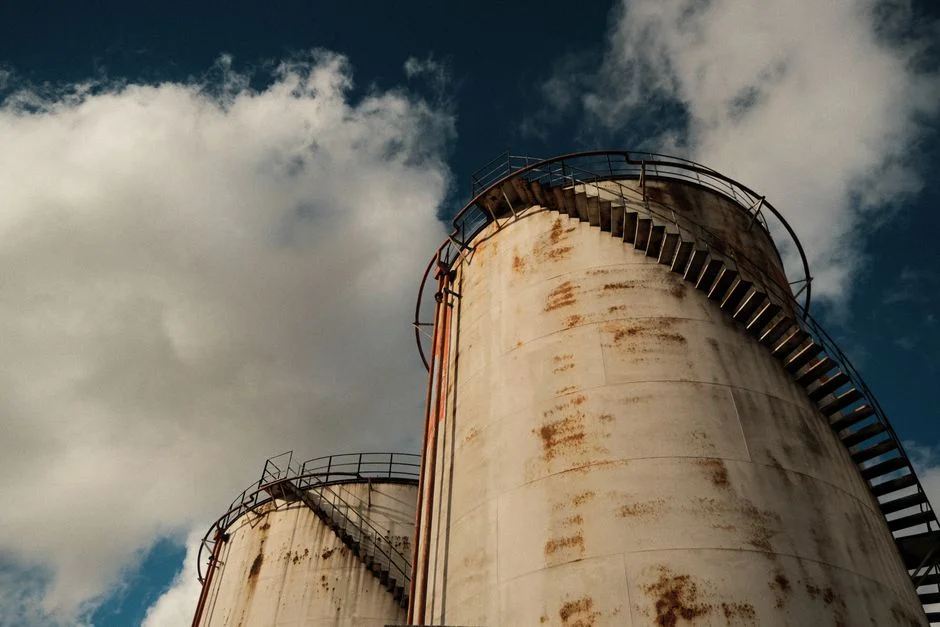
A lamella clarifier — also called an inclined-plate settler or high-rate sedimentation tank — handles dense metal-hydroxide floc by multiplying effective settling area inside a compact tank, which lets it run at surface loadings of 20–40 m/h versus the 1–2 m/h of a conventional gravity clarifier (HydropureWater P10). The mechanism is purely physical: floc settles onto the inclined plates, slides down to a collection hopper, and is removed as underflow sludge while clarified water rises counter-current to the plate surface. A reference HydropureWater high-efficiency lamella clarifier is built around exactly this plate pack.
The footprint math is what makes the lamella viable at all. A conventional gravity clarifier runs 5–8 m² per m³/h, a lamella 0.3–0.6 m² per m³/h, a DAF 0.2–0.4 m² per m³/h — for a 100 m³/h stream that translates to roughly 30 m² of DAF footprint versus ~600 m² for a conventional clarifier. Many lamella designs also include a sludge-recirculation loop that re-injects settled sludge to contact fresh influent, cutting coagulant consumption by up to 30% (HydropureWater P10). The hard limitation is FOG: free oil and grease do not settle in a clarifier's residence time and exit in the overflow, so any oil load has to be handled upstream or in a downstream polish step (per S1, S5).
Side-by-Side: DAF, Lamella, and Conventional Clarifier on the Rows Procurement Asks About
Procurement does not ask about micro-bubble nucleation kinetics — it asks about TSS removal, CAPEX multiplier, footprint, energy, and float dryness. The table below reorganizes the dense metal-hydroxide stream parameters, not food-processing FOG defaults, into the rows a capital-procurement lead actually defends in front of a CFO.
| Parameter | DAF | Lamella Clarifier | Conventional Gravity Clarifier |
|---|---|---|---|
| TSS removal on dense Fe(OH)₃ / Al(OH)₃ floc | 90–95% (per S5: 95% in food plant reference) | Comparable when floc is well-conditioned | 70–85% on legacy 1970s designs |
| CAPEX multiplier (lamella = 1.0x) | 1.5–2.5x (HydropureWater field data, 2026) | 1.0x | 0.7–0.9x equipment, plus major civil/building cost |
| Footprint per m³/h | 0.2–0.4 m² | 0.3–0.6 m² | 5–8 m² |
| Energy use | 8–15 kWh/m³ (compressor + recycle) plus chemistry | 0.1–0.3 kWh/m³ (scraper drive) plus chemistry | Scraper drive plus chemistry |
| Float/underflow dryness | 4–8% DS (dewaterable in standard filter press) | 2–5% DS underflow | 1–3% DS underflow |
| Cold-weather performance (<10°C) | Moderate — size 10–15% margin on recycle pump and saturation vessel | Low — freezing risk in unheated sludge hopper | Low — same freeze risk in larger vault |
| Best-fit stream | FOG, emulsified oil, colloidal fines, light floc | Dense settleable hydroxide floc, high flow, no oil | Legacy installations, very large settling basins |
The head-to-head verdict: DAF wins on FOG, colloidal fines, footprint, and float dryness; lamella wins on CAPEX for FOG-free streams at very high flow; the conventional clarifier loses on footprint and is rarely the 2026 answer.
Three Centertown Scenarios and What They Each Choose
Three Centertown scenarios cover the bulk of the mining and metals cases a procurement lead will see in this budget cycle. Each one is anchored in 40 CFR 437 daily-maximum numbers a compliance officer can verify against the current NPDES permit.
| Scenario | Stream Profile | Recommended Train | Expected 40 CFR 437 Effluent |
|---|---|---|---|
| 1 — Iron/taconite concentrator | 250 m³/h, no oil, 1,500–3,000 mg/L TSS as Fe(OH)₃ floc plus magnetite fines | Lamella primary at ~30 m/h surface loading (~8–9 m² plate area); add DAF polish only if a maintenance shop starts contributing FOG intermittently | TSS <30 mg/L on lamella alone; Pb, Zn, Cu, Fe controlled at upstream precipitation (per 40 CFR 437 daily-maximum limits) |
| 2 — Mixed-metals refinery | 80 m³/h, 100–300 mg/L TSS, Cu/Zn precipitates, 50–200 mg/L emulsified cutting oil from maintenance bay | DAF primary (a clarifier would discharge emulsified oil straight to the NPDES outfall and trip the 40 CFR 437 envelope on oil-and-grease as well as TSS); small lamella as polish for residual TSS margin. 80 m³/h sits mid-band on a standard DAF model with no custom-engineering cost | TSS <20 mg/L post-polish; metals well inside daily-maximum envelope |
| 3 — Cold-weather copper-mine dewatering | <20 m³/h sump discharge, intermittent through winter | Compact DAF skid — starts and stops in minutes; a lamella in an unheated vault risks freezing in the sludge hopper and is harder to insulate. DAF's higher unit CAPEX pays back in operational uptime | TSS <30 mg/L; metals controlled at precipitation; saturator sized 10–15% over nominal for winter nucleation penalty |
For a cross-regional perspective on the warm-climate counterpart of Scenario 3, the Wellsville mining factories DAF vs clarifier 2026 guide walks through the same decision logic without the cold-weather sizing margin, and the Lima mining and metals 2026 factory guide covers a comparable mid-band flow case. For adjacent pretreatment framing on metals-bearing streams, the gold mining wastewater treatment process guide walks through comparable chemistry.
CAPEX-vs-Footprint Crossover: When DAF Premium Disappears
The headline ratio for 2026: DAF CAPEX is 1.5–2.5x a comparable lamella at equal flow (HydropureWater field data, 2026). That ratio narrows quickly once civil work, excavation, and footprint-driven building cost are added. For a 100 m³/h stream the lamella needs ~50 m² of building versus ~30 m² for a DAF and ~600 m² for a conventional clarifier — the conventional clarifier is where the building cost quietly blows up the project budget, and that is the per-m² civil cost the top-ranking pages never quantify.
OPEX narrows the gap further. The lamella saves up to 30% on coagulant via sludge recycle (HydropureWater P10), but DAF produces a thicker float (4–8% DS) that dewaters more easily in a downstream plate-and-frame filter press, shrinking sludge-haul cost per dry ton. Holding the dose tight against variable influent with an automatic chemical dosing skid keeps both systems inside their design window. The DAF CAPEX premium therefore looks largest in cold, space-rich sites (where the lamella fits cheaply) and smallest in dense urban industrial corridors where every square meter of building is expensive.
Phased 2026–2028 Retrofit Plan for a Centertown Plant on a 1970s Clarifier
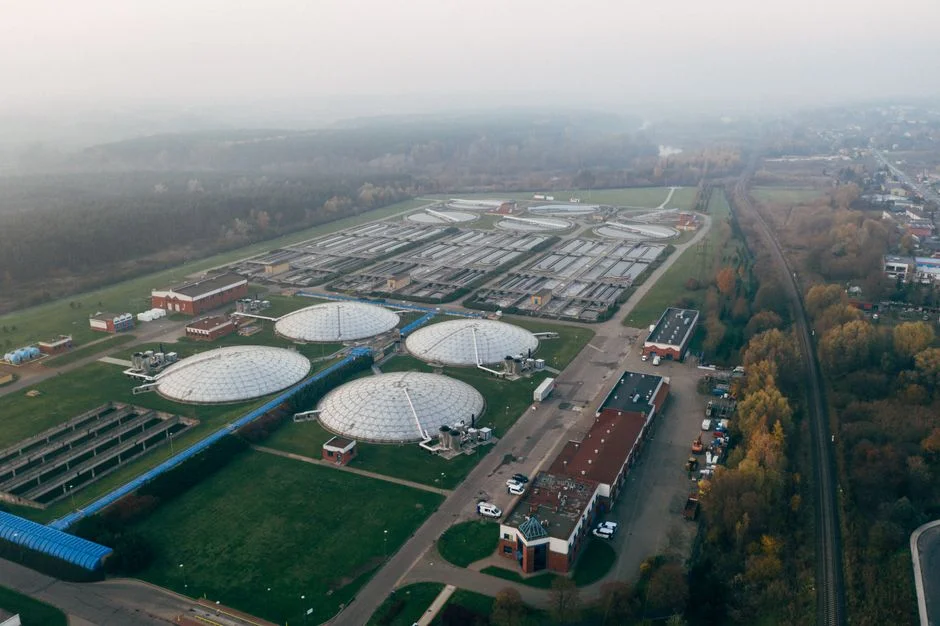
For a Centertown plant sitting on a 1970s clarifier that has to stay in service through construction, the safe sequence is a four-phase 2026–2028 plan. Phase 1 (2026 Q2–Q3) is jar testing to validate floc density, polymer dose, and float quality on actual plant wastewater, plus a permit re-review against current 40 CFR 437 effluent limits and any state-level overrides. Phase 2 (2026 Q4–2027 Q1) is equipment selection, layout design with a footprint-driven building cost model, and board approval. Phase 3 (2027 Q2–Q3) is civil work and equipment delivery — standard DAF models avoid custom-engineering markup at 4–300 m³/h flows. Phase 4 (2027 Q4–2028 Q1) is install, commission, parallel-run with the legacy clarifier, then cut over. This phased approach keeps the existing clarifier in service through construction and avoids a discharge-permit gap during the cutover — the single biggest permit risk a project manager can engineer out before the diggers arrive.
Frequently Asked Questions
Does 40 CFR 437 require a DAF or a clarifier for mining and metals wastewater?
No. Neither technology is explicitly mandated, but 40 CFR 437.30–437.32 sets daily-maximum and monthly-average effluent limits for TSS, total recoverable lead, zinc, copper, and iron, plus pH 6.0–9.0. A well-sized DAF or lamella, paired with chemical precipitation, can meet those limits; many 2026 Centertown plants run DAF primary plus lamella polish for compliance margin (per 40 CFR 437 daily-maximum limits).
What surface loading should I design a lamella clarifier for on dense Fe(OH)₃ floc?
For dense Fe(OH)₃ or Al(OH)₃ floc, design at 20–30 m/h on the plate-pack projected area; for fine silica or low-density floc, drop to 10–15 m/h. The published 20–40 m/h range (HydropureWater P10) applies to clean, well-conditioned hydroxide floc only and assumes upstream polymer conditioning at 1–5 mg/L.
Can a DAF system run through winter in Centertown without freezing?
Yes, but the saturation vessel and recycle line should be insulated or heat-traced. Micro-bubble nucleation kinetics slow by roughly 20–30% at 5°C versus 20°C (HydropureWater field data, 2026), so a 10–15% sizing margin on the recycle pump and saturation volume is prudent for plants that run through winter.
Can a lamella clarifier handle a taconite concentrator stream without a DAF?
Yes — many taconite concentrators run lamella-only as primary clarification on FOG-free streams, and Scenario 1 above is built around that. Add a DAF polish step only if colloidal fines start bleeding through or if a maintenance shop discharge adds intermittent oil that the lamella cannot capture.
How much smaller is a DAF footprint than a conventional clarifier?
A DAF at 0.2–0.4 m² per m³/h is roughly one-twentieth the footprint of a conventional gravity clarifier at 5–8 m² per m³/h, and about half the footprint of a lamella at the same flow. For a 100 m³/h stream, that is the difference between 30 m² and 600 m² of clarifier footprint (HydropureWater field data, 2026).