Why this decision matters for Fall River fabricated metals plants in 2026
Fabricated metals operations under SIC 3441 (fabricated structural metal), 3442 (metal doors, sash, and trim), and 3499 (fabricated metal products, not elsewhere classified) generate process wastewater that is chemically distinct from food, mining, or municipal streams. A typical Fall River stamping, machining, or coating shop produces a mixed stream containing cutting-oil emulsions from CNC and stamping coolant overflow, drawing compounds from press operations, parts-washer caustic or alkaline cleaners, dense grinding swarf and metallic fines, weld flux rinse water, and occasional hexavalent chromium rinse from plating sub-lines. Each of these sub-sources carries regulated pollutants under EPA 40 CFR Part 433 (Metal Finishing), which sets the federal floor for total suspended solids (TSS), oil and grease (O&G), and heavy metals including zinc, copper, nickel, total chromium, and lead.
The published 40 CFR 433 limits that govern a primary clarifier selection are the category monthly-average and daily-maximum values for TSS and O&G. A correctly chosen primary unit must consistently bring the discharge below the daily-maximum ceiling, not just average out, because POTW inspectors and the local authority typically enforce against grab samples on a bad day. In Fall River, the city POTW operates under a sewer-use ordinance that is generally tighter than the federal rule: lower daily-maximum ceilings, mandatory slug-control provisions for batch discharges of emulsified oil, and surcharge formulas that penalize high TSS, high O&G, and high metals on the same bill.
The selection stakes are concrete. A wrong primary unit (a clarifier on an emulsified oil stream, or a DAF on a heavy-swarf-only stream with no compressor room) either triggers 40 CFR 433 excursions and POTW surcharges, or forces a retrofit within 12–24 months. For a 50–150 gpm shop floor, that retrofit is a six-figure project that competes with tooling, press rebuilds, and ERP rollouts for capital. Choosing correctly in 2026 is the difference between a defensible bid package and a sunk cost that operations will resent.
DAF vs clarifier: how each technology actually removes contaminants
A Dissolved Air Flotation (DAF) system saturates a pressurized side stream (typically 60–80 psig) with air, then releases that stream at atmospheric pressure inside a flotation tank. The pressure drop nucleates 20–40 micron micro-bubbles (per DAF Corp engineering data) that attach to oil droplets and pre-flocculated suspended solids. The bubble-particle aggregate has effective density lower than water, so it rises to the surface in roughly 3–5 minutes of hydraulic residence time. A surface skimmer sweeps the floated layer into a sludge hopper; clarified underflow exits the bottom of the tank. DAF is fundamentally an oil-and-fine-solids removal tool, and its removal mechanism is bubble attachment, not settling.
A gravity clarifier (including a lamella plate clarifier) relies on Stokes-law settling. Particles denser than water fall to a sludge bed at the bottom; clarified supernatant overflows a peripheral launder. In a lamella design, inclined plates at 55–60° shorten the effective settling path, which increases the equivalent settling area without increasing footprint. Clarifiers excel at removing heavy, fast-settling solids — metallic swarf, weld scale, sand-blast fines — but they have no mechanism for floating emulsified oil. Oil removal in a clarifier is incidental, driven only by skimmer baffles catching free oil, and the unit typically tops out near 70% O&G removal on streams with stable emulsions (per the Ecologix 2026 selection guide).
The consequence for fabricated metals is a clean split: DAF handles the cutting-oil emulsion and very fine TSS that a clarifier physically cannot, and a clarifier handles the dense swarf and scale at lower cost and zero compressed-air demand. Sludge consistency differs as well — DAF typically yields a 2–4% thickened float that dewaters well on a belt press or plate-and-frame filter, while clarifier underflow sludge runs 1–2% solids and carries more water to the dewatering step.
2026 parameter comparison: DAF vs gravity clarifier for fabricated metals
Below is the side-by-side engineering comparison for a typical 50–150 gpm Fall River fabricated metals plant stream. Numbers are drawn from manufacturer literature and case-study data; the DAF column reflects circular FC-style units at the high end and rectangular units at the low end of the removal range.
| Parameter | DAF system | Gravity / lamella clarifier |
|---|---|---|
| TSS removal | 85–98% (circular 92–98%, rectangular 85–90%, per DAF Corp) | 70–90% (90% documented in mining case, per Ecologix) |
| Oil & grease removal | Up to 95% (food-processing case, per Ecologix) | ~70% ceiling on emulsified streams (per Ecologix) |
| Typical influent range | 200–3,000 mg/L TSS, 100–2,000 mg/L O&G | 500–5,000 mg/L TSS, <200 mg/L O&G |
| Hydraulic residence time | 3–5 minutes flotation zone | 1–2 hours (lamella shortens effective path) |
| Footprint per 100 gpm | 10–14 m² (skid-mounted) | 30+ m² (conventional), 12–18 m² (lamella) |
| Achievable effluent | <20 ppm filterable TSS (per DAF Corp) | 30–60 ppm TSS without chemical aids |
| Sludge consistency | 2–4% thickened float | 1–2% underflow sludge |
| Compressed-air requirement | 3–7 kW per 100 gpm (saturation loop) | None |
| Relative CAPEX (2026, $ per gpm installed) | $4,500–$8,500 | $1,800–$3,500 |
| Relative OPEX (per m³ treated) | Higher (air + polymer) | Lower OPEX, higher sludge-hauling cost |
For Fall River shops, the two physical-plant rows matter most: DAF needs compressed air, which means either an existing plant-air system at 80 psig or a dedicated 5–10 hp skid compressor; a clarifier needs only a sludge pump and basin. The DAF system and a lamella clarifier are the two product lines most often evaluated for this duty class, and both are commonly sized against a 50–150 gpm envelope.
When a Fall River metals plant should choose DAF
Pick a DAF as the primary clarifier when any of the following four conditions apply, because each one describes a stream where a clarifier physically cannot meet the discharge goal. First, when influent oil and grease regularly exceeds 200 mg/L, or when stamping and drawing compounds create a stable emulsion that does not break in a 30-minute holding tank — a DAF's bubble attachment is the only mechanism that reliably floats emulsified droplets. Second, when the discharge limits demand consistent sub-30 ppm TSS and low oil carryover to satisfy 40 CFR 433 daily-maximum values plus the local Fall River sewer-use ordinance surcharge thresholds.
Third, when floor space is constrained. A skid-mounted 100 gpm DAF typically occupies 10–14 m², roughly one-third the footprint of an equivalent conventional clarifier and competitive with a lamella unit. For older Fall River industrial buildings where treatment equipment shares space with finished-goods staging, that footprint delta is decisive. Fourth, when the downstream process is a membrane bioreactor (MBR), reverse osmosis (RO), or ultrafiltration polish — the low-oil, low-SDS effluent from a DAF protects membrane life and avoids the fouling that a clarifier effluent cannot prevent. Engineers specifying for these conditions typically evaluate the DAF system as the baseline reference design, sized against the DAF range of 4–300 m³/h.
When a gravity or lamella clarifier is the right call
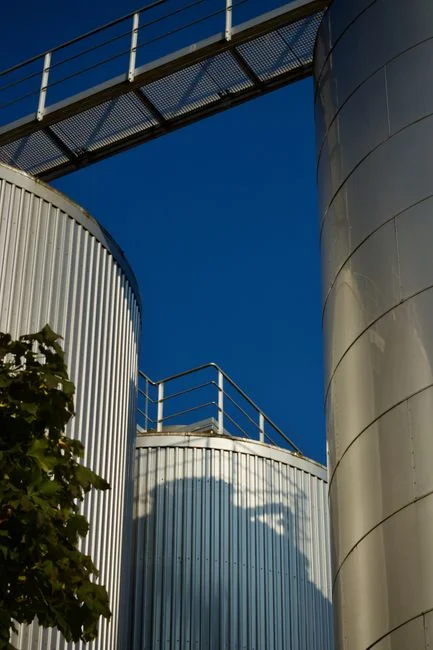
Not every Fall River metals stream needs a DAF. Choose a gravity or lamella clarifier when the wastewater is dominated by dense, fast-settling swarf and scale with little emulsified oil — the classic grinding-only shop, weld-fabrication-only shop, or a parts-washer discharge that has already been skimmed of free oil. On these streams, a clarifier delivers 70–90% TSS removal at roughly one-third the CAPEX of a DAF, and the absence of a compressed-air skid simplifies the electrical room and the controls package.
Choose a lamella clarifier over a conventional circular clarifier when footprint matters but oil content is low. Inclined-plate lamella designs operate at surface loading rates of 20–40 m³/m²·h and produce the same effective settling area in a fraction of the basin footprint, which is why the lamella clarifier product line is the default where floor space is constrained but the stream is oil-free. The 70% oil-removal ceiling on emulsified streams (per Ecologix) is the hard line that disqualifies a clarifier-only train as a full FOG solution for a stamping or drawing shop, and that ceiling is the reason most Fall River plants with mixed operations end up on a hybrid flowsheet rather than a single clarifier.
The hybrid DAF + clarifier flowsheet most Fall River plants end up with
For mixed fabricated-metals streams, the standard 2026 design is a two-stage train that combines a DAF for oil and fine TSS with a lamella clarifier as a polish step ahead of heavy-metal precipitation. Ecologix's selection guide confirms that hybrid systems are the norm for complex wastewater streams, and that pattern holds in Fall River shops where the same facility runs both a stamping cell (emulsified oil) and a grinding cell (swarf) into a common sewer.
In the typical arrangement, Stage 1 is a DAF (often with coagulant and flocculant dosing on a HydropureWater automatic chemical dosing skid) that removes 85–98% of TSS and the bulk of emulsified oil, producing an effluent typically below 30 ppm TSS and below 15 mg/L O&G. Stage 2 is a lamella clarifier or sand filter that polishes residual floc and protects the downstream heavy-metal precipitation step. After primary clarification, pH adjustment and hydroxide or sulfide precipitation drop zinc, copper, and nickel to the 40 CFR 433 monthly-average levels, and the resulting metal-bearing sludge is dewatered on a plate-and-frame filter press for off-site disposal. This train is what experienced designers specify for a 50–150 gpm Fall River shop with mixed operations, and it is the configuration that the Muncie fabricated metals DAF vs clarifier guide and the Catlettsburg mining and metals DAF vs clarifier guide describe for comparable Midwestern and Mid-Atlantic operations.
2026 CAPEX and OPEX bands for DAF vs clarifier
Translating the engineering comparison into a 2026 dollar band a procurement manager can put in front of finance: installed CAPEX typically runs $4,500–$8,500 per gpm for a DAF skid including compressor, pumps, controls, and chemical dosing, versus $1,800–$3,500 per gpm for a gravity or lamella clarifier with sludge pump and controls. For a 100 gpm Fall River shop, that puts a DAF installation in the $450,000–$850,000 range and a clarifier in the $180,000–$350,000 range, before heavy-metal precipitation and dewatering.
OPEX runs the other direction. A DAF consumes more energy per cubic meter treated because of the air-saturation loop and typically 5–15 mg/L polymer consumption; a clarifier has lower energy OPEX but generates wetter 1–2% sludge, which raises sludge-hauling cost. The often-overlooked line item is the compliance-insurance premium: a DAF's higher upfront is offset by lower risk of 40 CFR 433 excursions and Fall River POTW surcharges, and that risk-adjusted number is what an EHS manager should defend in front of finance. The secondary clarifier vs alternatives comparison walks through the same CAPEX/OPEX logic for the secondary stage, and the math is consistent: spend more on the primary if it reduces variance in the secondary.
Frequently Asked Questions
Which is better for fabricated metals wastewater, DAF or clarifier?
DAF wins when influent oil and grease is above 200 mg/L or when the stream carries a stable cutting-oil emulsion, because DAF's micro-bubble attachment is the only mechanism that reliably floats emulsified droplets. A gravity or lamella clarifier wins when the stream is dominated by dense, fast-settling swarf and scale with negligible emulsified oil, where 70–90% TSS removal at lower CAPEX is acceptable.
What TSS removal can a DAF achieve in metal finishing?
A DAF in fabricated metals duty typically achieves 85–98% TSS removal — 92–98% on circular units and 85–90% on rectangular units (per DAF Corp) — with achievable effluent below 20 ppm filterable TSS and a thickened float sludge at 2–4% consistency.
Can a DAF and a clarifier be used together?
Yes. Hybrid DAF-plus-clarifier trains are the standard for complex fabricated-metals streams (per Ecologix), with the DAF handling oil and fine TSS in Stage 1 and a lamella clarifier or sand filter polishing residual floc in Stage 2 ahead of heavy-metal precipitation.
What influent values trigger 40 CFR 433 non-compliance?
40 CFR Part 433 sets category monthly-average and daily-maximum limits for TSS, O&G, and regulated heavy metals. A primary clarifier must hold the discharge below the daily-maximum ceiling, because grab-sample enforcement on a bad day is the typical POTW inspection pattern, not a monthly-average check.
How much floor space does a 100 gpm DAF need vs a clarifier?
A skid-mounted 100 gpm DAF typically occupies 10–14 m² including the air-saturation skid. A conventional gravity clarifier at 100 gpm needs 30 m² or more; a lamella clarifier at the same flow needs roughly 12–18 m². The DAF's footprint advantage shrinks once you add the compressor, but the DAF still wins on TSS and oil performance per square meter.