Why Thousand Oaks Pharma Factories Are Rethinking Their Primary Clarifier in 2026
Thousand Oaks pharmaceutical factories in 2026 should select a DAF machine as primary clarification when the stream carries FOG, fermentation residues, emulsified CIP solvents, or suspended API solids, because modern DAF systems reach 85–98% TSS removal at hydraulic loadings of 5–30 m³/m²·h and produce 2–6% dry-solids sludge — outperforming lamella clarifiers on API-rich, low-density streams. Use lamella/circular clarifiers only as polishers downstream of DAF or biological treatment.
The Ventura County biopharma cluster — anchored by Amgen's global headquarters and largest biologics campus, the Allotrope Partners network, Takeda California operations, and a layer of CDMOs — discharges to the City of Thousand Oaks' Hill Canyon WWTP under limits set by 40 CFR Part 439 (Pharmaceutical Manufacturing Point Source Category) and the Ventura County Industrial Wastewater Control Ordinance. The federal rule breaks pharmaceutical manufacturing into fermentation, synthesis, formulation/finishing, and research subcategories, each with its own BOD5, TSS, COD, pH, and total residual chlorine ceilings; silver is regulated in legacy/photographic subcategories (per 40 CFR Part 439). The local ordinance layers flow-equalization, slug-load protection, and priority-pollutant scanning on top.
The operational pressure is real: API parent compounds and intermediates have become increasingly biorecalcitrant, fermentation centrate arrives high in colloidal protein and cell debris, and CIP rinses carry emulsified solvents that a 1990s-era circular clarifier cannot reliably skim. Clean Technology Post's 2026 DAF benchmark section puts pre-biological BOD reduction at 40–60% when DAF is paired with proper coagulant and flocculant conditioning (cleantechnologypost.com, 2026-08). For most Thousand Oaks API and biologics streams, DAF is the 2026 baseline; clarifiers remain as polishers and on select dilute streams.
DAF vs Lamella Clarifier: How the Two Technologies Actually Separate Pharma Solids
A DAF clarifier inverts the separation vector: a saturator pressurizes 4–6 bar of air into a 20–40% recycle stream, then releases that stream through a pressure-reduction valve to generate a cloud of microbubbles. DAF Corp's Micro Bubble Generator produces consistent 20–40 µm bubbles with no coarse air carry-over (dafcorp.com, 2025); SigmaDAF's standard bubble range is 30–50 µm (clearwaterind.com, 2026-04). These bubbles attach to flocculated particles and float them upward at 5–15 m/h under Stokes-law-adapted rise velocities, while clarified effluent exits from the bottom of the tank. A well-engineered DAF machine operates in the 4–300 m³/h flow range across 13 standard models and produces 2–6% dry-solids sludge.
A lamella clarifier depends on the opposite physics: density-driven settling, accelerated by 45–60° inclined plates that multiply the effective surface area. Lamella designs reach 20–40 m³/m²·h surface loading with a sludge collection cone and an integrated flocculation zone; solids drop to a bottom cone and the clarified overflow exits through peripheral launders. The floc in a lamella clarifier must be dense and shear-resistant, because the only force moving it is gravity.
This is the engineering distinction that drives every downstream decision: a DAF floc must be buoyant; a clarifier floc must be heavy. A hybrid exists — SigmaDAF's FPHF flotation equipment combines cross-flow and countercurrent flow inside a lamella pack to handle high flows at low-to-large solids loads, reaching compact high-rate operation at up to 40 m³/m²·h (clearwaterind.com, 2026-04). Pharmaceutical engineers evaluating a single-unit compromise often ask about the FPHF first, then discover that the conditioning chemistry, not the tank geometry, is what determines the result.
The Pharma Decision Matrix: Six Criteria That Pick DAF or Clarifier in 2026
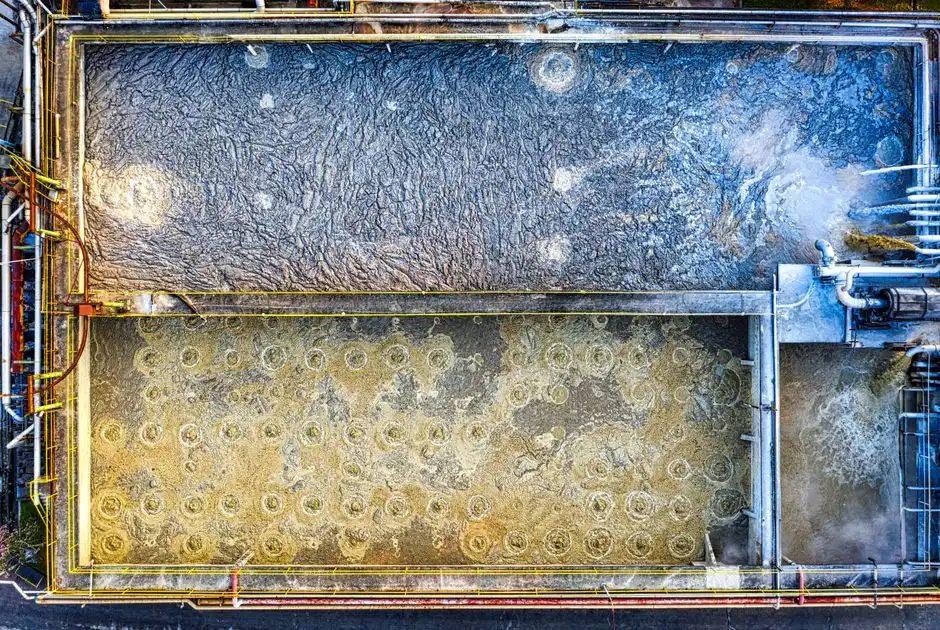
The matrix below is the working tool to defend a primary-clarifier decision in a CAPEX review. Each row is anchored in a measurable design number, not a preference.
| Criterion | DAF | Lamella / circular clarifier | 2026 winner for Thousand Oaks API streams |
|---|---|---|---|
| Influent TSS / BOD5 | Handles 2,000–5,000 mg/L cleanly; DAF Corp FC-150 design point: 2,000 PPM in → 50 PPM out at 500 GPM (dafcorp.com) | Struggles above 800–1,200 mg/L without sludge recirculation | DAF |
| FOG / emulsified oils / CIP solvent | >95% FOG removal achievable (cleantechnologypost.com, 2026-08) | Emulsified droplets have near-neutral buoyancy and escape with overflow | DAF |
| API and antibiotic residue | Removes floc-bound API mass with the floated sludge; no destruction of the active molecule — only mass transfer to a smaller waste stream | Releases dissolved API fractions to downstream biological or RO polish | DAF for mass transfer; RO/AOP still required for ecotoxicity |
| Sludge dryness | 2–6% DS (dafcorp.com; cleantechnologypost.com, 2026-08) | 0.5–1.5% DS underflow | DAF — directly shrinks plate-and-frame filter press cycle time |
| Footprint / hydraulic loading | 5–30 m³/m²·h, up to 40 m³/m²·h with lamella packs (cleantechnologypost.com, 2026-08) | 1–3 m³/m²·h conventional, 20–40 m³/m²·h with lamella plates | DAF at 4–6× smaller footprint for the same load |
| CAPEX / OPEX | Higher CAPEX, 40–60% lower polymer demand for the same removal | Lower CAPEX, larger polymer dose, bigger downstream sludge train | Tie on day one; DAF wins on lifecycle |
The matrix is calibrated to a Thousand Oaks API train where the centrate stream carries 2,000–5,000 mg/L TSS, intermittent surfactant loading from CIP, and BOD5 in the 1,500–4,000 mg/L range. DAF's lead widens on every FOG- and solvent-bearing stream and narrows on a clean RO reject or utility blowdown — which is why a hybrid train (DAF first, lamella polishing) is the 2026 default rather than a single-unit decision.
Pharma Stream-by-Stream: Where Each Technology Fits in a 2026 Treatment Train
Fermentation centrate and cell-broth waste: route through DAF first, then an MBR bioreactor or conventional activated sludge. DAF removes 85–95% of suspended cell debris and reduces BOD by 40–60% before biology (cleantechnologypost.com, 2026-08), protecting membranes from fouling and preventing filamentous bulking in the activated-sludge stage.
API synthesis mother-liquor and wash waters: DAF with chemical conditioning — ferric chloride or polyaluminum chloride coagulation followed by anionic polymer flocculation — is the default. A lamella clarifier belongs downstream as a polishing step only, on the DAF effluent.
CIP rinse and formulation wash: high in surfactants and emulsified solvents, often at 30–50 GPM skid scale. DAF is essentially the only clarifier that handles these economically, because emulsified droplets carry a near-neutral density and will not settle on their own.
Clean-in-place condensate and RO reject: loadings are low and dissolved species dominate. A lamella clarifier is adequate as a polisher here, sized on surface-loading rate rather than peak-shock TSS.
Utility wastewater (boiler blowdown, cooling-tower bleed): lamella clarifier with sand filtration is sufficient. DAF is over-specified for this duty and will not earn its OPEX on a stream that has neither FOG nor colloidal API.
Sizing a DAF System for a Thousand Oaks Pharma Plant: 2026 Parameters
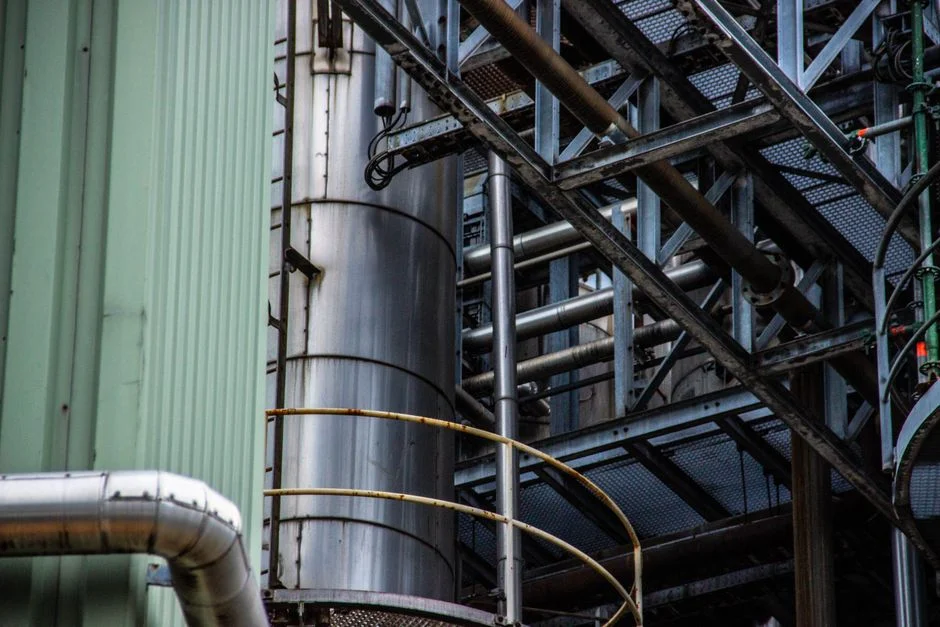
The sizing calculation begins with a flow and ends with an air-to-solids ratio. The table below condenses the 2026 design window for a pharma-grade unit.
| Parameter | 2026 design range (pharma) | Source / note |
|---|---|---|
| Surface area | Peak flow (m³/h) ÷ selected hydraulic loading; use 10–20 m³/m²·h as the conservative pharma starting point | cleantechnologypost.com, 2026-08 |
| Tank depth | 2–3 m separation distance | cleantechnologypost.com, 2026-08 |
| Saturator pressure | 4–6 bar; packed tower or venturi design; 80–95% saturation efficiency | cleantechnologypost.com, 2026-08 |
| Recycle ratio | 20–40% on most pharma streams; 10–15% on already-dissolved API streams where floc formation is the rate-limiting step | cleantechnologypost.com, 2026-08 |
| Air-to-solids (A/S) ratio | 0.005–0.06 mL air per mg influent solids; jar test sets it for a new API | cleantechnologypost.com, 2026-08 |
| Flow envelope | 4–300 m³/h across 13 standard models | DAF product spec |
| Material of construction | 304L stainless standard; 316SS for chloride- or solvent-bearing streams; polypropylene for aggressive CIP chemistry | dafcorp.com; clearwaterind.com |
Jar testing is not optional. The A/S ratio that produces 95% TSS removal on a fermentation centrate will under-perform on a CIP rinse dominated by anionic surfactant, because the floc surface chemistry is different. Treat every new API as a new jar test.
Chemical Conditioning: The 2026 Playbook for API and Fermentation Streams
The flotation tank does the visible work; the coagulation and flocculation stage does the actual work. Coagulation starts with ferric chloride or polyaluminum chloride at 50–200 mg/L as the pharma starting dose, then a jar test confirms the optimum for the specific API. Flocculation uses a cationic polymer when the API colloids carry a strong negative charge; an anionic polymer is selected when bridging with the ferric hydroxide floc is the goal. The pH window for most APIs is 6.5–7.5 — outside this range the floc collapses and DAF removal falls off sharply.
A PLC-controlled chemical dosing skid handles coagulant, flocculant, and pH adjuster injection from a single panel, with streaming-current or turbidity feedback trimming the polymer dose in real time. DAF Corp and SigmaDAF both supply serpentine flocculator mix tubes or chemical mix tanks as the conditioning stage immediately upstream of the flotation cell (dafcorp.com; clearwaterind.com, 2026-04). The conditioning stage is where the operator wins or loses 10 percentage points of TSS removal — treat it accordingly.
Compliance Check: 40 CFR Part 439 and Ventura County Limits in 2026
40 CFR Part 439 subdivides pharmaceutical manufacturing into fermentation, synthesis, formulation/finishing, and research subcategories, each with daily-maximum and monthly-average ceilings for BOD5, TSS, COD, pH, and total residual chlorine; silver is a regulated metal in legacy photographic subcategories. The Ventura County Industrial Wastewater Control Ordinance and the City of Thousand Oaks' Hill Canyon WWTP discharge permit layer local limits on flow equalization, slug-load protection, and priority-pollutant scans on top. EPA's Emerging Technologies handbook (EPA 832-R-06-006) catalogues DAF as a physical/chemical primary treatment option for the broader process-design conversation.
The practical implication is short: the primary clarifier must produce effluent that the downstream biological or membrane system can polish to below the 40 CFR 439 daily maxima. Under-sized gravity clarifiers are the most common reason Thousand Oaks plants miss BOD5 — the influent is biorecalcitrant enough that the centrate never gets a second chance downstream. A DAF that removes 40–60% of BOD up front (cleantechnologypost.com, 2026-08) hands the biological stage a feed it can actually finish.
Cost and ROI: What a DAF Conversion Looks Like in 2026 Dollars
Using a 50–200 m³/h DAF machine as the reference unit and a lamella clarifier of equivalent flow as the comparator, the 2026 economics look like this: order-of-magnitude CAPEX for DAF runs 1.4–1.8× the lamella clarifier at the same flow. OPEX tilts the other direction — DAF carries higher electricity for the recycle pump and saturator compressor, but polymer consumption drops 40–60% and downstream sludge volume roughly halves because the floated sludge runs 2–6% DS versus 0.5–1.5% DS for clarifier underflow. The plate-and-frame filter press cycle time falls proportionally, and the avoided polymer plus reduced dewatering runtime drive payback to 18–36 months for most Thousand Oaks API plants. The closed-loop water economics in California — covered in the closed-loop water reuse for manufacturing guide — compound the ROI when the DAF effluent feeds a polishing RO loop rather than a single-pass discharge.
Frequently Asked Questions
What hydraulic loading should a Thousand Oaks API plant use to size a DAF in 2026?
Start with 10–20 m³/m²·h as a conservative pharma figure; high-rate lamella-pack DAFs can reach 40 m³/m²·h, but jar testing on the actual centrate or CIP stream is the only reliable way to confirm a higher number for a new API (per cleantechnologypost.com, 2026-08).
Does DAF destroy API parent compounds or only move them to a smaller waste stream?
DAF only transfers floc-bound API mass to the floated sludge; it does not destroy the active molecule. A downstream biological step, advanced oxidation, or RO polish is still required for ecotoxicity control on recalcitrant APIs (per EPA 832-R-06-006).
Which 40 CFR Part 439 subcategory most often forces a Thousand Oaks plant to add DAF pre-treatment?
The fermentation subcategory, because colloidal cell debris and high BOD5 overwhelm gravity clarifiers and push the downstream biological stage past its daily-maximum ceiling. DAF pre-treatment delivering 40–60% BOD reduction (cleantechnologypost.com, 2026-08) is the most defensible CAPEX justification.
How does a DAF conversion interact with the City of Thousand Oaks' Hill Canyon WWTP discharge permit?
DAF protects the permit by lowering TSS, FOG, and slug-load BOD5 spikes before they reach the equalization basin, which keeps the plant inside the Ventura County Industrial Wastewater Control Ordinance's priority-pollutant scan and slug-load limits.