Why Ludlow Chemicals Plants Are Re-Evaluating Clarification in 2026
For Ludlow, Massachusetts chemicals factories in 2026, choose a DAF when the stream carries emulsified oils, FOG, or fine colloids typical of organic-chemical production (95% oil removal vs clarifier's ~70%); choose a lamella clarifier when the load is heavy settleable solids or RCRA F006/F019 sludges. Most plants now run a DAF–lamella hybrid to meet 40 CFR Part 414 daily-maximum limits. The decision rarely sits on removal efficiency alone — it sits on whether the primary unit can consistently deliver effluent below the Part 414 daily-maximum thresholds for the plant's specific subcategory, and whether the resulting sludge can be managed without triggering RCRA manifesting.
Three pressures are converging on Ludlow engineers in 2026. First, 40 CFR Part 414 Subpart F (Organic Chemicals, Plastics, and Synthetic Fibers) imposes BPT, BAT, and NSPS technology-based daily-maximum limits on TSS, COD, total metals, and oil & grease that any primary clarifier must be able to support downstream. Second, Massachusetts 314 CMR 3.0 governs indirect discharges to the local POTW, while MassDEP 314 CMR 7.00 covers direct surface-water discharges — both commonly triggered at Ludlow's mixed chemical sites. Third, Ludlow's northeast climate requires indoor or insulated tankage: a tank that performs on the spec sheet in May can underperform in January when viscosity rises and free-oil layers thicken, so footprint and headroom — not just removal — drive equipment selection. Most Ludlow chemicals plants now carry mixed streams: process washwater, boiler blowdown, and occasional RCRA-characteristic batches from conversion-coating operations that share the collection system.
How DAF and Clarifiers Actually Work on a Chemical Stream
Two mechanisms separate suspended matter from water using distinct physical principles. A dissolved air flotation system saturates a 20–50% recycle stream with air at 60–80 psig in an air-dissolving tube, then depressurizes through needle valves to release 10–100 micron microbubbles that attach to oil droplets and colloidal solids, lifting them to the surface for skimming (WesTech mobile DAF; Komline-Sanderson DAF clarifier principle). The process targets materials that "normally settle slowly, persist by remaining in suspension, or have a tendency to float" (Komline, 2026).
A HydropureWater lamella clarifier (gravity settler with inclined plates) relies on Stokes' law. Lamella plates increase effective settling area 5–10× over a conventional basin, enabling surface loading rates of 20–40 m/h versus 1–3 m/h on a conventional clarifier. The trade-off is contact time: a clarifier needs quiescent conditions, while a DAF actively drives separation. Chemical conditioning with coagulants (alum, PAC, ferric chloride) and flocculants (cationic polyacrylamide, 0.5–3 mg/L typical dose) is standard for both, and often mandatory for chemical-plant effluent to break oil-in-water emulsions before either separator sees the water. DAF wins on buoyancy-driven separation of low-density contaminants; clarifier wins on density-driven separation of heavy inorganic solids — that asymmetry explains the matrix in Section 4.
40 CFR Part 414 and RCRA: The Compliance Filters That Drive the Decision
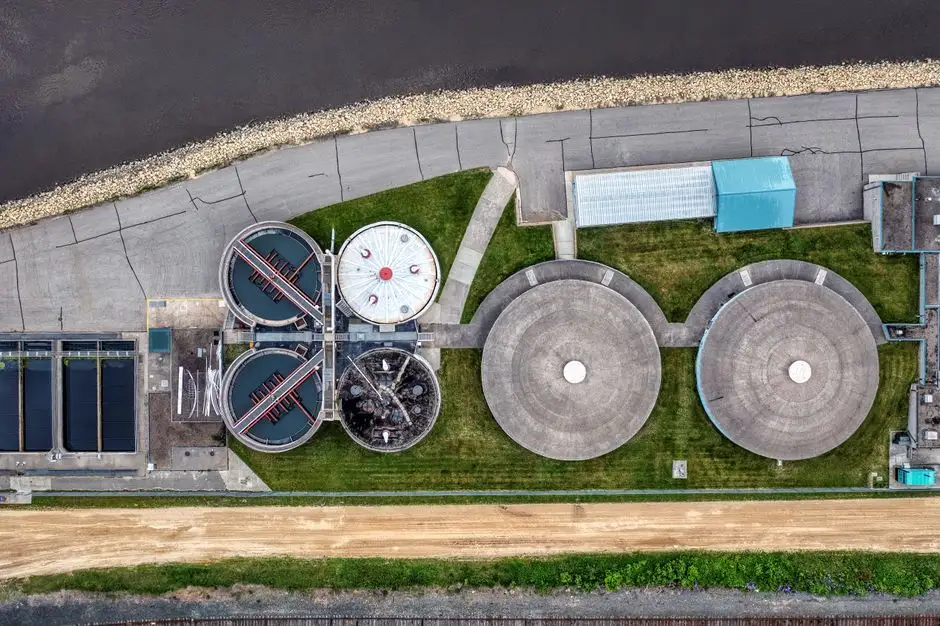
40 CFR Part 414 Subparts B–F cover organic chemicals, and Subparts G–N cover inorganic chemicals; each subpart sets BPT, BAT, and NSPS technology-based limits for TSS, COD, total metals, and oil/grease. A Ludlow plant has to map its waste stream to the correct subpart before any hydraulic sizing — a Part 414 daily-maximum TSS of around 60 mg/L for some organic subcategories leaves no margin for a clarifier that delivers 80–120 mg/L TSS in winter.
The RCRA side is where the decision becomes expensive. Under 40 CFR 261.3(c)(2)(i), the "derived-from" rule treats any sludge generated from treating a listed hazardous waste as a listed hazardous waste itself. F006 covers wastewater treatment sludges from chemical conversion coating of aluminum (chemical milling, etching, bright dipping, electropolishing, electrochemical machining per EPA RCRA Permit Policy Compendium 9444.1987(03), January 1987). F019 covers wastewater treatment sludges from the chemical conversion coating of aluminum, including zirconium phosphatizing in can washer systems (per EPA 9444.1987(09), March 1987). A Ludlow plant with even occasional conversion-coating batches can find its clarifier underflow inherits F006/F019 status and triggers Subtitle C manifesting, even when the influent itself was not listed.
Sludge consistency is the second compliance lever. DAF float typically dewaters to 18–25% dry solids with a filter press, while clarifier underflow often runs 2–4% dry solids. The disposal-cost gap between those two endpoints is meaningful at 2026 landfill tipping fees (often $80–150/ton in the Northeast), and a higher-solids float cake is more likely to pass a TCLP delisting petition than a dilute clarifier underflow.
DAF vs Clarifier for Chemicals Wastewater: 2026 Comparison Matrix
Case study data provides a baseline for comparing these technologies. A food processing plant with high oil content achieved 95% removal of oils and greases with a DAF, compared to a clarifier's 70% efficiency for the same stream; a mining facility with heavy sediment loads opted for a clarifier, reducing solids by 90% at lower cost (Ecologix, 2026). Those two case points anchor the matrix below — they are the benchmark numbers a Ludlow engineer can defend in a Part 414 review.
| Parameter | DAF | Lamella Clarifier |
|---|---|---|
| Primary target | Emulsified oil, FOG, colloids (< 1,000 mg/L TSS, fine fraction) | Settleable TSS, heavy inorganic solids (> 2,000 mg/L) |
| Oil & grease removal | 90–95% (Ecologix 2026 case) | 60–70% (Ecologix 2026 case) |
| TSS removal | 70–85% (chemical-conditioned) | 85–95% (well-settled heavy solids) |
| Hydraulic / surface loading | 5–15 m/h typical | 20–40 m/h (lamella plates) |
| Footprint, 10 m³/h unit | ~8–12 m² (tank + skimmer) | ~3–6 m² (inclined plates) |
| Sludge dry solids | 3–6% float (18–25% after filter press) | 2–4% underflow (18–25% after press) |
| RCRA F006/F019 derived-from risk | Float cake more readily dewatered and characterized | Dilute underflow more likely to inherit listed status |
| OPEX index (relative) | 1.0–1.2 (air compressor, recycle pump) | 0.6–0.8 (mostly pumping) |
| Cold-climate suitability | Indoor installation with insulated recycle loop; hydraulic performance stable | Indoor installation; viscosity rise in winter reduces settling rate |
| CAPEX range (2026, 4–300 m³/h) | Moderate to high (skid + air system + chemical dosing) | Moderate (tank + plates, no air system) |
Read the matrix as a decision aid, not a verdict. Ludlow streams that combine residual FOG from reactor washdowns with high TSS from inorganic salt batches will not be solved by either unit alone — that is the case for the hybrid discussed next.
When a DAF + Lamella Hybrid Is the Right 2026 Answer
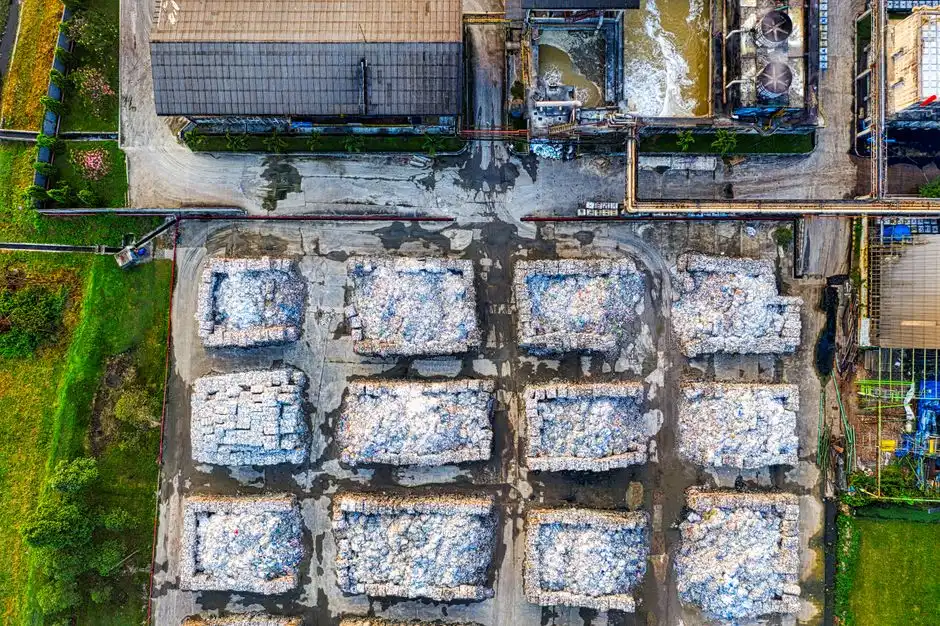
Mixed chemical streams often require a multi-stage approach to ensure consistent effluent compliance. Use a DAF as primary when emulsified oil exceeds 50 mg/L, FOG is present, or TSS is below 1,000 mg/L with a colloidal fraction above 30%. Use a lamella clarifier as primary when settleable solids exceed 2,000 mg/L, there is no oil phase, or footprint is constrained on a tight indoor site.
For the realistic Ludlow case — a mixed stream that carries both reactor washwater (oily, colloidal) and periodic salt-bearing batches (heavy settleables) — run a dissolved air flotation system first to strip oil/FOG and lift the colloidal fraction, then a HydropureWater lamella clarifier to polish residual TSS down to Part 414 daily-maximum levels. Add an automatic coagulant and flocculant dosing skid upstream of the DAF to stabilize performance across influent swings (pH 6.5–8.5 typical, dose response curves established by jar testing). The hybrid is more expensive than either unit alone, but it avoids the most common 2026 failure mode: a single clarifier that cannot meet 40 CFR Part 414 oil & grease limits in winter, or a single DAF that cannot meet TSS limits during salt-batch episodes. For comparison context on a parallel chemicals site, see the El Dorado chemicals 2026 DAF vs clarifier guide.
5-Step Selection Process for a Ludlow Chemicals Plant in 2026
- Pull 12 months of influent data — TSS, COD, oil & grease, pH, temperature, and flow. Ludlow's seasonal swing matters: winter influent at 8–12 °C behaves differently from summer at 20–25 °C, and a single-day sampling campaign will not show it.
- Map the worst-case stream to 40 CFR Part 414 daily-maximum limits for the plant's specific subpart (B–F for organics, G–N for inorganics). Anything above the daily-max is an immediate consent-order risk.
- Run jar tests and a DAF pilot on the actual stream. DAF pilot units are rentable (Komline-Sanderson, 2026) and a one-week rental typically produces the data needed to defend equipment selection in a Part 414 review. Bench-scale settling tests for the lamella option cost almost nothing.
- Confirm RCRA status of expected sludge under 40 CFR 261.3(c)(2)(i) and review with MassDEP. If F006/F019 derived-from applies, the disposal cost swing is large enough to flip the DAF/clarifier decision on its own.
- Site the unit indoors with at least 25% hydraulic margin for Ludlow winter operation. Insulate recycle lines on the DAF, and confirm headroom for the skimmer drive and access hatches. Downstream polishing units, if any, should be sized in line with the MBR effluent quality and working principle 2026 guide if a membrane step follows.
Frequently Asked Questions
What oil removal efficiency should I expect from a DAF vs a clarifier for a chemicals wastewater stream?
A properly sized DAF delivers 90–95% oil & grease removal on emulsified chemical streams, versus roughly 60–70% for a clarifier on the same water (Ecologix 2026 case data). For 40 CFR Part 414 Subpart F daily-maximum oil & grease compliance, a clarifier alone will rarely close the gap during a reactor washdown episode.
When does the RCRA derived-from rule
Frequently Asked Questions
Is DAF or a clarifier better for a chemical plant wastewater stream in 2026?
The selection depends primarily on the density and morphology of the suspended solids. Dissolved Air Flotation (DAF) is generally superior for chemical streams containing oil, grease, or low-density flocculent particles that exhibit settling velocities slower than 0.5 meters per hour. DAF systems typically achieve 80% to 95% removal of suspended solids for these light-density contaminants.
Conversely, conventional clarifiers remain the industry standard for high-density inorganic precipitates or heavy metal hydroxides where specific gravity significantly exceeds 1.2. In 2026, many Ludlow facilities are opting for DAF units over clarifiers to reduce hydraulic retention time (HRT), which often drops from 2-4 hours in a clarifier to 20-40 minutes in a DAF system.
Does a clarifier sludge from chemical plant wastewater count as RCRA hazardous waste?
Clarifier sludge is classified as RCRA hazardous waste if it exhibits any of the four characteristics—ignitability, corrosivity, reactivity, or toxicity—defined under 40 CFR Part 261. If the influent wastewater contains constituents listed in the F, K, P, or U lists, the resulting sludge is often designated as "derived-from" hazardous waste, requiring strict cradle-to-grave manifest tracking.
In Ludlow, facilities must perform Toxicity Characteristic Leaching Procedure (TCLP) testing on the dewatered sludge cakes. If the concentration of regulated contaminants exceeds the regulatory levels provided in Table 1 of 40 CFR 261.24, the sludge must be managed, stored, and disposed of at a permitted TSDF (Treatment, Storage, and Disposal Facility).
Can a DAF and a lamella clarifier be used together for chemical plant wastewater?
Yes, a dual-stage system is often implemented when wastewater contains a heterogeneous mix of both floatable oils and settleable heavy solids. In this configuration, the lamella clarifier acts as the primary treatment stage to remove high-density grit and metallic particles, while the downstream DAF unit polishes the effluent by removing emulsified oils and remaining light-fraction suspended solids.
This combined approach allows for optimized chemical dosing, as coagulants can be tailored for high-density settling in the clarifier, while flocculants and air-to-solids ratios are specifically tuned for flotation in the DAF. This tandem arrangement can improve overall TSS removal efficiency to upwards of 98% compared to single-stage processes.
What 40 CFR Part 414 limits apply to DAF effluent in an organic chemicals plant?
40 CFR Part 414 (Organic Chemicals, Plastics, and Synthetic Fibers Point Source Category) establishes categorical pretreatment standards for existing sources (PSES) and new sources (PSNS). Effluent limits are calculated based on mass-based production rates (kg/kkg of product) rather than simple concentration, typically covering parameters such as BOD5, TSS, and specific organic priority pollutants like benzene, toluene, or phenols.
While DAF units are highly effective at meeting TSS and oil/grease limits, they are often insufficient for the soluble organic concentrations regulated under Part 414. Consequently, DAF effluent usually requires secondary biological treatment or advanced oxidation processes (AOP) to ensure compliance with the specific subcategory mass-loading limits mandated by the EPA.
How much indoor space does a DAF system need for a Ludlow chemical plant installation?
An industrial-scale DAF system for a chemical plant typically requires a footprint ranging from 150 to 500 square feet, depending on the hydraulic loading rate, which usually ranges from 1.5 to 3.0 gallons per minute per square foot (gpm/ft²). This estimate includes the flotation tank, the recycle pump skids, the air saturation system, and the surface skimmer mechanism.
When planning for a Ludlow facility, additional space must be allocated for maintenance access, which requires at least 3 to 5 feet of clearance around the perimeter of the vessel. Furthermore, if the system includes an integrated chemical coagulation tank and a sludge dewatering unit (such as a filter press or screw press), the total footprint for the treatment train often increases to 800–1,200 square feet.