Why Salina Fabricated Metals Plants Are Rethinking Primary Treatment in 2026
For Salina fabricated metals plants in 2026, choose DAF when the wastewater carries free oils, cutting fluids, or tramp lubricants — DAF removes 85–98% of total suspended solids and up to 95% of oils and greases. Choose a gravity or lamella clarifier when the stream is dominated by heavy metal-bearing fines and grit. Most Salina fabricators run a hybrid: DAF first, then clarifier for the metal-hydroxide precipitate.
Salina sits in the middle of a central-Kansas metal-fabrication cluster that feeds agricultural-equipment OEMs and aerospace Tier suppliers. Cutting, stamping, machining, welding, and coating shops along the I-70 corridor discharge to the City of Salina wastewater system, which operates an industrial pretreatment program under Kansas Department of Health and Environment (KDHE) delegation authority. The pretreatment program enforces local discharge limits that flow from 40 CFR Part 433 (Metal Finishing) categorical standards, and 2026 has brought three converging pressure points: tighter local surcharges for oil and grease (O&G) and heavy metals, expanded EPA PFAS scrutiny for metal-finishing rinsewater, and capex windows that will not survive a redesign once a line is running.
That combination is forcing plant engineers to pick a primary treatment technology — dissolved air flotation (DAF), clarifier, or both — based on a real compliance bar, not a vendor brochure. The rest of this article maps 40 CFR 433 effluent limits to DAF and clarifier performance, then gives a Salina-specific decision framework that accounts for coolant, lubricant, and metal-fines streams in a single outfall.
What 40 CFR Part 433 Actually Requires of a Fabricated Metals Line
40 CFR Part 433 sets the daily maximum effluent limits a Salina fabricator must hit at the discharge sampling point, and the numbers are tighter than most plants assume on first read.
| Parameter | 40 CFR 433 daily maximum (mg/L) | Why it matters for a fabricated metals line |
|---|---|---|
| Copper (Cu) | 1.16 | Common in machining coolant carryover and copper-alloy stamping |
| Nickel (Ni) | 0.69 | Stainless stamping, welding, and plating rinsewater |
| Zinc (Zn) | 0.43 | Galvanized parts, phosphating, and die casting rinse |
| Lead (Pb) | 0.32 | Historical leaded-brass and bronze machining |
| Chromium (Cr) | 2.38 | Conversion coatings, stainless passivation |
| Total metals (sum) | 4.41 | Aggregate cap for the six regulated metals |
| Oil & grease (O&G) | 52 | Cutting fluids, stamping lubricants, parts-washer carryover |
| Total suspended solids (TSS) | 60 | Metal fines, grinding swarf, and shot-blast dust |
DAF and clarifiers are both physical-separation units. Neither one precipitates dissolved metals. Meeting the Cu/Ni/Zn/Pb/Cr numbers almost always requires a chemical precipitation stage — typically raising pH to 8.5–9.5 with NaOH or Na2CO3 to convert dissolved metal ions to hydroxide floc — and the precipitation reactor must sit downstream of oil removal or the floc will coat in oil and refuse to settle.
O&G is the first hurdle. The 52 mg/L daily maximum is hard to meet with a clarifier and easy to meet with a DAF, and free oil that breaks through to a clarifier will foul the precipitation reactor. Fabricated metals wastewater typically runs 100–5,000 mg/L TSS and 50–10,000 mg/L O&G depending on the operation: a grinding shop sits at the high end of the TSS range, a stamping press with a parts washer sits at the high end of the O&G range, and a job shop running both can hit both extremes in a single shift (per EPA Metal Finishing effluent guideline development documents, 2025 revision).
How a DAF System Works on a Metalworking Line
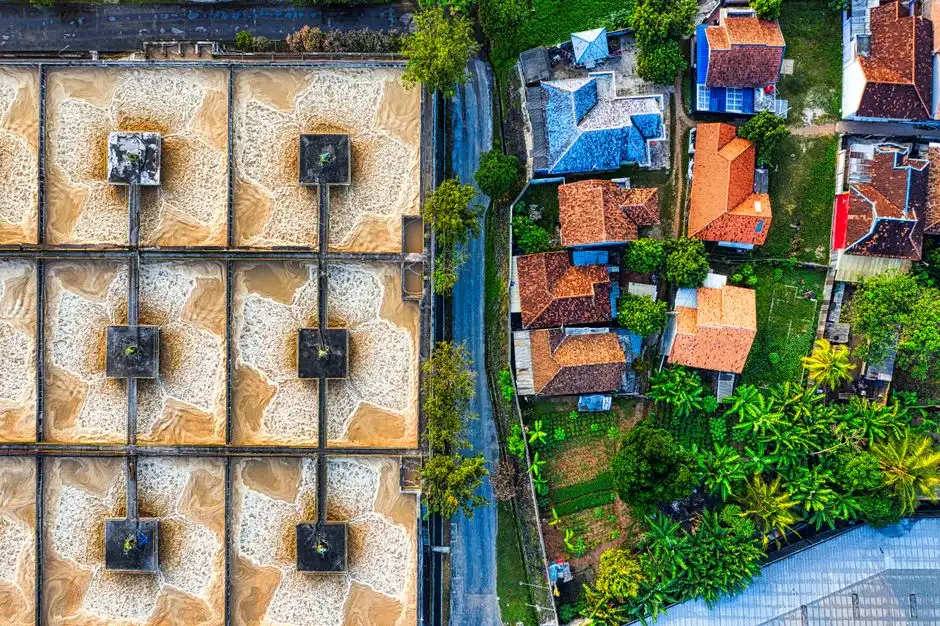
A dissolved air flotation system saturates a side-stream of clarified effluent with compressed air at 60–80 psi in a packed saturator vessel, then releases that air-saturated water through a pressure-reduction valve back into the main flotation tank. The pressure drop generates 20–40 micron micro-bubbles — small enough to attach to oil droplets and fine suspended solids, large enough to carry them upward. The float forms a concentrated layer on the surface and a rotating skimmer sweeps it into a hopper.
Independent manufacturer data shows the geometry works. DAF Corp's FC Maximizer round units achieve 92–98% TSS removal at flows from 10 GPM up to 11,000 GPM in tanks 6–70 ft in diameter, and a typical FC-150 design treats 500 GPM from 2,000 mg/L TSS down to 50 mg/L (DAF Corp, 2025 product data). The same vendor reports float sludge consistency of 2–4% solids — dry enough to feed a plate and frame filter press for final dewatering without intermediate thickening.
Chemistry matters. Most metalworking DAF systems dose a cationic polymer (typically 1–10 mg/L) plus an inorganic coagulant such as ferric chloride or polyaluminum chloride to neutralize surface charge on emulsified oil droplets so the bubbles can attach. An automatic chemical dosing system tied to flow-paced metering keeps the dose on target as production swings between a heavy stamping shift and a light maintenance shift. The caveat specific to fabricated metals: DAF is excellent on free and emulsified oils, but it does not touch dissolved metals. The Cu and Ni in your rinsewater will pass straight through the float tank and need a precipitation step downstream.
How a Clarifier (Circular or Lamella) Handles Metals Waste
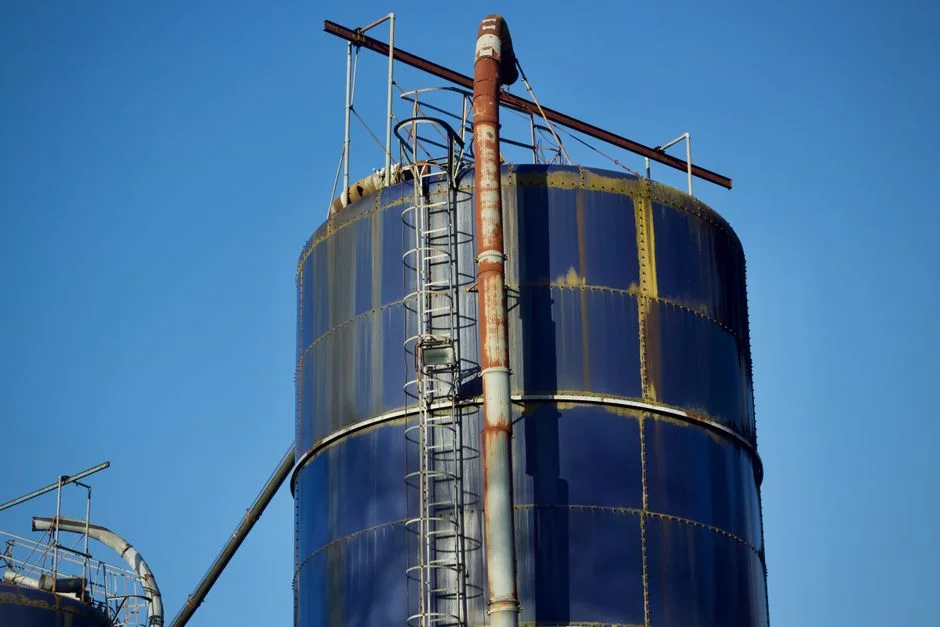
A clarifier is a gravity-settling tank. Denser particles — typically metal-hydroxide floc after chemical precipitation — drop to a sludge cone on the bottom while clarified water overflows a peripheral weir. A HydropureWater lamella clarifier stacks inclined plates inside the tank, multiplying the effective settling area in a small footprint: 20–40 m/h surface loading rate and roughly 30% lower chemical consumption than a conventional clarifier (HydropureWater engineering specification, 2026).
Clarifiers fail on free oil. Oil floats rather than settles, so a clarifier on an oily stream either passes oil over the effluent weir or accumulates a scum blanket that the rake cannot reach. Independent comparison data puts the gap at 95% O&G removal for DAF versus 70% for a clarifier on the same stream, and even the 70% figure only holds when the oil is already broken out of emulsion (Ecologix, 2026 selection guide).
Where a clarifier wins is post-precipitation polishing. Once pH adjustment has converted dissolved metals to hydroxide floc, the floc is dense, fast-settling, and exactly the particle a clarifier was designed to remove. The conventional circular clarifier needs the largest footprint of the three options; a lamella cuts that footprint by 60–80% (HydropureWater engineering specification, 2026). Underflow solids run 1–3% — wetter than DAF float and typically harder to dewater, but adequate as a feed to a plate and frame filter press for volume reduction.
DAF vs Clarifier: 2026 Comparison for Salina Fabricated Metals
This is the screenshot a procurement meeting needs. Every number is sourced; no range is left qualitative when a real figure is available.
| Parameter | DAF system (round or rectangular) | Lamella clarifier | Conventional circular clarifier |
|---|---|---|---|
| TSS removal | 92–98% (DAF Corp FC Maximizer) | 70–90% | 60–85% |
| O&G removal | Up to 95% (Ecologix 2026) | ~70% (Ecologix 2026) | ~70% (Ecologix 2026) |
| Footprint | Shallow tank, 6–70 ft diameter round units; compact rectangular RC UniMax | 60–80% smaller than conventional; inclined plates | Largest footprint of the three |
| CapEx (qualitative) | Highest (skid, saturator, compressor, controls) | Lowest | Low to moderate |
| OpEx (qualitative) | Higher (compressed air, polymer, compressor maintenance) | Lower chemical use; passive operation | Lower chemical use; passive operation |
| Sludge consistency | 2–4% float solids (DAF Corp) | 1–3% underflow | 1–3% underflow |
| Best-fit stream | Free oil, emulsified coolant, fine TSS | Metal-hydroxide floc after precipitation | Heavy grit, high-solids inorganic stream |
| Key maintenance | Saturator, air compressor, skimmer drive, recycle pump | Rake/torque, sludge pump, plate inspection | Rake/torque, sludge pump |
For fabricated metals the O&G row is decisive. A 70% O&G removal rate on a 1,000 mg/L stream still leaves 300 mg/L in the effluent — six times the 40 CFR 433 daily maximum of 52 mg/L. A DAF at 95% leaves 50 mg/L, which is below the limit with margin. This is why a clarifier alone is almost never a defensible primary treatment for a Salina fabricator with oily coolant streams, and why the hybrid train keeps showing up in bids.
When a Salina Fabricated Metals Plant Should Pick DAF, Clarifier, or Both
Pick a dissolved air flotation system alone when the dominant load is free oil, tramp lubricant, or emulsified coolant from stamping presses, machining cells, and parts-washer overflow. A DAF-only train works for shops without plating or conversion coating, where dissolved metals are not a compliance concern and the only 40 CFR 433 numbers at risk are the 52 mg/L O&G and 60 mg/L TSS daily maximums.
Pick a HydropureWater lamella clarifier alone when the stream is post-precipitation — pH-adjusted to 8.5–9.5, metals converted to hydroxide floc, oil already removed upstream by a parts-washer interceptor or emulsion-breaking pre-treatment. Lamella is also the right pick for grinding shops generating heavy metal-fines slurry that needs a small footprint.
Pick a hybrid train — DAF, then chemical precipitation, then lamella clarifier — when a plant runs both oily and metal-dissolved streams or when 40 CFR 433 limits must be met at a single outfall. The hybrid is the most common configuration for Salina job shops that stamp, machine, and send parts through a wash. The DAF knocks out the O&G that would otherwise coat the precipitation reactor; the precipitation stage converts dissolved Cu/Ni/Zn to removable floc; the lamella settles the floc to meet TSS and metals. Local pretreatment surcharges for O&G and heavy metals in Salina make this combination the lowest total-cost-of-compliance option for most multi-process fabricators, even though the CapEx is higher than either unit alone.
Avoid a clarifier alone on streams above 200 mg/L O&G — the plant will violate the 52 mg/L daily maximum almost every production shift, and KDHE / Salina Wastewater Utility enforcement escalates quickly once the second excursion hits. For a deeper look at how this hybrid logic plays out in a different plant profile, see the fabricated metals wastewater buyer guide for Madison Heights and the mining and metals wastewater guide for Caddo Gap. For a non-metals process reference, the chemicals wastewater treatment guide for El Dorado shows the same DAF-vs-clarifier logic applied to a different effluent envelope. The DAF system design and cost fundamentals piece also walks through saturation and microbubble sizing in more detail.
Frequently Asked Questions
Can a clarifier meet the 40 CFR 433 52 mg/L oil and grease daily maximum?
Generally no, not on its own. Independent data shows clarifier O&G removal around 70% on a stream where the oil is already broken out of emulsion (Ecologix, 2026). On a 1,000 mg/L coolant stream that still leaves 300 mg/L in the effluent — well over the 52 mg/L limit. A DAF upstream, or an emulsion-breaking pre-treatment plus a clarifier, is the realistic path to compliance for a fabricated metals line.
Can DAF meet the dissolved metals limits (Cu, Ni, Zn, Pb, Cr)?
No. DAF is a physical-separation process; it removes free and emulsified oils plus suspended solids, but dissolved metal ions pass through the float tank untouched. The 1.16 mg/L Cu, 0.69 mg/L Ni, and 0.43 mg/L Zn daily maximums require a chemical precipitation step (NaOH or Na2CO3 to pH 8.5–9.5) followed by a clarifier to settle the hydroxide floc. DAF belongs upstream of the precipitation reactor, not in place of it.
What is the typical CapEx order of magnitude for these three options?
Qualitatively: a lamella clarifier is the lowest CapEx, a conventional circular clarifier is low to moderate, and a DAF system is the highest of the three because of the saturator, air compressor, recycle pump, and skimmer drive. A hybrid DAF + lamella train is the combined CapEx of both units. The right framing for procurement is total cost of compliance — including avoided surcharges and avoided enforcement — over a 10-year horizon, not first-cost alone.
Can a Salina plant reuse DAF float as a fuel-blending feedstock?
Often yes, after dewatering. DAF float comes off the skimmer at 2–4% solids; running it through a plate and frame filter press brings it to 25–35% cake solids, which falls inside the typical fuel-blender acceptance range for industrial waste-oil feedstock. The plant still needs a waste-oil hauler under a KDJEPA generator ID and should confirm the blender's spec sheet on metals and halogen content before signing a disposal contract.
What is the recommended treatment train for a stamping + machining line in Salina?
The defensible 2026 train is: parts-washer interceptor → equalization tank → dissolved air flotation system → pH adjustment / chemical precipitation reactor (pH 8.5–9.5) → HydropureWater lamella clarifier → optional multimedia sand filter → discharge to Salina Wastewater Utility. Sludge from both the DAF float and the lamella underflow is dewatered on a plate and frame filter press; chemical feed is paced by an automatic chemical dosing system.