Why Kalamazoo Fabricated Metals Plants Are Revisiting Clarifier Selection in 2026
For fabricated metals wastewater in Kalamazoo in 2026, choose DAF when oil, grease, and coolant emulsions push influent TSS above ~500 mg/L or when 40 CFR Part 437 daily-max limits (oil & grease 26 mg/L, TSS 31 mg/L) demand 85-98% removal. Choose a gravity or lamella clarifier when the stream is already low-oil and you need lower CAPEX and 2-4% dry sludge with minimal chemical use.
Kalamazoo County supports roughly 120 NAICS 332 fabricated-metal establishments across stamping, machining, and structural-metal product lines, all of which discharge industrial wastewater to the City of Kalamazoo Water Reclamation Plant (WRP). Pretreatment enforcement tightened in 2024-2025, with the WRP pretreatment coordinator issuing revised sampling schedules and more aggressive surcharge assessments for non-compliant oil and grease or metals exceedances. A typical Kalamazoo shop sends a combined waste stream to pretreatment: floor-drain carryover from stamping presses, tramp oil and synthetic coolant from CNC machining centers, alkaline cleaning rinses, and occasional hexavalent chrome rinsewater from surface-finishing cells. The composite feed is not friendly to simple settling — total suspended solids commonly run 200-2,000 mg/L, oil and grease 100-2,000 mg/L, pH 6-10, with free and emulsified oils that do not break without chemistry.
The binding design envelope is 40 CFR Part 437, the centralized waste treatment category that covers metal finishing, which sets daily-maximum effluent limits at 26 mg/L oil and grease, 31 mg/L TSS, 0.42 mg/L lead, 0.54 mg/L total chromium, 0.32 mg/L hexavalent chromium, and 1.48 mg/L zinc, with monthly-average limits roughly half those values. The City of Kalamazoo WRP local limits program layers on additional surcharges for BOD, TSS, and O&G, and the Michigan Part 31 / Part 41 framework allows civil penalties of $10,000+ per day for significant non-compliance — a number that can dominate a CAPEX memo. The question every plant engineer faces in 2026 is whether the primary clarifier on a new pretreatment skid or retrofit should be a dissolved air flotation unit, a conventional gravity clarifier, or an inclined-plate (lamella) clarifier, and whether one is enough or whether a two-stage train is required.
How DAF and Gravity Clarifiers Actually Separate the Solids You Generate
Dissolved air flotation and gravity separation attack the same waste stream with fundamentally different physics, and that difference is what makes or breaks compliance on a fabricated metals line. In a DAF system, 20-40% of the clarified effluent is pressurized to 60-80 psig in a saturation vessel, dissolves air to near saturation, then is released back into the contact zone through a needle or pressure-relief valve. The pressure drop nucleates a cloud of micro-bubbles in the 20-80 micron range (DAF Corporation reports a consistent 20-40 μm bubble from its Micro Bubble Generator, ClearStream describes a "specialized pressure relief valve" that minimizes coarse bubbles) which attach to oil droplets, dispersed metals, and fine solids. The bubble-particle agglomerate has effective specific gravity below 1.0 and rises to the surface, where a rotating scoop or flight skims the float layer into a sludge hopper. The hydraulic residence time in the contact zone is short — typically 3-5 minutes — and the float sludge comes off at 2-4% dry solids (per DAF Corp's published performance).
Gravity and lamella clarifiers rely on Stokes-law settling, and the EPA 1975 Process Design Manual for Suspended Solids Removal (EPA 625/1-75-003a) Chapter 1 is still the language regulators read. The manual divides wastewater solids into four size classes: soluble (<0.001 μm), colloidal (0.001-1 μm), supracolloidal (1-100 μm), and settleable (>100 μm). A conventional gravity clarifier efficiently removes settleable and most supracolloidal solids, but cannot reach colloidal or emulsified oil droplets on residence time alone — a stamped steel swarf or grinding swarf settles, but a 5 μm coolant emulsion droplet will not, which is why an unstaged gravity clarifier rarely hits the 40 CFR Part 437 oil and grease daily-max of 26 mg/L on a fabricated metals feed without aggressive chemistry.
Inclined-plate (lamella) clarifiers compress the effective settling footprint by stacking plates at 55-60° from horizontal. The HydropureWater JY-series lamella, for example, achieves 20-40 m/h surface loading versus roughly 1-2 m/h in a conventional basin, so a 50 gpm unit fits in a 6 ft × 6 ft envelope rather than a 20 ft diameter tank. Both DAF and lamella designs almost always need coagulant (alum, PAC, or polyaluminum chloride) and a polymer flocculant ahead of the clarifier to neutralize the surface charge on emulsified oil droplets, per the chemical treatment chapters of EPA 625/1-75-003a. The choice between DAF and gravity is therefore not a choice of "with or without chemistry" — it is a choice of which unit does the final phase separation once chemistry has destabilized the emulsion. Engineers who want a more general framework for primary clarifier selection can also review the primary clarifier vs alternatives comparison for context on where DAF and lamella sit in the broader menu of options.
Side-by-Side Performance: DAF vs Lamella Clarifier on Fabricated Metals Wastewater
The table below distills the comparison a Kalamazoo engineer can paste into a CAPEX justification memo. DAF performance numbers reflect the FC Maximizer / RC UniMax class equipment (92-98% TSS at 2,000 ppm loading per DAF Corporation) and the mobile units marketed by WesTech. Lamella numbers reflect typical inclined-plate designs on chemically conditioned fabricated-metals feed. All CAPEX/OPEX are 2026 dollars for a Michigan installation and exclude building, permitting, and utility upgrades.
| Parameter | DAF (circular or rectangular) | Lamella / Inclined-Plate Clarifier |
|---|---|---|
| TSS removal on raw feed | 92-98% | 60-80% raw, 85-95% with coagulation |
| O&G removal | 95-99% (effluent typically <10 mg/L) | 50-70% (emulsified oil passes through) |
| Hydraulic loading | 3-5 gpm/ft² contact zone; 5-15 min HRT | 20-40 m/h surface loading on plates |
| Footprint for 50 gpm | 6-8 ft diameter round or ~10 ft × 4 ft rectangular skid | ~6 ft × 6 ft plate pack, 10-12 ft tall |
| Total installed height | 10-12 ft (saturator on top) | 10-12 ft (plate stack vertical) |
| Sludge dryness | 2-4% DS as float (3-5% achievable on oily feed) | 1-2% DS as underflow |
| Chemical demand | PAC 50-150 mg/L + polymer 2-8 mg/L (reference dose; jar-test required) | PAC 100-200 mg/L + polymer 4-10 mg/L (reference dose; jar-test required) |
| CAPEX (50 gpm, 2026) | $180,000-$260,000 installed | $90,000-$140,000 installed |
| OPEX per 1,000 gal treated | $0.18-$0.32 | $0.10-$0.20 |
| Air system | Air saturator, recycle pump, compressor | None |
On oil and grease specifically, DAF routinely produces a float layer with <10 mg/L residual in the clarified water, while a lamella clarifier without upstream oil-water separation will leave emulsified oil in the underflow and the overflow, because Stokes-law settling does not capture 1-10 μm droplets in a reasonable residence time. A packaged HydropureWater DAF system is taller (10-12 ft with the saturator) but smaller in floor area than a lamella of equal hydraulic capacity, which matters when a Kalamazoo shop is retrofitting into an existing corner of a production bay. Lamella designs — including the HydropureWater lamella clarifier — win on simple CAPEX, on power consumption (no compressor or recycle pump), and on chemistry consumption when the feed is already low-oil. For reference, polymer at $0.04-$0.12/lb and PAC at $0.20-$0.35/lb dominate the variable OPEX line; a DAF train typically uses 30% less chemistry than a settling clarifier for the same O&G target because the float blanket coalesces oil that would otherwise demand a higher coagulant dose to settle.
Matching the Choice to Your Waste Stream: A 2026 Selection Matrix
Influent characterization drives the selection more than any preference, and a four-week composite sampling program per EPA 625/1-75-003a Chapter 4 should be the gating step before any equipment order. The matrix below maps typical influent bands to the right primary clarifier and notes where a two-stage train is worth the extra OPEX.
| Influent Condition | Recommended Primary Unit | Why |
|---|---|---|
| Oil & grease > 200 mg/L, free oil visible, coolant emulsions present | DAF | Micro-bubble flotation captures free and emulsified oil; settles the heavy fines in one unit |
| TSS > 800 mg/L, oil & grease 50-200 mg/L, no free oil | DAF or DAF + lamella polish | DAF handles load swings; lamella polish tightens metals-bearing TSS to <10 mg/L |
| Upstream oil-water separator already at <50 mg/L O&G, TSS is metallic fines (>100 μm), floor area tight, headroom open | Lamella clarifier | Stokes-law settling handles the size class; no air system, lower CAPEX and power |
| TSS > 3,000 mg/L with both emulsified oil and heavy fines, or polish to <10 mg/L ahead of UF/membrane | DAF followed by lamella in series | DAF strips oil and floatables; lamella polishes residual TSS and reduces membrane fouling |
| Hex chrome, lead, or zinc approaching 40 CFR Part 437 daily-max | DAF with chemical precipitation stage, then lamella polish | Precipitate metals as hydroxides, float the sludge, polish TSS; protects POTW metals limits |
Tie each branch back to 40 CFR Part 437 daily-max limits (oil and grease 26 mg/L, TSS 31 mg/L, total chromium 0.54 mg/L, lead 0.42 mg/L, zinc 1.48 mg/L) and to the City of Kalamazoo WRP surcharge schedule, which prices excess O&G in $/lb and excess TSS in $/lb above the local limit. A 2026 trend in fabricated-metals shops with tight metals ceilings is to install DAF as the primary clarifier and a small polishing lamella on the recycle line, capturing oil floatables in the DAF and any TSS bleed-through in the lamella before the effluent goes to the POTW. That series configuration also protects any downstream membrane or UF polishing step from oil fouling — a single DAF that hits 95% O&G removal still passes 5-10 mg/L of emulsified oil, which is enough to foul a UF membrane in days rather than months.
2026 Installed Cost and ROI for a 50 gpm Kalamazoo Shop
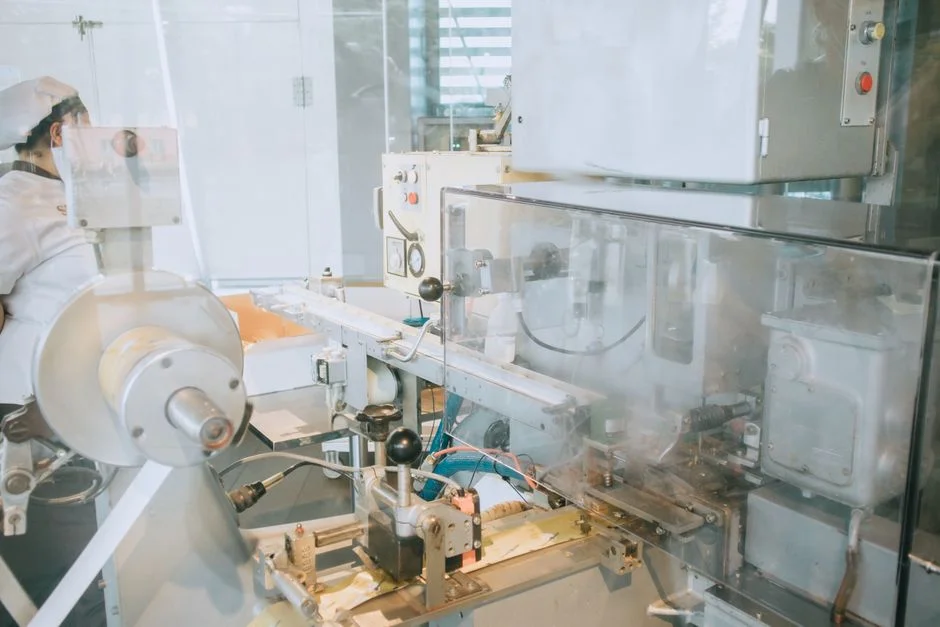
A 50 gpm (≈11.4 m³/h) reference plant maps to a 60-100 employee stamping or machining shop in the Kalamazoo area — large enough to be running two or three production lines and small enough that pretreatment is a single skid in a corner of the facility. At that flow, a packaged HydropureWater DAF skid lands at $180,000-$260,000 CAPEX installed, with OPEX of $0.18-$0.32 per 1,000 gallons treated (polymer, power for the saturator and recycle pump, and sludge hauling). A lamella retrofit of the same hydraulic capacity lands at $90,000-$140,000 installed, with OPEX of $0.10-$0.20 per 1,000 gallons because the air system is gone and the polymer dose is lower. Sludge handling is where the DAF economics recover: DAF float at 3-5% dry solids cuts hauling frequency by roughly 40% versus a lamella underflow at 1-2% dry solids, which on a 50 gpm stream handling 800 mg/L TSS works out to a meaningful $/year differential when liquid waste disposal in Michigan runs $0.08-$0.15 per gallon.
Payback sensitivity hinges on what the City of Kalamazoo WRP actually surcharges. If the local limit program surcharges oil and grease at $0.15/lb and the plant is currently running 150 mg/L O&G in the discharge from a tired oil-water separator, a DAF pays back in roughly 18-30 months on a 50 gpm stream because it pulls 95-99% of the oil out before the POTW sees it. If the city surcharges only TSS and the plant is already under the 31 mg/L daily-max on solids, a lamella retrofit wins on simple first-cost and the DAF premium never earns its keep. A full OPEX story also has to include downstream dewatering — pairing the clarifier with a plate-and-frame filter press takes the DAF float from 3-5% DS to 25-35% DS cake, which is typically the cheapest solids-handling finish for a shop this size, and the economics relative to a belt thickener are covered in the belt thickener vs centrifuge comparison.
Implementation Checklist for a 2026 Kalamazoo Installation
- Pull a four-week composite sample of the combined waste stream for TSS, oil and grease, total metals (lead, total chromium, zinc), and pH. Run a jar tester per the protocol in EPA 625/1-75-003a Chapter 4 to bench-test coagulant and polymer dose.
- Pilot the leading option at 80-100 gpm on the actual feed for 30-60 days — a DAF Corp RC UniMax pilot or a WesTech mobile DAF trailer can be on site within a day and gives real removal data without committing CAPEX.
- Confirm local discharge limits with the City of Kalamazoo WRP pretreatment coordinator. Submit a 40 CFR Part 437 pollutant minimization plan if any of lead, total chromium, or zinc is running above 50% of the daily-max in the composite.
- Pair the chosen clarifier with an HydropureWater automatic chemical dosing skid for PAC and polymer, and with a downstream sludge dewatering unit — plate-and-frame press for DAF float, belt thickener for lamella underflow.
- Plan operator training and a 12-month preventive maintenance schedule covering the air saturator, recycle pump, and skimmer on a DAF, or the plate pack, sludge hopper, and polymer feed on a lamella. Both systems are reliable but neither tolerates skipped PM.
Frequently Asked Questions
What is the binding federal limit for oil and grease on a fabricated metals discharger in 2026?
Under 40 CFR Part 437, the daily-maximum oil and grease limit for the metal finishing subcategory is 26 mg/L, and the monthly-average limit is 17 mg/L. The City of Kalamazoo WRP local limits program layers surcharges on top, and exceedances can also trigger Michigan Part 31 civil penalties of $10,000+ per day for significant non-compliance.
How much dry solids does a DAF produce versus a lamella clarifier on the same feed?
A DAF on a fabricated metals feed typically produces float sludge at 2-4% DS, with 3-5% achievable on oily streams. A lamella clarifier on the same feed produces underflow at 1-2% DS. The DAF float cuts hauling volume by roughly 40% versus the lamella underflow at the same hydraulic throughput.
Can a lamella clarifier hit 40 CFR Part 437 oil and grease limits on a coolant-rich feed?
Rarely without upstream oil-water separation and aggressive chemistry. Stokes-law settling captures settleable solids above ~100 μm but does not efficiently remove 1-10 μm emulsified oil droplets, which is the size class that dominates CNC coolant carryover. A DAF or a DAF + lamella series is the safer choice when coolant emulsions are a meaningful fraction of the flow.
What is the realistic CAPEX for a 50 gpm DAF or lamella clarifier in Michigan in 2026?
A packaged 50 gpm DAF skid installs for $180,000-$260,000 in 2026 dollars. A 50 gpm lamella clarifier retrofit installs for $90,000-$140,000. The DAF premium recovers through 30% lower chemistry use, 40% lower sludge hauling volume, and avoided POTW oil and grease surcharges when those surcharges are material to the OPEX picture.
How long does a DAF pilot typically run before a buying decision in 2026?
30-60 days of pilot operation is the standard range to capture production variation across coolant types, cleaning cycles, and storm events. A DAF Corp RC UniMax pilot or a WesTech mobile DAF trailer can be on site in one to two weeks and gives defensible removal data for both POTW negotiation and a board-level CAPEX memo.