Alternatives Clarifier Comparison Costs Data Decision for Industrial Wastewater
A primary clarifier uses gravity to settle solids before biological treatment. This alternatives clarifier comparison costs data decision review covers removal, footprint, and cost trade-offs. Gravity tanks remove 50–65% TSS and 20–35% BOD. DAF, lamella, and MBR units trade energy and chemicals for higher removal and smaller footprints under 2026 industrial limits.
Surface loading rates of 24–48 m³/m²·d force large tanks. Fine or buoyant solids often escape gravity settling. DAF systems reach 90–98% TSS removal in about one-tenth the space. Lamella clarifiers can cut chemical use by up to 30% per HydropureWater 2025 benchmarks.
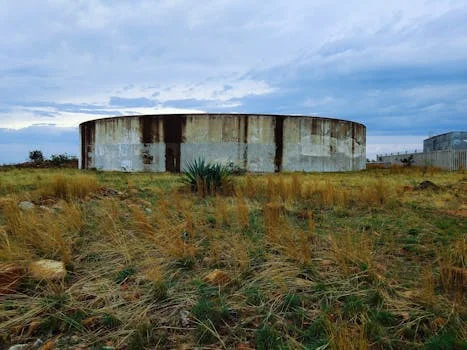
A food processing plant in Texas still runs a 50-year-old primary clarifier. Under 2024 EPA benchmarks, many food and beverage permits need TSS below 10 mg/L. That plant still discharges about 30 mg/L TSS because emulsified fats and fine organics will not settle. EPA 2023 data indicates primary clarifiers fail modern discharge limits in 40% of industrial pretreatment systems.
Three limits push plants away from gravity-only primary tanks:
- Excessive Footprint Requirements: The required surface area is calculated as Flow (Q) divided by the Surface Loading Rate. With typical rates of 24–48 m³/m²·d, a 100 m³/h flow requires a footprint of 50–100 m², excluding peripheral access and sludge handling zones.
- Inability to Manage Buoyant Particles: Fats, oils, and grease (FOG) or emulsified oils do not settle via gravity. While primary clarifiers include surface skimmers, they are often overwhelmed by industrial concentrations, leading to carryover that fouls downstream biological processes.
- High Sludge Management Costs: Primary sludge typically compacts to 1–3% solids. This high water content necessitates large-scale dewatering equipment and increases disposal costs compared to the 3–5% solids often achievable in alternative high-rate systems.
New builds and retrofits now ask whether to replace or supplement the tank. Intensive separation often protects compliance better than upsizing gravity volume alone.
What Is a Primary Clarifier and Where Does Gravity Settling Fail?
Primary clarification relies on gravity sedimentation. Particles denser than water settle during a set detention period. Stokes' Law links settling velocity to particle diameter squared and the density difference versus the fluid. Industrial tanks see Type I discrete settling, Type II flocculent settling, and Type III hindered settling.
Design ranges stay tight because the mechanism is passive. Hydraulic load above the design surface loading rate leaves solids in suspension. Those solids exit over the effluent weir. EPA 2023 guidelines list the industrial ranges below for baseline efficiency:
| Design Parameter | Standard Industrial Range | Impact on Performance |
|---|---|---|
| Surface Loading Rate | 24–48 m³/m²·d | Determines the minimum particle size captured. |
| Detention Time | 1.5–2.5 Hours | Required for Type II flocculent settling to occur. |
| Weir Loading Rate | 125–250 m³/m·d | Prevents high-velocity currents from pulling solids over the weir. |
| Sludge Blanket Depth | 0.3–0.6 m | Ensures adequate sludge thickening without anaerobic gas production. |
Limits appear when influent solids will not settle or when shocks hit the tank. A batch dump of high-concentration surfactants can cut surface tension and stall settling velocity. Thermal stratification also creates density currents that short-circuit flow. Effective detention time can fall by up to 50%.
Tank shape still matters. Rectangular units save space in multi-unit layouts but need chain-and-flight collectors. Circular tanks often run cleaner hydraulics and simpler sludge removal. They need more land and are harder to cover for odor control.
Primary Clarifier vs DAF, Lamella, and MBR Performance
For many industrial streams, Dissolved Air Flotation (DAF), lamella clarifiers, and Membrane Bioreactors (MBR) outperform a primary clarifier. Gravity tanks stay low-energy and often chemical-free. They still lack the precision modern pretreatment needs. DAF uses micro-bubbles to float FOG-heavy solids. Lamella plates raise effective settling area by up to 10 times in the same footprint. MBRs pair biology with membranes and can remove both secondary and primary clarification stages.
The table below compares the four options for a 100 m³/h industrial influent using HydropureWater product data and industry benchmarks:
| Parameter | Primary Clarifier | DAF | Lamella Clarifier | MBR System |
|---|---|---|---|---|
| TSS Removal (%) | 50–65% | 90–98% | 80–90% | 99.9% |
| BOD Removal (%) | 20–35% | 40–60% | 30–50% | 95–99% |
| Surface Loading Rate | 1.0–2.0 m/h | 10.0–20.0 m/h | 0.5–1.5 m/h (effective) | Flux: 15–25 LMH |
| Footprint (m²) | 100 m² | 12 m² | 25 m² | 40 m² |
| Chemical Use | None to Low | Moderate (Coagulants) | Moderate (Flocculants) | Low (Cleaning) |
| Energy (kWh/m³) | 0.02–0.05 | 0.10–0.25 | 0.05–0.10 | 0.50–1.00 |
| Sludge Compaction | 1–3% solids | 3–5% solids | 2–4% solids | 0.8–1.2% solids |
Plants chasing light organics and oils should start with a Dissolved Air Flotation (DAF) System. Sites packed with heavy mineral solids but short on land often prefer Lamella clarifiers for compact, chemical-efficient sedimentation, which can cut footprint by about 70% versus conventional tanks.
When reuse or very tight nutrient limits drive the design, MBR systems for near-reuse-quality effluent in industrial applications bypass gravity settling limits. That path raises energy use, so teams should weigh flux, cleaning, and sludge volume against permit risk.
How Do You Select a Clarifier System for Industrial Wastewater?
Selection balances CAPEX, OPEX, and site constraints. A primary clarifier may show the lowest purchase cost. Land use, sludge hauling, and possible fines can reverse that result over a 10-year life. The framework below groups choices by influent and project goals.
1. Influent characteristics: High oils, surfactants, or buoyant solids from food or petrochemical lines defeat gravity tanks. DAF is the practical choice there. Heavy mineral solids from mining or metal finishing favor a lamella clarifier.
2. Space and scalability: Urban plants and expansions without spare land usually drop the primary clarifier first. Engineers can compare modular systems for space-constrained industrial sites before locking a DAF or lamella layout into existing pipe racks.
What Design Criteria Matter for Primary, Secondary, Lamella, and DAF Types?
Use surface loading, detention time, weir loading, and sludge solids as the first screen. Match those numbers to FOG level, settleable fraction, and available area. Only then compare energy and chemical dose across options.
3. Cost ranges (CAPEX vs. OPEX):
- Primary Clarifier: CAPEX ($500–$1,200/m³/h); OPEX ($0.05–$0.10/m³). Best for low-budget municipal-style pre-treatment.
- DAF: CAPEX ($800–$1,500/m³/h); OPEX ($0.10–$0.20/m³). Higher energy and chemical costs are offset by higher solids removal and lower disposal fees.
- Lamella: CAPEX ($700–$1,300/m³/h); OPEX ($0.08–$0.15/m³). Middle-ground for footprint and efficiency.
- MBR: CAPEX ($1,500–$3,000/m³/h); OPEX ($0.20–$0.40/m³). High investment but eliminates multiple downstream stages.
4. ROI example: A 100 m³/h plant with a primary clarifier hauls 1,000 tons of 2% sludge per year at $100,000 disposal cost. A second look at the Dissolved Air Flotation (DAF) System at $120,000 CAPEX yields about 700 tons of 4% sludge per year. The $30,000 sludge saving plus $20,000 in avoided TSS fines gives roughly a 2.4-year payback.
Plants should then optimize sludge handling after clarifier selection to cut final haul volume.
Keep this alternatives clarifier comparison costs data decision lens on lifecycle cost, not only equipment price. Permit risk and sludge solids often move the ranking more than nameplate energy use.
Case Study: Food Plant Limits Expose Primary Clarifier Gaps

A Texas poultry plant faced a compliance crisis in 2024. Its 50 m³/h circular primary clarifier could not meet a revised local limit of 10 mg/L TSS. Influent FOG sat at 200–300 mg/L with emulsified oils that resisted settling. Effluent TSS often peaked at 25 mg/L, driving monthly surcharge fines and biological upsets downstream.
The gap matches the earlier Texas food plant that still discharged about 30 mg/L TSS from a 50-year-old gravity tank. In both cases, buoyant organics—not hydraulic overload alone—set the failure mode. Selection then shifts toward flotation or high-rate sedimentation instead of a larger primary clarifier.
Who This Is For / Who Should Look Elsewhere / Next Step
Who this is for: Process engineers, plant managers, and procurement teams comparing primary clarification against DAF, lamella, or MBR for industrial pretreatment. It fits FOG-heavy food plants, space-limited retrofits, and sites facing tighter TSS permits.
Who should look elsewhere: Municipal plants with settleable solids, spare land, and stable permits may still size a conventional primary clarifier. Pure aeration or lift-station projects need different equipment pages, not this clarification comparison.
Next step: Match your TSS, FOG, footprint, and sludge disposal numbers to the table above, then request a duty-specific equipment layout if DAF or lamella looks stronger on lifecycle cost.