Why La Vergne Plastics and Rubber Plants Are Revisiting DAF vs Clarifier in 2026
Rutherford County hosts one of the densest concentrations of NAICS 326 plastics and rubber manufacturing in the Southeast — automotive tier-1 rubber molding, TPE compounding, injection molding, and PVC calendering operations clustered around the I-24 corridor. In 2026, those plants are operating under two simultaneous constraints: federal categorical pretreatment standards under 40 CFR Part 422 (plastics and synthetic resins) and 40 CFR Part 463 (rubber manufacturing), and a Tennessee TDEC KPDES permit that governs discharge to the Stones River watershed. Both regimes set daily-maximum and monthly-average effluent limits on TSS, oil and grease, and COD — and the choice between a dissolved air flotation unit and a lamella clarifier is what determines whether a plant meets those numbers.
The decision turns on four contaminant classes that define the plastics/rubber matrix: polymer fines and pellets (low-density floatables from extrusion startup and parts handling), latex and oil emulsions (surfactant-stabilized colloids from rubber compounding and mold-release operations), plasticizer and carbon-black films (surface-active films from PVC calendering and rubber milling), and dense mineral fillers such as talc and calcium carbonate (gravity-settling solids from masterbatch and compounding washwater). A 2026 vendor benchmark widely cited — 95% oil/grease removal for a DAF versus 70% for a clarifier on a food-grade oily feed (Ecologix, 2026) — is a useful anchor, but the underlying feed is food oil, not polymer or latex. La Vergne plants need the same comparison re-run against their actual matrix, which is the purpose of this page.
How a DAF System Actually Treats Plastics and Rubber Wastewater
A dissolved air flotation system saturates a side stream of clarified effluent at 60-80 psig in an air-mixing tube, then releases the pressure through a needle valve at the DAF inlet to generate a cloud of 20-40 micron micro-bubbles (per the DAF Corporation Micro Bubble Generator specification). Those bubbles attach to anything hydrophobic or emulsified — polymer fines, latex droplets, oil-coated plasticizer films, silicone release agents — and float the loaded agglomerates to the surface in a quiescent zone, where a rotating scoop skims them into a sludge hopper. The mechanism is mechanical, not biological, which is why DAF performs predictably across a wide influent range and is largely insensitive to temperature swings inside an unheated La Vergne treatment building.
For a properly sized unit on a plastics/rubber feed, the realistic performance envelope is 92-98% TSS removal on a circular FC Maximizer-style DAF and 85-90% TSS removal on a rectangular RC UniMax configuration (DAF Corporation, 2026). A worked example the engineer can scale to local flow: the FC-150 Maximizer is rated for 500 gpm of wastewater at 2,000 ppm TSS loading, clarified to approximately 50 ppm — a 97.5% solids reduction on a single pass. That footprint is roughly 15 ft in diameter for the skid, which fits inside most existing La Vergne equipment pads without a building expansion.
Where DAF dominates on a plastics/rubber feed is on the floatable and emulsified fraction: low-density polymer pellets (specific gravity near 0.9-0.95), latex carryover from rubber mixing, and oil or silicone release-agent films all attach readily to micro-bubbles. DAF also tolerates — and usually requires — coagulant and polymer dosing; a typical regimen is 50-150 mg/L polyaluminum chloride (PAC) as coagulant followed by 1-5 mg/L cationic polymer as flocculant, delivered through an automatic chemical dosing system. For broader equipment context across industries, the industrial wastewater treatment equipment selection guide walks through how DAF fits against other primary separation technologies.
Where a Lamella or Gravity Clarifier Wins on Plastics and Rubber Wastewater
A lamella clarifier is a gravity sedimentation tank fitted with an inclined-plate pack — typically 55-60° plate angles — that increases the effective settling area inside a small footprint. Surface loading rates of 20-40 m/h are achievable on a well-designed unit, with a sludge recirculation loop returning a portion of the thickened underflow to stabilize the floc blanket in the reaction zone. The clarifier wins on any stream where the contaminant is denser than water and forms a settleable floc — which in a plastics/rubber plant means calcium carbonate filler washwater, talc-rich compounding effluent, carbon-black settling streams, and the heavy grit load from rubber bale wash.
The Ecologix mining case study — approximately 90% solids reduction on heavy sediment at lower cost than a comparable DAF (Ecologix, 2026) — is the right analog for a talc/carbon-black-heavy rubber compounding line. A lamella clarifier achieves 85-92% removal on those streams using only gravity and a small polymer dose, with no compressed-air system, no saturator, and no micro-bubble generator to maintain. Sludge falls into a bottom cone at 2-5% consistency, comparable to the 2-4% thickened sludge a DAF produces (DAF Corporation, 2026), and feeds the same downstream dewatering equipment — a HydropureWater plate and frame filter press handles either sludge source.
Where the clarifier loses on a plastics feed is on the floatable and emulsified fraction: polymer pellets rise rather than settle and exit the clarifier in the overflow, latex emulsions stay suspended and pass through the plate pack, and plasticizer/carbon-black films form a surface scum that the inclined plates do not capture. On a latex-bearing rubber compounding line, those three failure modes are precisely what push a plant to either oversize the clarifier past economic sense or to put a DAF upstream. A useful cross-reference is the stamping press oily water pretreatment before DAF process guide, which describes the same upstream oil-film problem and the same DAF-first answer for metalworking plants.
Contaminant-by-Contaminant: DAF vs Clarifier in a Plastics/Rubber Plant
The table below is the working matrix for a La Vergne plant defending a 2026 technology choice to TDEC and to corporate. Numbers are drawn from the operating envelopes cited above (DAF Corporation FC Maximizer 92-98% TSS, RC UniMax 85-90% TSS, Ecologix 95%/70% O&G benchmark) and from the analogous mining/compounding performance band for clarifiers on dense solids.
| Contaminant | Typical Source | DAF Performance | Clarifier Performance | Recommended Primary |
|---|---|---|---|---|
| Polymer fines / pellets | Extrusion startup, pellet handling, fugitive spill | 90-98% removal (hydrophobic floatables attach to bubbles) | Poor — pellets float, overflow | DAF |
| Latex / oil emulsions | Rubber compounding, mold release, dip lines | 90-95% O&G (Ecologix 95% benchmark on emulsified feed) | 60-70% O&G (Ecologix 70% benchmark) | DAF |
| Plasticizer / carbon-black films | PVC calendering, rubber milling, ink wash | 85-92% (hydrophobic film attaches to bubbles) | Marginal — surface scum bypasses plates | DAF |
| Talc / CaCO3 fillers | Compounding washwater, masterbatch | Acceptable, but higher polymer dose | 85-92% (gravity settling, low chemical use) | Clarifier (or DAF air-flotation alternative) |
| Heavy grit / bale wash solids | Rubber stock prep, bale wash | Unnecessary cost on this stream | 88-92% (analog to mining 90% in S2) | Clarifier |
| Mixed stream (compounding + molding + parts washing) | Combined plant effluent | Primary, 90-95% overall | Polish, 5-10% additional TSS drop | DAF → lamella clarifier train |
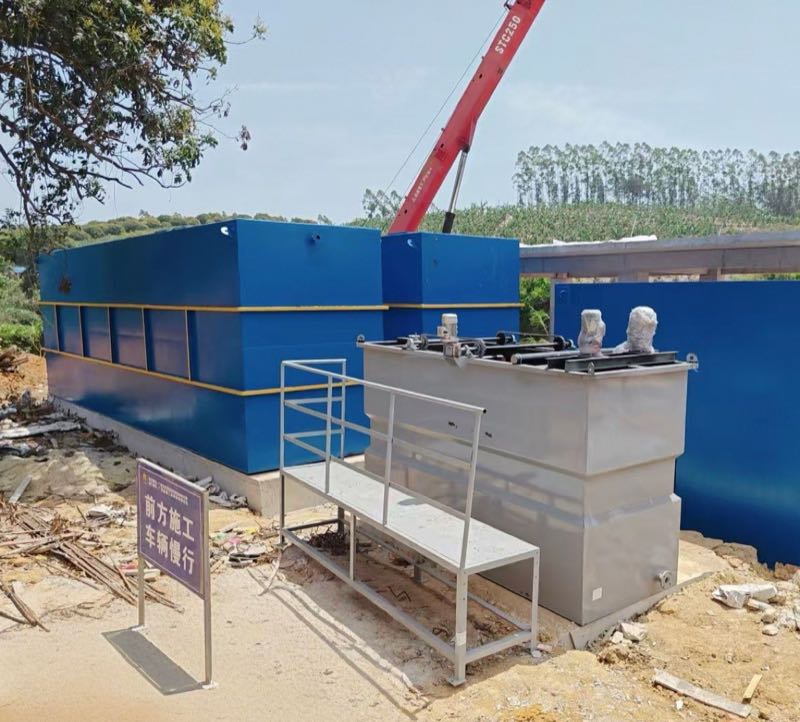
The bottom row is the 2026 default for any La Vergne plant that runs more than one of the operations above on a shared waste stream. A DAF primary captures the floatables, latex, oils, and films; a lamella clarifier polishes the underflow to pull the dense fillers and any polymer-floc carryover below the 40 CFR Part 422/463 monthly-average TSS limit. The dissolved air flotation system paired with a HydropureWater high-efficiency sedimentation tank (lamella clarifier) is one of the equipment configurations sized to this train.
2026 Compliance Map: 40 CFR Part 422, Part 463, and TDEC KPDES
40 CFR Part 422 sets categorical pretreatment standards for plastics and synthetic resins manufacturing, with subparts for contact cooling and process wastewater. 40 CFR Part 463 does the same for rubber manufacturing, with subparts covering tire production, general rubber goods, and latex-based operations. Both parts establish daily-maximum and monthly-average limits on TSS, oil and grease, COD, pH, and specific toxic organics — and both have direct bearing on the DAF-vs-clarifier sizing decision. A clarifier-only system rarely meets the O&G daily-maximum on a latex-bearing feed because the 60-70% removal band leaves the effluent above the limit on a high-loading day; a DAF-only system rarely meets the TSS monthly-average on a dense-filler feed because the flocculant demand climbs and the underflow carries suspended fines.
On top of the federal categorical limits, every La Vergne plant discharging to the Murfreesboro or Nashville POTEs operates under a TDEC-issued KPDES permit, with the Stones River watershed as the receiving-water context. TDEC's pretreatment program enforces the federal categorical limits through local limits analysis and IU permits, and it expects a documented engineering basis for the technology selection — not a vendor preference. The framework in this article — DAF primary on floatables/emulsions, clarifier polish on dense solids, hybrid train on mixed streams — is the defensible 2026 selection logic. A related local analog for chemical-industry plants is covered in the DAF or clarifier for chemicals wastewater in El Dorado factory guide; for plastics/rubber, the same selection logic is overlaid on 40 CFR Parts 422 and 463 rather than the organics-and-solvents regime that drives chemical-plant design.
Cost, Footprint, and 2026 Decision Framework for La Vergne Plants
The table below translates the technical comparison into a CAPEX/OPEX band a plant manager can take to a board meeting. Numbers are 2026 order-of-magnitude estimates for skid-mounted, pre-assembled equipment in the 50-500 gpm range typical of a single NAICS 326 line in La Vergne.
| System | CAPEX (skid-mounted, 50-500 gpm) | OPEX Drivers | Best-Fit Stream | Footprint |
|---|---|---|---|---|
| DAF (4-300 m³/h) | Higher upfront; air compressor, saturator, micro-bubble generator, controls | Compressed air, polymer/coagulant dose, periodic nozzle maintenance | Latex, oils, plasticizer films, polymer fines | Compact skid; circular or rectangular tank |
| Lamella clarifier | Lowest upfront; plate pack, reaction zone, sludge cone | Low polymer dose, no compressed air, minimal mechanical wear | Talc, CaCO3, carbon black, bale-wash grit | Small footprint for flow rate; vertical orientation |
| DAF → lamella train | Sum of both skids plus interconnecting piping | Combined OPEX; DAF polymer dominates, clarifier is negligible | Mixed plastics/rubber plant effluent under 40 CFR 422/463 | Two skids in series; fits existing equipment pad with 15-20% expansion |
| Plate and frame filter press (downstream) | Moderate; sized to combined sludge volume | Filter cloth replacement, wash water, power | 2-4% thickened sludge from DAF or clarifier underflow | Separate bay; semi-automatic operation |
The decision rule for a 2026 La Vergne capital request is three lines: (1) if oil/grease, latex, or plasticizer films dominate the mass balance, specify DAF primary; (2) if dense fillers and grit dominate, specify lamella clarifier primary; (3) if both are present — which is the common case for a plant running compounding plus molding plus parts washing — specify a DAF primary followed by a lamella polish. This is the configuration TDEC reviewers expect to see in a 2026 IU permit application, and it is the configuration that hits both the daily-maximum O&G and the monthly-average TSS without oversizing either unit. Before committing to a 500+ gpm unit, run jar testing plus a 48-100 gpm DAF pilot on the actual plant stream — the FC-60 Maximizer pilot at 48 gpm and the RC UniMax pilot at 80-100 gpm (DAF Corporation, 2026) cover the typical La Vergne flow range, and the jar/pilot data is the engineering basis the permit reviewer will ask for.
Frequently Asked Questions
DAF or clarifier for rubber latex wastewater — which should a plant choose?
DAF is the primary. A DAF system achieves approximately 95% oil and grease removal on an emulsified feed (Ecologix, 2026), while a clarifier achieves approximately 70% on the same stream. On a rubber compounding or latex-dip line, that 25-point gap is the difference between meeting and missing the 40 CFR Part 463 O&G daily-maximum. Use a clarifier as a polish step downstream of the DAF if dense fillers are also present, not as a replacement.
Can a clarifier alone meet 40 CFR Part 463 oil and grease limits on a latex-bearing feed?
Generally no. The 60-70% O&G removal band on a clarifier leaves the effluent above the daily-maximum on a typical latex-bearing feed during a high-loading shift. A DAF unit, or a DAF followed by a clarifier, is required to consistently meet the categorical standard. The only case where a clarifier can meet the O&G limit alone is a stream with very low latex content and a heavy mineral load — which is not the typical rubber plant profile.
How are plastic pellet floatables handled in a DAF or clarifier?
DAF is the only reliable primary. Plastic pellets have a specific gravity near 0.9-0.95, so they float in a clarifier and exit in the overflow rather than settling into the sludge cone. In a DAF, the micro-bubbles attach to the pellet surface and carry them into the float layer for skimming at 90-98% removal. Upstream bar screens or basket strainers are still recommended to protect the DAF pump and saturator from large pellets, but the separation step itself is a DAF job.
Can DAF and a lamella clarifier be combined in one treatment train?
Yes, and that combination is the 2026 default for any La Vergne plant with a mixed plastics/rubber waste stream. DAF primary removes the floatables, latex, oils, and plasticizer films; lamella clarifier polish removes the dense fillers and any polymer-floc carryover that escapes the DAF underflow. The two units in series hit both the 40 CFR Part 422/463 daily-maximum O&G and the monthly-average TSS on a single pass, with a combined footprint that fits most existing equipment pads.
Is a pilot test required before specifying a full-scale DAF or clarifier?
Yes, for any 500+ gpm full-scale unit. Jar testing on the actual plant stream identifies the coagulant and polymer dose, then a 48-100 gpm DAF pilot (per DAF Corporation pilot offerings) confirms the removal rates on the real matrix before the plant commits to a CAPEX number. The pilot data is also the engineering basis a TDEC permit reviewer expects to see in the 2026 IU permit application.