What an Orrville Chemical Plant Actually Discharges in 2026
A chemical plant on the Waynedale or Marshallville side of Orrville rarely sends a single, well-behaved stream to the City of Orrville WWTP. The 2026 influent is a moving target: free oils and emulsified FOG from equipment washdowns, latex and polymer residues from product changeovers, surfactants and wetting agents from cleaning, solvent traces, dissolved salts from neutralization, and pH swings between acid and caustic cleaning campaigns. Batch discharges from resin and agglomerated-chemical operations arrive as slugs rather than as a steady diurnal curve, which is what makes jar testing and equalization non-optional upstream of any clarifier or DAF.
The federal baseline is 40 CFR Part 471 — Organic Chemicals, Plastics, and Synthetic Fibers (OCPSF), which sets categorical pretreatment standards for BOD, TSS, and priority pollutants discharged from these operations (per 40 CFR Part 471). On top of that, the City of Orrville WWTP pretreatment program layers local discharge limits, and local limits are usually the binding constraint because POTWs are required to protect their own NPDES permit and their biological treatment process. Noncompliance is enforced through Ohio EPA Director's Final Findings and Orders under the Division of Surface Water, not just through a warning letter, so the choice of primary separation unit is a compliance decision, not just a capex decision. The US chemical plant pretreatment compliance guide walks through how those two regulatory layers stack on a single discharge.
How a DAF Works on a Chemical Stream
A dissolved air flotation unit removes contaminants by attaching fine air bubbles to oil droplets and suspended particles, reducing their bulk density so they rise to the surface. The bubbles are generated by pressurizing 20–40% of the clarified effluent at 60–90 psig with compressed air, then releasing the pressure through a needle valve or nozzle inside the contact zone, where a 20–40 micron bubble cloud forms (per DAF Corp's Micro Bubble Generator specification). The floated layer is skimmed with a top-mounted rotary skimmer, and heavier grit that does not float drops to a bottom cone for separate removal.
On a chemical stream, the bubble-to-particle attachment is not free — it has to be engineered. Coagulant (typically ferric chloride, aluminum sulfate, or a cationic polymer) is dosed in a flash-mix train to neutralize surface charge on latex and oil droplets, then a high-molecular-weight flocculant is dosed in a slow-mix tank to build a 1–3 mm floc that the bubbles can lift. A PLC-controlled coagulant and flocculant dosing system with flow-paced metering pumps is the standard configuration, because under-dosing starves the DAF and over-dosing sends a polymer blanket into the effluent. Komline-Sanderson puts the rule plainly: DAF is best applied to materials that normally settle slowly, persist by remaining in suspension, or have a tendency to float — which describes the slow-settling, low-density fraction of a chemical stream (oils, latex, polymer fines, surfactant-stabilized emulsions) far better than any gravity device.
The float from a well-run DAF comes off at 2–4% total solids (per DAF Corp), which is dry enough to feed a plate and frame filter press directly for final dewatering to 25–35% cake without an intermediate thickener. For an Orrville chemical plant, a packaged dissolved air flotation system ships with the saturator, recycle pump, and skimmer drive on a single skid, which matters when the only available footprint is inside an existing production building.
How a Clarifier and a Lamella Clarifier Work on a Chemical Stream
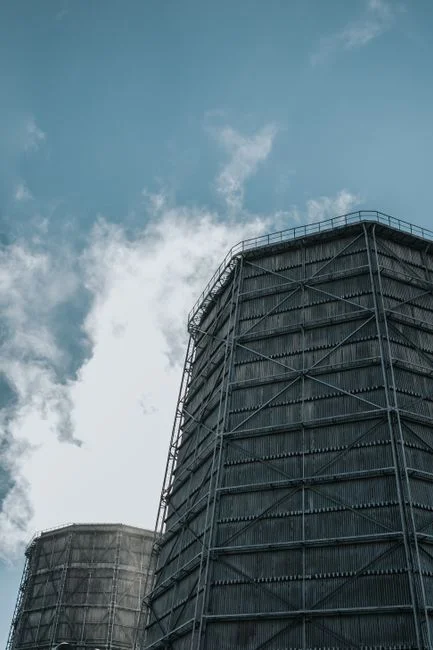
A conventional clarifier is gravity doing the work: water flows slowly through a circular or rectangular basin at 1–2 m/h surface loading, heavier suspended solids drop to a sludge bed, clarified water overflows V-notch weirs, and a rotating scrapor pushes sludge to a central hopper for pumping out. Effectiveness depends on quiescent settling, which is why hydraulic residence time stretches to 2–4 hours. The 2026 Ecologix comparison reports conventional clarifier TSS removal around 70–90% and FOG removal limited to 60–75% on emulsified streams, because the slow-settling fraction simply does not have time to drop out at typical surface loadings.
A lamella clarifier adds a pack of inclined plates at 55–60° inside the same footprint. Solids settle onto the plate faces, slide down to the sludge hopper, and clarified water exits through the top. The effective settling area is multiplied by the projected plate area, which is why surface loadings of 20–40 m/h are achievable in a fraction of the footprint (per HydropureWater High-Efficiency Sedimentation Tank specification). Many lamella designs also recirculate a portion of the settled sludge back to the inlet as a nucleation aid, which improves floc growth and reduces polymer demand by up to 30% versus a conventional clarifier running on the same stream.
For an Orrville chemical plant, the lamella's strength is the inorganic side of the stream: metal-hydroxide floc from acid/caustic neutralization, salt precipitates, and the heavy mineral fraction that arrives with bulk-raw-material wash water. A HydropureWater lamella clarifier drops into a 2–4 m ceiling height and runs on a much smaller footprint than a circular clarifier, which is usually the binding constraint inside a chemical plant building envelope. The same reference walks through how the inclined plates interact with chemically conditioned floc, and the BOD removal engineering guide for industrial wastewater covers how lamella effluent feeds downstream biological polishing.
Side-by-Side Comparison: DAF vs Clarifier vs Lamella Clarifier
Before you choose, run the three options against the same stream. The table below consolidates the operating ranges reported by DAF Corp, Ecologix, and HydropureWater, and the cost column is banded because 2026 equipment quotes depend on flow, materials of construction, and instrumentation.
| Parameter | DAF | Conventional Clarifier | Lamella Clarifier |
|---|---|---|---|
| TSS removal | 85%–98% (DAF Corp FC Maximizer: 92%–98%; RC UniMax: 85%–90%) | 70%–90% (per Ecologix 2026 guide) | 80%–95% in chemical service (HydropureWater field data, 2026) |
| FOG / free oil removal | Up to 95% on emulsified FOG (per Ecologix food-plant benchmark) | 60%–75% on emulsified FOG | 60%–75% unless coagulated; 80%–90% with optimized coagulant |
| Hydraulic residence time | 20–40 min | 2–4 h | 30–60 min |
| Surface / hydraulic loading | 5–25 m/h (depending on recycle ratio) | 1–2 m/h | 20–40 m/h on plate area |
| Footprint (relative) | Small (compact skid) | Large (plan-area dominant) | Small (1/4 to 1/2 of conventional) |
| Polymer + coagulant dose | Both required; tuned to bubble attachment | Moderate coagulant; polymer often used | Up to 30% less polymer with sludge recycle (per HydropureWater) |
| Sludge consistency | 2%–4% float (per DAF Corp) | 1%–2% underflow, requires thickening | 1%–3% underflow |
| Recovers free oil as product? | Yes (skimmed float can be decanted) | No (oil trapped in underflow) | No (oil trapped in underflow) |
| Typical 2026 CAPEX band | Medium–High (recycle pump, saturator, compressor) | Low–Medium (large civil work) | Medium (plates + small civil) |
| Typical 2026 OPEX band | Medium–High (compressed air, polymer, power) | Low (mostly polymer and sludge hauling) | Low–Medium (reduced polymer, low power) |
Three operating takeaways from the table. First, on TSS and FOG together, the DAF is the only technology that clears 90% on both simultaneously. Second, the lamella clarifier is the only one that reduces polymer demand meaningfully, which compounds over a 20-year asset life. Third, the conventional clarifier is the cheapest to run but the most expensive to install per unit of flow, and it almost never wins on a tight chemical-plant footprint.
Matching the Choice to a Chemical Stream in Orrville
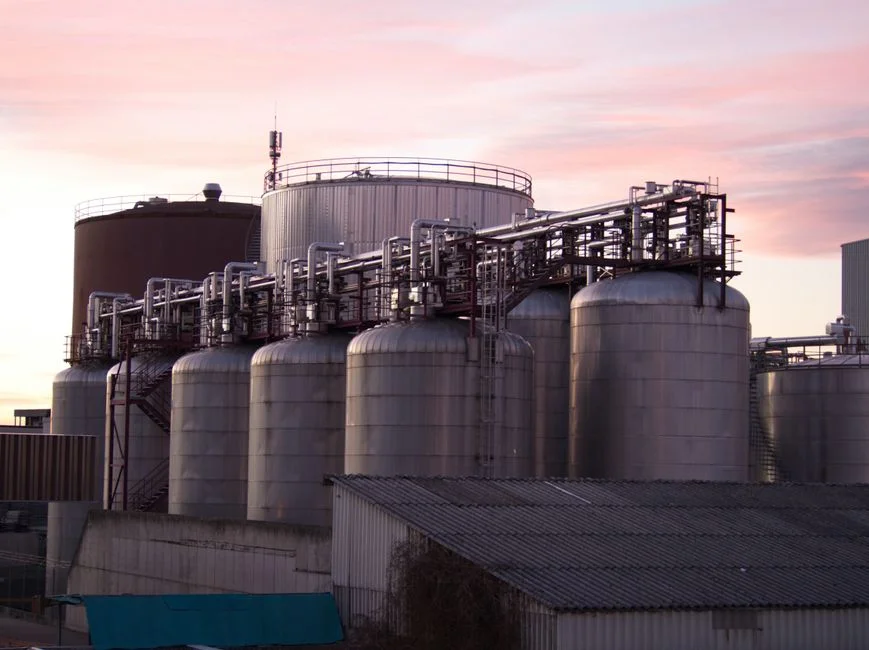
The decision rule for a 2026 Orrville chemical stream comes down to which contaminant class dominates. Use this in order:
- Free oil > 50 mg/L, emulsified FOG, latex, surfactants, or fine polymer particles that don't settle even after coagulation → DAF. The bubble attachment step is what makes these contaminants recoverable; a clarifier will let them pass. A dissolved air flotation system is the standard reference unit for this case.
- Inorganic salts, metal-hydroxide floc, or acid/caustic neutralized sludge with low free-oil content → Lamella clarifier. The settling is fast, the footprint is tight, and the sludge recirculation saves polymer. Pair the lamella with a PLC-controlled coagulant and flocculant dosing system to keep dose tight.
- Low-FOG, low-TSS stream with cheap land and 70%–80% removal acceptable → Conventional clarifier. Rare in chemical service, but still appropriate for a low-strength cooling-tower blowdown or a dilute rainwater side-stream.
Hybrid configurations are common. A lamella or conventional clarifier upstream of a DAF handles the bulk TSS and equalizes the flow, then the DAF polishes the floatable fraction and recovers free oil. Ecologix confirms that hybrid trains are used in practice for streams with both heavy and light contaminants. If your plant runs both an OCPSF reactor washdown and a metal-hydroxide precipitation step, the hybrid layout is usually the lowest-risk answer. The companion article on the chemicals wastewater DAF vs clarifier guide for El Dorado walks through a similar decision for a different chemical corridor.
CAPEX, OPEX, and Ohio EPA Compliance in 2026
DAF carries higher CAPEX because of the recycle pump, air compressor, saturator vessel, and skimmer drive (per Ecologix 2026), plus higher OPEX for compressed air and polymer. The offset is that skimmed float from a chemical plant is often a salable byproduct — recovered oil, latex concentrate, or surfactant-rich float that goes back to a product tank rather than to a hauler. Clarifiers have the lowest OPEX because there is no air system and polymer dose is moderate; lamella plates add modest cost versus a conventional clarifier but recover that cost quickly in chemical savings and footprint (per HydropureWater High-Efficiency Sedimentation Tank specification).
Compliance-wise, every system must hit 40 CFR Part 471 OCPSF limits and the City of Orrville WWTP local limits simultaneously, and any excursion can trigger NPDES permit violations back through the POTW. Ohio EPA enforces through Director's Final Findings and Orders issued by the Division of Surface Water, which carry the same weight as a consent decree. Before you sign a purchase order, run a jar test on the actual chemical stream and, where the stream is complex, an on-site pilot. Komline and DAF Corp both explicitly state that pilot testing is the most reliable way to size a DAF or clarifier for a given waste stream — a simple lab test generally determines if a DAF is feasible, and further testing simulates the operation under specific operating conditions. The US chemical plant pretreatment compliance guide has the regulatory reference set if you need to walk it through your environmental manager.
Frequently Asked Questions
Should an Orrville chemical plant choose a DAF or a clarifier in 2026?
Choose a DAF when the stream carries free oil, emulsified FOG, latex, surfactants, or fine polymer particles — DAF achieves 85%–98% TSS removal and up to 95% FOG removal (per DAF Corp and Ecologix 2026). Choose a clarifier when the stream is dominated by heavier inorganics or salt byproducts where gravity settling is fast and cheap. For most OCPSF plants, a DAF upstream of biological polishing is the standard configuration because the floatable fraction is the one most likely to violate 40 CFR Part 471 limits.
When is a lamella clarifier better than a DAF for a chemical stream?
A lamella clarifier is better when the stream is low in free oil and high in settleable inorganic solids or metal-hydroxide floc, and the plant has a tight indoor footprint. Lamella designs reach 20–40 m/h surface loading and cut polymer demand by up to 30% versus a conventional clarifier (per HydropureWater). They do not, however, match DAF FOG removal unless coagulated aggressively.
What polymer and coagulant dose should I expect on a chemical-plant DAF?
Typical jar-tested doses run 50–200 mg/L of coagulant (ferric chloride or alum) and 1–10 mg/L of high-molecular-weight cationic flocculant, but the right dose is stream-specific. Run a six-beaker jar test with varying coagulant, flocculant, and pH before any equipment order, and re-verify every quarter because batch discharges from a chemical plant shift the optimal dose.
Is pilot testing required before buying a DAF or clarifier for an Ohio chemical plant?
Pilot testing is not legally required, but both Komline-Sanderson and DAF Corp state that a lab or on-site pilot is the most reliable way to size a DAF or clarifier for a given waste stream. For an Ohio NPDES-permitted discharger subject to 40 CFR Part 471 and local pretreatment limits, a pilot also generates the data set your engineer of record will need to defend the design to Ohio EPA reviewers.
Which federal effluent guideline applies to an Orrville chemical plant discharging to the POTW?
Most Orrville chemical plants fall under 40 CFR Part 471 — Metal Finishing or Organic Chemicals, Plastics, and Synthetic Fibers, depending on the product line. Part 471 sets categorical pretreatment standards that the City of Orrville WWTP local limits may further restrict, so the binding number is almost always the local limit, not the federal one.