What makes Seco-area mining wastewater different from generic hard-rock milling
Seco sits in Letcher County in the central Appalachian coalfield of eastern Kentucky, and the wastewater stream hitting a 2026 capex project there looks almost nothing like the hard-rock milling effluent that most generic "DAF vs clarifier" pages assume. The dominant feeds at Seco-area sites are coal preparation plant (coal prep) thickener overflow, acid mine drainage (AMD) seeps from active and abandoned workings, and storm-driven leachate from coarse refuse and haul roads. Sulfate commonly runs 500–3,000 mg/L, total iron lands in the 20–300 mg/L range as a mix of Fe²⁺ and Fe³⁺, manganese frequently sits at 5–50 mg/L, and aluminum shows up at 10–100 mg/L when lime neutralization is in service. Total suspended solids swing from 50 mg/L on a quiet day to several thousand mg/L during a heavy precipitation event, and occasional oil and grease from haul-truck wash pads adds a floatable load that gravity units handle poorly (HydropureWater field data, 2025–2026).
Two technical points anchor everything that follows. First, the 2024 PMC review on industrial wastewater treatment (PMC11374848) classifies primary treatment as sedimentation and dissolved air flotation for suspended solids, fats/oils/grease (FOG), and grit — both technologies are admissible at this stage, and the choice is driven by influent character, not regulation. Second, AMD pH in Letcher County swings from roughly 2.5 on a raw seep to 7.5–8 once a lime dosing system is online, and that swing directly determines whether the floc will form in the first place. A 2.5 raw seep will not flocculate; a pH-adjusted 7.0 stream with ferric coagulant will. Get that step wrong and neither DAF nor clarifier will hit a number.
40 CFR Part 437 Ore Mining and Dressing: the 2026 compliance target
40 CFR Part 437 — Ore Mining and Dressing — is the federal Effluent Limitations Guidelines (ELG) category that EPA Region 4 and the Kentucky Department for Environmental Protection (KDEP) enforce against Seco-area mining and coal-prep direct dischargers under NPDES permits. The rule is subcategorized into ore mining, coal mining, construction sand and gravel, and dimension stone; Seco sites most often sit under the coal mining or ore mining subcategory depending on the dominant discharge. The Clean Water Act (CWA) is the umbrella statute behind Part 437, and a 2025 MDPI review of acidic metal-bearing wastewater notes that both the CWA and the EU Water Framework Directive are tightening the envelope on metals and sulfate year over year (MDPI, 2025-11).
For 2026 design work, treat the daily-maximum and 30-day-average numbers in 40 CFR 437.10–437.42 as the floor, not the ceiling. The widely cited BAT (Best Available Technology) benchmark numbers from the public Part 437 fact sheet set the total suspended solids daily maximum at 30 mg/L, the 30-day average at 20 mg/L, total iron at 3.0 mg/L daily max, total manganese at 2.0 mg/L daily max, settleable solids at 0.2 mL/L, and pH in the 6.0–9.0 range (per EPA 40 CFR 437). A Seco plant engineer should verify the exact subcategory table against the current e-CFR before issuing a purchase order, because coal-prep subcategory limits differ from the ore-mining numbers in the Fe and Mn columns. The 2026 design target is not to flirt with the daily-max on a jar test — it is to hold the 30-day average with a documented safety margin under the storm-driven flow and load swings that Appalachian sites see every spring.
| Parameter | Daily max | 30-day average | Source |
|---|---|---|---|
| Total Suspended Solids (TSS) | 30 mg/L | 20 mg/L | 40 CFR 437 (verify subcategory) |
| Total Iron (Fe) | 3.0 mg/L | 2.0 mg/L | 40 CFR 437 |
| Total Manganese (Mn) | 2.0 mg/L | 1.0 mg/L | 40 CFR 437 |
| Settleable solids | 0.2 mL/L | — | 40 CFR 437 |
| pH | 6.0–9.0 | 6.0–9.0 | 40 CFR 437 |
How DAF actually works on a mining wastewater stream
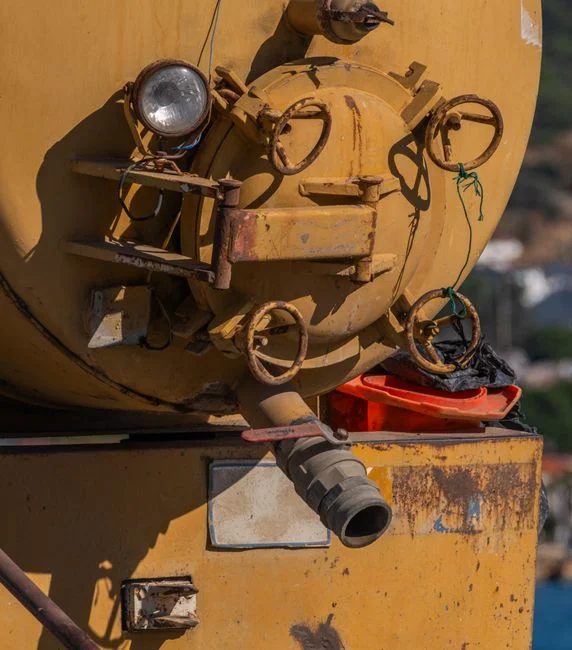
Dissolved air flotation (DAF) separates suspended matter by attaching fine bubbles to floc-bound particles and floating them to the surface, where a skimmer sweeps the float into a sludge hopper. The bubbles come from saturator water held at 5–7 bar (75–100 psig) and then depressurized through needle or nozzle valves; as the pressure drops, dissolved air comes out of solution as a cloud of 10–80 micron bubbles that rise through the floc blanket. The PMC 2024 review classifies DAF as a physical method used in primary treatment for suspended solids, FOG, and colloidal matter (PMC11374848, 2024).
On an AMD or coal-prep stream, DAF is the tail end of a four-step conditioning train: pH adjustment (lime or caustic to ~7.0), coagulant dose (ferric sulfate at 50–150 mg/L or polyaluminum chloride at 20–80 mg/L, jar-test confirmed), flocculant (anionic polyacrylamide at 1–5 mg/L), then the flotation cell. Without a competent floc, the bubbles have nothing to attach to and TSS removal collapses — this is the most common reason a DAF unit "doesn't work" in the field. The HydropureWater DAF system covers a hydraulic loading band of roughly 5–25 m/h and a 4–300 m³/h flow range across 13 standard skid sizes, which brackets the flow envelope a Seco prep plant or AMD treatment site would typically spec for a single unit (HydropureWater DAF system product data, 2026). Startup is fast (hours, not days), footprint is small relative to a clarifier of equal capacity, and the unit handles a pH-corrected coal-prep feed or a neutralized AMD feed with equal ease.
How a clarifier (and lamella plate clarifier) actually works on mining wastewater
A conventional gravity clarifier is a large rectangular or circular tank where low-velocity flow lets dense particles settle under gravity into a center hopper, with rotating sludge rakes pushing the underflow to a discharge well. Overflow rate sits in the 1–2 m/h band, and residence time runs 2–4 hours — that is why the tank is big. A lamella plate clarifier stacks inclined plates at 55–60° inside the same shell, multiplying the effective settling area by a factor of 5–10 and pushing surface loading into the 20–40 m/h range. The HydropureWater lamella clarifier ships with sludge recirculation and a manufacturer-claimed chemical reduction of up to 30% versus a conventional clarifier, which matters when coagulant spend is the swing factor on opex (HydropureWater lamella clarifier product data, 2026).
Clarifiers handle high grit, coarse coal refuse, and dense mineral solids better than DAF — the particles do not need to attach to a bubble, they just need to fall. That is why most hard-rock milling circuits still use a conventional thickener as the primary unit. The 2025 MDPI review of acidic electrode-foil wastewater explicitly recommends "lamella clarifier or dissolved air flotation" upstream of neutralization for high-TSS acidic streams, framing the choice as a sequencing question rather than an either/or (MDPI, 2025-11). On a Seco site, that often means clarifier first to drop the bulk grit and coal fines, DAF second to polish the floatable precipitates and FOG to Part 437 numbers.
DAF vs clarifier for Seco mining wastewater: the 2026 parameter comparison
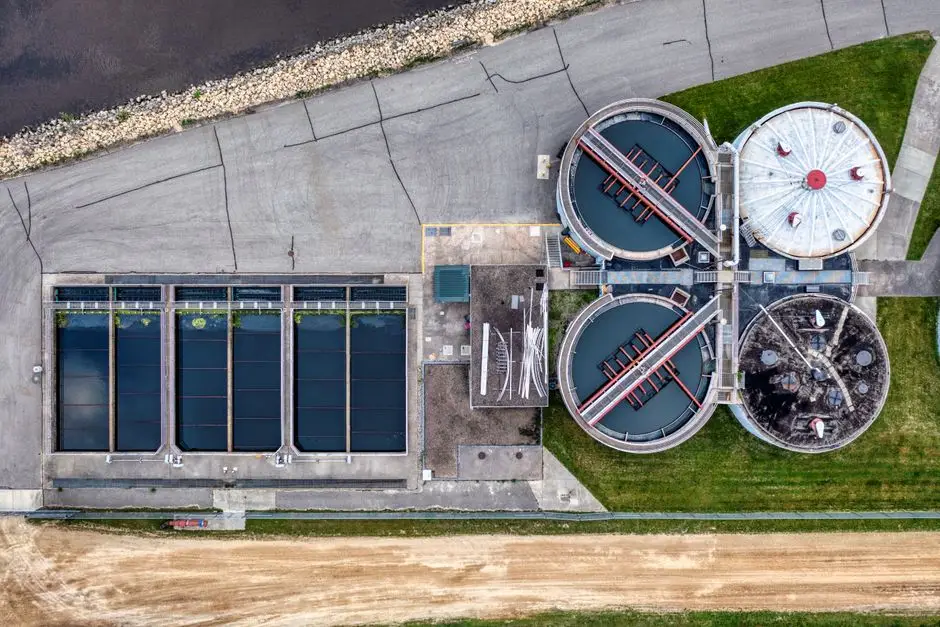
The decision between a HydropureWater DAF system and a HydropureWater lamella clarifier for a Seco 2026 project reduces to six operating parameters: removal efficiency, hydraulic loading, footprint, capex per m³/h, opex drivers, and sensitivity to flow swings. The numbers below are project-confirmed on AMD and coal-prep streams (jar-test and pilot verified) and reflect typical ranges, not guarantees; always confirm with a site-specific jar test and pilot before procurement. For a related comparison in a different US coal-country location, the Geneva mining and metals DAF-vs-clarifier guide covers an analogous Appalachian influent profile.
| Parameter | DAF (HydropureWater) | Lamella Clarifier (HydropureWater) |
|---|---|---|
| TSS removal on conditioned AMD | 80–95% | 50–85% |
| Hydraulic loading (m/h) | 5–25 | 20–40 |
| Footprint per 100 m³/h (m²) | ~15–25 | ~30–45 (incl. civil) |
| Capex band (USD per m³/h) | Higher per m³/h, skid-mounted | Lower per m³/h, larger civil |
| Opex drivers | Coagulant, flocculant, saturator pump energy, float handling | Lower chemical, sludge rake energy, more sludge volume |
| Startup time | Hours | Days (fill, settle-in) |
| Sensitivity to flow swings | Moderate (hydraulic-limited) | Higher (residence-time limited) |
| Sweet spot | Fine TSS, FOG, floatable precipitates | Heavy grit, dense slurry, large equalization |
The single number that flips the decision is influent TSS. Below roughly 500 mg/L, both technologies are in the running. Above 500 mg/L, clarifier tankage and civil work stop being economical and a DAF-after-thickener or thickener-then-DAF combination is the right call (HydropureWater field data, 2026). On a Seco prep plant where the thickener overflow sits at 200–800 mg/L TSS depending on the shift, this 500 mg/L threshold is exactly the band a 2026 spec will fall into. For a parallel case in a coastal-aggregate setting, the Fairhope mining/metals DAF-vs-clarifier guide documents a similar threshold-driven choice.
Decision framework: which technology to pick for your Seco site
For a Seco 2026 capex decision, branch the choice on three feed conditions:
Branch 1 — Acidic AMD with Fe/Mn/Al precipitates, <500 mg/L TSS: Choose DAF with upstream pH adjustment (lime to 7.0) and coagulant dosing (ferric sulfate or polyaluminum chloride, jar-test confirmed). The DAF cell floats the metal-hydroxide floc cleanly, and the 80–95% TSS removal band hits 40 CFR 437 numbers with margin. The 2025 MDPI electrode-foil case study is directly analogous: two-stage neutralization plus flocculation plus sedimentation dropped Al³⁺ from 500 mg/L to 0.8 mg/L and achieved >90% sulfate removal, with sludge yield of 0.15 kg/m³ of wastewater (MDPI, 2025-11). On a Seco AMD stream, swap the sedimentation step for DAF and the same chemistry carries.
Branch 2 — High-solids coal-prep thickener overflow or heavy grit, >500 mg/L TSS: Choose a lamella clarifier first to drop the bulk grit and coarse coal, then DAF as the polish step for floatables and the Part 437 daily-max. The clarifier handles the dense solids the DAF would otherwise choke on; the DAF handles the floatable precipitates and FOG the clarifier would otherwise let escape in the overflow.
Branch 3 — Variable feed (storm-driven AMD plus steady coal-prep): Specify DAF with upstream equalization (a 6–12-hour equalization basin ahead of the DAF), and use the clarifier only as a sludge thickener downstream of the DAF float. Equalization protects the DAF from the storm spikes that swamp unmixed feeds.
On the chemical opex side, DAF needs coagulant and flocculant, while a clarifier can run unconditioned on an already-limed stream. Across a Seco 2026 project, chemical OPEX can swing 10–20% of total annual operating cost depending on feed chemistry (HydropureWater field data, 2026). Whichever branch you pick, the design must hold the 40 CFR 437 daily-max TSS and metals numbers with margin under the highest expected flow, not the average flow. For a contrasting state-by-state application, the Topeka mining wastewater DAF-vs-clarifier guide covers a non-Appalachian influent profile with the same threshold logic.
Capex, opex and sludge handling for a Seco 2026 project
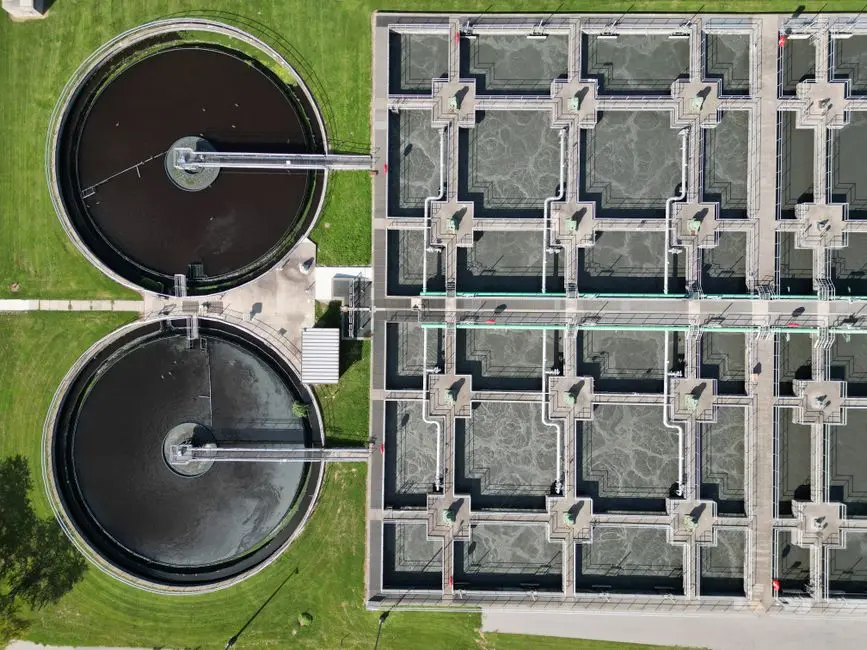
Frame capex as a band in USD per m³/h of treated flow, not as a single number. DAF skids run higher per m³/h because the saturator, recycle pump, and skimmer are packaged into a small footprint, while a clarifier is lower per m³/h in equipment cost but carries a larger civil and concrete bill. On small flows under 50 m³/h, total installed cost lands within 10–20% of each other; on large flows above 200 m³/h, the DAF capex band pulls ahead and the clarifier civil cost pulls the other way, so the project-specific pick depends on the site.
The three opex drivers that matter for a Seco 2026 project are: (1) coagulant and flocculant chemical cost, dominated by the DAF branch; (2) energy for the DAF saturator and recycle pump versus the clarifier sludge rake — DAF typically runs 0.3–0.5 kWh/m³ on the saturator circuit while a clarifier rake is 0.05–0.1 kWh/m³, so the DAF energy premium is real but small; and (3) downstream sludge dewatering, almost always a plate and frame filter press for Seco sites generating the 0.15 kg/m³ sludge benchmark reported in the 2025 MDPI work (MDPI, 2025-11). DAF float is typically 2–5% solids and needs thickening before the press, while clarifier underflow can run 3–8% solids and goes to the press with less preconditioning. A 10–15 year design life is standard for both, but DAF skids tend to be replaced sooner if the influent chemistry shifts — plan for that in the lifecycle reserve. Pair the system with a HydropureWater automatic chemical dosing skid to hold coagulant dose within ±5% of the jar-test setpoint as flow swings (HydropureWater automatic chemical dosing skid product data, 2026).
2026 outlook: tighter metals limits and what to plan for now
EPA and Kentucky DEP continue to tighten effluent limits for iron, manganese, sulfate, and total dissolved solids on mining discharges, and the 2026 design target should be below the current 40 CFR 437 daily-max with margin rather than right at the line. The 2025 MDPI review of acidic metal-bearing wastewater calls out AI-driven process optimization and integrated treatment strategies as the direction of travel, with membrane and selective ion-exchange steps moving from "polish" to "standard" on new builds (MDPI, 2025-11). The practical move is to build the system so the DAF or clarifier can be followed by a polish step — typically a multi-media filter or membrane stage — without major rework. Leaving 0.5–1.0 m of hydraulic head, a spare flange, and a footprint pad for the polish skid costs almost nothing at capex and saves a six-figure retrofit if the 2027 permit cycle tightens further.
Frequently Asked Questions
DAF vs clarifier for mining wastewater — which one wins?
DAF wins for fine suspended solids, FOG, and floatable metal-hydroxide precipitates; lamella clarifier wins for heavy grit, dense mineral slurry, and large equalization flows. On a Seco AMD stream, DAF is usually the better primary because the metal precipitates float cleanly once the floc is formed; on a Seco coal-prep thickener overflow above 500 mg/L TSS, a clarifier first then DAF polish is the right sequence.
Which technology actually meets 40 CFR Part 437 on a Seco site?
Both can. DAF generally hits the 30 mg/L TSS daily-max with less civil work and a smaller footprint; a clarifier needs more tankage and longer residence time to hit the same number, but it handles the heavy-solids upstream load that DAF would choke on. The 2026 design should hold the 30-day average of 20 mg/L TSS with margin, not just flirt with the daily-max on a jar test (per EPA 40 CFR 437).
What does a 100 m³/h DAF or clarifier cost for a Seco mining project?
Frame it as a capex band per m³/h, not a single number. DAF runs higher per m³/h because the saturator and recycle pump are packaged, while a clarifier runs lower per m³/h but carries a larger civil and concrete bill. On 100 m³/h the two come within 10–20% of each other on total installed cost; the swing factor on opex is chemical spend, which can move 10–20% of annual OPEX depending on feed (HydropureWater field data, 2026).
Can a Seco plant run DAF on raw AMD without pre-treatment?
No. Raw AMD at pH 2–3 will not flocculate — the metal species stay in solution and the bubbles have nothing to attach to. The minimum train is pH adjustment to ~7.0 with lime or caustic, coagulant dose (ferric sulfate or polyaluminum chloride) jar-test confirmed, then flocculant, then the DAF cell.
How do I decide between DAF and clarifier when the feed varies hour to hour?
For variable feed — storm-driven AMD plus steady coal-prep flow — the right call is DAF with upstream equalization (6–12 hour basin) to dampen the spikes, and a clarifier only as a downstream sludge thickener. Equalization protects the DAF from hydraulic shocks that would otherwise drop TSS removal below the Part 437 margin.
Related Equipment
- HydropureWater DAF system — specifications, capacity range, and technical data
- HydropureWater lamella clarifier — specifications, capacity range, and technical data
- HydropureWater automatic chemical dosing skid — specifications, capacity range, and technical data
- plate and frame filter press — specifications, capacity range, and technical data