Why the 40 CFR 433 Frame Changes the DAF vs Clarifier Question in Lanett
For fabricated metals plants in Lanett, Alabama, the selection between a DAF system and a gravity clarifier is dictated by 40 CFR 433, the federal categorical pretreatment standard for the Metal Finishing point source category, which sets daily-maximum and monthly-average discharge limits for total metals (copper, nickel, total chromium, zinc, lead, cadmium), oil and grease (O&G), total suspended solids (TSS), and pH on any stream sent to a publicly owned treatment works (POTW) such as the City of Lanett wastewater treatment plant. The 2026 binding numbers most procurement readers will see in their permit renewal are an O&G daily maximum of 52 mg/L and a TSS daily maximum of 86 mg/L, with total chromium capped at 2.0 mg/L daily max and nickel at 3.0 mg/L daily max under 40 CFR 433.16 — values that any primary clarifier must be capable of meeting consistently before a drop of water ever leaves the property. Because chromium and nickel are regulated as total metals, the only way to hit those numbers with a physical separation device is to first convert the dissolved metal to an insoluble hydroxide via pH adjustment (typically to pH 9–9.5) and then coagulate, which means the choice between a DAF and a lamella clarifier is really a question of where in the treatment train the metal-bearing floc is removed, not whether it is removed at all. Lanett's industrial base — anchored by WestPoint Home, WestRock, and a cluster of metal-finishing job shops along the I-85 corridor — shares the same Chambers County POTW discharge point, so the same compliance arithmetic applies to every plant sending wastewater to that outfall.
What Lanett Fabricated Metals Wastewater Actually Looks Like
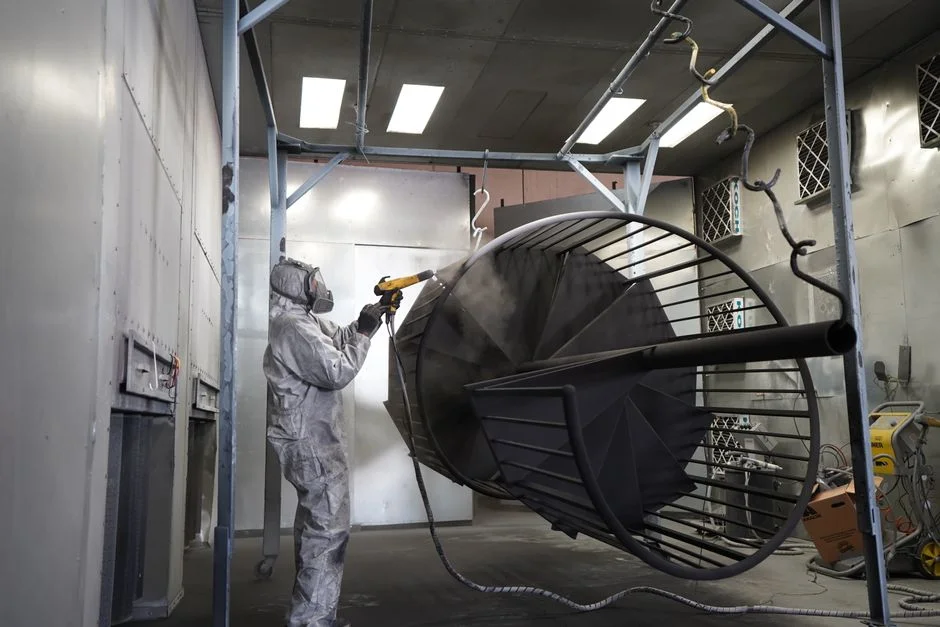
A typical Lanett fabricated metals stream is a blend of five distinct fractions, and the technology choice follows from which fraction dominates. The first fraction is free-floating tramp oil skimmed from stamping presses and parts-washer overflow, which has a density around 0.85 g/mL and physically rises in any quiescent tank. The second is emulsified synthetic and semi-synthetic machining coolant from CNC sumps, stabilized by surfactants so that droplets stay in the 5–20 micron range and never settle under gravity. The third is metal-hydroxide floc from alkaline cleaning and zinc-phosphate pretreatment, which forms a dense, brownish-green sludge that settles readily when chemistry is correct. The fourth is hexavalent chrome rinsewater from plating lines, which must be chemically reduced (commonly with sodium bisulfite or ferrous sulfate at acidic pH) to trivalent chromium and then pH-precipitated to Cr(OH)3 before either DAF or clarifier can capture it. The fifth is grinding swarf and deburring TSS, which is genuinely settleable but carries a lot of adhered coolant. The DAF principle articulated by Komline-Sanderson is that DAF is best applied to material that "normally settles slowly, persist by remaining in suspension, or have a tendency to float" — exactly the coolant and tramp-oil fractions. The clarifier principle from Ecologix is that clarifiers rely on gravity sedimentation, so they handle the heavy metal-hydroxide and swarf fractions well but underperform on emulsified oil because the droplets simply ride over the weir.
How a DAF System and a Clarifier Actually Work, Side by Side
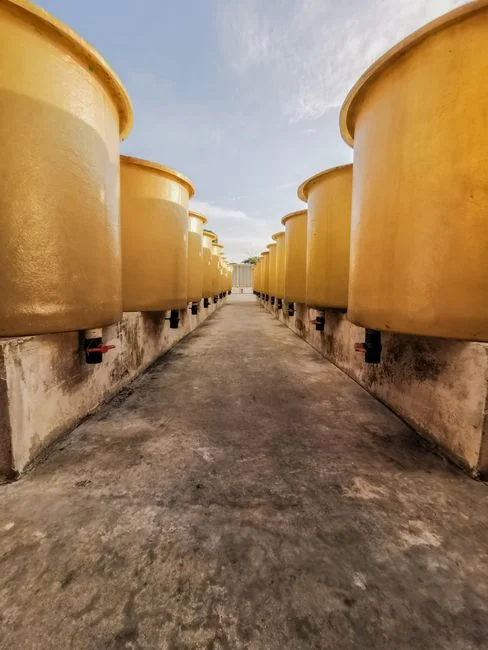
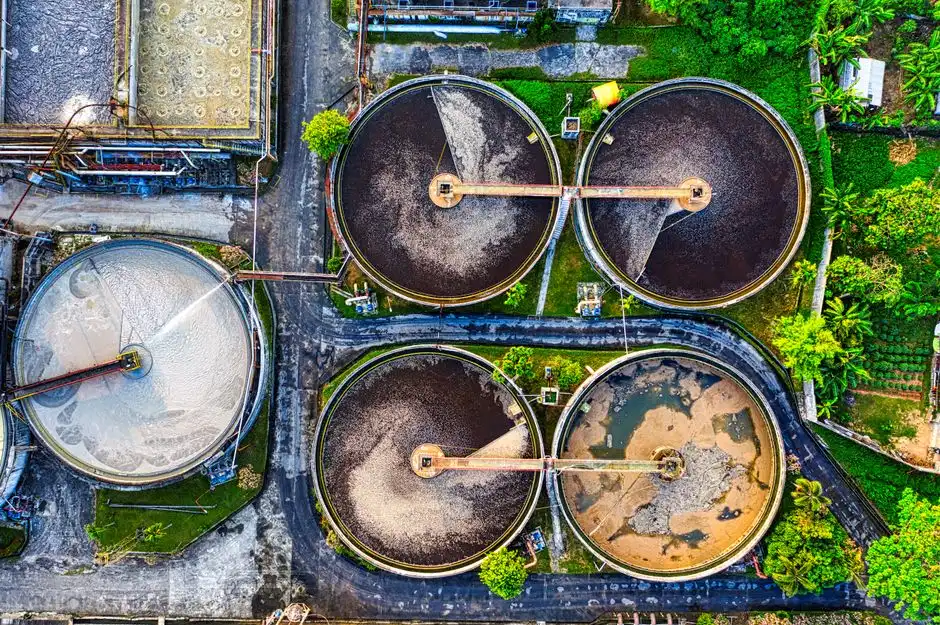
A DAF system saturates a pressurized recycle stream (typically 20–30% of the throughput) with air at 60–80 psig in a packed saturator, then releases that stream through a needle valve or eductor at the DAF inlet, generating 30–50 micron microbubbles that nucleate onto floc-conditioned particles and lift them to the surface (clearwaterind.com). A paddle skimmer then scrapes the floating blanket to a discharge hopper, while a bottom auger captures any heavy settleable solids that drop into the collection zone — a dual removal design that no conventional clarifier can match. The HydropureWater dissolved air flotation (DAF) system follows this same hydraulic architecture in 304SS construction, with 316SS and polypropylene options available for corrosive plating streams. A conventional or lamella clarifier, by contrast, is a quiescent tank measured in hours of residence time: settleable solids drop to a sludge bed under Stokes-law gravity, surface scum is decanted poorly with a rotating bridge or beach skimmer, and sludge is raked to a central hopper. The HydropureWater high-efficiency lamella clarifier uses inclined plates to compress the effective settling path and push surface loading rates to 20–40 m/h, which is what allows a lamella to compete with a DAF on footprint. On materials of construction, DAF tanks are typically 304SS with 316SS or polypropylene upgrades for plating baths, while clarifiers can be carbon steel with epoxy lining or stainless for the same duty (per komline.com on construction options). On footprint, a 50 GPM (~11 m³/h) packaged DAF skid including chemical conditioning fits in roughly 3 m × 6 m, while an equivalent conventional clarifier at a 1–2 m/h overflow rate needs a tank in the 30–50 m² range — a poured-concrete civil work item, not a plug-and-play skid.
Removal Performance: Oils, TSS, and Metals on Real Streams
On high-oil streams, DAF has been documented at 95% O&G removal against a clarifier at 70% on the same influent (ecologixsystems.com), which is the band a Lanett plant with a parts washer should plan around. On TSS, DAF with polymer conditioning typically delivers 85–95% removal on metal-finishing wastewater, while a lamella clarifier with coagulant typically lands at 70–90% on the same stream — the difference driven by the lamella's inability to capture colloidal and oil-coated particles that a DAF's microbubbles can nucleate onto. On total metals, both technologies sit in the 80–95% removal range once pH adjustment and coagulant upstream are correct, because precipitated Cu(OH)2, Ni(OH)2, and Zn(OH)2 are dense and settleable regardless of which physical device they reach. That convergence is why the binding constraint on the technology choice is almost always the oil and colloidal fractions, not the dissolved metals. Emulsified coolant is the deal-breaker for clarifiers — the droplets are stabilized against coalescence by surfactant and stay in suspension indefinitely, so they ride straight over a clarifier weir and into the POTW sewer.
| Pollutant fraction | DAF removal (typical) | Lamella clarifier removal (typical) | Binding 40 CFR 433 limit |
|---|---|---|---|
| Free tramp oil | 90–95% | 50–70% | O&G 52 mg/L daily max |
| Emulsified coolant / MWF | 85–95% | 20–40% | O&G 52 mg/L daily max |
| Settleable metal-hydroxide floc | 80–90% | 85–95% | Total Cr 2.0 mg/L, Ni 3.0 mg/L daily max |
| Colloidal TSS (post-coagulation) | 85–95% | 70–85% | TSS 86 mg/L daily max |
| Hex chrome (post-reduction to Cr³⁺) | 85–95% | 80–90% | Total Cr 2.0 mg/L daily max |
DAF vs Clarifier Comparison Matrix for Fabricated Metals Plants
The matrix below is the artifact to forward to ownership. Rows are the pollutant fractions a Lanett plant actually generates, columns are the two technologies, and the right-hand column flags which fraction should drive the technology decision. The hybrid DAF + lamella configuration — DAF first to strip oil and float colloidal TSS, lamella second to polish metal-hydroxide sludge — is the recommended default for any plant with both oil and metal-sludge streams, which is the majority of fabricated metals operations in the Chambers County corridor.
| Parameter | DAF | Gravity / lamella clarifier | Recommended fit |
|---|---|---|---|
| Free tramp oil | Excellent (90–95%) | Marginal (50–70%) | DAF |
| Emulsified coolant / MWF | Excellent (85–95%) | Poor (20–40%) | DAF |
| Settleable metal-hydroxide floc | Good (80–90%) | Excellent (85–95%) | Lamella |
| Colloidal TSS (post-coagulation) | Excellent (85–95%) | Good (70–85%) | DAF |
| Hex chrome rinsewater (post-reduction) | Good (85–95%) | Good (80–90%) | Either (after chemistry) |
| Footprint per m³/h | ~0.2–0.3 m² (skid) | ~0.5–1.0 m² (civil tank) | DAF on brownfield; lamella on greenfield |
| CAPEX per m³/h (2026 OOM) | Higher (mid-five to low-six figures USD) | ~40–60% of DAF CAPEX | Lamella on capex-only plants |
| OPEX drivers | Compressed air, recycle-pump kWh, polymer | Coagulant, sludge hauling | Lamella on low-air sites; DAF where polymer is cheap |
| Typical install time | Days (skid plug-and-play) | Weeks to months (concrete cure) | DAF on fast-track retrofits |
| Sludge output | Thin float (2–4% DS) + bottom heavy | Thick underflow (3–6% DS) | Lamella if filter press is downstream |
Three Lanett Plant Scenarios and the Recommended Primary Unit
Scenario A — CNC job shop with parts washer, no plating. The wastewater is dominated by tramp oil and synthetic coolant, with TSS from grinding and minor metal-hydroxide carryover from alkaline wash. The recommended primary unit is a packaged DAF, sized in the DAF 4–300 m³/h range, with polymer conditioning on the floc tube and no clarifier downstream. The binding 40 CFR 433 limit is O&G at 52 mg/L daily max, and the DAF is doing the heavy lifting on that limit. For sizing, a single-skid packaged DAF covers flows up to 66 GPM (~15 m³/h); above that, a two-skid modular arrangement is the standard configuration (clearwaterind.com COMPACT DAF).
Scenario B — Plating line with hex chrome, zinc phosphate, and nickel. The stream is a sequenced wash-rinse train with high dissolved metals plus emulsified oil carryover from racking and parts-washer drainage. The train must include Cr(VI) reduction at pH 2–2.5 with bisulfite, then pH adjustment to 9–9.5 for hydroxide precipitation of Cu, Ni, Zn, and Cr(III), and finally the DAF for the oil/floatable fraction. The binding limit is total chromium at 2.0 mg/L daily max. The recommended configuration is DAF primary plus a downstream lamella clarifier polishing stage for the metal-hydroxide sludge, with the combined sludge stream sent to a filter press for dewatering to 25–35% DS cake.
Scenario C — Mixed stamping and finishing with light machining. Flows are intermittent and small, typically under 20 m³/h, with batch discharges from press washes and a small CNC cell. The recommended unit is a single packaged DAF skid, with a downstream lamella only if jar tests on a 24-hour composite show settleable-solids carryover above 200 mg/L. The binding 40 CFR 433 limit is TSS at 86 mg/L daily max for this scenario, because the metal load is light and the oil fraction is moderate. A paired filter press vs centrifuge cost analysis is worth reading before specifying the sludge dewatering line, because the OOM economics shift with cake dryness targets.
2026 Cost Order of Magnitude: DAF, Lamella, and Hybrid Skids
Order-of-magnitude CAPEX bands for 2026, intended for the first budget conversation with ownership and not as a vendor quote: a 10–30 m³/h packaged DAF skid typically falls in the low six figures USD, a 30–80 m³/h DAF in the mid six figures, and a comparable-capacity lamella clarifier typically 40–60% of the DAF CAPEX because there is no air compressor, saturator vessel, or recycle pump train. A hybrid DAF + lamella skid arrangement adds roughly 50–70% to the DAF-only CAPEX but typically delivers the lowest compliance risk on a 40 CFR 433 mixed stream, because the binding O&G and TSS limits are met by the DAF stage and the metal-hydroxide sludge is captured and thickened by the lamella. On OPEX, a DAF adds compressed-air and recycle-pump power plus polymer consumption, while a lamella clarifier is dominated by coagulant dose and sludge-hauling cost; the comparison should be framed qualitatively against a plant's specific kWh tariff and polymer contract rather than against fabricated kWh figures. The CAPEX conversation is incomplete without a downstream sludge-dewatering line — a plate and frame filter press for sludge dewatering is the standard pairing, and the upstream automatic chemical dosing system is what keeps the chemistry inside the band that makes both the DAF and the lamella hit their rated removal. For a comparable Alabama metals benchmark outside Chambers County, the Fairhope metals DAF vs clarifier guide walks the same arithmetic on a Mobile-Baldwin county stream profile.
Selection Checklist Before You Sign the PO
- Pull representative samples and run jar tests. A 24-hour composite from each process drain, tested in the vendor's lab against both DAF and lamella, will determine which device actually wins on the stream. Komline-Sanderson notes explicitly that a "simple lab test will generally determine if the use of a DAF is feasible" (komline.com), and the same logic applies to lamella sizing.
- Map 40 CFR 433 limits against your effluent data. Identify the binding limit — O&G, TSS, total chromium, or nickel — because that single number dictates the primary unit and the chemistry upstream of it.
- Confirm utility availability. A DAF needs compressed air at 60–80 psig, a recycle pump, and a flocculation tube; a lamella only needs sludge pumps. Chambers County power costs, air availability, and floor loading should be checked before the skid arrives.
- Validate downstream sludge handling. Both DAF float and lamella underflow go to a filter press, dewatering bag, or landfill. Confirm the downstream capacity — a plate and frame filter press for sludge dewatering is the typical pairing — before sizing the primary unit, or the operator will be hauling liquid sludge in 30-yard roll-offs.
- Cross-check against the broader regional picture. A useful adjacent reference is the mining and metals 2026 pretreatment compliance guide for North Little Rock, which covers the same 40 CFR 433 arithmetic in a different jurisdictional wrapper.
Frequently Asked Questions
DAF vs clarifier for fabricated metals — which wins?
DAF wins on free oil, emulsified coolant, and colloidal TSS; a lamella or gravity clarifier wins on heavy metal-hydroxide sludge. For a mixed fabricated-metals stream — which describes most Lanett plants — the dominant 2026 recommendation is a hybrid DAF-then-lamella configuration sized to 40 CFR 433 limits.
Can a DAF or clarifier effluent meet 40 CFR 433 metal finishing categorical pretreatment standards?
Yes. Both DAF and lamella effluents can meet the O&G (52 mg/L daily max), TSS (86 mg/L daily max), and total metals (Cr 2.0 mg/L, Ni 3.0 mg/L daily max) limits under 40 CFR 433 when paired with proper pH adjustment, Cr(VI) reduction, and coagulant chemistry. DAF is the safer default because it handles the oil and coolant fractions that a clarifier passes through.
What is the footprint difference between a 50 GPM DAF skid and an equivalent clarifier?
A 50 GPM (~11 m³/h) packaged DAF skid with chemical conditioning fits in roughly 3 m × 6 m. An equivalent conventional clarifier at a 1–2 m/h overflow rate needs a 30–50 m² civil tank — concrete, rebar, and cure time, not a skid.
What is the 2026 CAPEX order of magnitude for a fabricated metals primary clarifier?
A 10–30 m³/h packaged DAF typically lands in the low six figures USD, a 30–80 m³/h DAF in the mid six figures, and a comparable-capacity lamella at roughly 40–60% of the DAF CAPEX. A hybrid DAF + lamella adds about 50–70% to the DAF-only figure.
Can a DAF and a clarifier be used together?
Yes, and for mixed fabricated-metals streams the hybrid DAF-then-lamella configuration is the dominant 2026 recommendation. The DAF strips oil, coolant, and colloidal TSS; the lamella polishes metal-hydroxide sludge and thickens it for the downstream filter press.