
Why Hamilton Chemical Plants Are Re-asking the DAF vs Clarifier Question in 2026
Hamilton's chemical corridor along the Great Miami River in Butler County sits inside the Greater Cincinnati Metropolitan Sewer District (MSD) service area and discharges to the Big Pine wastewater plant, one of the most heavily loaded industrial sheds in Ohio. The mix of organic, specialty, and fine-chemicals facilities generates a stream profile rarely seen at a municipal works: emulsified oils and resins, FOG spikes from intermediate-product washdowns, and metals-bearing spent baths (Zn, Pb, Cr, Cu, Ni) from catalyst and surface-finishing operations. For most of these plants the primary separation unit is a circular clarifier that was specified in the 1990s against influent assumptions that no longer hold.
Three forces have converged in 2026. First, 40 CFR Part 437 categorical pretreatment continues to govern organic chemicals, plastics, and synthetic fibers facilities, with reportable TSS, oil & grease, COD, and metals ceilings applied to every Significant Industrial User (SIU). Second, Ohio EPA's Director's Final Findings and renewed NPDES permit cycles have tightened the local discharge envelope, particularly for total zinc, lead, and copper. Third, Greater Cincinnati MSD's local limits (often referred to as the MSDSDP limits) are routinely stricter than the federal categorical numbers for those same metals plus TSS. A clarifier that delivered 70-80% TSS removal in 1998 now misses the new ceiling on a routine week.
On the plant floor this looks like a rising TSS trend on the MSD self-monitoring report, a surcharge line item that has roughly doubled over four quarters, and a CFO asking the operations manager to justify any new capex with a defensible payback. That is the moment most Hamilton chemical lines are re-asking the DAF vs clarifier question — and the right answer in 2026 is rarely one or the other.
How DAF and Clarifiers Actually Separate a Chemical Wastewater Stream
A dissolved air flotation (DAF) unit saturates a side stream of clarified effluent with air at 4-6 bar in a pressure vessel, then releases that stream through needle valves or a proprietary nozzle into the flotation tank. The pressure drop nucleates a cloud of micro-bubbles in the 20-40 micron range (per DAF Corporation's Micro Bubble Generator product literature). Those bubbles attach to oil droplets, FOG globules, and pre-flocculated suspended solids, lifting them to the surface where a rotating scoop or beach skims them off as a 2-4% solids float.
A gravity clarifier — circular, rectangular, or inclined-plate (lamella) — does the opposite: it slows the flow to near-quiescent conditions, often aided by a flocculant, and lets Stokes-law settling drop the denser particles to a sludge bed. The sludge is raked to a central sump and withdrawn as a 1-2% underflow. The HydropureWater lamella clarifier uses parallel inclined plates at 55-60° to compress the effective settling distance, reaching 20-40 m/h surface-loading rates on industrial chemical streams.
Three operating differences drive the procurement decision more than the marketing literature suggests:
- Hydraulic retention: a DAF runs at 3-5 minutes of nominal residence time versus 1-3 hours for a conventional clarifier and 15-25 minutes for a lamella. On a constrained Hamilton industrial lot, the DAF footprint of 0.05-0.1 m² per m³/h is 3-4× more compact than a circular clarifier at 0.2-0.4 m² per m³/h.
- Sludge consistency: DAF float at 2-4% solids feeds a plate-and-frame press directly, cutting haul-off mass and pressing cycle time. Clarifier underflow at 1-2% solids needs an extra thickening step or accepts higher disposal tonnage.
- Emulsion handling: gravity settling cannot capture sub-100 micron oil droplets or stabilized oil-in-water emulsions. DAF bubble attachment does, which is the single most important reason DAF is non-negotiable on FOG-laden chemical lines.
Characterize Your Stream First: The Hamilton Chemical Matrix
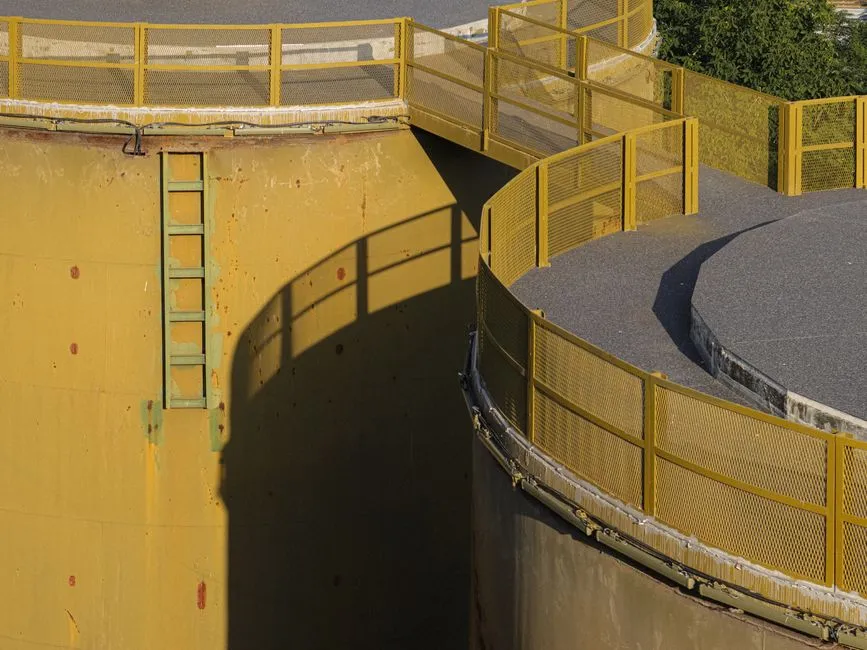
The fastest way to make a bad primary-separation decision is to start by comparing equipment instead of the stream. Every Hamilton line is a different blend, and the right primary unit is driven by what is actually in the wastewater, not by the equipment catalog. The matrix below is the working tool our engineers use on a pre-RFQ site visit.
| Parameter | Typical Hamilton Chemical Range | Pushes You Toward DAF | Pushes You Toward Lamella / Clarifier |
|---|---|---|---|
| Oil & FOG (mg/L) | 20-1,200 | >100 mg/L, or any stable emulsion | <50 mg/L, free oil absent |
| TSS (mg/L) | 150-4,000 | Fine, low-density floc, FOG-bound | >70% settleable fraction, inorganic |
| TDS (mg/L) | 1,000-15,000 | High TDS does not block DAF | Very high TDS may require clarifier dilution |
| Metals (Zn, Pb, Cr, Cu, Ni) | 1-50 mg/L combined | Co-precipitate after pH adjust | Lamella polish after hydroxide precipitation |
| pH | 2-12 (varies by line) | 6-9 optimum for floc | Metals precipitation at 8.5-9.5 |
| Temperature | 20-60 °C | Higher viscosity coolers help DAF | Hot streams degas in DAF — pre-cool or use clarifier |
| Surfactants / emulsifiers | Detected in most resin lines | Breakers + DAF required | Clarifier alone will not break emulsion |
The rule of thumb that has held up across our Hamilton-area projects: if FOG exceeds 100 mg/L or an oil-in-water emulsion is present, DAF is the only credible primary unit, and Ecologixsystems' 2026 selection guide reports 95% oil-and-grease removal with DAF versus ~70% for a clarifier on the same stream. If more than 70% of the TSS is settleable inorganic solids and FOG is below 50 mg/L, a lamella clarifier is mechanically simpler and cheaper to operate. The hybrid trigger — and this is the case in roughly half of the Hamilton chemical lines we have surveyed in the last 18 months — is emulsified organics plus a metals-bearing waste stream: DAF primary to lift oils, FOG, and fine organic TSS, followed by pH adjustment and hydroxide precipitation, then a lamella clarifier polish to drop the metal-hydroxide floc. Combined sludge is conditioned and dewatered on a single plate-and-frame press.
DAF vs Clarifier for Chemicals: Side-by-Side Parameters
Most DAF-vs-clarifier articles published in 2024-2026 quote a single efficiency number and stop. The honest comparison is multi-axis, and the parameter ranges below are the ones that actually drive a chemical-plant procurement decision in Hamilton.
| Parameter | DAF System (e.g., HydropureWater) | Gravity / Lamella Clarifier |
|---|---|---|
| TSS removal | 85-98% (FC Maximizer 92-98%, RC UniMax 85-90%, per DAF Corp) | ~70-85% on chemical streams |
| Oil & FOG removal | ~95% (Ecologixsystems 2026) | ~70% (Ecologixsystems 2026) |
| Footprint | 0.05-0.1 m² per m³/h | 0.2-0.4 m² per m³/h (3-4× larger) |
| Hydraulic retention | 3-5 minutes | 1-3 hours (conventional); 15-25 min (lamella) |
| Capex band | Skid DAF in 304L SS: higher unit cost, lower install cost on brownfield | Concrete basin lower material cost, higher civil works |
| Opex drivers | Air compressor, saturation pump, polymer | Rake drive, periodic desludging, larger polymer dose for metals |
| Sludge consistency | Float at 2-4% solids — feeds plate-and-frame directly | Underflow at 1-2% solids — often needs thickening |
| Best-fit stream | Organic, oily, emulsified chemical waste | Heavy inorganic, metals-precipitate, low-FOG |
On capex, treat published numbers as ranges rather than point estimates: a skid-mounted DAF in 304L stainless for a 50 m³/h chemical line will land in a different envelope than a 500 m³/h packaged unit, and a concrete clarifier inverts that relationship once civil works are added. The honest engineer asks for both bids and weighs them against footprint, polymer cost, and disposal tonnage over a 10-year horizon, not just day-one capex.
Hamilton, Ohio Regulatory Gate: 40 CFR 403, 40 CFR 437, and MSD Local Limits
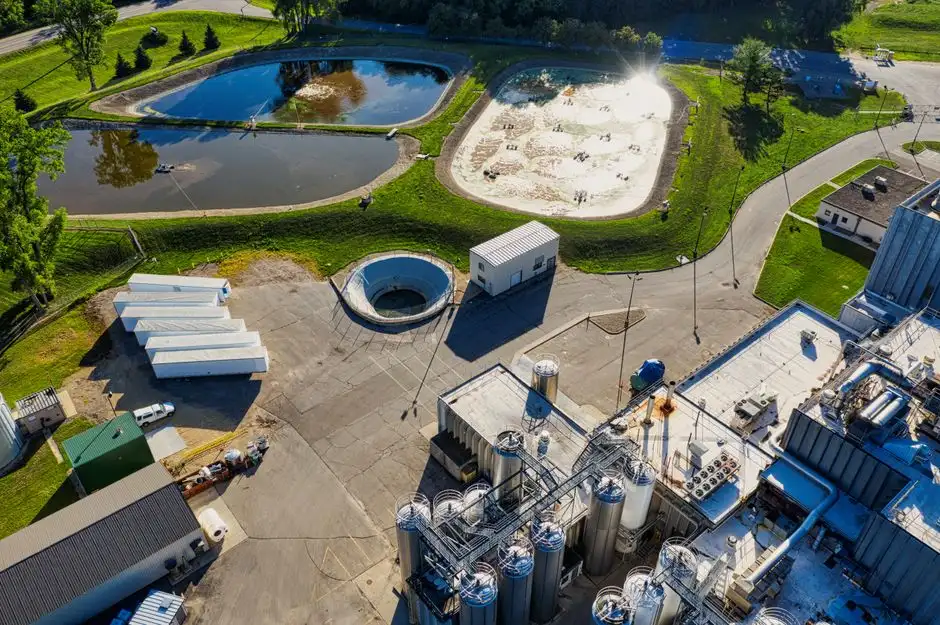
The technical comparison only matters inside a compliance envelope. For Hamilton chemical plants in 2026, three regulatory layers stack on top of each other, and the primary-separation unit has to keep you inside all three at once.
| Layer | Governing Document | Relevant Parameters on a Chemical Line | Implication for Primary Separation |
|---|---|---|---|
| Federal categorical | 40 CFR Part 437 (Organic Chemicals, Plastics & Synthetic Fibers) | TSS, O&G, COD, total metals | Sets the floor; clarifier-only often misses O&G ceiling on emulsified lines |
| Federal pretreatment framework | 40 CFR Part 403 (General Pretreatment, SIU self-monitoring) | 24-hr composite sampling, reporting, slug-control plans | Defines how you measure compliance and what your jar/pilot test must reproduce |
| Local limits | Greater Cincinnati MSD local limits (MSDSDP), enforced under Ohio EPA Director's Final Findings | Zinc, lead, copper, TSS — typically tighter than federal | Drives the metals polish stage; clarifier alone will not hit zinc limits on a 40 CFR 437 stream |
A baseline 24-hour composite on a Hamilton SIU typically reports 200-1,500 mg/L TSS, 50-400 mg/L O&G, and 2-30 mg/L total zinc, with pH swings from 3 to 11 across process lines. A 1990s circular clarifier removing 70-80% TSS still leaves 40-300 mg/L in the effluent, well above current MSD ceilings on a worst day. A DAF + lamella train routinely drops the same stream below 30 mg/L TSS and below 10 mg/L O&G, which is the kind of margin a procurement manager can take to the CFO and an operations manager can take to the regulator. For a deeper read on the regulatory chain that drives these limits, the 2026 EPA standards compliance guide for U.S. wastewater treatment regulations under the Clean Water Act lays the framework end to end.
When a Hybrid DAF + Lamella Clarifier Train Beats Either Single Unit
For most of the Hamilton chemical lines we have walked in 2025-2026, the right answer is not DAF or clarifier but DAF then clarifier. The hybrid train handles the two contaminant populations that almost always coexist in a chemical plant wastewater: low-density emulsified organics that only flotation can lift, and high-density metal-hydroxide floc that only sedimentation can drop. The typical flow path is straightforward:
- Equalization basin (flow and pH damping, typically 8-24 hours retention).
- Coagulant and flocculant dosing — a PLC-controlled coagulant and flocculant dosing skid tied to a streaming-current or pH signal.
- DAF primary — skim oils, FOG, fine organic TSS; float at 2-4% solids.
- pH adjust to 8.5-9.5 for metals precipitation, optional polymer for floc growth.
- Lamella clarifier polish — settle metal-hydroxide floc; underflow 1-2% solids.
- Combined sludge to a plate-and-frame filter press for dewatering to 25-35% dry solids for off-site disposal.
Combined-train performance on a properly sized Hamilton chemical line routinely lands below 30 mg/L TSS and below 10 mg/L oil & grease in the clarifier effluent — a comfortable margin under Greater Cincinnati MSD local limits and well below the 40 CFR Part 437 categorical ceilings. Ecologixsystems' 2026 selection guide explicitly confirms that hybrid DAF + clarifier configurations are the recognized answer for complex industrial streams with both organic and inorganic contaminant loads. The capex trade-off is real: two separation units instead of one, but a single shared polymer system, a single sludge-handling line, and a much smaller compliance-risk surcharge. For plants that need an interim step before full capex deployment, the same logic is documented in our parallel chemicals wastewater DAF vs clarifier guide for Bishop and the equivalent factory guide for Morristown, where the hybrid pattern repeats.
Hamilton Decision Framework: Five Questions Before You Issue the RFQ
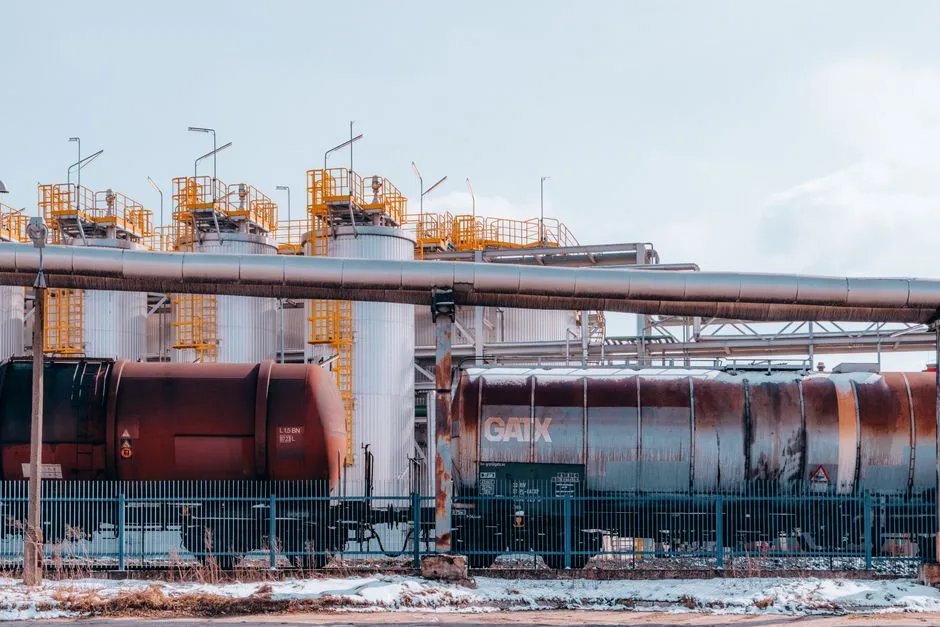
Before any RFQ goes out, the engineer and the procurement lead should be able to answer five questions with numbers, not adjectives. The framework below is what a Hamilton chemical plant should be able to defend in a capital review.
| # | Question | If Yes | If No |
|---|---|---|---|
| 1 | Is FOG > 100 mg/L, or is an oil-in-water emulsion present in the composite sample? | DAF is non-negotiable as primary. | Clarifier / lamella may suffice. |
| 2 | Are you co-precipitating heavy metals (Zn, Pb, Cu, Ni) above MSD local limits? | Plan a lamella polish downstream of DAF, with pH 8.5-9.5. | Single DAF or clarifier may be enough. |
| 3 | What is the available footprint in m² per m³/h of design flow? | If < 0.15 m²/m³/h, specify DAF or lamella — not a conventional clarifier. | Footprint is not a constraint; conventional clarifier is feasible. |
| 4 | Will the unit sit inside containment or a chemical-resistant enclosure? | Specify skid-mounted 304L stainless DAF (6-15 ft skid range, per DAF Corp). | Carbon-steel skid or concrete basin is acceptable. |
| 5 | Do you have a current 24-hour composite TSS, O&G, and metals baseline plus a recent jar test or pilot run? | Size with confidence and defend the number to the CFO and the regulator. | Stop and run a pilot before sizing — sizing off assumed numbers is the single most expensive mistake in this equipment class. |
If the answer to Question 1 is yes and Question 2 is also yes, the answer to the original question is no longer "DAF or clarifier" — it is "DAF and lamella, sized off a real composite, with a pilot run to confirm polymer dose and float-solids percentage." That is the RFQ a Hamilton chemical plant should put on the street in 2026.
Frequently Asked Questions
When is a DAF system clearly the right primary for a Hamilton chemical wastewater line?
When the 24-hour composite shows FOG above 100 mg/L or any measurable oil-in-water emulsion, a DAF is non-negotiable as primary separation. Ecologixsystems' 2026 selection data puts DAF oil-and-grease removal at ~95% versus ~70% for a clarifier on the same chemical stream. On a Hamilton line with FOG spikes from resin washdowns, that delta is the difference between meeting and missing the MSD local limit.
Can a lamella clarifier replace a DAF for oily chemical wastewater?
No. A lamella clarifier compresses settling distance and improves the removal of settleable inorganic solids, but it cannot lift emulsified oils or FOG — those contaminants need micro-bubble attachment. Use a lamella as a polish stage after DAF and pH adjustment, not as a replacement for DAF on an oily stream.
What is the realistic TSS and oil & grease a hybrid DAF + lamella train can hit?
A properly sized and chemically conditioned DAF + lamella train on a Hamilton chemical line routinely delivers below 30 mg/L TSS and below 10 mg/L oil & grease in the clarifier effluent (HydropureWater field data, 2025-2026). That is comfortably inside Greater Cincinnati MSD local limits and the 40 CFR Part 437 categorical ceiling for organic chemicals, plastics, and synthetic fibers facilities.
Do 40 CFR Part 437 categorical pretreatment limits actually apply to a Hamilton chemical plant?
Yes, if the facility falls under the Organic Chemicals, Plastics, and Synthetic Fibers category and discharges to a POTD through a sewer, the 40 CFR Part 437 numerical limits apply on top of the 40 CFR Part 403 general pretreatment and SIU self-monitoring framework. Greater Cincinnati MSD's local limits are then enforced on top of those federal numbers and are typically tighter for zinc, lead, copper, and TSS.
How much pilot testing is enough before issuing an RFQ for a DAF or clarifier?
At minimum, run a 7-day composite characterization (TSS, O&G, metals, pH, temperature) and a jar test for coagulant and flocculant dose. For flows above 50 m³/h or streams with significant variability, a 2-4 week on-site pilot on a mobile DAF (per WesTech's mobile DAF fleet, 47'-6" to 51'-7" trailer footprint) is the standard defensible basis for sizing. Anything less is a guess with a capital price tag attached.