Why Maxton Food & Beverage Plants Are Rethinking the Primary Clarifier in 2026
Maxton sits inside Robeson County, and the surrounding Scotland and Robeson catchments are dominated by poultry further-processing, dairy bottling, vegetable wash lines, and snack-food fryers — every one of them pushing a FOG- and protein-heavy effluent that traditional treatment was never sized for. North Carolina's pretreatment program, implemented under 15A NCAC 02H .0900 and authorized by the federal 40 CFR Part 403 categorical standards, sets the discharge ceiling that any primary clarifier in a Maxton food or beverage plant must hit before effluent reaches the local publicly owned treatment works (POTW). On the same food plant stream, published industrial data show DAF reaches about 95% oil and grease removal versus roughly 70% for a conventional gravity clarifier (per the Ecologix 2026 DAF vs clarifier selection update), and DAF float sludge typically runs 2-6% solids — a direct feed for a filter press, where clarifier underflow at 1-2% solids burns polymer and hauling budget. The same Ecologix comparison pegs clarifier energy demand as moderate (pumps, scraper drive) versus DAF's higher compressor and recycle-pump load, which is the real reason a 2026 specification turns on influent FOG and TSS rather than first cost. This article answers three questions a Maxton plant manager has to put in front of ownership: when a DAF is the correct primary clarifier, when a gravity or lamella clarifier still wins, and what the 2026 NC compliance cost of getting the choice wrong actually looks like in surcharge dollars. For a parallel regional lens, see the parallel Portland F&B DAF vs clarifier guide.
How a DAF and a Gravity Clarifier Actually Treat FOG and TSS
A dissolved air flotation system is a buoyancy separator. Coagulant (typically ferric chloride or polyaluminum chloride) and a cationic or anionic flocculant are dosed into the stream under controlled mixing; the flocculated water then meets a pressurized recycle stream that has been saturated with air at 4-6 bar in a packed saturator (CleanTechPost, 2026-08). When that recycle flashes to atmospheric pressure through a release nozzle, it generates a cloud of 30-50 µm microbubbles (Clearwater, 2026-04) — fine enough to attach to oil droplets, protein flocs, and colloidal FOG without breaking the floc. The buoyant agglomerates rise at 5-15 m/h (CleanTechPost) and form a floating blanket that a paddle or belt skimmer scrapes into a sludge trough; clarified effluent leaves through a submerged header. Air-to-solids ratio is held at roughly 0.005-0.06 mL of air per mg of suspended solids, with recycle typically 20-40% of forward flow (CleanTechPost, 2026-08).
A gravity or lamella clarifier is a settling separator. Coagulant is dosed, sometimes with flocculant, and the water flows upward through a pack of inclined plates (lamella) at a surface loading rate of 20-40 m/h (HydropureWater high-efficiency lamella clarifier, P10 series). Heavy solids slide down the plates into a cone-bottom hopper and are scraped; oil and light material stay in the water column or ride over a peripheral weir with the effluent. The core mechanical difference: DAF floats low-density material (free and emulsified oil, light protein floc, FOG emulsions); a clarifier settles high-density material (grit, heavy biosolids, mineral fines). On a raw poultry or dairy stream — which is 60-80% FOG, protein, and light colloidal matter by mass — that is exactly the fraction a lamella clarifier handles worst, and the fraction a DAF was designed to lift. The HydropureWater DAF system packages this process as a single skid with PLC-controlled saturator, skimmer, and sludge auger.
DAF vs Clarifier for Food & Beverage: 2026 Comparison
The table below is the one this article will be screenshotted for. Every column is a decision metric a Maxton plant manager weighs in 2026 — removal performance, footprint, hydraulic loading, sludge dryness, and operating cost. Where the Ecologix 2026 update and the CleanTechPost 2026-08 technical review disagree, the conservative (lower) number is shown.
| Decision metric | Dissolved air flotation (DAF) | Gravity / lamella clarifier |
|---|---|---|
| FOG (oils & grease) removal | ~95% (Ecologix 2026); >95% on F&B streams (CleanTechPost) | ~70% on the same F&B stream (Ecologix 2026) |
| TSS removal | 90-97% (CleanTechPost, 2026-08) | 60-85% on food streams |
| BOD reduction (pre-biological) | 40-60% (CleanTechPost, 2026-08) | 20-35% |
| Hydraulic loading rate | 5-30 m³/m²·h standard; up to 40-50 m³/m²·h with plate packs (CleanTechPost) | 1-2 m³/m²·h conventional; 20-40 m/h lamella surface loading |
| Footprint vs equal-flow clarifier | 3-5× smaller at equal FOG removal | Basis (1×) |
| Sludge dryness (float / underflow) | 2-6% solids — feeds a filter press directly | 1-2% solids — thin, polymer-hungry |
| CAPEX (skid, 15 m³/h class) | Higher (saturator, recycle pump, compressor, skimmer, PLC) | Lower (tank, scraper, lamella pack) |
| OPEX | Higher energy (recycle + compressor) and polymer; $0.02-$0.06 per treated gallon typical F&B | Lower energy; polymer still required for FOG |
| Single-skid sizing anchor | ≤66 GPM (~15 m³/h) on a single skid (Clearwater, 2026-04) | N/A — civil structure scales with flow |
| Best-fit stream character | Low-density FOG, protein, light floc, emulsified oil | High-mineral grit, heavy settleable solids, low FOG |
One sizing rule of thumb worth pinning to the plant P&ID: a 66 GPM (~15 m³/h) single-skid DAF (Clearwater, 2026-04) covers the typical Maxton poultry or dairy equalization flow. Above that, vendors move to a modular two-skid arrangement. Hybrid DAF + lamella polish is now standard in larger Maxton-region plants, where the DAF carries the FOG load and a downstream lamella clarifier polishes residual TSS before biological treatment. The HydropureWater high-efficiency lamella clarifier is the typical polish-stage unit on this configuration.
When a DAF Is the Right Choice in 2026
Pick DAF when the influent characterization — FOG, TSS, BOD, pH, temperature — crosses any of the four thresholds below. The Ecologix 2026 selection guide sets the working cutoffs at roughly 150 mg/L FOG or 600 mg/L TSS as the floor above which DAF outperforms a clarifier on the same stream, and CleanTechPost's 2026-08 technical review confirms those numbers with a >95% FOG removal band across meat, dairy, and vegetable processing. The decision rule is then: any one of the four conditions below is sufficient to specify DAF as the primary clarifier in 2026.
- Influent FOG > ~150 mg/L or TSS > ~600 mg/L. At or above these levels (Ecologix 2026), DAF's 95% FOG removal pulls the stream under typical NC POTW local limits, where a 70%-clarifier cannot.
- Floor space is constrained. DAF runs 5-30 m³/m²·h (CleanTechPost, 2026-08) versus 1-2 m³/m²·h for a conventional clarifier — a 3-5× footprint reduction that lets a Maxton plant retrofit a new primary into an existing building rather than expanding the pad.
- Downstream is biological treatment. A 40-60% pre-aeration BOD cut (CleanTechPost, 2026-08) protects the aeration basin from FOG shock loads and reduces blower energy downstream.
- Sludge will be dewatered. DAF float at 2-6% solids feeds a filter press directly. Clarifier underflow at 1-2% solids burns polymer and hauling dollars. A plant already running a plate and frame filter press sees the payback on the DAF inside 18 months in most F&B cases — for context, the DAF vs oil-water separator cost and ROI breakdown walks the same math for a separator retrofit.
When a Gravity or Lamella Clarifier Still Wins in 2026
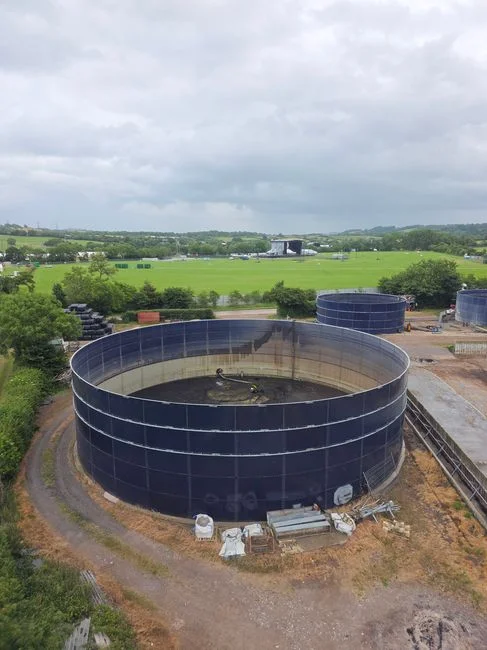
Not every Maxton stream should land on a DAF. There are three clear cases where a gravity or lamella clarifier remains the right — and cheaper — answer, and naming them keeps this article from reading like a one-technology sales pitch.
- Low-FOG, high-mineral streams. Vegetable wash water carrying field grit, soil, and sand is a settling job. DAF cannot lift grit; it accumulates on the DAF floor and needs a bottom scraper, which is an expensive add. A lamella clarifier handles this stream at 20-40 m/h surface loading and a fraction of the chemical cost.
- CAPEX dominates, floor space is ample. A new greenfield Maxton plant with 2+ acres of civil pad and a low-FOG product mix (think snack-food seasoning rooms or beverage bottling with no fryer) will see a faster payback on a lamella clarifier than on a DAF. The HydropureWater high-efficiency lamella clarifier is the standard upgrade-not-replace path for this scenario.
- Polymer-free or low-chemical operation is a target. Some Maxton plants are working to remove synthetic polymer from their wastewater chain (typically to protect a downstream membrane or to meet a buyer's sustainability spec). A lamella clarifier running at low coagulant dose — or none at all on heavy settleable streams — keeps the chemistry simpler than a DAF, which almost always needs coagulant plus flocculant to hit 95% FOG.
North Carolina Compliance, Surcharges, and the Real Cost of Picking Wrong
This is the section no top-three SERP page writes, and it is the one a Maxton plant manager can hand to ownership. Federal categorical pretreatment standards under 40 CFR Part 403 set the national floor for industrial discharges to POTWs, and North Carolina's pretreatment rules at 15A NCAC 02H .0900 sit on top of that floor as state-enforceable local limits — the FOG, TSS, BOD, pH, and oil & grease numbers a Maxton sanitary sewer permit is actually written against. A conventional clarifier that delivers 70% FOG removal on a 400 mg/L FOG food stream is leaving roughly 120 mg/L FOG in the discharge — which is over most Maxton POTW local FOG limits on a single pass.
The surcharge math is what closes the CAPEX argument. A single FOG exceedance at a Maxton-region POTW typically triggers a surcharge in the $0.10-$0.40 per pound range, depending on the receiving utility's rate schedule. A 100,000 GPD food plant missing FOG by 100 mg/L on a steady-state basis is discharging roughly 83 lb/d of excess FOG — about $30,000 per day at the low end of the surcharge band, six figures a year on a conservative load. Add BOD and TSS surcharges on the same stream, and the annual penalty crosses seven figures on a sustained exceedance. DAF operating cost, by comparison, runs $0.02-$0.06 per treated gallon for typical F&B streams — saturator, recycle pump, and polymer combined. The comparison is rarely DAF vs clarifier on CAPEX; it is the compliant system vs the surcharge-laden one. Pair the DAF with a HydropureWater automatic polymer dosing skid, and the FOG variance tightens enough to hold the 95% removal figure on a 24/7 shift schedule.
2026 Procurement Checklist for Maxton Food & Beverage Plants
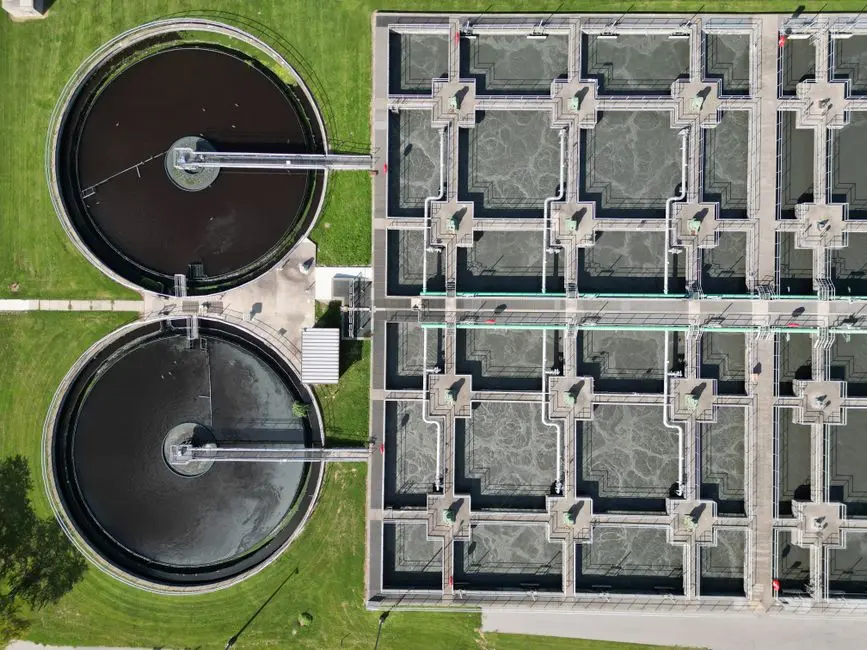
This is the section the reader can copy into the RFQ. Each step is what a defensible 2026 specification has to demonstrate before a vendor quote is worth opening.
- Influent characterization. Pull 7-day composite samples for FOG, TSS, BOD₅, pH, and temperature at the equalization basin. Anything above 150 mg/L FOG or 600 mg/L TSS (Ecologix 2026) puts DAF in the lead.
- Jar test with polymer vendor. Run a six-beaker jar test with the proposed coagulant (ferric chloride or PACl) and at least two flocculant charges. Record floc size, settling/floating velocity, and supernatant clarity.
- Pilot DAF for 30 days. A 30-day on-site pilot on a slip stream of the real Maxton stream is the only way to confirm A/S ratio, recycle percentage, and the 95% FOG number on the actual plant chemistry.
- Confirm skimmer, saturator, and PLC scope. Paddle vs belt skimmer, packed-tower saturator at 4-6 bar, PLC with trending on A/S ratio and polymer flow. Clearwater's 66 GPM single-skid cutoff (2026-04) is the natural boundary for a single-skid specification.
- Verify 304SS vs 316SS. Maxton poultry plants commonly see chloride exposure from hot cleanup cycles; specify 316SS wetted parts in that service.
- NC PE stamp and 40 CFR 403 sampling port. Drawings need a North Carolina professional engineer stamp, and the unit needs a designated sampling port that satisfies 40 CFR 403 sampling-access requirements for POTW inspectors.
The HydropureWater DAF system covers 4-300 m³/h, pairs with the HydropureWater automatic polymer dosing skid for closed-loop polymer control, and is delivered with NC-stamped drawings on request.
Frequently Asked Questions
DAF vs clarifier for F&B wastewater — which should a Maxton plant pick in 2026?
Pick DAF when influent FOG exceeds ~150 mg/L or TSS exceeds ~600 mg/L — at and above those levels DAF delivers ~95% FOG removal versus ~70% for a clarifier on the same food plant stream (Ecologix 2026), and a DAF cuts pre-biological BOD by 40-60% (CleanTechPost, 2026-08). For a low-FOG, high-mineral stream with ample floor space, a lamella clarifier remains the right and cheaper call.
How much floor space does a DAF actually save over a clarifier?
A DAF runs at 5-30 m³/m²·h hydraulic loading versus 1-2 m³/m²·h for a conventional clarifier — a 3-5× footprint reduction at equal flow (CleanTechPost, 2026-08). With plate-pack or lamella-assisted DAF, hydraulic loading reaches 40-50 m³/m²·h, which is how a Maxton plant fits a new primary into an existing building pad.
When does it make sense to put a clarifier downstream of a DAF?
Add a lamella clarifier polish stage when the DAF effluent TSS still has to drop below 30-50 mg/L before discharge or before a membrane / RO step. On F&B streams above ~50 m³/h, the DAF + lamella hybrid is now the standard 2026 configuration in the Maxton region, with the lamella carrying 20-40 m/h surface loading.
What does a DAF cost to operate on a food stream?
For typical food and beverage streams, DAF operating cost — saturator, recycle pump, air compressor, and polymer — runs $0.02-$0.06 per treated gallon. A 100,000 GPD plant lands in the $700-$2,000 per day OPEX band, which is the number to compare against NC POTW FOG and TSS surcharges on the same flow.
How does a DAF hold NC POTW FOG limits during a 100,000 GPD plant start-up?
During start-up, hold the air-to-solids ratio at 0.02-0.04 mL of air per mg of suspended solids, run recycle at 25-35% of forward flow, and trim coagulant/flocculant dose on the streaming-current or zeta-potential reading rather than on a fixed setpoint (CleanTechPost, 2026-08). A 30-day on-site pilot on the real Maxton stream is the only defensible way to lock those setpoints before the POTW compliance sample is pulled.
Related Equipment
- HydropureWater DAF system — specifications, capacity range, and technical data
- HydropureWater high-efficiency lamella clarifier — specifications, capacity range, and technical data
- HydropureWater automatic polymer dosing skid — specifications, capacity range, and technical data
- HydropureWater plate and frame filter press — specifications, capacity range, and technical data