
Why Fort Wayne Fabricated-Metal Plants Are Re-evaluating Clarification in 2026
Fort Wayne stamping, machining, and metal-fabrication shops discharging to the City of Fort Wayne Water Pollution Control Utility (WPCU) operate under 40 CFR 433 Metal Finishing categorical pretreatment standards, which set daily-maximum limits of 52 mg/L TSS, 56 mg/L oil & grease, and 2.13-4.50 mg/L for total metals including lead, cadmium, total chromium, copper, nickel, and zinc (per EPA 40 CFR 133, incorporated by reference in 40 CFR 433.10). WPCU's industrial surcharge structure multiplies the bill on every pound of TSS, O&G, and total metals above domestic-strength thresholds, so primary clarification performance is now a line item on the monthly invoice, not just a compliance checkbox. Winter adds a second pressure: Fort Wayne's January daily mean is 24 °F with overnight lows below 0 °F (per NOAA 1991-2020 climate normals for Fort Wayne International), and unheated clarifier bays in that air mass see water viscosity climb roughly 50% versus a 70 °F baseline, slowing Stokes-law settling by a similar order. Coolant and lube loadings peak in the same months because stamping throughput runs hardest when automotive OEM schedules demand it, which means the worst-case influent meets the worst-case ambient at exactly the same time.
How a DAF System Actually Treats Oily, TSS-Laden Metals Wastewater
A dissolved air flotation system removes contaminants by attaching fine air bubbles to flocculated particles and floating them to the surface, where a skimmer strips them off as sludge. Pressurized recycle water is saturated with air at 60-80 psig, then depressurized through a release nozzle; the dissolved air comes out of solution as a cloud of 30-50 micron microbubbles (per SigmaDAF/Clearwater Industries specifications, S1) that have just enough buoyancy to lift floc without turbulent resuspension. Chemical conditioning upstream is non-optional: coagulant (typically ferric chloride or alum at 50-150 mg/L) destabilizes colloidal oils and fine metal hydroxides, and a flocculant polymer (usually anionic or cationic polyacrylamide at 1-10 mg/L) bridges the destabilized particles into a 0.5-2 mm floc that bubbles can grip (HydropureWater field data, 2026). DAF cells run with serpentine floc tubes or mix tanks feeding the flotation zone, where a surface paddle skimmer removes floated sludge and a bottom auger or hopper collects heavier metal-bearing settleables, so a single vessel handles both oils and metallic fines. Packaged units like the dissolved air flotation system cover 4-300 m³/h across 13 standard models, and the COMPACT DAF plug-and-play format handles flows up to 66 GPM on a single skid, modular to two skids above that (per SigmaDAF, S1).
How a Conventional Clarifier Handles the Same Stream
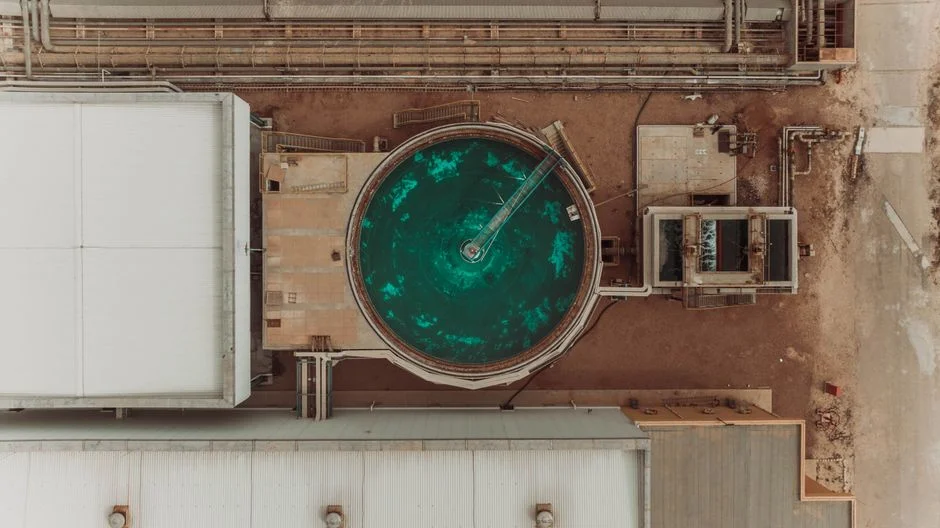
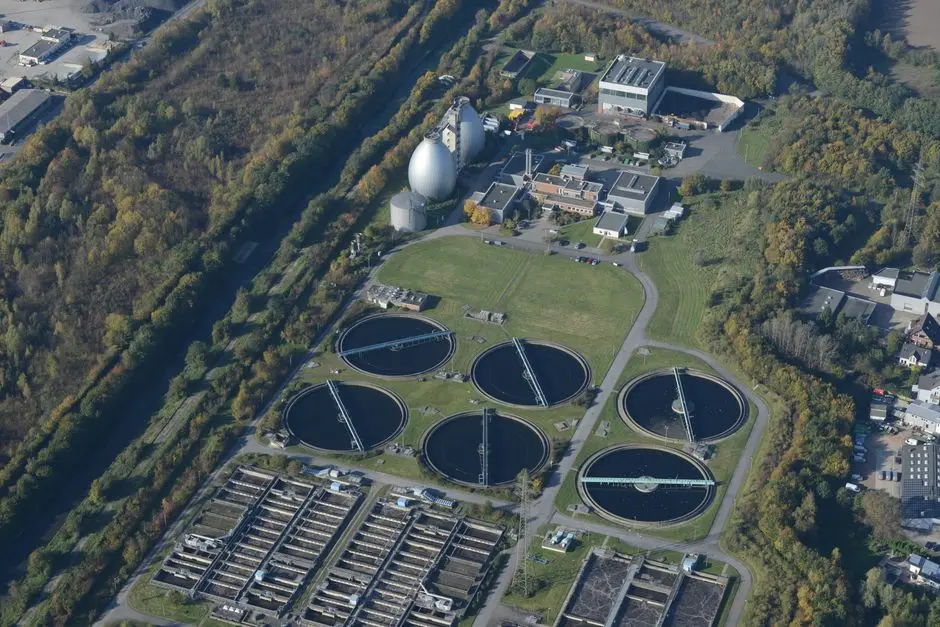
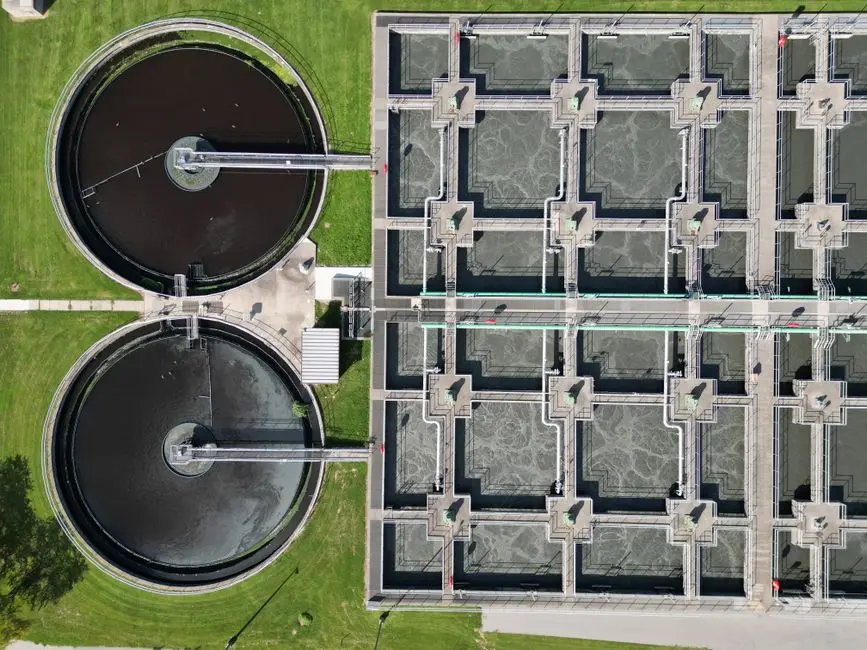
A conventional gravity clarifier is a quiescent basin in which settleable solids fall to the floor under their own weight and are scraped to a hopper by chain-and-flight mechanisms, suction headers, or rotating arms. Hydraulic residence time runs 2-4 hours for primary clarifiers and longer for secondary, footprint is dominated by the surface area required to keep overflow rate below roughly 600-800 GPD/ft² for chemical precipitates, and no chemical conditioning is strictly required. Clarifiers earn their keep on streams that are predominantly coarse, settleable, and low in oil: grinding swarf, carry-off from machining, and dilute rinse water with O&G under 30 mg/L. For fabricated metals, the failure modes are predictable: stable coolant emulsions do not break and float, cold-water viscosity slows settling velocity, and sub-50 micron metal hydroxide fines stay in suspension long enough to discharge as a TSS exceedance (HydropureWater field data, 2026). Modern inclined-plate and lamella designs such as the HydropureWater high-efficiency sedimentation tank shrink the footprint and improve capture, but the underlying mechanism is still Stokes-law settling, so cold ambient air and emulsified oils still hurt performance.
DAF vs Clarifier: Side-by-Side Parameters for a Fabricated-Metals Plant
The table below scores both technologies against the questions a Fort Wayne plant engineer will ask when comparing bids. DAF free-area, effective-area, and flow ceilings are anchored to FRC's published ranges of 5-500+ sq ft free area, 35-3,100+ sq ft effective area, and up to 2,000+ GPM (per S3). Microbubble size is set at 30-50 microns (per S1), and aeration skid sizing is taken from VanAire's 150/300/450 GPM modules at roughly 6 ft × 4 ft × 6 ft (per S4). Removal-efficiency bands are the typical fabricated-metals range HydropureWater has observed across stamping, machining, and parts-washing installations, not a single-vendor best case.
| Parameter | DAF (Dissolved Air Flotation) | Conventional Clarifier (Gravity / Lamella) |
|---|---|---|
| Typical influent TSS range handled | 200-3,000+ mg/L | 100-800 mg/L |
| Oil & grease tolerance (influent) | Up to 5,000+ mg/L emulsified | <30 mg/L; emulsions do not break |
| Expected removal efficiency (TSS / O&G) | 85-95% TSS; 90-97% O&G | 40-70% TSS; 20-40% O&G |
| Hydraulic residence time | 15-40 minutes | 2-4 hours |
| Footprint per GPM | 0.3-0.5 sq ft/GPM (100 GPM ≈ 30-50 sq ft) | 1-2 sq ft/GPM (100 GPM ≈ 100-200 sq ft) |
| Sensitivity to cold ambient (<32 °F) | Low; microbubble-driven, not viscosity-driven | High; settling velocity drops ~50% near freezing |
| Chemical (polymer) demand | 1-10 mg/L flocculant + 50-150 mg/L coagulant | None, or low dose for lamella |
| Sludge consistency produced | 2-5% dry solids float; 3-8% bottom underflow | 1-3% underflow only |
| CAPEX band, 50-150 GPM packaged (2026) | $150,000-$400,000 skidded | $60,000-$180,000 basin + scraper |
| OPEX band per 1,000 gal treated | $0.02-$0.05 (polymer + blower/pump) | $0.005-$0.015 (pump + sludge haul) |
Read the clarifier row as the warm-bay, low-O&G best case; Fort Wayne winter conditions push the real number toward the lower end of each clarifier range, while DAF performance is comparatively stable season to season.
When Fort Wayne Fabricators Should Pick DAF
Pick DAF when the jar test shows influent O&G routinely above 50 mg/L, when TSS averages above 300 mg/L across a representative shift, or when 40 CFR 433 daily-maximum metals are sitting within 25% of the limit and you have no polish filtration downstream. Pick DAF when the stream is dominated by coolant emulsions, stamping lubes, or drawing compounds — these form stable oil-in-water emulsions with droplet sizes under 20 microns that a clarifier simply cannot break, but that a 30-50 micron bubble cloud can lift once flocculated. Pick DAF when bay footprint is constrained to under roughly 1 sq ft per GPM, because DAF's 15-40 minute residence time yields a 0.3-0.5 sq ft/GPM footprint versus 1-2 sq ft/GPM for a comparably loaded clarifier. Pick DAF when the plant must hit 40 CFR 433 total-metal limits without adding polish filtration, because DAF sludge capture pulls floc-bound metals out of the aqueous phase and consolidates them into a 2-5% dry-solids float that a plate and frame filter press can dewater to 25-35% cake. Pair the DAF with an automatic chemical dosing system sized for the actual polymer and coagulant demand shown in jar testing, because feed-ratio drift is the single biggest reason DAF underperforms its nameplate efficiency.
When a Clarifier Is Still the Right Call
A conventional clarifier is the right call when the stream is predominantly coarse grinding swarf, machine coolant carry-off, and dilute rinse water with little free or emulsified oil, and the plant can absorb a 2-4 hour residence time. It is the right call when the facility already owns a concrete basin, has low solids loadings under 200 mg/L TSS, no chemical dosing budget, and is willing to add downstream filtration to close the gap to 40 CFR 433 daily-maximum limits. It is also the right call when the basin is enclosed and heated above 60 °F year-round, because warm-water settling kinetics are roughly twice as fast as near-freezing kinetics and the clarifier's lower removal band becomes acceptable. For sites where the clarifier is right in concept but footprint is tight, inclined-plate and lamella upgrades such as the HydropureWater high-efficiency sedimentation tank multiply the effective settling area 4-6× within the same concrete footprint, buying back the cold-weather margin without buying a saturator skid. If you want a deeper process primer before quoting either path, the DAF machine engineering process and efficiency guide is a useful technical reference, and the chemical dosing system engineering and cost guide helps size the polymer skid that ends up driving DAF OPEX more than any other component.
2026 Cost Bands and Pilot Testing for Fort Wayne Buyers
For a 50-150 GPM packaged skidded DAF in 2026, CAPEX runs roughly $150,000-$400,000 including the saturator, aeration skid, floc tubes, and PLC; OPEX lands at $0.02-$0.05 per gallon, dominated by polymer at $1.50-$3.00 per pound and a small air-saturation pump draw (HydropureWater field data, 2026). A conventional clarifier at the same flow is $60,000-$180,000 for basin, scraper mechanism, and pumps, but the hidden cost is the polish step: multimedia filtration or membrane banks to bring TSS from 30-80 mg/L clarifier effluent down to a 40 CFR 433-safe margin typically add $80,000-$150,000 to the project. The table below summarizes the 2026 spend picture side by side.
| Cost Item | DAF (50-150 GPM) | Conventional Clarifier (50-150 GPM) |
|---|---|---|
| Equipment CAPEX (packaged) | $150,000-$400,000 | $60,000-$180,000 |
| Required downstream polish to meet 40 CFR 433 | Often none; DAF effluent typically inside limits | Multimedia or membrane filter: $80,000-$150,000 |
| OPEX per 1,000 gal | $0.02-$0.05 (polymer + blower + pump) | $0.005-$0.015 (pump + sludge hauling) |
| Footprint at 100 GPM | ~30-50 sq ft | ~100-200 sq ft |
| Cold-weather derating in Fort Wayne winter | Minimal; flotation is microbubble-driven | Significant; settling velocity ~50% slower near 0 °F |
Because influent varies by shift and by product mix, the right answer for any specific Fort Wayne fabricator is empirical, not theoretical. Run a 30-90 day on-site DAF pilot; multiple vendors (S1, S3, S4) advertise rental or pilot units specifically for this evaluation, and a pilot lets you confirm removal efficiency on your actual coolant and lube mix before committing $150,000-$400,000 to a permanent installation. A bench-scale jar test paired with a site survey of bay dimensions, heating, and available hydraulic head is the lowest-cost next step, and the cheapest insurance against buying the wrong technology. For a comparison of how peer plants further east are handling similar pretreatment limits, see how Michigan metal plants meet 2026 pretreatment limits.
Frequently Asked Questions
Is a DAF system legally required to meet 40 CFR 433 for fabricated metals discharging to Fort Wayne WPCU?
No. 40 CFR 433 Metal Finishing sets daily-maximum and monthly-average numerical limits for TSS, O&G, and the regulated metals, but the rule is technology-neutral — it does not mandate DAF. DAF is, however, often the most reliable single-step way to hit those limits on emulsified coolant and lube streams because it consistently delivers 85-95% TSS and 90-97% O&G removal, which usually brings effluent inside 40 CFR 433 daily-maximums without a polish stage (HydropureWater field data, 2026).
How much floor space does each system need at 100 GPM?
Plan on roughly 30-50 sq ft of floor footprint for a 100 GPM packaged DAF including the aeration skid and floc tubes, versus roughly 100-200 sq ft for a 100 GPM conventional clarifier of comparable removal target (per FRC sizing ranges, S3, and VanAire aeration skid dimensions, S4). DAF's shorter 15-40 minute residence time is the reason the footprint is roughly 3-5× smaller per gallon of flow.
What polymer consumption should a Fort Wayne fabricator expect on a DAF?
Plan for 1-10 mg/L of flocculant polymer (typically anionic or cationic polyacrylamide) plus 50-150 mg/L of coagulant (ferric chloride or alum) ahead of a fabricated-metals DAF (HydropureWater field data, 2026). The right dose is a function of influent TSS, oil load, and the jar-test curve for the specific coolant and lube mix on site; it is not a single number you can take off a nameplate.
How does Fort Wayne winter weather affect each system?
DAF is far less temperature-sensitive than gravity settling because flotation is microbubble-driven rather than viscosity-driven; bubble-bubble and bubble-floc attachment kinetics are only weakly temperature-dependent. A conventional clarifier, in contrast, sees Stokes-law settling velocity drop roughly 50% as water viscosity climbs between 70 °F and 32 °F, and that is exactly the temperature window Fort Wayne unheated bays sit in from November through March (per NOAA 1991-2020 climate normals for Fort Wayne International).
Can an existing clarifier be retrofitted into a DAF?
Yes, in many cases. The most common retrofit drops a saturator skid, recycle pump, and release nozzle into an existing concrete basin, adds a surface skimmer, and turns the basin into a DAF cell; inclined-plate packs can be retained or added to boost effective area. This is roughly 40-60% of the cost of a new packaged DAF and is a common path for plants that already own the civil work and want to upgrade removal efficiency without pouring a new basin.