
Quick Answer: Which Should Ottawa Transportation Equipment Plants Choose in 2026?
For Ottawa, US transportation equipment factories in 2026, choose a DAF when free oil, FOG, and fine emulsified solids dominate the wastewater stream; choose a gravity or lamella clarifier when heavy grit, grinding swarf, and inorganic settleables dominate. Most plants benefit from a DAF primary stage, because 40 CFR Part 467 limits oil and grease to 38 mg/L daily maximum, and DAF typically removes 90–95% FOG versus 70% for a clarifier (Ecologix 2026; Lenox Institute 2019).
For plants running a mixed machining and paint-shop composite waste stream, the defensible 2026 design is a lamella clarifier for grit, a HydropureWater DAF system for oil, and chemical polish for residual metals — a train that hits the Part 467 limits while reducing footprint by up to 82.7% versus a conventional clarifier layout (Lenox Institute 2019). Confirm the decision with a 7-day jar test on your actual composite sample before signing the PO.
How 40 CFR Part 467 Shapes the Technology Choice
40 CFR Part 467 — the Transportation Equipment Cleaning categorical standard — is the binding compliance driver for any Ottawa factory discharging to a POTW, and it sets numeric effluent limits across multiple subcategories (auto parts stamping, rail maintenance, heavy-truck assembly, and paint-shop operations). The daily maximum oil and grease limit of 38 mg/L is the single metric that most reliably forces a DAF ahead of a clarifier, because emulsified cutting fluids, drawing compounds, and booth water routinely produce oil shears in the 5–50 µm range that gravity settling does not remove (per EPA 40 CFR Part 467).
Part 467 also sets TSS, total lead, and total chromium limits that the secondary clarifier-only train often cannot meet without a parallel polishing stage. The transportation equipment 40 CFR Part 467 compliance case filed in late 2025 documents a Michigan heavy-truck plant that had to retrofit a DAF after a clarifier-only train missed 38 mg/L O&G for 11 of 12 months. Plan to size the primary separator to consistently deliver below 30 mg/L O&G so the downstream filter or MBR can hold the 38 mg/L line with margin.
Ottawa Transportation Equipment Wastewater: What Is Actually in the Stream
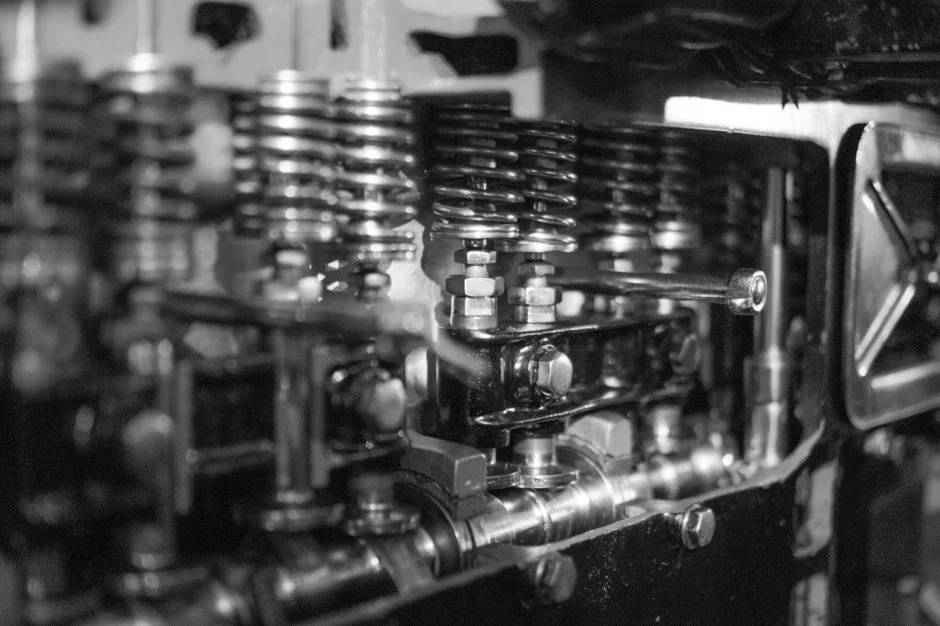
Ottawa's transportation-equipment cluster produces three characteristic waste streams that have to be handled together or separately depending on the plant layout. Stream one is metalworking and machining wastewater from CNC coolant, cutting fluid, and stamping lube — typically 200–2,000 mg/L free oil, 500–3,000 mg/L TSS, and emulsified oils in the 1–20 µm range (HydropureWater field data, 2026). Stream two is parts washing and phosphate pre-treatment wastewater, which carries alkaline cleaners, surfactants, and occasional pH excursions to 9–11 from acid pickling rinse drag-out. Stream three is paint-shop booth water and floor wash, with paint solids, solvents, and a high BOD/COD load that complicates downstream biology.
These streams typically combine in floor drains and trench systems before reaching the pretreatment room, making a mixed profile the design basis. Pure clarifier duty is rare; even a stamping plant that is "mostly inorganic" still sees tramp oil from hydraulic press leaks and emulsified drawing compound. Spec the primary separator to handle 50–100 mg/L free oil at minimum, even on the most inorganic stream, and require a side-stream oil skimmer ahead of the clarifier or DAF.
DAF vs Clarifier: Side-by-Side Engineering Parameters
The table below provides the head-to-head numbers needed to defend the technology selection. Values are drawn from the Clari-DAF pilot data (Lenox Institute 2019), the Ecologix 2026 selection guide, the lamella vs conventional comparison (HydropureWater product data 2026), and the DAF Corp equipment catalog.
| Parameter | Conventional Clarifier | Lamella Clarifier | DAF (Clari-DAF style) |
|---|---|---|---|
| Surface loading rate | 0.5–1.5 gpm/ft² (1.2–3.7 m/h) | 20–40 m/h (HydropureWater product data) | Up to 20 gpm/ft² (50 m/h) (Lenox 2019) |
| TSS removal | 50–70% | 80–90% | 92–98% (DAF Corp) |
| FOG removal | ~70% (Ecologix 2026) | 75–85% | 90–95% (Ecologix 2026) |
| Effluent turbidity | 10–30 NTU typical | 3–10 NTU | <0.5 NTU pilot (Xylem/Lenox 2019) |
| Footprint vs conventional | Baseline (1×) | ~40–60% of conventional | ~17.3% of conventional (82.7% reduction) |
| Sludge consistency | 1–3% solids underflow | 2–5% solids underflow | 2–4% float (DAF Corp) |
| Air/recycle equipment | None | None | Compressor, recycle pump, saturation tank |
For a 100 gpm composite flow, a DAF primary fits in roughly 50–80 ft² of floor area while a conventional clarifier at 1 gpm/ft² needs 100 ft² and a 12–15 ft SWD. The lamella vs conventional clarifier comparison covers the structural case in more detail.
When a DAF Is the Right Primary
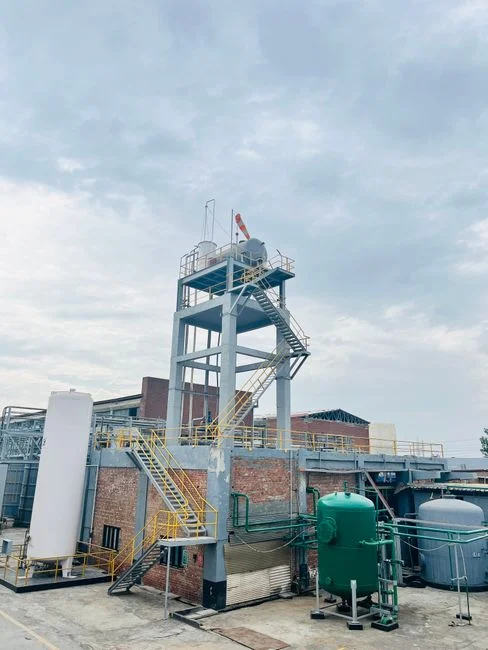
Specify a DAF first when the influent free oil runs above 100 mg/L, when emulsified oil is present at any concentration, or when the FOG discharge limit to the POTW is tighter than 50 mg/L. At 90–95% FOG removal, a DAF alone gets a 500 mg/L stream down to 25–50 mg/L — comfortably below the 38 mg/L Part 467 daily max with single-stage chemistry (Ecologix 2026). The HydropureWater DAF system is built for this envelope.
DAF also wins on retrofit footprint. Inside an existing Ottawa plant where trench drains dictate equipment location, the 82.7% footprint reduction versus a conventional clarifier (Lenox Institute 2019) often means the difference between a permit-table change and a building expansion. DAF handles batch discharge from parts washers better than clarifiers because the saturated recycle stream responds in seconds, and the air-scoured float layer resists resuspension during flow swings. Plan for a 20–30% recycle ratio and polymer dosing in the 1–5 mg/L range for stable operation.
When a Clarifier (Conventional or Lamella) Is the Right Primary
Specify a clarifier first when the stream is dominated by heavy inorganic grit, weld slag, or grinding swarf above 100 µm — putting that load through a DAF first will plug nozzles and foul the micro-bubble generator within weeks. A lamella clarifier at 20–40 m/h loading (HydropureWater product data) drops 80–90% of those coarse solids in a small footprint, and the HydropureWater lamella clarifier consumes up to 30% less polymer than an equivalent DAF front-end on grit-heavy streams. This is the correct choice for a heavy-truck frame plant with high weld-spatter and grinding throughput.
Clarifier-only is also defensible for very low-FOG, cost-driven operations — the Ecologix 2026 mining case study documented 90% TSS removal with a clarifier-only train on high-density metallic fines at lower operating cost. For a rail-car maintenance shop with mostly aqueous parts washing and minimal cutting fluid, a lamella clarifier followed by multimedia filtration may hit Part 467 limits without a DAF. The trade-off is clear: clarifiers do not meet 38 mg/L O&G on emulsified streams, so any drawing compound or coolant cross-contamination creates a compliance risk.
The 2026 Hybrid That Most Ottawa Plants Actually Install
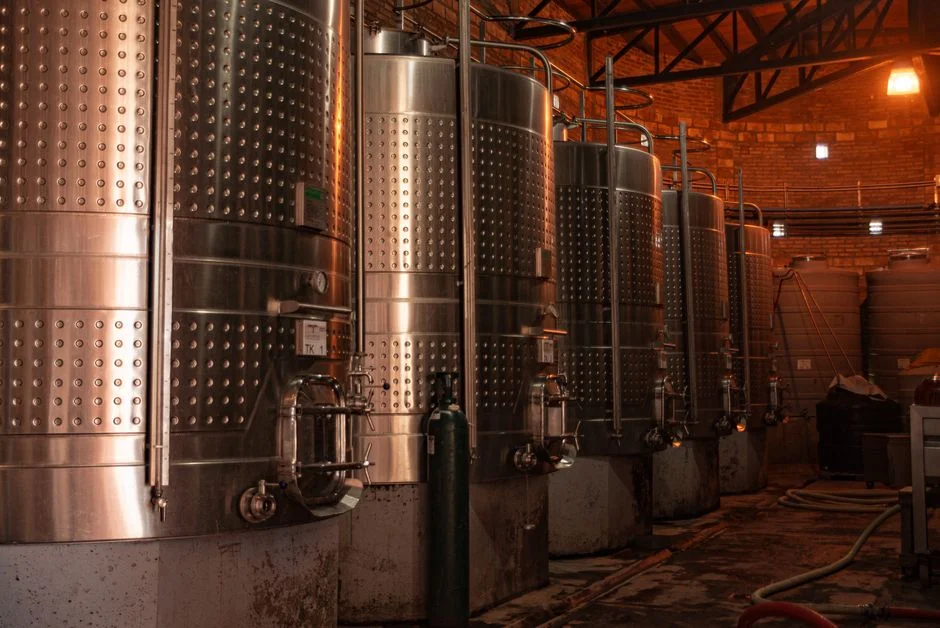
For composite machining and paint-shop wastewater, the engineered train that holds up in 2026 is a four-stage configuration: equalization → lamella clarifier for grit and swarf → HydropureWater DAF system for oil and emulsified FOG → automatic coagulant and polymer dosing skid for pH, metals, and residual TSS polish → multimedia filter or MBR → sludge dewatering via a plate and frame sludge filter press. This train hits 40 CFR Part 467 limits across O&G, TSS, lead, and chromium while reducing chemical use by up to 30% on the clarifier stage (HydropureWater field data, 2026) and protecting the DAF micro-bubble generator from coarse solids.
Two operating notes from recent retrofits: put the lamella ahead of the DAF rather than after, as coarse swarf in the DAF contact zone destroys bubble-particle attachment efficiency; and dose the polymer between the lamella and DAF so the flocculation window matches the DAF's 3–5 minute hydraulic residence time. A coordinated skid package from a single supplier shortens installation from 12–16 weeks to 6–8 weeks and provides one controls integrator for the whole train.
2026 Cost and Footprint Trade-Off for Ottawa Plants
Clarifiers win on first cost and operating cost; DAFs win on footprint, compliance margin, and oil removal. In an Ottawa industrial park where buildable slab runs $80–$150/ft² in 2026 (regional construction cost benchmarks, 2025-Q4), the 82.7% DAF footprint reduction often pays back the higher DAF capex in 18–30 months through building cost alone, before counting polymer and disposal savings. On a 100 gpm composite line, expect installed capex of $180,000–$280,000 for a lamella clarifier train versus $320,000–$480,000 for a DAF-primary train including compressor and saturation equipment.
Polymer and chemical cost favor the lamella — up to 30% lower than DAF-only chemistry on grit-heavy streams — but DAF float at 2–4% solids (DAF Corp) dewaters cleanly on a plate and frame sludge filter press, while clarifier underflow at 1–3% solids carries more water to the press and increases haul-off weight. For an Ottawa plant generating 800–1,200 lb/day of dry solids, the DAF float typically dewaters to 22–28% cake solids versus 18–22% for clarifier underflow. A DAF-led train costs more upfront and less to operate per pound of oil removed.
Frequently Asked Questions
Does 40 CFR Part 467 require a DAF for transportation equipment plants?
Part 467 does not name a technology, but
Frequently Asked Questions
Should an Ottawa auto parts plant choose DAF or clarifier in 2026?
For 2026 operations in Ottawa, the choice depends on the presence of emulsified oils and surfactants typical of high-volume machining. Dissolved Air Flotation (DAF) is generally superior for transportation equipment wastewater due to its ability to handle light, non-settleable solids and emulsified fats, oils, and grease (FOG). If the waste stream contains heavy metal particulates or high-density inorganic solids, a clarifier is preferred; however, most modern automotive facilities opt for DAF to meet tightening local discharge limits.
What is the 40 CFR Part 467 oil and grease limit for transportation equipment cleaning?
Under 40 CFR Part 467, which covers the Aluminum Forming Point Source Category, the oil and grease discharge limits are strictly regulated to protect local water systems. For direct discharge, the daily maximum limit is typically 38 mg/L, while the monthly average is restricted to 19 mg/L. Facilities must ensure their pretreatment systems are calibrated to consistently remain below these thresholds to maintain compliance.
Can a clarifier meet 38 mg/L oil and grease on its own?
A standard gravity clarifier is generally incapable of meeting a 38 mg/L oil and grease limit on its own when dealing with transportation equipment wastewater. Gravity separation relies on Stokes' Law, which is ineffective for emulsified oils or particles with a specific gravity near 1.0. Without the addition of chemical coagulants, flocculants, and downstream filtration or dissolved air flotation, a clarifier typically only achieves oil and grease removal efficiencies of 40% to 60%, leaving effluent concentrations well above the regulatory limit.
How much floor space does a DAF save over a clarifier?
A DAF system typically saves between 60% and 80% of the floor space required by a conventional circular gravity clarifier of equivalent hydraulic capacity. Because DAF units utilize rapid bubble-attachment mechanisms to achieve separation in minutes rather than hours, the retention tanks are significantly smaller. This high surface-loading rate allows a DAF to process up to 4 gallons per minute per square foot, compared to the 0.5 to 1.0 gallons per minute per square foot common in conventional clarifiers.
Is a DAF plus lamella clarifier hybrid better than either alone for paint-shop and machining wastewater?
A hybrid system integrating a lamella clarifier for primary solids removal followed by a DAF for secondary oil and grease polishing is the most effective configuration for complex automotive wastewater. The lamella clarifier efficiently handles high-density paint solids and metal fines, preventing the DAF from becoming overloaded with heavy sludge. The subsequent DAF stage then removes the remaining emulsified oils and low-density contaminants, ensuring the final effluent consistently meets the 38 mg/L limit regardless of upstream process fluctuations.