Why Saint Albans Food Plants Are Rethinking Solids Removal in 2026
Saint Albans, Vermont sits inside one of the densest dairy and craft-food clusters in the Northeast, anchored by cheese processors, fluid-milk plants, breweries, and a meat-packing sector that all discharge to the St. Albans City Water Pollution Control Facility under Vermont ANR indirect discharge permits. Federal pretreatment limits under 40 CFR Part 432 govern Food and Drug Products point-source discharges by subcategory (milk processing, cheese, ice cream, etc.) and set daily-maximum thresholds that most local POTWs tighten further — Saint Albans operators typically have to hold FOG below 100 mg/L and TSS below 250 mg/L on daily maxima to stay out of the enforcement letter pile. In 2026, three pressures are converging: tighter permit enforcement from Vermont ANR, hauled-sludge tipping fees that have climbed roughly 15-25% year-over-year at regional biosolids handlers, and seasonal flow swings from maple-season rinses (February-April) and summer dairy peaks (June-August) that punish any passive clarifier sized for average flow. The right question for a plant engineer is not "which brand is best" but "which primary solids-removal unit matches the actual sub-stream" — whey is a different problem than cheese brine, and brewery trub behaves nothing like slaughterhouse bloodwater.
How a DAF and a Clarifier Actually Work in a Food Plant
A Dissolved Air Flotation (DAF) system runs as a four-stage sequence: coagulation and flocculation, air dissolution, bubble-particle attachment, and flotation with skimming. After polymer conditioning — cationic or anionic at 0.5–5 mg/L — a 10–30% recycle stream of clarified effluent is pressurized to 4–6 bar in a saturation tank, where it dissolves air at 85–95% efficiency. On release back into the flotation cell at atmospheric pressure, the air comes out of solution as 20–100 μm micro-bubbles (the 30–50 μm range is the commercial standard per DAF clarifier engineering deep-dive). Those bubbles attach to floc and lift it to the surface, where paddle skimmers remove a float at 3–5% solids. A conventional clarifier is a passive gravity vessel — heavier particles settle over a 2–4 hour retention time, producing a 1–2% underflow that has to be pumped and dewatered downstream. For the same flow, a clarifier needs 4–5× the footprint of a DAF, and once the tank is sized and poured, an operator cannot retune it for a slug load. A DAF, by contrast, responds in minutes: bump the recycle ratio, adjust saturation pressure, change the polymer dose. That tunability explains why a DAF dominates any stream with light, near-neutral-buoyancy particles — which is most of what a Saint Albans food plant actually discharges.
DAF vs Clarifier: Side-by-Side Parameters for Food and Beverage Streams
The table below summarizes the operating envelope a Vermont plant engineer should size against using published 2025-2026 manufacturer data and field experience.
| Parameter | DAF | Conventional Clarifier |
|---|---|---|
| TSS removal | 92–97% | 40–60% |
| FOG removal | up to 95% | ~70% |
| BOD removal (primary) | 50–70% | 25–40% |
| Surface loading rate | 5–15 m/h | 1–2 m/h |
| Footprint (same flow) | 1× (baseline) | 4–5× |
| Sludge solids concentration | 3–5% float | 1–2% underflow |
| CAPEX (4–300 m³/h) | $50,000–$500,000 | 30–50% lower vessel cost, 4–5× civil cost |
| OPEX energy | 0.2–0.5 kWh/m³ | mainly pumping |
| Polymer demand | 0.5–5 mg/L (mandatory) | often required, higher dose |
| Slug-load response | Adjustable in minutes | Cannot be tuned once sized |
| Cold-weather (≈4°C) performance | Microbubbles remain effective | Viscosity rise requires 2× retention |
The 20–30 percentage-point gap on TSS and FOG represents the primary performance difference between these technologies. Everything else — footprint, sludge dryness, tunability — flows from the physics of flotation versus settling on light, emulsified, or protein-rich particles. The food-processing case study in the 2026 Ecologix comparison documented 95% oil and grease removal on a DAF versus 70% on a clarifier treating the same high-oil stream, with conventional clarifiers also requiring larger volumes of flocculant to force settling of near-neutral particles.
Matching Equipment to the Eight Common Saint Albans Sub-Streams
Reframing the question as a stream-matching exercise allows plant managers to identify the correct primary unit for their specific influent. The table below maps the eight sub-streams a Saint Albans plant most likely handles to a recommended primary unit.
| Sub-stream | Typical characteristics | Recommended primary | Why |
|---|---|---|---|
| Dairy whey / creamery rinses | High protein, lactose BOD, near-neutral pH | DAF | Protein and residual fat are near-neutral buoyancy; micro-bubbles attach readily |
| Cheese brine | High TDS (NaCl), suspended curd fines | DAF | Fine curd floats; clarifier loses curd to overflow |
| Brewery trub / kettle rinse | Light yeast and protein particles | DAF + rotary screen upstream | Yeast is buoyant; rotary screen protects DAF from grain husks |
| Meat processing bloodwater | High protein, high FOG, dark color | DAF (with blood recovery) | Dissolved blood and emulsified fat will not settle in a clarifier |
| Paunch manure / gut contents | High TSS, fibrous, variable | DAF primary, screen upstream | Solids respond to flotation after coarse screening |
| Bakery / confectionery wash water | High sugar BOD, suspended flour | DAF primary + biological polish | Flour and sugar fines float; DAF protects downstream biology |
| Maple / flavor bottling rinses | Warm, sugary, seasonal | DAF with pH 6.5–7.5 optimization | Sugar-coated fines need tuned polymer chemistry |
| Vegetable wash with grit | Heavy sand, soil, low FOG | Clarifier acceptable as primary | Dense inorganic grit settles readily; add DAF only if FOG appears |
DAF microbubbles stay effective at water temperatures near 4°C, while a clarifier's settling velocity drops with rising viscosity, forcing retention time to roughly double to maintain the same removal. For a Saint Albans plant running outdoor equalization in February, this creates a performance penalty for clarifiers and a significant advantage for DAF systems.
Cost, Payback, and ROI for a Saint Albans Food Plant
For a DAF sized to the 4–300 m³/h band common in regional food plants, CAPEX runs $50,000–$500,000 depending on materials of construction (SS304 versus SS316 for high-chloride cheese brine) and the level of automation. OPEX includes energy at 0.2–0.5 kWh/m³ for the recycle pump and air compressor, polymer at 0.5–5 mg/L, and routine mechanical maintenance. Sludge disposal costs drive the financial case: because DAF float exits at 3–5% solids versus 1–2% for clarifier underflow, the volume hauled off-site drops by 50–70%. For a medium-sized food plant, that volume reduction alone saves roughly $40,000 per year in tipping fees. Plugged into the standard ROI framework, payback for a high-FOG stream lands in the 1.5–3 year window:
(Annual Disposal Savings + Avoided Fines − Annual OPEX) ÷ CAPEX = Years to Payback
The formula excludes soft savings — avoided permit excursions, production uptime, potential water reuse — because those are harder to quantify. A DAF system sized with an automatic polymer dosing skid and paired with a GX series rotary bar screen upstream is the typical matched equipment list for a Saint Albans dairy or brewery installation. For chemical or heavy-metal-bearing streams with different matrices, the same engineering logic applies but with different chemistry — see the DAF vs clarifier for chemical plants guide for comparison.
Compliance and Permit Considerations Under 40 CFR 432 and Vermont ANR
40 CFR Part 432 is the federal anchor for any food and drug products discharge in the United States, organized by subcategory with BOD, TSS, and FOG limits that vary by process. Vermont ANR enforces these limits through the indirect discharge permit held by each Saint Albans facility, and the St. Albans City WPCF applies local limits — typically stricter than the federal floor — on daily maxima and grab-sample FOG. A well-sized DAF with polymer conditioning serves as the standard for meeting daily-maximum FOG and TSS targets across the relevant 40 CFR 432 subcategories. Pairing the DAF with a plate-and-frame filter press for sludge dewatering keeps hauled-waste manifests within permit mass limits and reduces landfill load; the same logic drives retrofit decisions covered in the filter press retrofit guide. Biological polishing downstream — MBBR, SBR, or activated sludge — handles residual soluble BOD that a primary DAF cannot remove.
30-Day Site Trial Checklist Before You Buy
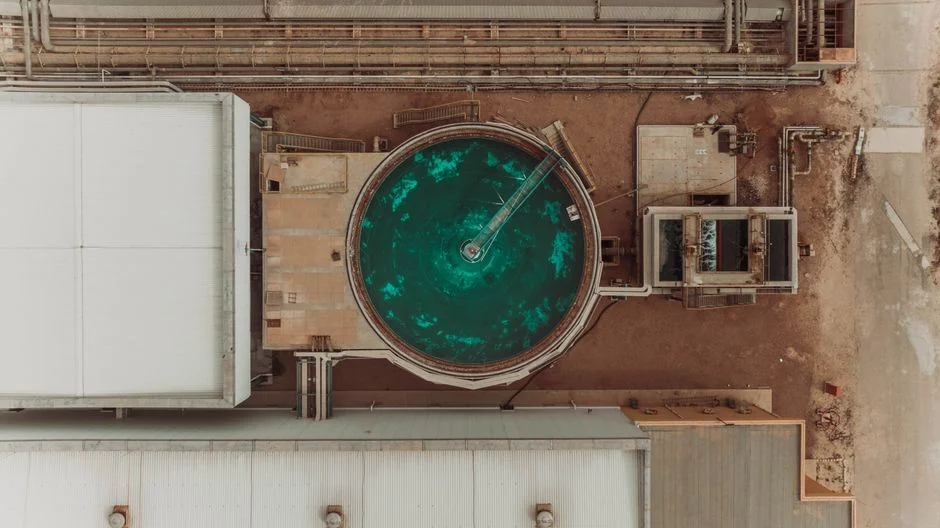
Follow this testing sequence before signing a purchase order to ensure your equipment meets regulatory requirements.
- Characterize the stream (Days 1–7): Pull 5-day composite samples for TSS, FOG, BOD/COD, pH, temperature, and flow. Map slug loads against production shifts — cheese make days, CIP rinse cycles, brewery cleanouts.
- Jar-test polymers (Days 8–14): Test 2–3 candidates — cationic, anionic, and a blend — at 0.5–5 mg/L dose ranges. Record the dose that produces the largest, strongest floc and the clearest supernatant.
- Pilot a small DAF (Days 15–25): Run a 1–5 m³/h pilot DAF on the actual whey, brine, or bloodwater stream. Measure float solids concentration, effluent TSS/FOG, and polymer consumption at steady state.
- Lock the operating envelope (Days 26–30): Confirm saturation pressure (4–6 bar), recycle ratio (10–30%), and polymer dose. Use those numbers to size the full-scale DAF system, the upstream GX series rotary bar screen, and the polymer dosing package.
A vendor who refuses to support a pilot on your actual stream should not be considered.
Frequently Asked Questions
Is a DAF or a clarifier better for high-FOG food wastewater?
A DAF is the correct primary for high-FOG streams. Published 2026 comparison data shows DAF achieving 95% FOG removal versus roughly 70% for a clarifier on the same high-oil food processing stream, with 92–97% TSS removal versus 40–60%. The physics favors flotation because fats, oils, and grease are near-neutral or lower density than water and respond to micro-bubble
Frequently Asked Questions
Should a Saint Albans food plant choose a DAF or a clarifier in 2026?
The choice depends on the specific loading rates and space constraints of the Saint Albans facility. In 2026, Dissolved Air Flotation (DAF) is typically preferred for food and beverage plants with high concentrations of Fats, Oils, and Grease (FOG) or light suspended solids, as it offers a smaller physical footprint and faster separation times compared to traditional gravity clarifiers. Clarifiers remain the standard for heavy, inorganic solids or high-volume flows where chemical coagulation is not the primary mechanism for removal.
How much FOG can a DAF remove compared to a clarifier in dairy wastewater?
In dairy wastewater applications, a DAF system is highly efficient, typically achieving FOG removal rates of 85% to 95% when paired with effective coagulation and flocculation. Conversely, a standard gravity clarifier often struggles with dairy effluent due to the buoyancy of milk fats, typically achieving only 40% to 60% FOG removal without significant chemical intervention, making DAF the superior choice for meeting municipal pretreatment standards in the region.
What is the typical CAPEX and ROI for a DAF system in a small food processing plant?
For a small food processing plant, the CAPEX for a skid-mounted DAF system typically ranges between $80,000 and $150,000 depending on flow rate and automation requirements. The Return on Investment (ROI) is generally achieved within 18 to 30 months, driven primarily by the reduction in high-strength surcharges imposed by local Saint Albans wastewater treatment utilities and decreased sludge disposal costs.
Does a DAF system meet 40 CFR Part 432 pretreatment limits for food and beverage plants?
Yes, a properly engineered DAF system is a critical component for achieving compliance with 40 CFR Part 432, which mandates specific limits on BOD, TSS, and Oil & Grease for meat and poultry processing. By effectively reducing the pollutant load prior to discharge into the municipal sewer system, DAF units ensure that effluent concentrations remain within the categorical pretreatment standards required by the EPA and local Vermont environmental authorities.
Can a DAF system operate in cold Vermont winter temperatures?
DAF systems can operate reliably in Vermont winters provided the equipment is housed in a climate-controlled environment or a heated enclosure. While the internal process is exothermic to a degree, the ambient Saint Albans air temperatures can cause freezing of pipes, valves, and chemical feed lines, necessitating heat tracing and insulation for all exposed exterior components to prevent hydraulic failure and maintain consistent chemical reaction kinetics.