What Makes EV and Auto Plant Wastewater Different in Midway
Midway EV and auto factories should choose a DAF for streams carrying oil, grease, paint detackifier polymer, and fine colloidal solids — the technology that hit 95% FOG removal in Ecologix's 2026 benchmark — and use a lamella clarifier only for heavy, settleable metal-bearing sludge. Most 2026 EV plants run a DAF as primary, with a lamella as polish. The reason a one-size answer fails is that an EV/auto plant is really four or five small factories plumbed into one outfall: stamping drawing compound with emulsified soap and tramp oil; e-coat and paint detackifier overflow loaded with colloidal polymer and pigment; NMP (N-methyl-2-pyrrolidone) condensate from cathode coating in battery plants; phosphating or zinc-rich rinse water from metal-finishing lines; and Gigafactory lithium-bearing rinse water with anode-coating fines.
Midway plants typically discharge to a POTW and must meet EPA's 40 CFR Part 433 metal-finishing categorical limits at the pretreatment boundary — oil & grease 52 mg/L daily maximum, TSS 60 mg/L daily maximum, plus subcategory-specific total metals caps for zinc, nickel, lead, and hexavalent chromium (per 40 CFR Part 433). Oil/grease and colloidal detackifier polymer overwhelm a plain clarifier but float cleanly in a DAF: pressurized recycle water releases 30–50 micron microbubbles that attach to conditioned floc and lift it to the surface (per SigmaDAF USA 2026 spec). The exception is the phosphating rinse line, where settleable metal-hydroxide floc from pH/precipitation belongs in a lamella.
How DAF and Clarifiers Actually Treat Auto Wastewater
A dissolved air flotation unit is a two-stage separator. First, the influent passes through a coagulation/flocculation stage — typically an inorganic coagulant (alum, PAC, or ferric chloride) followed by a long-chain flocculant such as anionic PAM at 0.5–3 mg/L dosing. Second, 20–50% of clarified effluent is recycled through a saturation tank held at 5–7 bar, dissolving air into the water. On depressurization at the DAF inlet, the air comes out of solution as a cloud of 30–50 micron microbubbles that nucleate on the conditioned floc and reduce its bulk density below water, lifting it to the surface in 3–5 minutes for skimming (per SigmaDAF USA 2026 spec). Heavier grit settles to a bottom auger.
A clarifier is gravity sedimentation. A conventional circular or rectangular basin is sized at a surface overflow rate of about 1 m³/m²/h with 3–4 hour hydraulic retention; the heavy floc falls to a sloped bottom (minimum 45° for hopper-bottom units) and is scraped to a central sludge sump (per SigmaDAF TSS technical reference, 2026). A lamella clarifier stacks inclined plates at 55–60° inside the tank, multiplying the effective settling area 3× or more for high-density solids and shrinking the basin footprint by a similar factor (per SigmaDAF TSS reference). The key distinction for an auto engineer: DAF separates on buoyancy, clarifier separates on gravity, and colloidal polymer, oil, and FOG do not respond to gravity at typical retention times.
By 2026, a hybrid configuration — DAF primary, lamella polish — has become the default for new EV/auto lines. The DAF absorbs FOG, colloidal detackifier, and floatable pigment; the lamella catches metal-hydroxide floc that slips through in a sludge blanket. This is the architecture the top-ranking generic "DAF vs clarifier" articles do not describe for the auto sector.
Side-by-Side: DAF vs Clarifier on the Numbers That Matter
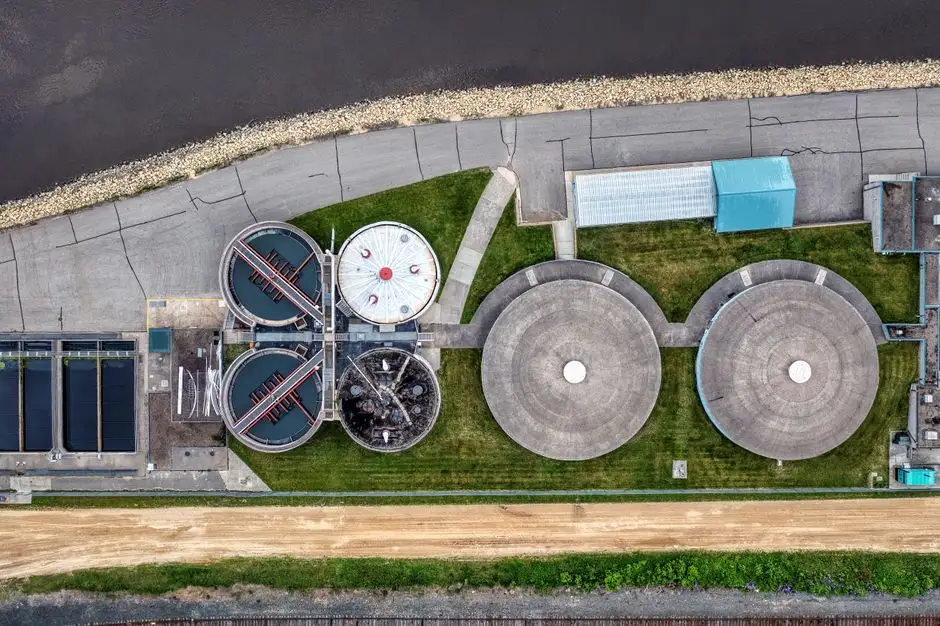
The table below collapses the trade-off a procurement manager needs to scan in 30 seconds. Removal figures are drawn from the SigmaDAF USA 2026 spec and the Ecologix 2026 selection guide; cost bands are turnkey installed ranges for industrial packaged equipment in the US Midwest and are not vendor-specific quotes.
| Parameter | DAF (Dissolved Air Flotation) | Lamella Clarifier | Conventional Clarifier |
|---|---|---|---|
| Target contaminant | Oil, FOG, colloidal solids, fine TSS | Settleable metal-hydroxide floc, high-density TSS | Heavy settleable TSS, grit |
| FOG removal | 70–95% (Ecologix 2026: 95% in food benchmark) | ~50–70% (only floatable fraction) | ~50–70% (only floatable fraction) |
| TSS removal | 85–99% (SigmaDAF 2026) | 60–90% (high-density only) | 60–90% (high-density only) |
| Footprint per m³/h | 0.05–0.15 m² (compact) | 0.2–0.5 m² (compact inclined plates) | 1.0+ m² (large rectangular basin) |
| Sludge dryness | 4–5% dry solids (SigmaDAF 2026) | 2–4% | <1% (thickener required) |
| Hydraulic retention | 3–5 minutes in float zone | 20–40 minutes | 3–4 hours |
| OPEX drivers | Air compressor, recycle pump, 2–4 kWh/m³, chemical dose | Sludge pump, low energy | Sludge pump + scraper drive, low energy |
| 2026 turnkey CAPEX (per m³/h) | USD 18,000–45,000 | USD 6,000–15,000 | USD 4,000–10,000 |
| Best fit at Midway EV/auto | FOG, e-coat detackifier, NMP condensate polish, Gigafactory rinse | Phosphating rinse, metal-hydroxide precipitation, DAF polish | Rare — only legacy civil basins |
For a detailed look at a packaged unit, see the DAF system and the HydropureWater lamella clarifier referenced in the stream-matching section below.
DAF Design Parameters You Should Specify in 2026
A vendor quote that does not list the following numbers is not a quote — it is a brochure. The parameters below are the ones an engineer should expect to see on a 2026 data sheet for an industrial DAF sized for a Midway EV/auto line.
| Parameter | 2026 Industrial Range / Spec | Source / Note |
|---|---|---|
| Microbubble size | 30–50 microns | SigmaDAF USA 2026 spec |
| Hydraulic loading (float zone) | 5–25 m³/m²/h, application-dependent | SigmaDAF / Clearwater 2026 |
| Reference unit (skid) | SigmaDAF Compact 66 GPM single-skid for flows ≤66 GPM; two-skid modular above | SigmaDAF USA 2026 |
| Recycle ratio (oily / FOG streams) | 20–50% | Standard 2026 design |
| Recycle ratio (colloidal / detackifier) | 20–30% | Lower — floc is already light |
| Saturation pressure | 5–7 bar | SigmaDAF USA 2026 |
| Materials of construction (standard) | 304SS | SigmaDAF USA 2026 |
| Materials (chloride-bearing Gigafactory rinse) | 316SS, PP, or FRP-lined | SigmaDAF USA 2026 (on request) |
| Flocculant dose (anionic PAM) | 0.5–3 mg/L typical | HydropureWater field data, 2026 |
| Chemical dosing skid | Specified separately, PLC-controlled | See HydropureWater automatic chemical dosing skid |
The recycle ratio is the lever engineers tune most often. Oily stamping wastewater with emulsified soap needs the high end (40–50%) because bubble attachment to oil droplets is the rate-limiting step. Colloidal detackifier streams float easily once flocculated, so pushing more recycle just dilutes the influent and wastes compressor energy.
2026 CAPEX and OPEX Bands for Midway Plants
Budget justification is where most generic DAF-vs-clarifier guides fall down. The numbers below are framed as 2026 industrial turnkey installed ranges — equipment, skid, controls, startup — for a packaged unit discharging to a POTW in the US Midwest. They are not vendor-specific quotes and should be treated as ±20% engineering estimates.
| Cost line | DAF (per m³/h) | Lamella Clarifier (per m³/h) | Conventional Clarifier (per m³/h) |
|---|---|---|---|
| Turnkey equipment CAPEX | USD 18,000–45,000 | USD 6,000–15,000 | USD 4,000–10,000 |
| Civil works (basin, footing) | Minimal (skid) | Small (compact) | Large (3–4 h retention volume) |
| Energy (kWh/m³ treated) | 2–4 (compressor + recycle pump) | 0.2–0.5 (sludge pump only) | 0.2–0.5 (scraper + sludge pump) |
| Sludge dewatering cost | Lower — feed already 4–5% DS | Moderate — 2–4% DS | Higher — <1% DS, thickener needed first |
| Installation time | 2–4 weeks (skid) | 4–8 weeks | 3–6 months (civil) |
| Engineering + permitting adder | +15–25% on top of equipment (POTW-discharging facility) | +15–25% | +15–25% |
Where a DAF quietly earns its higher CAPEX is at the back end. Because the floated sludge exits at 4–5% dry solids, it feeds a HydropureWater plate and frame filter press directly, producing a 25–35% cake without an intermediate thickener (per SigmaDAF 2026 reference). Clarifier sludge below 1% DS needs a gravity thickener stage first, adding CAPEX, footprint, and a week of residence time before the press. For a Midway plant running a 50 m³/h combined DAF, a roughly USD 1.0–2.25 M equipment line, the dewatering simplification typically pays back the DAF premium inside 18–30 months on sludge-hauling savings alone (HydropureWater field data, 2026).
Matching the Right Unit to Each Auto Wastewater Stream
This is the table an engineer actually copies into a Monday-morning memo. Match the unit to the dominant contaminant, not to the plant label.
| Wastewater stream | Dominant contaminant | Recommended primary unit | Polish / follow-up |
|---|---|---|---|
| Stamping drawing compound | Emulsified oil + soap (FOG) | DAF | Bag or cartridge filter before discharge |
| E-coat / paint detackifier overflow | Colloidal detackifier polymer + pigment (TiO₂, TIOCA) | DAF | Lamella clarifier for settleable pigment fines |
| NMP-bearing cathode coating condensate | NMP solvent + cathode fines | Vacuum/steam distillation for NMP recovery first; DAF polish on condensate | Carbon polish for residual NMP to <1 mg/L |
| Phosphating / zinc-rich rinse | Settleable Zn, Ni, Fe hydroxide floc | Lamella clarifier after pH adjustment (typically pH 9–10) | Sand filter or ion exchange for metals limits |
| Gigafactory lithium-bearing rinse water | FOG + anode-coating fines; dissolved Li, Mn, Co | DAF for FOG/fines | Chemical precipitation for Li/Mn/Co — DAF alone will not hit metals limits |
The mistake generic guides make is treating the plant as one stream. A Midway Gigafactory with a body shop next door typically has three or four incompatible streams that need separate equalization and treatment trains before they can be combined for a common outfall.
Compliance, Permits, and the 40 CFR Part 433 Checklist
The EHS approver is usually the silent second signer on a CAPEX like this, and the regulation they will reach for is 40 CFR Part 433 — Metal Finishing Point Source Category. Four subcategories apply to EV/auto parts plants: aluminum forming (433.15), copper forming (433.16), ferrous forming (433.17), and metal finishing (433.14) — the catch-all for stamping, e-coat, and phosphating lines.
The daily-maximum limits an engineer should design the system to hit, not just meet, are: oil & grease 52 mg/L, TSS 60 mg/L, and the subpart-specific total metals caps (zinc, nickel, lead, hexavalent chromium, copper). For a Midway plant discharging to a POTW, the local control authority may impose limits stricter than the federal categorical standards — always check the POTW's industrial pretreatment program (IPP) permit before finalizing equipment sizing.
A DAF alone will not reliably hit zinc, nickel, or hexavalent chrome limits. It removes FOG and TSS; metals limits require chemical precipitation (pH 9–10 for Zn/Ni, pH 8–9 for Cr(VI) reduction with FeSO₄ first) and/or ion exchange downstream. The DAF is the primary solids-removal front end; metals polishing is a separate unit operation. Specify the chemical conditioning skid — the HydropureWater automatic chemical dosing skid or equivalent — as part of the same procurement, because dosing turndown is what makes the metals limits achievable day to day. For a related decision framework at a sister locality, see the EV/auto DAF-vs-clarifier guide for Kansas City; for a non-auto comparable, the fabricated metals DAF-vs-clarifier guide for Greeneville walks through the same logic for a different regulatory envelope.
Frequently Asked Questions
Can a clarifier replace a DAF for an EV paint line?
No. Detackifier polymer and overspray pigment are colloidal — they carry a surface charge and stay in suspension indefinitely under gravity. A clarifier will discharge cloudy water with FOG well above the 52 mg/L 40 CFR Part 433 daily-maximum limit. DAF microbubbles attach to the conditioned floc and float what gravity cannot settle.
Is a DAF enough for nickel and zinc limits?
No. DAF removes FOG and TSS; it does not precipitate dissolved metals. To hit the 40 CFR Part 433 daily-maximum metals caps, a DAF must be followed by chemical precipitation (pH adjustment to 9–10 with caustic) and/or ion exchange. For flocculant selection on the precipitation stage, the 2026 PAM dosing system selection guide walks through the dose turndown that metals work demands.
How long does installation take?
Skid-mounted DAFs (e.g., SigmaDAF Compact at 66 GPM single-skid) install in 2–4 weeks once the foundation and influent piping are ready. Civil-work clarifiers, including the basin pour and cure, take 3–6 months. For a 2026 capex that has to be in service before a new model launch, the DAF schedule is usually the deciding factor.
Does a DAF need a licensed operator?
In most US jurisdictions, no full-time licensed operator is required for an industrial DAF under 100 m³/h. PLC control with daily checks for chemical dose, pH, and float depth is sufficient. Always confirm with the state environmental agency and the local POTW's industrial pretreatment program.
Can I retrofit a clarifier with a DAF stage?
Yes — and in 2026 it is the most common retrofit path at EV/auto plants built in the 2000s. Add a DAF upstream of the existing clarifier; keep the clarifier as a polish step. The hybrid DAF + lamella arrangement consistently outperforms either unit alone on FOG, TSS, and metals-precipitation carryover, and it reuses the civil investment already in the ground.