Why PAM Dosing Systems Fail in Industrial Wastewater Treatment (And How to Fix It)
Inconsistent polymer preparation and dosing accuracy are responsible for 30-50% of poor flocculation events in industrial wastewater treatment, leading directly to regulatory non-compliance and elevated operational costs. Many industrial facilities grapple with inefficient polyacrylamide (PAM) dosing, often manifesting as suboptimal suspended solids removal and excessive chemical consumption. This issue is particularly acute in sectors like papermaking, mining, and textile manufacturing, where high pollutant loads demand precise and reliable chemical treatment.
Common failure modes include inconsistent polymer concentration, where manual or poorly calibrated systems deliver a solution varying by ±10% instead of the optimal ±1% achievable with automated systems. Incomplete dissolution, often characterized by "gel balls" or undissolved polymer particles, significantly reduces the active surface area of the flocculant, rendering it ineffective. aging time mismatches—where freshly dissolved polymer is used before reaching its optimal activation state (typically 30-120 minutes depending on PAM type and concentration)—prevent the polymer chains from fully extending and achieving maximum charge neutralization and bridging capabilities.
The impact of these dosing failures is substantial. Poor flocculation can lead to 20-40% higher polymer consumption as operators attempt to compensate for inefficiency by increasing dosage, driving up chemical expenditure. It also results in 15-30% lower Total Suspended Solids (TSS) removal rates, falling short of critical discharge limits (per EPA 2023 benchmarks for industrial effluent). This directly translates to regulatory fines, such as those enforced under China’s GB 18918-2002 for industrial discharge standards, and potential operational shutdowns. For instance, a textile plant in Shandong reduced its polymer use by 28% and consistently met discharge limits after upgrading from a manual batch system to an automatic PAM dosing system, observing a significant improvement in post-treatment TSS levels from 80 mg/L to under 30 mg/L (HydropureWater field data, 2023).
PAM Dosing System Types: Dry Powder vs. Liquid Polymer Systems Compared
Selecting between dry powder and liquid polymer PAM dosing systems hinges on balancing operational requirements, available space, and desired response times for industrial wastewater treatment. Each system type offers distinct advantages and disadvantages, making suitability highly dependent on specific plant characteristics and wastewater profiles.
Dry powder systems typically consist of a dry powder feeder, a dissolution tank, and one or more aging tanks. Their primary advantages include lower storage volume requirements for the raw material and a significantly longer shelf life of 2-3 years for the dry polymer. However, they demand longer mixing times, typically 60-120 minutes, to ensure complete dissolution and proper aging. Dry systems also present potential dust hazards during loading, necessitating appropriate ventilation and safety protocols. The need for multiple tanks for dissolution and aging often requires a larger physical footprint.
Liquid polymer systems, conversely, use pre-emulsified or pre-dissolved liquid PAM. These systems offer faster activation times, ranging from 5-30 minutes, due to the polymer already being in a liquid state, which simplifies the mixing process. This characteristic makes them ideal for applications requiring rapid response to variable wastewater loads. Liquid systems are also easier to automate and eliminate dust hazards. However, they require higher storage volumes for the bulk liquid polymer and have a shorter shelf life, typically 3-6 months, due to potential bacterial growth or polymer degradation. Their higher concentration also means they often require dilution prior to dosing.
Use-case matching is crucial for optimal performance. Dry systems are often preferred for facilities with lower flow rates, space-constrained environments, or where long-term polymer storage is a priority, such as in food processing plants with consistent but moderate wastewater volumes. Liquid systems excel in high-flow, variable-load applications, like municipal wastewater treatment plants or large industrial facilities with fluctuating effluent characteristics, where rapid adjustment of flocculant supply is critical. Process parameters for dry systems generally involve polymer concentrations of 0.1-0.5% after dissolution, while liquid systems typically operate with initial concentrations of 0.5-2% before further dilution. Automated systems, such as HydropureWater’s automatic PAM dosing systems with PLC control, consistently achieve dosing accuracy of ±1% regardless of polymer form, while mixing energy typically ranges from 0.5-2 kW/m³ of solution, impacting the overall efficiency of polymer activation.
| Feature | Dry Powder PAM Systems | Liquid Polymer PAM Systems |
|---|---|---|
| Raw Material Storage Volume | Lower (compact powder) | Higher (bulk liquid) |
| Raw Material Shelf Life | 2-3 years | 3-6 months |
| Mixing/Aging Time | 60-120 minutes | 5-30 minutes |
| Activation Speed | Slower | Faster |
| Dust Hazards | Yes (during loading) | No |
| Automation Complexity | Moderate (powder feeding, dissolution, aging) | Easier (pump control, dilution) |
| Polymer Concentration (prepared) | 0.1-0.5% | 0.5-2% (before further dilution) |
| Typical Use Cases | Low-flow, space-constrained, consistent loads | High-flow, variable loads, rapid response |
Key Engineering Specs for Industrial PAM Dosing Systems: What to Compare
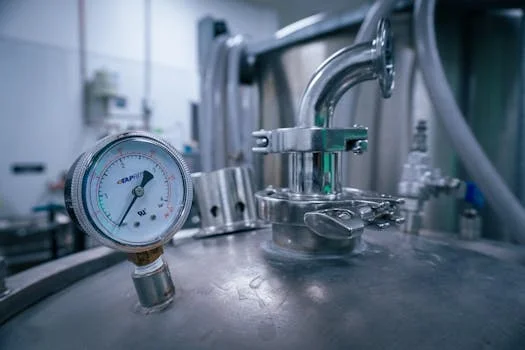
Evaluating industrial PAM dosing systems requires a detailed comparison of key engineering specifications that directly impact flocculation efficiency, operational costs, and system reliability. The most critical parameter is dosing accuracy, with automated systems achieving ±1% compared to ±5% for manual or semi-automatic setups (per Top 1 data for automatic devices). This precision minimizes polymer overuse and ensures consistent treatment quality.
Mixing time is another crucial spec, determining the system's footprint and response capability. Dry PAM requires 30-120 minutes for complete dissolution and aging, necessitating larger aging tanks. In contrast, liquid PAM systems offer faster activation within 5-30 minutes, allowing for more compact designs and quicker adaptation to changing wastewater conditions. The target polymer concentration range also varies significantly: 0.1-0.5% for dry PAM after dissolution versus 0.5-2% for liquid PAM before final dilution. Understanding this difference is vital for optimizing storage, handling, and subsequent dilution steps.
Energy consumption, typically ranging from 0.5-2 kWh/m³ of prepared solution, is influenced by agitator motor size, mixing speed, and tank design. Efficient mixing without excessive shear is paramount to prevent polymer chain degradation. Flow rate compatibility, spanning 1-500 m³/h, must be matched to the industrial plant's specific wastewater capacity, ensuring the system can handle peak and average flows effectively. Finally, the automation level dictates operational labor and responsiveness. Manual systems are operator-dependent and prone to inconsistencies. Semi-automatic systems use timers for batch preparation but still require manual intervention. Fully automatic systems, leveraging PLC control and real-time sensor feedback, offer the highest precision and adaptability, crucial for dynamic industrial environments.
| Engineering Specification | Typical Range / Benchmark | Impact on System Performance |
|---|---|---|
| Dosing Accuracy | ±1% (Automated) vs. ±5% (Manual) | Minimizes chemical waste, ensures consistent flocculation |
| Mixing Time (Dry PAM) | 30-120 minutes | Influences tank footprint, polymer activation, and response time |
| Mixing Time (Liquid PAM) | 5-30 minutes | Faster activation, more compact design, quicker response |
| Polymer Concentration (Dry) | 0.1-0.5% | Affects polymer dissolution, storage volume, and dosing pump sizing |
| Polymer Concentration (Liquid) | 0.5-2% | Influences dilution requirements, storage, and handling |
| Energy Consumption | 0.5-2 kWh/m³ (of prepared solution) | Operational cost, influenced by agitator and pump efficiency |
| Flow Rate Compatibility | 1-500 m³/h | Matches system capacity to plant wastewater volume |
| Automation Level | Manual, Semi-automatic, Fully Automatic (PLC + sensors) | Labor requirements, consistency, adaptability to load changes |
Cost Breakdown: CAPEX vs. OPEX for PAM Dosing Systems
A comprehensive cost analysis for PAM dosing systems must differentiate between Capital Expenditure (CAPEX) and Operational Expenditure (OPEX) to accurately project total cost of ownership and return on investment (ROI). The upfront CAPEX for a dry PAM dosing system typically ranges from $15,000 to $50,000, encompassing components such as dry powder storage hoppers, screw feeders, dissolution tanks, aging tanks, agitators, dosing pumps, and the control panel. Liquid polymer systems, due to their specialized storage and pumping requirements for higher concentration liquids, generally have a higher CAPEX of $25,000 to $80,000, which includes bulk storage tanks, transfer pumps, inline mixers, dilution systems, and precision dosing pumps.
OPEX represents the ongoing costs and often significantly outweighs CAPEX over the system's lifespan. The primary OPEX driver is polymer cost, which can range from $0.5 to $2 per kilogram depending on type (anionic, cationic, non-ionic) and supplier. Energy consumption for mixing and pumping adds $0.1 to $0.5 per cubic meter of treated wastewater. Routine maintenance, including spare parts for pumps (diaphragms, tubes, seals) and sensor calibration, typically ranges from $1,000 to $5,000 annually. Automation can yield substantial OPEX savings; implementing an automatic PAM system can reduce chemical consumption by up to 30% (per Top 3 data on automated systems), drastically cutting the largest variable cost.
Calculating the ROI is crucial for procurement decisions. For a hypothetical industrial plant treating 100 m³/h of wastewater, a $30,000 automatic PAM dosing system can pay back its investment in 18-24 months through polymer savings alone. If the plant saves $0.15/m³ in polymer costs due to increased efficiency, annual savings would be $0.15/m³ * 100 m³/h * 24 h/day * 330 days/year = $118,800. Factoring in annual OPEX (e.g., $5,000 for energy and maintenance), the net annual savings would be approximately $113,800. The ROI formula, (Annual Savings - Annual OPEX) / CAPEX, demonstrates a rapid return. Hidden costs such as initial operator training (1-2 days), the inventory of critical spare parts, and potential downtime due to unplanned maintenance should also be factored into long-term budgeting. Establishing a preventive maintenance schedule for dosing pumps and agitators is essential to minimize these unforeseen expenses.
| Cost Category | Dry Powder PAM System | Liquid Polymer PAM System | Notes |
|---|---|---|---|
| CAPEX (System Purchase) | $15,000 - $50,000 | $25,000 - $80,000 | Includes storage, mixing, dosing, control. Liquid systems often higher due to specialized storage/pumps. |
| OPEX (Polymer Cost) | $0.5 - $2/kg | $0.5 - $2/kg | Main variable cost. Automation can reduce consumption by up to 30%. |
| OPEX (Energy) | $0.1 - $0.5/m³ (of wastewater treated) | $0.1 - $0.5/m³ (of wastewater treated) | For mixing, pumping, and controls. |
| OPEX (Maintenance) | $1,000 - $5,000/year | $1,000 - $5,000/year | Spare parts (pumps, sensors), calibration, labor. |
| Hidden Costs | Training (1-2 days), spare parts inventory, downtime | Training (1-2 days), spare parts inventory, downtime | Often overlooked, but significant. |
| Typical ROI Period | 18-30 months (with automation) | 18-24 months (with automation) | Driven primarily by polymer savings. |
How to Choose the Right PAM Dosing System: A Decision Framework for Industrial Plants
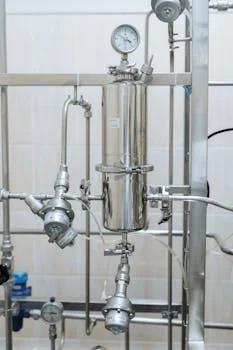
Selecting the optimal PAM dosing system for industrial applications requires a structured decision framework that considers plant-specific conditions, wastewater characteristics, and budgetary constraints. This systematic approach ensures that the chosen system delivers maximum wastewater flocculation efficiency and long-term cost-effectiveness.
Step 1: Define Wastewater Characteristics. Begin by thoroughly analyzing your industrial wastewater's Total Suspended Solids (TSS), Chemical Oxygen Demand (COD), and average/peak flow rates. High TSS (500-5000 mg/L) and COD levels often necessitate higher polymer dosing rates, typically 1-10 g/m³. This analysis also helps determine the most suitable polymer type (anionic, cationic, or non-ionic PAM) and its optimal molecular weight, which profoundly impacts flocculation performance in DAF systems for PAM-enhanced flocculation.
Step 2: Assess Space Constraints. Evaluate the available footprint within your facility. Dry powder PAM systems generally require less raw material storage volume but more space for dissolution and aging tanks (e.g., approximately 2m² for a compact dry system vs. 5m² for a liquid system with bulk storage). If space is severely limited, a compact dry system or a highly integrated liquid system may be preferred.
Step 3: Determine Automation Needs. Consider the variability of your wastewater load and the availability of operational labor. Industrial processes with highly variable loads, such as batch processing or intermittent discharge, demand fully automatic, PLC-controlled dosing systems that can adjust polymer delivery in real-time based on sensor feedback. Facilities with consistent, stable flows might find semi-automatic systems sufficient, balancing cost and control.
Step 4: Compare Vendor Specs. Utilize a detailed parameter table, similar to the one presented earlier, to compare critical engineering specifications across potential vendors. Focus on reported dosing accuracy (aim for ±1% for automatic systems), mixing time, energy consumption, and flow rate compatibility. Request performance guarantees and references from similar industrial applications to validate claims.
Step 5: Calculate ROI. Finally, perform a comprehensive Return on Investment (ROI) calculation using the cost breakdown methodology outlined previously. Input your plant's specific polymer consumption, energy costs, and labor rates to determine the payback period for different system options. This financial analysis, incorporating both CAPEX and OPEX, provides the ultimate justification for your investment in the best PAM dosing system for industrial use.
Frequently Asked Questions
What is the lifespan of a PAM dosing pump?
The lifespan of a PAM dosing pump typically ranges from 5-10 years for robust diaphragm pumps and 3-7 years for peristaltic pumps, depending on the chemical aggressiveness, operating pressure, and maintenance schedule (e.g., the CD3 pump is noted for durability per Top 5 data).
What’s the difference between STP and WWTP in PAM dosing?
Sewage Treatment Plants (STPs), which handle municipal wastewater, typically use lower PAM doses (0.1-1 g/m³) and prioritize consistent, stable dosing for predictable influent. Industrial Wastewater Treatment Plants (WWTPs) handle higher TSS loads (500-5000 mg/L) and often require variable dosing rates (1-10 g/m³) to adapt to fluctuating industrial effluent characteristics.
Which pumps are commonly used for chemical dosing in PAM systems?
Diaphragm pumps are widely used for their high accuracy and reliability, particularly for non-abrasive chemicals. Peristaltic pumps are preferred for viscous liquids and slurries, offering pulsation-free flow. Progressive cavity pumps are employed for highly viscous or abrasive slurries, though less common for standard PAM solutions.
How do I troubleshoot poor flocculation in my PAM dosing system?
To troubleshoot poor flocculation, systematically check for: (1) incorrect polymer concentration (target 0.1-0.5% for dry, 0.5-2% for liquid), (2) insufficient mixing time (ensure 30-120 min for dry, 5-30 min for liquid), (3) aging tank temperature (maintain 20-30°C for optimal activation), and (4) dosing pump calibration (verify ±1% accuracy).
Can I use the same PAM dosing system for drinking water and industrial wastewater?
No, generally not. Drinking water systems require specific certifications like NSF/ANSI 60 to ensure material safety and prevent contamination. Industrial wastewater systems, while requiring robust construction and precise dosing, prioritize higher dosing rates, chemical resistance, and heavy-duty operation over potable water safety standards.
Related Equipment
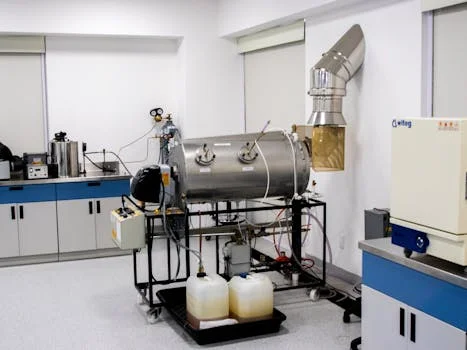
The following HydropureWater products are engineered for the wastewater challenges discussed above:
- HydropureWater’s automatic PAM dosing systems with PLC control — view specifications, capacity range, and technical data
- DAF systems for PAM-enhanced flocculation — view specifications, capacity range, and technical data
Need a customized solution? Request a free quote with your specific flow rate and pollutant parameters.