Why Flocculant Dosing Systems Fail: A Case Study from a Textile Plant
Manual flocculant mixing often results in 30% chemical waste and 20% TSS carryover due to inconsistent preparation and operator error (HydropureWater field data, 2025). A textile processing facility in Gujarat recently illustrated this engineering challenge. The plant, processing 1,200 m³ of effluent daily, relied on a manual "bucket-and-paddle" mixing method for their cationic polyacrylamide (PAM). Despite using high-grade chemicals, the secondary clarifier consistently suffered from "pin-floc" carryover and sludge bulking. Technical audits revealed that the manual preparation failed to provide the 45–60 minutes of maturation time required for the polymer chains to fully uncoil, resulting in "fish-eyes"—undissolved polymer globules that clog filters and waste active ingredients.
Operator dependency remains the primary failure point in non-automated systems. At the Gujarat facility, shift changes led to dosing variances of up to 40%, as different operators estimated chemical volumes by eye. This variability forced the plant to overdose by 25% to ensure compliance, leading to an annual chemical overspend of approximately $18,000. the inconsistent floc strength compromised the performance of their filter presses for dewatering flocculated sludge, resulting in wetter sludge cakes and higher disposal costs.
To address these inefficiencies, engineers must evaluate the four primary flocculant delivery methods: manual mixing, inline injection, automated flocculant dosing units, and electrocoagulation. While manual mixing offers the lowest capital entry point, its high operational volatility makes it unsuitable for flows exceeding 10 m³/h. Inline injection provides better mixing but lacks maturation time. Electrocoagulation removes the need for polymers entirely but introduces significant energy costs. Automated flocculant dosing units bridge this gap by providing controlled maturation and precise volumetric dosing, ensuring optimal solid-liquid separation and regulatory compliance.
How Flocculant Dosing Units Work: Engineering Mechanics and Process Parameters
Automated flocculant dosing units utilize a three-stage preparation and maturation process to ensure polymer chains are fully extended for maximum bridging efficiency. Unlike manual tanks, these units are engineered to manage the high viscosity of concentrated polymers while preventing the mechanical shearing of the delicate molecular chains. The process begins in the preparation chamber, where dry powder or liquid emulsion is metered into a high-energy mixing zone. To achieve optimal dissolution, the system maintains a specific mixing energy, or G-value, typically between 500–1000 s⁻¹ during the initial wetting phase.
The second stage is maturation (or "aging"). Per industry benchmarks, polymer molecules require 30–60 minutes of residence time in a low-shear environment to reach full activity. Automated units utilize a series of baffled chambers to prevent "short-circuiting," ensuring that every drop of solution has matured before entering the storage chamber. This is critical because under-matured polymer is significantly less effective at capturing fine suspended solids, while over-mixed polymer can suffer from chain degradation. The final stage involves a HydropureWater’s PLC-controlled flocculant dosing units utilizing positive displacement pumps to deliver the matured solution at a dosing accuracy of ±1%.
| Process Parameter | Specification / Range | Impact on Treatment Efficiency |
|---|---|---|
| Mixing Energy (G-Value) | 500–1000 s⁻¹ (Initial) / 50–100 s⁻¹ (Aging) | Prevents "fish-eyes" and molecular chain shearing. |
| Maturation Time | 30–60 Minutes | Ensures 100% polymer activation for maximum TSS capture. |
| Dosing Accuracy | ±1% (Automated) vs ±10-15% (Manual) | Reduces chemical waste and prevents clarifier upset. |
| Solution Concentration | 0.1% – 0.5% (Standard) | Optimal viscosity for injection and rapid dispersion. |
| Control Logic | Flow-paced or Turbidity-linked PLC | Maintains consistent flocculation during influent spikes. |
The integration of PLC control allows these units to synchronize with the plant's main influent flow meters. When the wastewater flow increases, the dosing pump automatically scales the polymer injection rate, maintaining a constant ppm (parts per million) concentration. This level of precision is essential for downstream processes, particularly for DAF systems optimized for flocculant-treated wastewater, where floc size consistency directly dictates the air-to-solids ratio and float stability.
Flocculant Dosing Unit vs Alternatives: Efficiency and Performance Benchmarks
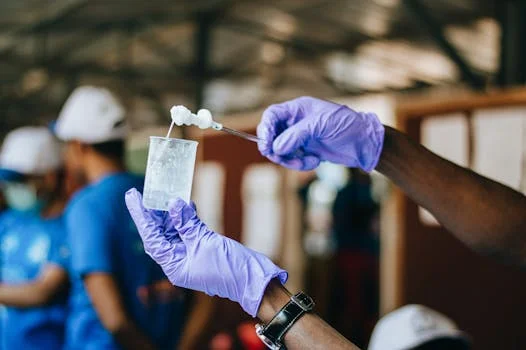
Flocculant dosing units deliver 95–98% TSS removal efficiency by eliminating the "fish-eye" effect and ensuring consistent polymer molecular weight. In a side-by-side engineering comparison, the automated unit outperforms manual and inline systems by a significant margin, particularly regarding floc settling velocity and COD reduction. While manual mixing can achieve decent results in batch processes, it fails in continuous flow environments where the influent chemistry is dynamic. Inline injection, while space-efficient, often lacks the necessary "contact time" for the polymer to fully react with the colloidal particles before entering the clarifier.
Data from 2024 EPA benchmarks and field studies indicate that automated dosing produces larger, denser flocs (1–3 mm) compared to manual systems (0.5–1.5 mm). These larger flocs exhibit settling rates of 5–10 m/h, which allows for smaller clarifier footprints or increased throughput in existing tanks. In contrast, electrocoagulation offers high removal rates for heavy metals but often struggles with organic-heavy wastewater, where the lack of polymeric "bridging" leads to fragile flocs that easily break under hydraulic shear.
| Metric | Automated Dosing Unit | Manual Mixing | Inline Injection | Electrocoagulation |
|---|---|---|---|---|
| TSS Removal Efficiency | 95–98% | 70–85% | 80–90% | 85–92% |
| COD Removal Rate | 60–75% | 40–60% | 50–65% | 55–70% |
| Floc Settling Velocity | 5–10 m/h | 2–5 m/h | 3–7 m/h | 4–8 m/h |
| Chemical Consumption | Baseline (100%) | 125–140% | 110–120% | 0–10% (Coagulant only) |
| Footprint (per 100 m³/h) | 2–3 m² | 5–8 m² | 0.5–1 m² | 5–10 m² |
The efficiency of an automated system also extends to sludge dewaterability. Because the polymer is fully matured and precisely dosed, the resulting sludge has a lower specific resistance to filtration (SRF). This translates to a 15–20% increase in cake solids when processed through a filter press vs centrifuge comparison for sludge dewatering, significantly reducing the volume of waste destined for landfill.
Cost Comparison: Flocculant Dosing Unit vs Manual, Inline, and Electrocoagulation Systems
The 5-year Total Cost of Ownership (TCO) for automated dosing units is often 20–30% lower than manual systems due to reduced chemical consumption and labor overhead. While the initial capital expenditure (CapEx) for an automated unit ($15,000–$50,000) is higher than a manual setup ($2,000–$10,000), the operational savings provide a rapid return on investment. For an industrial plant treating 100 m³/h, the chemical savings alone—estimated at 15–25%—can amount to $10,000–$25,000 annually depending on the polymer type and influent TSS concentration.
Operating costs (OpEx) for automated units typically range from $0.10 to $0.30 per cubic meter of treated water. This includes electricity for the low-speed mixers, chemical costs, and minimal labor for hopper refilling. Manual systems, while low in electricity use, carry a high labor cost ($0.20–$0.50/m³) and significant "hidden" costs from chemical waste and non-compliance fines. Electrocoagulation, though chemical-light, is energy-intensive, with OpEx reaching $0.60/m³ in regions with high electricity tariffs.
| Cost Component (5-Year TCO) | Automated Dosing Unit | Manual Mixing | Inline Injection | Electrocoagulation |
|---|---|---|---|---|
| Capital Cost (CapEx) | $15,000 – $50,000 | $2,000 – $10,000 | $8,000 – $25,000 | $30,000 – $100,000 |
| Annual Chemical Cost | $20,000 (Baseline) | $28,000 | $23,000 | $5,000 (Acid/Base) |
| Annual Labor & Energy | $3,000 | $12,000 | $4,000 | $18,000 |
| Annual Maintenance | $1,500 | $800 | $2,500 | $6,000 |
| Total 5-Year TCO | $137,500 | $216,000 | $175,500 | $245,000 |
ROI calculations indicate that for flow rates exceeding 50 m³/h, an automated flocculant dosing unit pays for itself within 12–24 months. Procurement managers should also consider the "compliance insurance" provided by automation; the cost of a single environmental fine for TSS exceedance often exceeds the price of an automated unit. For more details on budgeting for solids separation, refer to our sludge dewatering equipment comparison guide.
When to Choose a Flocculant Dosing Unit: Decision Framework for Engineers
Selecting between an automated dosing unit and inline injection depends primarily on flow rate stability and the required TSS removal threshold. For engineers designing new systems or upgrading existing ones, the choice must be guided by the "Three Cs": Concentration (of TSS), Consistency (of flow), and Cost (of chemicals). If the influent TSS exceeds 500 mg/L or the required removal efficiency is greater than 90%, an automated dosing unit is the only reliable engineering choice to ensure the polymer is fully activated.
The decision framework for 2025 follows a specific logical path:
- Flow Rate: If >50 m³/h, automate. The labor and chemical waste of manual mixing at this scale are unsustainable.
- Space Constraints: If footprint is extremely limited (<1 m²), use inline injection, but accept a 10–15% increase in chemical consumption to compensate for lack of maturation.
- Wastewater Type: For high-metal or oily wastewater where chemical addition is restricted, consider electrocoagulation despite the higher TCO.
- Budget: For batch processes or temporary sites with flows <10 m³/h, manual mixing remains viable if rigorous SOPs are in place.
Engineering Decision Tree: 1. Is flow rate >50 m³/h? (Yes: Proceed | No: Consider Inline/Manual) 2. Is TSS removal target >90%? (Yes: Automated Dosing | No: Proceed) 3. Are heavy metals the primary concern? (Yes: Electrocoagulation | No: Automated Dosing) 4. Is ROI <24 months required? (Yes: Automated Dosing | No: Manual/Batch)
Frequently Asked Questions
What is the minimum maturation time for industrial flocculants?
Most powder-based polyacrylamides (PAM) require 45 to 60 minutes of maturation at 20°C to achieve full chain extension. Emulsion polymers may mature faster (20–30 minutes), but still require low-shear mixing to avoid breaking the polymer chains. Automated dosing units are designed with multi-chamber tanks to ensure this residence time is met regardless of the dosing demand. Using under-matured polymer results in "fish-eyes" which can reduce chemical efficiency by up to 40% (per industry benchmarks).
How does dosing accuracy affect downstream sludge dewatering?
Dosing accuracy is critical for sludge dewaterability. Over-dosing creates "slimy" sludge that blinds filter cloths, while under-dosing results in fragile flocs that break under the pressure of a belt press or centrifuge. Automated units with ±1% accuracy ensure a consistent sludge SRF (Specific Resistance to Filtration). This consistency can improve the throughput of a plate and frame filter press by 20% and reduce the moisture content of the final cake by 5–8%.
Can one dosing unit handle both powder and emulsion polymers?
Standard units are typically optimized for one form. Powder units require a dry feeder and wetting assembly (venturi or educator), while emulsion units require specialized high-shear initial mixing followed by low-shear aging. However, "hybrid" units exist that feature dual-feed inlets. Engineers must specify the polymer form during the design phase because the mixing energy (G-value) requirements differ significantly between the two to prevent molecular degradation.
What maintenance is required for an automated flocculant dosing unit?
Routine maintenance is minimal but vital. Monthly tasks include calibrating the dosing pumps, checking the dry feeder for moisture clogs, and inspecting the tank for polymer buildup (jelly-like deposits). Annually, the mixers and level sensors should be serviced. Because these systems handle viscous and often slippery chemicals, ensuring all seals are intact prevents safety hazards and environmental contamination. Total annual maintenance costs typically range from $1,000 to $3,000.
Further Reading
Explore these in-depth articles on related wastewater treatment topics: