Gravity thickeners and DAF thickeners serve the same goal—concentrating sludge to reduce volume—but differ in mechanism, efficiency, and cost. Gravity thickeners use sedimentation (92-97% TSS removal for primary sludge) and are ideal for high-volume, low-cost applications, while DAF thickeners (95-99% TSS removal for secondary sludge) use micro-bubbles to float solids, offering a 30-50% smaller footprint but requiring 2-3x more energy. Key trade-offs: gravity thickeners cost ~$50,000–$200,000 (CAPEX) with minimal OPEX, while DAF systems range from $80,000–$300,000 but add $0.10–$0.25/m³ in operational costs. Choose gravity for primary sludge or budget constraints; opt for DAF when space is limited or influent TSS exceeds 10,000 mg/L.
Why Thickener Selection Matters: A Plant Manager’s Dilemma
Selecting the wrong thickening technology can increase downstream dewatering costs by up to 25% due to poor solids concentration and excessive chemical demand. For many industrial facilities, the decision is rarely about which technology is "better" in a vacuum, but rather which one solves the immediate conflict between capital availability and physical space. According to a 2024 WEF survey, 68% of industrial plants prioritize footprint reduction in 2025 retrofits, often making the higher OPEX of a DAF system a necessary compromise for sites that cannot expand their physical boundaries.
Consider a typical food processing plant undergoing a capacity upgrade. The facility may need to handle a 40% increase in secondary sludge volume. A traditional gravity thickener would require a massive concrete footprint that the plant simply does not have. Conversely, a DAF system fits within the existing layout but introduces a permanent increase in the monthly utility bill. The stakes are high: an undersized or poorly matched thickener leads to "thin" sludge, which forces downstream equipment like belt presses or centrifuges to run longer, consuming more polymer and increasing wear and tear.
Key decision drivers for engineers include the hydraulic loading rate, the specific gravity of the solids, and the intended final solids concentration. While primary sludge from food or municipal sources settles easily, secondary biological sludge (waste activated sludge) is often "fluffy" and resistant to gravity. In these cases, the choice between gravity and DAF dictates not just the footprint, but the long-term viability of the entire solids handling train.
How Gravity Thickeners Work: Mechanism and Process Parameters
Gravity thickeners utilize the density differential between water and solids to concentrate sludge, achieving 92-97% TSS removal for primary sludge according to EPA 2024 benchmarks. The process is a study in simplicity: influent sludge enters a central feed well of a circular tank, where the velocity is reduced to allow solids to settle to the bottom. A rotating rake mechanism gently stirs the settling sludge, helping to release trapped water and move the thickened solids toward a central hopper for withdrawal. Clarified effluent, or thickener overflow, exits via peripheral weirs.
For engineers, the design of a gravity thickener is governed by the surface loading rate and detention time. For primary sludges, a surface loading rate of 20–40 m/h is standard, while detention times can range from 6 to 24 hours depending on the desired underflow concentration. However, performance degrades significantly when dealing with light, colloidal, or biological particles that have a specific gravity close to that of water. In such instances, the use of chemical dosing systems for thickener optimization becomes mandatory, with polymer dosages typically ranging from 0.5 to 2 kg per ton of dry solids to ensure effective flocculation and settling.
| Parameter | Typical Value (Primary Sludge) | Typical Value (Secondary Sludge) |
|---|---|---|
| Surface Loading Rate | 20–40 m/h | 4–10 m/h |
| Detention Time | 6–12 Hours | 18–30 Hours |
| TSS Removal Efficiency | 92–97% | 80–85% |
| Underflow Solids % | 5–10% | 2–4% |
The process flow begins with influent entering the flocculation zone, followed by slow-speed sedimentation in the main tank body. The primary limitation of this technology is its physical size; to achieve high efficiency without chemicals, the tanks must be large. For plants with limited acreage, lamella clarifiers for compact gravity thickening offer a modular alternative by increasing the effective settling area within a smaller footprint.
How DAF Thickeners Work: Mechanism and Process Parameters
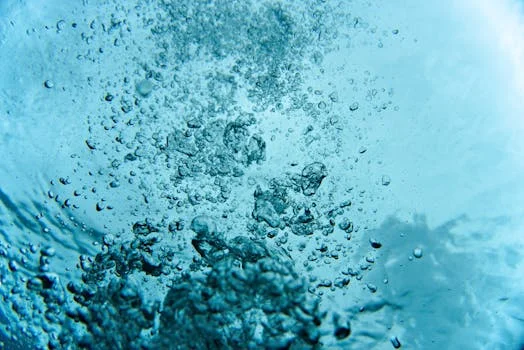
Dissolved Air Flotation (DAF) thickeners utilize micro-bubbles between 30 and 100 μm to achieve 95-99% TSS removal for light, secondary sludges. Unlike gravity systems that rely on sinking, DAF forces solids to the surface. This is achieved by dissolving air into a recycle stream of clarified effluent under high pressure (400–600 kPa). When this "whitewater" is released into the flotation tank at atmospheric pressure, the air comes out of solution as millions of tiny bubbles. These bubbles attach to the sludge flocs, reducing their effective density and causing them to float rapidly.
Critical process parameters for DAF include the hydraulic loading rate (5–15 m/h) and the air-to-solids (A/S) ratio, which typically ranges from 0.02 to 0.06. Because flotation is a much faster physical process than sedimentation, DAF units require significantly less detention time—usually only 1 to 2 hours. This speed allows DAF thickeners for industrial sludge to handle high volumes in a footprint 30–50% smaller than a comparable gravity system. This makes DAF the preferred choice for waste activated sludge (WAS) which is naturally prone to floating or remaining in suspension.
| Parameter | Standard Range | Impact on Performance |
|---|---|---|
| Hydraulic Loading Rate | 5–15 m/h | Higher rates reduce footprint but may lower TSS capture |
| Air-to-Solids (A/S) Ratio | 0.02–0.06 | Determines the "buoyancy" of the sludge blanket |
| Micro-bubble Size | 30–100 μm | Smaller bubbles provide better attachment to fine solids |
| Energy Consumption | 0.1–0.3 kWh/m³ | Main driver of higher OPEX compared to gravity |
The DAF process flow involves a pressurization pump, an air saturation vessel, and a flotation tank equipped with a surface skimmer. While highly effective, DAF is sensitive to influent pH (ideally 6.5–7.5) and requires consistent chemical conditioning to maintain floc stability. Engineers should also consult resources on DAF systems vs other flotation technologies to understand the nuances of recycle ratios and saturation efficiency.
Head-to-Head Comparison: Gravity vs DAF Thickeners
A head-to-head comparison reveals that while gravity thickeners offer lower operational costs, DAF systems provide a 30-50% reduction in required footprint. The choice between them often hinges on the specific gravity of the sludge and the available space. Gravity thickeners are the "workhorses" of primary treatment, while DAF systems are the "precision tools" for secondary biological solids. The following table provides a definitive comparison based on EPA 2024 benchmarks and internal HydropureWater performance data.
| Parameter | Gravity Thickener | DAF Thickener | Engineering Notes |
|---|---|---|---|
| TSS Removal Rate | 92–97% (Primary) | 95–99% (Secondary) | DAF is superior for biological solids |
| Footprint (m²/m³/h) | 2.5–5.0 | 0.5–1.5 | DAF saves up to 50% space |
| CAPEX ($/m³/h) | $500–$2,000 | $800–$3,000 | DAF requires more mechanical components |
| OPEX ($/m³) | $0.05–$0.10 | $0.15–$0.35 | DAF energy/chemical costs are 2-3x higher |
| Energy Use (kWh/m³) | 0.05–0.1 | 0.1–0.3 | DAF includes compressors and recycle pumps |
| Maintenance Needs | Low (Rake/Drive) | Moderate (Compressor/Skimmer) | DAF requires more frequent calibration |
| Ideal Sludge Type | Primary / Heavy Solids | Secondary / WAS / Oily Sludge | Gravity fails with "bulking" sludge |
The trade-off is clear: gravity thickeners are low-cost, high-area solutions, whereas DAF is a high-cost, low-area solution. For a plant processing 100 m³/h, a gravity thickener might require 50 m² of space, while a DAF unit can achieve the same results in just 25 m². However, the DAF unit will consume significantly more power to maintain the air saturation system, representing a permanent increase in the facility's carbon footprint and utility budget.
Cost Analysis: CAPEX, OPEX, and Lifecycle Costs
The total lifecycle cost of a DAF system typically exceeds that of a gravity thickener by 20-25% over a 10-year period, primarily driven by energy and chemical consumption. When evaluating CAPEX, a gravity thickener is generally the more affordable option, ranging from $50,000 to $200,000 for standard industrial sizes. This includes the tank, drive assembly, and basic controls. In contrast, a DAF system ranges from $80,000 to $300,000 because it requires high-pressure pumps, air saturation vessels, compressors, and more sophisticated automated controls.
OPEX is where the two technologies diverge most sharply. Gravity thickeners are passive systems; the only energy draw comes from the low-horsepower motor driving the rake. DAF systems, however, must constantly run saturation pumps and compressors. DAF systems almost always require higher polymer dosages to ensure the micro-bubbles have a stable surface to attach to. For a plant with a 100 m³/h flow, the 10-year total cost of ownership (TCO) for a gravity thickener is approximately $1.2M, while a DAF system can reach $1.5M.
| Cost Category | Input Variable | Gravity Estimate | DAF Estimate |
|---|---|---|---|
| CAPEX | Equipment + Install | $120,000 | $190,000 |
| Annual Energy | Flow x kWh x Rate | $8,000 | $22,000 |
| Annual Chemicals | Flow x Dosage x Cost | $12,000 | $28,000 |
| Annual Maint. | Labor + Parts | $5,000 | $12,000 |
| 10-Year TCO | CAPEX + (OPEX x 10) | $370,000 | $810,000 |
Procurement managers can use this ROI template to justify the higher CAPEX of lamella clarifiers for compact sedimentation if the space savings prevent the need for costly land acquisition or civil structural modifications.
When to Choose Gravity vs DAF: Use-Case Matching
The decision between gravity and DAF thickening is primarily dictated by influent sludge characteristics and site-specific spatial constraints. Engineers should follow a structured decision framework to ensure the selected technology aligns with the plant's long-term operational goals. If the sludge is primarily composed of inorganic solids or heavy primary organics, gravity is the logical choice. If the sludge is "light" (SVI > 150 mL/g) or contains high concentrations of fats, oils, and grease (FOG), DAF is the only reliable option.
Decision Flowchart for Thickener Selection:
- Is physical space limited? If yes, proceed to DAF. If no, evaluate sludge type.
- Is the sludge primary or secondary? Primary sludge favors Gravity; Secondary/WAS favors DAF.
- Is the Influent TSS > 10,000 mg/L? High solids loading can overwhelm gravity thickeners, making DAF more stable.
- Is the budget prioritized for CAPEX or OPEX? Low OPEX needs favor Gravity; Low CAPEX (in some modular cases) favors DAF.
- Is downstream dewatering sensitive to polymer carryover? Gravity thickeners typically result in lower residual polymer in the effluent.
Real-World Case Examples:
- Case A (Municipal): A municipal WWTP with 500 m³/h of primary sludge and ample land chose a gravity thickener. The result was a 15-year service life with minimal maintenance and the lowest possible cost per ton of solids removed.
- Case B (Food Processing): A snack food manufacturer with 100 m³/h of oily secondary sludge and a footprint constraint of 40 m² chose a DAF system. Despite the higher energy costs, the DAF achieved 98% TSS removal, protecting their downstream aerobic digesters from solids carryover.
Frequently Asked Questions
What is the difference between gravity thickening and flotation thickening?
Gravity thickening relies on the natural sedimentation of solids (sinking), making it ideal for dense primary sludge with 92–97% TSS removal. Flotation thickening (DAF) uses micro-bubbles to lift solids to the surface, making it superior for light, biological secondary sludge with 95–99% TSS removal.
Can a gravity thickener handle secondary sludge?
Yes, but it is less efficient. Gravity thickeners typically only achieve 80–85% TSS removal for secondary sludge compared to 95%+ for DAF. To make gravity thickening viable for secondary sludge, heavy polymer dosing (1–2 kg/ton) is required, and the footprint must be significantly larger to accommodate longer detention times.
How much space does a DAF thickener save compared to a gravity thickener?
A DAF thickener typically requires 30–50% less footprint than a gravity thickener for the same flow rate. For a 100 m³/h application, a gravity thickener might need 50 m², whereas a DAF unit can operate effectively in 25–35 m².
What are the energy requirements for DAF vs gravity thickeners?
Gravity thickeners are energy-efficient, using 0.05–0.1 kWh/m³ for the rake motor. DAF systems use 0.1–0.3 kWh/m³ because they require continuous operation of air compressors and recycle pumps. This results in DAF having 2-3x higher energy costs.
Are there alternatives to gravity and DAF thickeners?
Yes, alternatives include rotary drum thickeners for small flows (<50 m³/h) and belt thickeners for high-capacity dewatering prep. For a detailed look at downstream options, see the plate vs belt filter press 2025 engineering comparison.