Why Brownstown Mills Are Rethinking Primary Treatment in 2026
Brownstown, Indiana sits inside a southern Indiana paper corridor dominated by containerboard, recycled paperboard, and unbleached kraft operations, and the typical 1990s-era primary clarifier at these mills was sized for a furnish mix and a flow profile that no longer exist (per EPA Development Document, 1974). Furnish swings between virgin unbleached kraft, old corrugated container (OCC), and mixed waste paper have raised the floatable fraction of the feed stream, and biosolids hauling surcharges have risen with it. Operators are watching daily-maximum excursions on total suspended solids (TSS) and biochemical oxygen demand (BOD5) that the old gravity basin cannot absorb during a furnish change.
The regulatory floor is 40 CFR Part 430. New Source Performance Standards for the unbleached kraft and paperboard subcategories set BOD5 daily-maximums at 3.1 to 7.5 lbs/ton and TSS daily-maximums at 7.5 to 16.0 lbs/ton depending on the subcategory (per EPA Development Document for Unbleached Kraft & Semichemical Pulp, 1974). Paperboard from Waste Paper carries the heaviest TSS load at 16.0 lbs/ton daily-maximum, and the unbleached kraft – NSSC cross-recovery subcategory runs 15.4 lbs/ton TSS daily-max — both of which a single-stage gravity clarifier struggles to clear when the white water loop dumps a slug of fibre into the head of the primary basin. The pain in 2026 is operational: rising hauling cost, rising surcharges, and intermittent TSS excursions that trigger regulator follow-up. That is the procurement trigger for a primary-treatment technology re-evaluation.
How the Two Technologies Actually Separate Solids
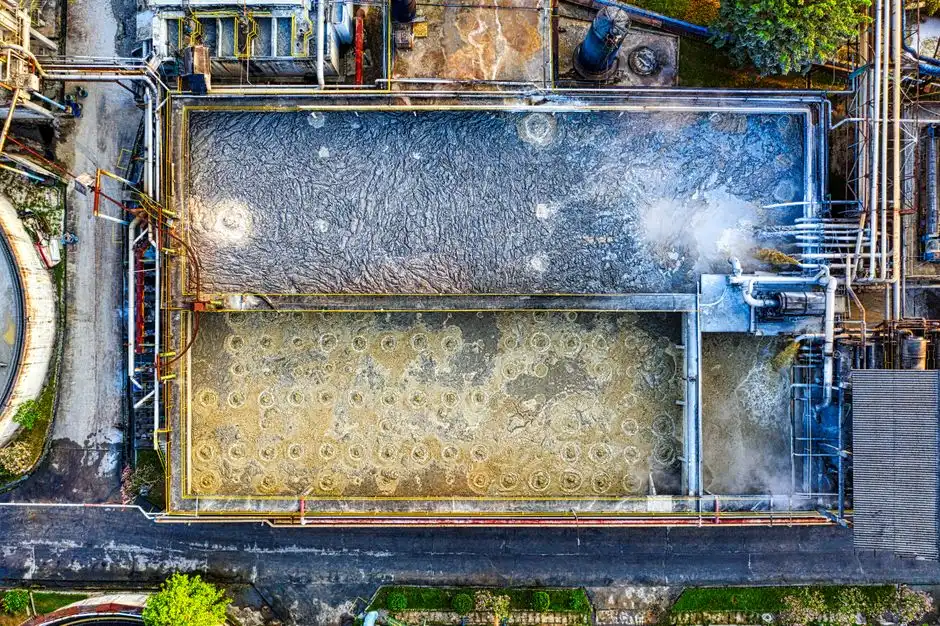
A conventional primary clarifier separates solids by gravity. Water enters a centre well, slows, and lets particles denser than water settle to a sludge blanket that rotating scrapers push to a centre hopper. Weirs at the perimeter skim clarified water. The mechanism works on grit, dregs, fibre bundles heavy with filler, and other high-density inorganics, but it fails on the materials that dominate modern pulp and paper white water: long fibre with near-neutral density, coating colour, latex, stickies, and filler particles that have already been washed free of their parent fibre (per EPA Development Document, 1974). Those floatables pass right over the clarifier weir and re-enter the aeration basin as load.
A dissolved air flotation (DAF) unit separates the same solids in the opposite direction. A pressurized recycle stream dissolves air at 4–6 bar; when that stream is released back to atmospheric pressure at the DAF nozzle, the dissolved air comes out of solution as a cloud of 10–80 micron micro-bubbles. Those bubbles attach to chemically conditioned floc and carry it upward, where a surface skimmer scrapes the float layer off as scum. Per the commercial process description, "This process is particularly efficient for particles with densities similar to water, which might be difficult to remove by conventional sedimentation" (per Ecologix, DAF for Pulp and Paper). In pulp and paper service, the DAF is the right tool for exactly the material the clarifier cannot catch — FOG, fibre, filler, latex, and low-density biomass (per Spectrum Water, DAF Units).
Chemical conditioning is non-optional for either technology. Both need a coagulant (typically a cationic polymer or ferric-based coagulant) to neutralize surface charge, and a flocculant (typically an anionic or non-ionic polyacrylamide) to build a settleable or floatable floc. On a DAF, the dose window is tighter because under-dosed floc will not attach to bubbles and over-dosed floc will trap bubbles and sink. On a clarifier, the dose window is wider but the consequence of a miss is a slow-settling sludge blanket that bulges over the weir. Automated polymer and coagulant dosing is standard practice on either system in 2026.
EPA 40 CFR Part 430 Limits by Subcategory: What Your Mill Actually Has to Hit
40 CFR Part 430 subdivides the pulp, paper, and paperboard category into five regulatory subcategories, and each carries its own BOD5 and TSS daily-maximum. The numbers below are the New Source Performance Standards from Table 3 of the EPA Development Document, expressed in both metric (kg/kkg) and customary (lbs/ton) units (per EPA, 1974):
| Subcategory | BOD5 30-day max (lbs/ton) | BOD5 daily max (lbs/ton) | TSS 30-day max (lbs/ton) | TSS daily max (lbs/ton) | Colour daily max (units) | Ammonia-N limit? |
|---|---|---|---|---|---|---|
| Unbleached Kraft | 3.1 | 6.2 | 7.5 | 15.0 | 30 | No |
| NSSC – Ammonia Base | 7.5 | 15.0 | 7.5 | 15.0 | 25 | Yes |
| NSSC – Sodium Base | 3.8 | 7.6 | 7.7 | 15.4 | 25 | No |
| Unbleached Kraft – NSSC (Cross-Recovery) | 3.0 | 6.0 | 8.0 | 16.0 | 37.5 | No |
| Paperboard from Waste Paper | 1.5 | 3.0 | 4.0 | 8.0 | — | No |
Several operational facts follow from this table. The Paperboard from Waste Paper subcategory does not carry a colour limit — but its 8.0 lbs/ton TSS daily-max is the loosest of the five, which is why recycled paperboard mills typically pass with a well-run clarifier plus a biological step. The NSSC-Ammonia Base subcategory is the only one with an ammonia-nitrogen limit, and Brownstown-area NSSC mills must add ammonia removal to whatever primary treatment they choose. pH must remain in the 6.0–9.0 range across every subcategory (per EPA, 1974). For the 1983 BATEA upgrade, EPA estimated that production-cost increases ranged from less than $1.00 up to $7.00 per ton depending on mill conditions — a number still useful as a 2026 order-of-magnitude sanity check (per EPA Development Document, 1973).
DAF vs Clarifier: Head-to-Head for Pulp & Paper Service
The matrix below compares the two technologies on the six criteria a Brownstown procurement engineer will score. Numbers are typical operating ranges from equipment-vendor and field experience; where a source confirms the range directly, it is cited inline.
| Criterion | DAF | Conventional primary clarifier |
|---|---|---|
| TSS removal on conditioned fibre/filler stream | 85–95% (per Ecologix, 2024) | 50–75% on the same feed |
| Fibre and filler recovery | Floatable fraction captured as 3–6% DS scum; recoverable for white-water loop | Floatable fraction passes over the weir; only the settled fraction is captured |
| Hydraulic footprint | 4–300 m³/h packaged in 13 standard models (per HydropureWater DAF product catalog, 2026); fits inside an existing clarifier bay in retrofit | Larger footprint per m³/h; new build is a 30-year concrete asset |
| Sludge consistency to dewatering | 3–6% dry solids as float; dewatering with a plate and frame filter press is straightforward | 1–3% dry solids underflow; typically needs thickening before dewatering |
| Sensitivity to furnish upsets | Recovers within minutes after chemistry re-dose; hydraulic surge handled in equalization | Sludge blanket bulges and washes over the weir; recovery takes hours |
| Chemical demand | Coagulant + flocculant mandatory; tight dose window; automated polymer and coagulant dosing is standard | Coagulant + flocculant recommended; wider dose window; automation still common |
On a fibre-and-filler stream the DAF recovers material the clarifier cannot catch — a direct economic value when the recovered fibre returns to the white-water loop and displaces virgin furnish (per Spectrum Water, DAF Units). On a grit and dregs stream from wood preparation, the clarifier wins because those particles settle fast and the DAF's bubble load adds no value. The fibre-recovery advantage of a DAF is the reason a 2026 DAF-first default applies to Brownstown paperboard and recycled-fibre mills.
2026 CAPEX, Footprint and Operating Cost Ranges
A packaged DAF system (covered in the DAF uses 2026 engineering guide) ships factory-built with the saturator, recycle pump, skimmer, and control panel pre-wired, so site work is reduced to a concrete pad, an inlet pipe, and a scum outlet. The 4–300 m³/h standard model range covers most Brownstown mill duties in a single unit, and the same DAF can be lowered into an existing clarifier bay for retrofit (per HydropureWater DAF product catalog, 2026). A new concrete clarifier of equivalent capacity is a heavier civil project: longer lead time, more concrete, more excavation, and a longer outage on tie-in.
Operating cost breaks down into three line items. Power: a DAF's air-saturation pump draw is a small fraction of total plant power at typical Brownstown flows; a clarifier needs no compressed air but does need sludge pumping. Chemicals: both technologies consume polymer at similar doses per ton of TSS removed, but the DAF's tighter dose window means an automated polymer and coagulant dosing system pays back faster. Sludge hauling: the DAF's thicker scum (3–6% DS) cuts hauling volume 30–50% versus clarifier underflow (1–3% DS) on the same feed, and the dewatering step downstream — typically a plate and frame filter press — runs at higher throughput per cycle on the thicker feed. A packaged DAF skid is a 15–20 year replaceable asset; a concrete clarifier is a 30-year-plus structure that becomes a sunk cost.
Decision Framework: DAF, Clarifier, or Both
The procurement question for a Brownstown mill in 2026 reduces to four binary filters. Apply them in order.
Choose DAF when: the primary load is fibre, filler, FOG, stickies, or coating colour; the mill flow is variable across shifts; fast restart after a furnish upset matters; and the site is footprint-constrained. This is the default for containerboard, recycled paperboard, and unbleached kraft mills running an OCC furnish. The DAF system described in our head-to-head covers this case in a single stage.
Choose clarifier when: the stream is high-density inorganics, grit, or dregs from wood preparation; the flow is steady; a new concrete structure is acceptable; or a DAF is already upstream polishing residuals. A lamella clarifier fits the high-density, high-flow case where footprint is still a constraint but floatables are not the load.
Choose both when: the mill is a high-flow site that uses the clarifier as a low-cost primary for the bulk of the settleable load and the DAF as a polishing step to clear the 40 CFR 430 daily-max numbers on BOD5 and TSS. EPA effluent data show primary clarifier effluent still carries significant BOD5 and TSS load before biological treatment, which is why the DAF-polish arrangement shows up in vendor pilot data (per EPA Development Document, 1974). For Brownstown in 2026, DAF-first is the default for paperboard and recycled-fibre mills; an existing kraft mill should evaluate a DAF-polish arrangement off the primary clarifier rather than replacing the basin.
What a Brownstown DAF Commissioning Looks Like in 2026
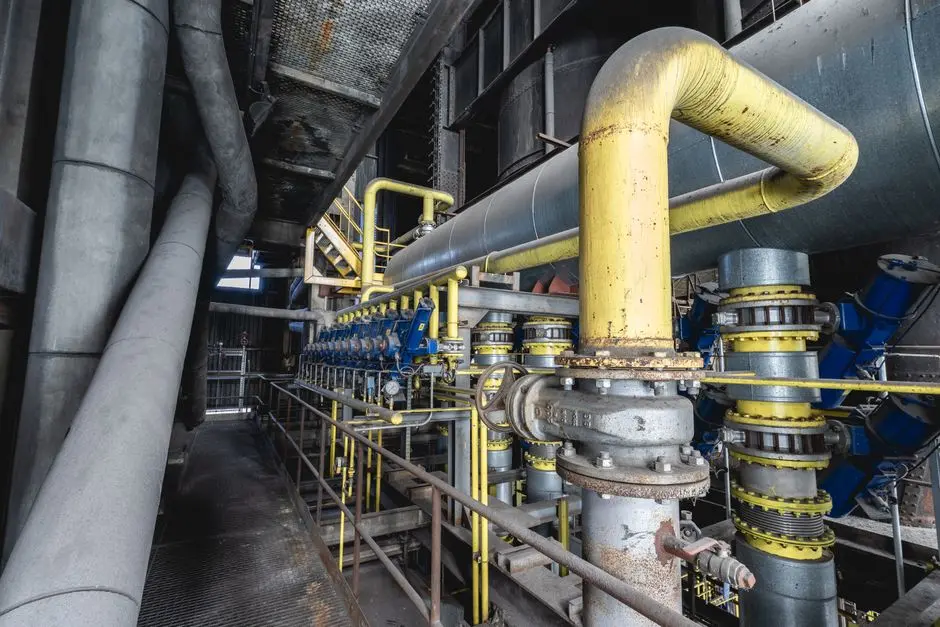
A 2026 DAF installation at a Brownstown mill follows a six-step commissioning sequence. Step one is jar testing on a representative feed sample to pick the right coagulant and flocculant and the right dose window — without this, the DAF is an expensive tank (per Spectrum Water, DAF Units). Step two is skid delivery; the DAF system is factory-built in 4–300 m³/h standard models, so on-site assembly is limited to setting the unit, piping the inlet and scum outlet, and wiring the control panel (per HydropureWater DAF product catalog, 2026). Step three is integration with the existing clarifier or biological step downstream, with a flow-paced tie-in so the DAF runs at its design hydraulic loading.
Step four is instrumentation: automatic polymer make-down, flow-paced air recycle, and a surface scum scraper with torque-interlock shutdown (per HydropureWater DAF product catalog, 2026). Step five is operator handoff, including chemistry tuning across the first 30 days as the furnish mix stabilizes and the dose window is locked in. Step six is compliance verification — daily composite sampling for BOD5, TSS, and pH against the 40 CFR 430 daily-maximums in the table above, with the first 30 days treated as a shakedown period before the data is reported. The same DAF vs clarifier decision logic used at other primary-treatment retrofits applies here: the DAF is only as good as its chemistry, and integrating the chemistry afterwards is where projects lose weeks.
Frequently Asked Questions
Which 40 CFR Part 430 subcategory applies to a Brownstown containerboard or recycled paperboard mill?
Containerboard from virgin unbleached kraft falls under the Unbleached Kraft subcategory (BOD5 daily-max 6.2 lbs/ton, TSS daily-max 15.0 lbs/ton). A mill using OCC or mixed waste paper falls under Paperboard from Waste Paper (BOD5 daily-max 3.0 lbs/ton, TSS daily-max 8.0 lbs/ton, no colour limit) per EPA Table 3 (1974). Confirm the subcategory against the mill's primary furnish before sizing.
Can a DAF hit 40 CFR 430 BOD5 and TSS in a single stage on pulp and paper white water?
Yes, on a conditioned fibre-and-filler stream a DAF typically reaches 85–95% TSS removal and recovers a large fraction of the floatable BOD5 contribution, which is enough to clear the 40 CFR 430 daily-max numbers in one stage on the Paperboard from Waste Paper and Unbleached Kraft subcategories (per Ecologix, 2024). A biological step downstream still handles dissolved BOD5.
Why does a conventional clarifier underperform on pulp and paper white water?
Because the load is dominated by long fibre, filler, and coating colour with densities near water, which gravity settling cannot resolve in a reasonable basin size (per EPA Development Document, 1974). The floatable fraction passes over the clarifier weir and re-enters the aeration basin as BOD5 and TSS load.
What chemical program does a DAF need to hit 40 CFR 430 numbers on pulp and paper service?
A coagulant (typically a cationic polymer or ferric-based coagulant) to neutralize surface charge plus a flocculant (typically an anionic polyacrylamide) to build a floatable floc. The dose window is tighter than for a clarifier, so automated polymer make-down and flow-paced dosing are standard on 2026 packaged units (per Spectrum Water, DAF Units).
Does a DAF remove enough material to reduce biosolids hauling cost on a Brownstown mill?
Yes. DAF scum at 3–6% dry solids cuts hauling volume 30–50% versus clarifier underflow at 1–3% dry solids on the same feed, and downstream dewatering on a plate and frame filter press runs at higher solids throughput per cycle (per HydropureWater DAF product catalog, 2026). The hauling-cost delta typically funds a meaningful share of the DAF CAPEX over the first five years of operation.
Related Equipment
- DAF system — specifications, capacity range, and technical data