Why Tampa Fabricated Metals Plants Face a Hard DAF-vs-Clarifier Choice in 2026
For Tampa-area fabricated metals plants in 2026, choosing between a DAF system and a gravity clarifier is no longer optional — EPA categorical limits, FDEP industrial permitting, and Tampa Bay's impaired-water status force a defensible decision before any equipment quote is signed. A typical shop's waste stream mixes tramp oils from stamping, emulsified coolants from machining, burnishing soap compounds, and grinding fines, all of which behave differently in a clarifier than in a flotation unit.
The regulatory anchor is EPA's Metal Finishing categorical rule at 40 CFR Part 433, which sets a daily maximum of 60 mg/L TSS, 86 mg/L oil & grease, 2.61 mg/L lead, 1.48 mg/L zinc, plus total metals limits for chromium, copper, and nickel — these are the ceilings a Tampa plant must hit on every sample to stay in compliance (per EPA 40 CFR 433). Florida's Industrial Wastewater Permit program, administered by FDEP, then layers a site-specific discharge permit on top of those categorical limits for any plant sending waste to a Tampa POTW or to surface waters. Stormwater from fabrication yards is separately regulated under the NPDES Multi-Sector General Permit — Sector AA covers Fabricated Metals, while scrap handling pulls in Sector N, and any ore/ingot storage pulls Sector M (per EPA NPDES MSGP).
Tampa Bay's listing as an impaired waterbody for nutrients, dissolved oxygen, and in some segments for metals means FDEP inspectors and City of Tampa pretreatment staff are tightening visible-sheen enforcement and quarterly self-monitoring in 2026. The combination of categorical ceilings, permit-by-rule review, and visible-effluent scrutiny is what makes the DAF-versus-clarifier decision unavoidable rather than academic.
How a DAF and a Gravity Clarifier Actually Separate Solids
A dissolved air flotation system separates contaminants by attaching microscopic air bubbles to flocculated particles so they rise; a gravity clarifier separates by letting denser particles fall under quiescent conditions. The two physical mechanisms explain why these units perform so differently on fabricated-metals wastewater.
In a typical DAF, a side-stream of clarified effluent is pressurized to 60–80 psig in a saturation vessel with compressed air, then released through a pressure-relief valve at the inlet of the flotation tank. The pressure drop nucleates bubbles in the 30–50 micron range, which attach to oil droplets and to chemically flocculated suspended solids and lift them to the surface in 5–15 minutes of hydraulic retention (per clearwaterind.com SigmaDAF/Clearwater product data, 2026-04). Surface skimmers scrape the float into a sludge hopper, while heavier grit drops to a bottom auger. Skimmer speed and air recycle rate are the two handles an operator uses to tune performance.
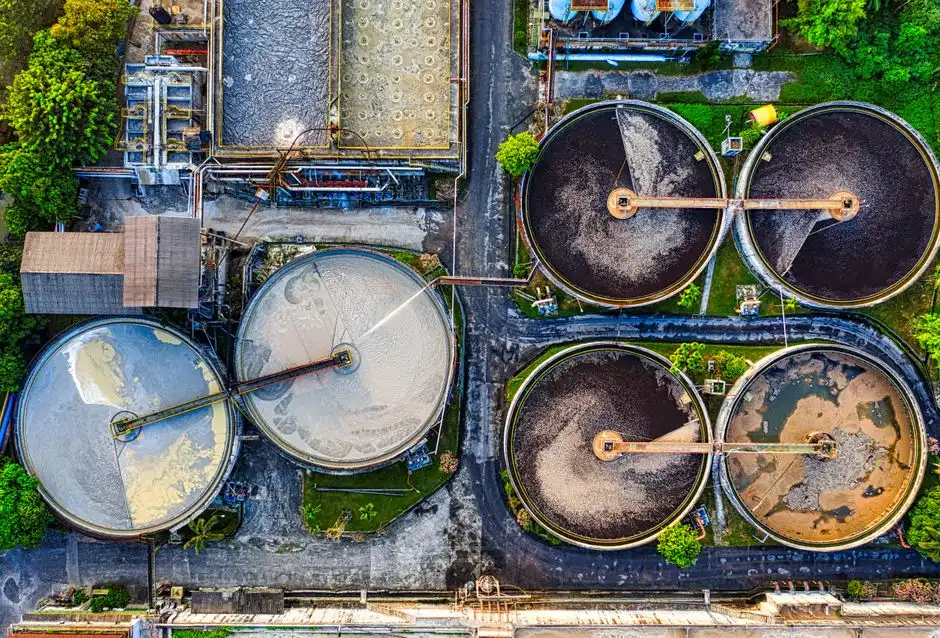
A gravity clarifier works on Stokes' law settling: dense particles fall through a 2–4 hour residence time basin. A lamella plate clarifier stacks inclined plates inside the tank to shorten the effective settling distance, which raises the surface loading rate to roughly 20–40 m/h depending on plate spacing and influent solids (per HydropureWater high-efficiency sedimentation tank product data, 2026). Heavier metallic fines settle well; tramp oil does not, because free oil and emulsified oil are close to neutral buoyancy and tend to ride the surface or escape over the weir.
Chemical conditioning is required in either device. A DAF needs a coagulant (typically a cationic polymer or ferric/alum salt) followed by a flocculant to grow floc large enough for bubble attachment; a clarifier needs a flocculant to produce a heavy, compact floc. In both cases a PLC-controlled automatic chemical dosing system tied to flow-paced metering pumps is what keeps the chemistry from drifting when influent surges.
For fabricated-metals streams specifically, tramp oils and emulsified coolants are the deciding factor. Emulsified oils have a specific gravity within roughly 5% of water once they are broken chemically, so a clarifier is fighting physics; the same floc, once bubble-attached, floats cleanly in a DAF. Conversely, dense metallic swarf and grinding fines settle in either device and are best knocked out in an upstream equalization or sludge pit to keep the clarifier or DAF from being overloaded with heavy solids.
Side-by-Side Comparison: DAF vs Clarifier for Fabricated Metals
The table below is built for a Tampa plant manager who needs a defensible comparison to hand to procurement in a single meeting. All values are typical operating ranges for fabricated-metals influent after chemical conditioning; specific site conditions can shift numbers ±10–15%.
| Parameter | Dissolved Air Flotation (DAF) | Gravity / Lamella Clarifier |
|---|---|---|
| Typical O&G removal | 80–95% on free & emulsified oil | 40–60% without prior oil removal; up to 70% with skimming |
| Typical TSS removal | 70–90% | 50–75% (lamella at the high end) |
| Hydraulic retention time | 5–15 minutes | 2–4 hours (lamella: 30–60 min effective) |
| Surface loading / footprint | Up to 20 gpm/ft² on high-rate units (per AquaDAF/SUEZ data, 2019-07) | 20–40 m/h lamella surface loading (per HydropureWater product data, 2026) |
| Flow surge sensitivity | Moderate — equalization tank strongly recommended | High — surges scour settled sludge and resuspend fines |
| Emulsified oil handling | Strong — floc + bubble attachment floats broken emulsions | Weak — neutrally buoyant droplets carry over the weir |
| Chemical demand | Coagulant + flocculant, often lower polymer dose | Flocculant-heavy; polymer dose drives OPEX |
| Skid / civil work | Pre-assembled skid; install in days | Concrete basin or large steel tank; weeks of civil work |
| CAPEX band (10–50 m³/h, 304SS, 2026) | $120k–$420k packaged, depending on options | $80k–$260k for tank + internals; civil work adds 30–60% |
| Primary OPEX drivers | Polymer, compressed air, skimmer maintenance, sludge hauling | Polymer, sludge hauling, basin cleaning, more chemical per m³ |
DAF wins for any stream where free or emulsified oil is more than a minor fraction; lamella clarifier wins when the plant already operates chemical precipitation for metals removal and only needs to knock down suspended solids on a stream with minimal oil loading. Tampa fabricated-metals shops almost never match the second profile, which is why DAF is the default recommendation below.
When a Clarifier Is the Right Answer (and When It Is Not)
A lamella clarifier is the right pick for a fabricated-metals plant when influent FOG is consistently under 50 mg/L, the plant already operates pH adjustment and metal-precipitation chemistry for EPA 40 CFR 433 metals compliance, and the site can absorb a concrete basin without structural headaches. In that profile the clarifier's smaller moving-parts count and lower polymer demand per m³ can beat DAF on lifecycle cost.
A clarifier is the wrong pick when tramp oils dominate the waste stream, when emulsified cutting fluids cause visible sheens on the equalization tank, or when the plant wants to recover oils for recycling rather than pay to haul wet sludge. For most Tampa plants discharging to the City of Tampa Industrial Pretreatment Program, a stand-alone clarifier without prior chemical conditioning cannot hold 86 mg/L O&G on a daily-max basis because emulsified oil passes straight over the weir.
The defensible compromise, used in larger plants, is a DAF as the primary oil-and-TSS remover followed by a lamella clarifier as a polishing step ahead of filtration or membrane reuse. That configuration also gives operators two failure modes to lean on instead of one.
Recommended Equipment for Tampa Fabricated Metals in 2026
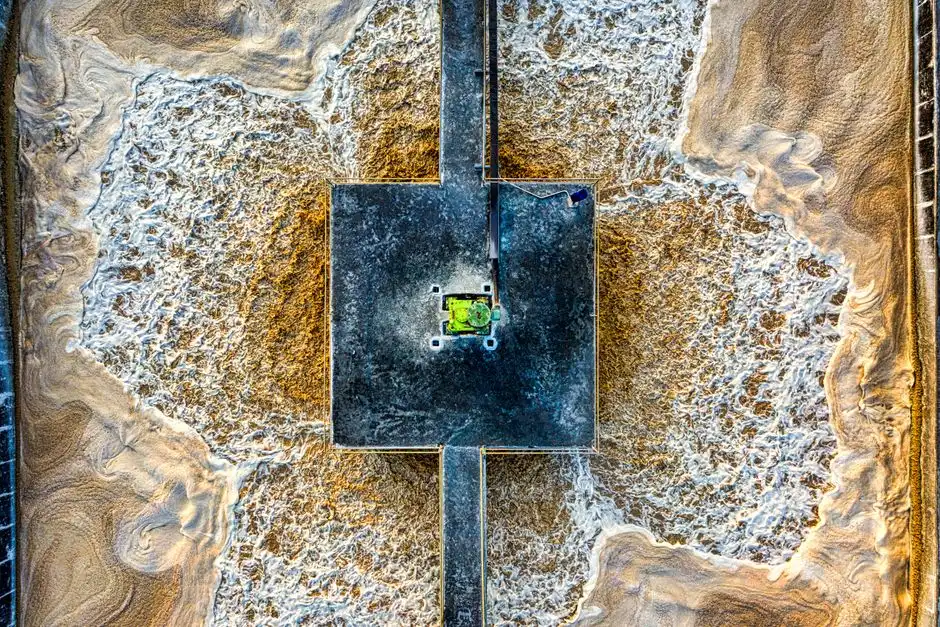
For the DAF-led path that fits the majority of Tampa fabricated-metals shops, the HydropureWater dissolved air flotation system is offered in 13 standard models covering 4–300 m³/h with automatic skimming, PLC control, and 304SS construction as the default (per HydropureWater DAF product description, 2026). Pair it with a PLC-controlled automatic chemical dosing system for coagulant and flocculant; without dose-locked polymer feed, removal efficiency drifts with every shift change. Specify 316SS if your rinse waters carry chlorides from plating or from Tampa's mildly saline atmospheric exposure.
For the clarifier-led path, the HydropureWater high-efficiency lamella sedimentation tank delivers the 20–40 m/h surface loading band and claims up to 30% chemical reduction versus conventional basins. It also works as a polishing clarifier downstream of a DAF in plants that need extra TSS reduction before sand filtration or RO.
Either way, the float or settled sludge stream has to go somewhere. A plate and frame filter press for float and settled sludge drops sludge volume to a 25–35% dry cake, which sharply reduces waste-haul cost and helps with FDEP sludge-handling documentation. Engineers evaluating a similar scope for other Florida metal shops can compare against our DAF or clarifier for Florida fabricated metals wastewater in Largo or the Greeneville reference in DAF vs clarifier guide for Greeneville fabricated metals plants; cross-border planning notes also appear in the DAF or clarifier for fabricated metals in Bridgeview piece. The parameter table below summarizes the two recommended HydropureWater units in extractable form.
| Spec | DAF | Lamella Sedimentation Tank |
|---|---|---|
| Flow range | 4–300 m³/h (13 models) | 5–200 m³/h typical |
| Standard material | 304SS; 316SS optional | Carbon steel with FRP / 304SS options |
| HRT | 5–15 min | 30–60 min effective (lamella) |
| Sludge removal | Surface skimmer + bottom auger | Bottom hopper + sludge valve |
| Control | PLC with HMI | PLC option; manual standard |
| Best fit in Tampa | Primary oil & TSS removal on quench/coolant streams | Polishing or low-FOG streams |
2026 Cost, Footprint, and Permitting Reality in Tampa
For a packaged 10–50 m³/h DAF skid in 304SS with PLC controls and an integral chemical conditioning train, 2026 order-of-magnitude CAPEX runs roughly $120,000–$420,000 before installation; an equivalent-capacity lamella clarifier sits at $80,000–$260,000 for the tank and internals, but concrete basin work, rebar, and FDEP-cleared engineering typically add 30–60% to the installed price. These are planning ranges, not vendor quotes — actual pricing depends on material upgrade, automation, and site constraints.
Installation timing is where DAF usually wins the schedule. A packaged skid arrives shop-assembled, sets on a concrete pad in days, and starts up after chemical tuning. A concrete-basin clarifier adds formwork, pour-and-cure time, and longer FDEP engineering review for the basin itself, which routinely extends the permit clock by 6–10 weeks. For Tampa plants facing a 2026 compliance deadline, that schedule gap can be the deciding factor even before dollars are counted.
Siting in Tampa has three Florida-specific overlays that national vendors tend to ignore. First, hurricane wind loading — outdoor equipment over 15 m³/h should be anchored for at least 150 mph design wind speed per current Florida Building Code. Second, storm surge — units placed inside the 100-year surge zone along Tampa Bay or the Hillsborough River need elevated plinths or enclosure in a masonry/steel building. Third, humidity and salt air — uncovered open-top basins accelerate corrosion, so enclosed DAF skids or covered clarifiers pay back in extended service life.
Frequently Asked Questions
What is the EPA 40 CFR 433 daily maximum TSS and O&G for metal finishing in Tampa?
EPA's Metal Finishing categorical standards cap total suspended solids at 60 mg/L daily maximum and oil & grease at 86 mg/L daily maximum, with monthly averages typically set at 26 mg/L O&G (per EPA 40 CFR Part 433). Tampa plants discharging to a POTW may face tighter local limits if the city's pretreatment program imposes them.
How small do DAF microbubbles need to be to float tramp oil in metalworking wastewater?
Commercial DAF systems are designed to produce 30–50 micron microbubbles, which is the size range that reliably attaches to oil droplets and chemically flocculated fines in fabricated-metals streams (per clearwaterind.com SigmaDAF product data, 2026-04). Bubbles in that range have enough buoyancy to lift floc without excessive residence time.
What surface loading rate can a high-rate DAF or lamella clarifier handle?
High-rate DAF units like the AquaDAF system are rated up to 20 gpm/ft² (per AquaDAF / SUEZ process data, 2019-07). Lamella clarifiers typically run 20–40 m/h of plate surface loading depending on plate spacing, which is what gives them a smaller footprint than a conventional clarifier at the same flow.
Do I need an FDEP Industrial Wastewater Permit to discharge to the City of Tampa sewer?
Yes — any fabricated-metals facility discharging industrial wastewater to a Tampa-area POTW typically needs an FDEP-issued Industrial Wastewater Permit or a permit-by-rule coverage, plus the local POTW's industrial pretreatment permit. Stormwater from fabrication yards is covered separately under the NPDES Multi-Sector General Permit Sector AA for Fabricated Metals.
Can a lamella clarifier meet 40 CFR 433 alone for a fabricated metals plant?
Only when influent FOG is already below ~50 mg/L and the plant is running chemical precipitation for metals. For most Tampa shops with tramp oil and emulsified coolant in the mix, a clarifier alone will not consistently meet the 86 mg/L O&G daily maximum without prior oil removal, which is why DAF-led systems are the default recommendation.