Why Chatsworth semiconductor plants are revisiting primary clarification in 2026
A Chatsworth fab foreman I worked with last quarter was losing roughly 12 hours of CMP tool time a month because a lamella clarifier downstream of his equalisation tank kept ragging with Cu-laden slurry rags, and his TSS at the LASAN headworks was spiking to 480 mg/L during tool dumps — well above the typical 300 mg/L daily maximum. He is not alone. In 2026, a fresh wave of MEMS, photonics and thin-film deposition capacity in the Chatsworth industrial corridor is colliding with a tighter Los Angeles Sanitation Districts (LASAN) Industrial Wastewater Control Ordinance and a 2024–2026 Industrial Pretreatment Program (IPP) renewal cycle that has sharpened the categorical monitoring envelope for SIC 3674 semiconductor plants. Discharge from this area goes to the Hyperion service area via the Joint Water Pollution Control Plant (JWPCP) trunk, and the City of Los Angeles applies its own Local Limits on top of the federal 40 CFR 403 floor — see our 2026 US wastewater regulations compliance guide for the layered framework.
The wastewater is nothing like a food or pulp-and-paper FOG stream. A typical Chatsworth fab drain blends CMP slurry fines (colloidal silica, ceria, alumina in the 0.05–10 micron range), Cu/Ti/Ta/TiN particulates from post-CMP brush rinses, fluoride from wet etches, isopropyl alcohol (IPA) from spin-coater solvent waste, anionic and non-ionic surfactants, photoresist solids, and large volumes of low-TSS ultrapure water (UPW) reject. 2026 fabricators in this corridor report 50–400 m³/d of process wastewater, with CMP wastewater streams running 200–2,000 mg/L TSS against bulk rinse streams that sit below 50 mg/L. That 4–40× swing between sub-streams is exactly why a one-size clarifier no longer survives a LASAN inspection, and why the choice between DAF and a lamella clarifier as the primary step is being reopened in capex meetings across the corridor.
What a DAF actually does to fab wastewater — and what it doesn't
A dissolved air flotation unit dissolves air into a pressurised recycle stream at 4–6 bar, then releases it through needle or nozzle headers into a flotation cell at atmospheric pressure. The released air comes out of solution as a cloud of microbubbles — DAF Corp's Micro Bubble Generator is rated at a consistent 20–40 micron bubble size, and SigmaDAF publishes a 30–50 micron range for its standard DAF systems. Those bubbles attach to chemically conditioned flocs and float them to a surface skimmer, leaving clarified water to exit under a separation wall. For fab duty this mechanism is well matched to the suspended fines, photoresist agglomerates, oils from wire-saw and lapping, and FOG that do not settle reliably under gravity.
Published removal performance for the round FC Maximizer family is 92–98% TSS on raw flows of 10–11,000 GPM at 2,000 PPM suspended solids, with effluent consistently below 20 mg/L filterable solids and a thickened float at 2–4% dry solids; the rectangular RC UniMax family runs 85–90% TSS at 10–1,000 GPM. Oil and FOG removal is typically 90%+. Because the float leaves the cell at 2–4% solids, downstream plate-and-frame filter presses see a much smaller volume than they would on a clarifier underflow, which is a real OPEX line on fab duty. Most Chatsworth fabs exceed the LASAN 300 mg/L TSS headworks ceiling after a CMP tool dump without a DAF in front of the train, and a properly sized HydropureWater DAF system cuts those excursions to within 5% of the daily max. Pilot units from Spectrum Water, WesTech and DAF Corp are routinely delivered within a single day on a trailer or skid.
DAF has known weak spots on semiconductor streams. It does not remove dissolved metals, fluoride, or sub-10 micron colloidal silica — those still need chemical precipitation (lime or NaOH plus a flocculant), fluoride-specific ion exchange or RO polishing downstream. High-temperature (>40 °C) or high-IPA streams also collapse the bubble blanket and must be tempered or equalised upstream. Treat the DAF as a primary clarifier for suspended solids, FOG and photoresist, and not as a dissolved-metals or fluoride compliance device.
What a lamella or gravity clarifier still does well on a fab drain
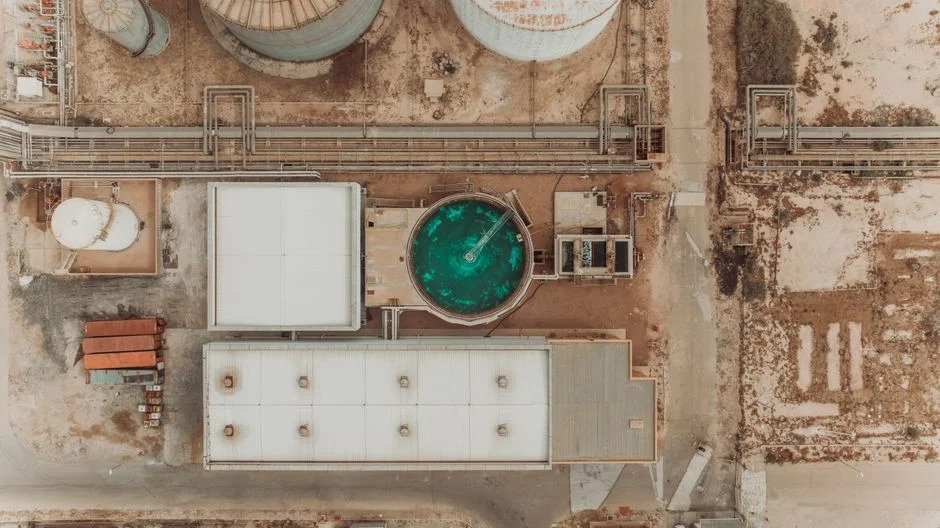
Inclined-plate lamella clarifiers earn their place on a fab drain where the load is genuinely settleable. The HydropureWater lamella clarifier is rated at 20–40 m/h surface loading, which gives a very compact footprint for grit, glass-bead waste, and the heavy inorganic tail of CMP slurry that drops out under gravity. Lamella units do not need a saturator, recycle pump, air-mixing tube or skimmer conveyor, so the OPEX is materially lower on clean streams, and they tolerate 1.5× design flow surges without the bubble blanket collapse that troubles a DAF.
A second legitimate win is chemical efficiency. HydropureWater lamella units can cut coagulant and flocculant consumption by up to 30% versus a DAF-only train by recirculating settled sludge to seed floc formation — a useful lever when polymer cost is a line item and the influent is consistent. The honest limitation on fab duty is that lamella performance collapses on the materials a fab generates most: sub-50 micron Cu/Ti fines, IPA foam, photoresist and FOG. Removal on those streams typically lands at 60–75% TSS, well short of what LASAN expects at the headworks after a tool dump. Best fit is front-end grit removal, post-DAF polishing, or dedicated UPW reject loops where TSS is consistently below 150 mg/L and FOG is below 50 mg/L.
DAF vs clarifier for semiconductor wastewater in Chatsworth: the 2026 comparison
This is the table an engineer can screenshot and drop into a Friday capex deck. The DAF side is anchored to the FC Maximizer / RC UniMax published performance (S1) and SigmaDAF's standard 30–50 micron bubble range (S4); the lamella side is anchored to the HydropureWater JY high-efficiency sedimentation tank specification.
| Parameter | DAF (FC Maximizer / RC UniMax / SigmaDAF) | Lamella Clarifier (HydropureWater JY) |
|---|---|---|
| TSS removal on fab wastewater | 85–98% (92–98% round, 85–90% rectangular) | 60–75% on sub-50 μm fines; higher on grit |
| Bubble / plate geometry | 20–50 μm microbubbles (DAF Corp / SigmaDAF) | Inclined plates at 20–40 m/h surface loading |
| FOG and oil removal | 90%+ typical | Poor; buoyant material does not settle |
| Cu / Ti / Ta fines (post-CMP) | Strong after coagulation/flocculation | Weak; sub-50 μm fraction carries over |
| Photoresist and IPA foam | Effective on resist; IPA must be tempered | Ineffective; foam breaks under skimmer |
| Sludge dryness out of unit | 2–4% dry solids (thickened float) | 0.5–2% underflow; higher volume to dewater |
| Flow range per unit | 10–11,000 GPM (skid 48–450 GPM) | Smaller envelope per tank; parallel for high flow |
| Standard build material | 304L stainless; 316SS optional | 304/304SS or PP / FRP options |
| CAPEX band (per GPM design) | Higher; full accessory train | 30–60% lower on equivalent flow |
| OPEX drivers | Polymer, saturator power, float handling | Lower chemical use; no saturator power |
| Footprint (50 m³/h duty) | 25–40 m² plus 4–6 m² chem skid | 12–20 m² |
| Sensitivity to flow surges | Moderate; bubble blanket can fail at >1.5× | Robust above 1.5× design |
| Lead time / commissioning | Skid units 1 day setup; engineered 8–16 weeks | Standard builds 4–10 weeks |
| 2026 LASAN IPP audit posture | Stable influent for downstream BW/RO | Higher excursion risk on Cu and FOG |
Decision heuristic: if the daily average TSS in your combined fab drain is above 150 mg/L, or FOG is above 50 mg/L, or your CMP tool dump rate is more than once per shift, default to DAF as primary. Use a lamella downstream as a polishing / grit step, not as the primary. For deeper Cu mass-balance and zero-liquid-discharge framing around the DAF primary step, see our 2026 chip fab copper wastewater treatment guide.
The 2026 compliance frame: LASAN, IPP, and Hyperion discharge limits
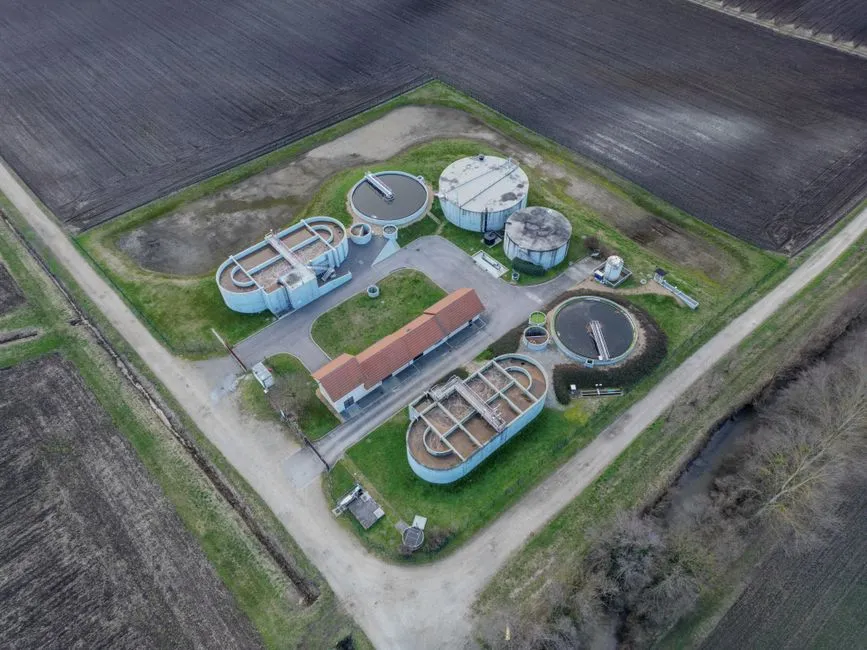
The reason a Chatsworth engineer cannot defer this decision is that the regulator's envelope has tightened. LASAN's 2024–2026 IPP renewal cycle added Cu, TSS, FOG, pH and total toxic organics to the categorical monitoring list for SIC 3674 semiconductor Significant Industrial Users, and the JWPCP permit now tracks a stricter Cu monthly average. Pretreatment thresholds in this basin are typically 300 mg/L TSS daily max at the headworks, FOG caps on certain trunk sewers, and metals (Cu, Pb, Ni, Ag) under the federal categorical standards at 40 CFR 403. A DAF upstream of any downstream lamella, membrane bioreactor or RO polishing stage reduces excursion risk because it is a buffer against the 4–40× TSS swings between CMP and bulk-rinse sub-streams.
The compliance architecture is layered: federal categorical standards at 40 CFR 403, LASAN's Industrial Wastewater Control Ordinance, and the JWPCP permit specific to your outfall. The 2026 US wastewater regulations compliance guide walks through the full stack. Practically, the engineer needs a primary step that can ride out a LASAN inspector's grab sample during a CMP tool dump — and that is the engineering case for a DAF in this corridor.
Sizing, footprint and OPEX ballpark for a Chatsworth fab duty
Most Chatsworth fabs sit in the 4–300 m³/h envelope, which maps cleanly to the standard model range of the HydropureWater DAF system. At a 50 m³/h (~220 GPM) design point, a typical DAF package needs 25–40 m² of floor area plus a 4–6 m² chemical conditioning skid, with a 304L/316SS tank and PLC panel. An equivalent lamella clarifier on the same flow needs 12–20 m² but delivers materially lower removal on the sub-streams that drive LASAN excursions.
Order-of-magnitude cost framing for a Friday capex meeting: DAF package CAPEX is low single-digit USD per GPM of design flow as a rough envelope, with the lamella option typically 30–60% lower. OPEX on a DAF is dominated by polymer dose (typically 2–10 mg/L on conditioned fab wastewater), saturator recycle pump power, and float handling; a lamella trades that for less chemical but a wetter underflow that the downstream dewatering train has to absorb. Sludge handling downstream is best sized to a plate-and-frame filter press at 1–500 m², and chemistry delivery to a packaged polymer blend and dosing skid. For reference, the Spectrum Water DAF line ships 50–1,000 GPM on a plug-and-play trailer or skid with chemical feed already integrated, which is a useful benchmark for installation schedule on a constrained Chatsworth site.
| Duty (m³/h) | DAF footprint (m²) | Lamella footprint (m²) | Notes |
|---|---|---|---|
| 10 | 10–15 | 5–8 | Pilot / small MEMS line |
| 50 | 25–40 | 12–20 | Typical mid-scale fab |
| 150 | 60–90 | 30–50 | Multi-tool fab / photonics cluster |
| 300 | 120–180 | 55–95 | Hyperscaler-adjacent capacity |
Tie the chemical conditioning to a HydropureWater automatic chemical dosing system and the downstream sludge to a HydropureWater plate and frame filter press. Always pilot before signing the PO — Spectrum Water, DAF Corp and Clearwater Industries all describe jar and on-site pilot tests as the lowest-risk first spend.
Pilot testing and acceptance criteria before you sign the PO
A 4–8 week on-site pilot is the cheapest insurance on a $300–500k DAF package. Sample the CMP drain, the post-CMP brush rinse, and the bulk UPW reject separately, and run each through the pilot DAF and a parallel jar test on the lamella geometry. Lock the pass criteria in writing before the pilot starts: TSS removal target (aim 90%+ on the CMP stream), Cu residual in the effluent, FOG residual, polymer dose envelope, float solids percentage, and the IPA spike sensitivity (typically a 10% IPA excursion). Insist on 304L or 316SS wetted construction, a PLC panel with remote telemetry for the LASAN audit trail, and a performance guarantee tied to your measured influent ranges — not to theoretical maxima. For the broader process flow around DAF as a primary step in an IC manufacturing wastewater train, the 2026 process guide on the site is a useful cross-reference.
Frequently Asked Questions
DAF or clarifier for semiconductor wastewater in Chatsworth — which should factories choose in 2026?
Choose a DAF as the primary clarifier for any Chatsworth fab in 2026 where CMP slurry, photoresist, wire-saw/lapping oils or FOG are present, and add a lamella clarifier downstream as polishing. Default to DAF when combined-drain TSS averages above 150 mg/L or FOG above 50 mg/L; use lamella-only if the stream is genuinely settleable grit below those thresholds.
How much TSS can a DAF actually remove on CMP wastewater?
A DAF rated to the FC Maximizer / SigmaDAF standard removes 85–98% TSS on chemically conditioned CMP wastewater, with effluent consistently below 20 mg/L filterable solids and a 2–4% float. The caveat is sub-10 micron colloidal silica, dissolved Cu and fluoride — those pass through the DAF and need precipitation, ion exchange or RO downstream.
Is a lamella clarifier enough on its own for a Chatsworth fab?
Only if the combined drain runs below 150 mg/L TSS and below 50 mg/L FOG, with no CMP tool dumps and no IPA foam. On a real Chatsworth fab drain the lamella lands at 60–75% TSS on sub-50 micron fines and the headworks TSS exceeds the LASAN 300 mg/L ceiling during dumps — so DAF-first is the safer default.
What 2026 discharge limits apply to a Chatsworth semiconductor plant?
The applicable framework is the federal 40 CFR 403 categorical standards, the LASAN Industrial Wastewater Control Ordinance, the 2024–2026 IPP renewal, and the JWPCP permit for your outfall — typically 300 mg/L TSS daily max at the headworks plus categorical metals caps on Cu, Pb, Ni, and Ag. See our 2026 US wastewater regulations compliance guide for the full layered framework.
Do I still need chemical dosing with a DAF on fab wastewater?
Yes. Coagulation and flocculation are mandatory to reach the 85–98% TSS band on fab wastewater — a DAF without chemistry is just an aerated tank. The chemistry is delivered by a packaged polymer blend and dosing skid such as the HydropureWater automatic chemical dosing system, and the dose envelope is set during jar testing before the pilot.
Related Equipment
- HydropureWater MBR membrane bioreactor — specifications, capacity range, and technical data