Why IC Manufacturing Wastewater Is Unlike Any Other Industrial Stream
Wafer fabrication is the most water-intensive discrete-manufacturing process on earth: a 12-inch fab consumes 15–20 m³ of process water per wafer, and a single mega-fab discharges 5,000–50,000 m³/day of segregated effluent. By comparison, a 200 mm line runs 4–10 m³ per wafer. That water carries chemicals — fluoride, tetramethylammonium hydroxide (TMAH), copper, tungsten, isopropyl alcohol, hydrogen peroxide — at concentrations that would cripple a municipal POTW within hours. Source segregation at the wet bench is therefore not a design preference but a process necessity.
Blending streams at the drain generates reactions that no downstream unit operation can undo economically. TMAH mixed with strong acids releases tertiary amines and trimethylamine (TMA) gas. HF combined with ammonia-bearing streams forms ammonium bifluoride complexes that resist conventional Ca precipitation. Photoresist solvents co-mingled with CMP slurry foul dissolved-air flotation cells and poison biological reactors. Every successful 2026 fab treatment train keeps these streams in separate piping until specific unit operations are ready for them.
Regulatory pressure is also tightening in 2026. Taiwan EPA's surface-water quality criteria (TWQC), China's GB 39731-2020 electronic-industry effluent standard, Korea's Water Quality Conservation Act (WQC) limits, and the EU Industrial Emissions Directive 2010/75/EU BAT-AELs all push fabs toward either stricter discharge ceilings or aggressive reuse. In the US, Phoenix-area semiconductor clusters discharge under local POTW pretreatment programs layered on EPA TSCA chemical-substance rules. The combined effect is a treatment train that must hit ppb-level targets for some parameters while still handling influent in the tens of thousands of mg/L for others — a dynamic range of six orders of magnitude in a single plant.
The Six Wastewater Streams Inside a Wafer Fab
A modern 12-inch fab generates six distinct wastewater streams, each with its own characteristic chemistry, peak loading, and preferred treatment route. Lumping them into one combined drain is the single most common design error in retrofit projects, and the first thing any EPC proposal should be evaluated against.
| Stream | Key Parameters (Influent Range) | Primary Treatment |
|---|---|---|
| CMP slurry wastewater | TSS 500–5,000 mg/L; nano-abrasives 30–300 nm (SiO₂, CeO₂); residual H₂O₂; surfactants | DAF + lamella clarifier + UF |
| TMAH developer | 1–10% TMAH; COD 50,000–200,000 mg/L; BOD/COD < 0.05 | Fenton, wet air oxidation, or electrochemical oxidation |
| HF / BOE etch wastewater | F⁻ 100–10,000 mg/L; co-contaminants H₃PO₄, NH₄F, H₂SO₄ | Ca(OH)₂ precipitation → <8–10 mg/L F⁻ |
| Cu / W plating rinsewater | Cu 10–500 mg/L; W, Ni trace; complexing agents (EDTA, citrate) | pH adjust + ion exchange or electrocoagulation |
| Photoresist / IPA waste | IPA up to 5%; NMP; surfactants; COD 5,000–30,000 mg/L | Air stripping + Fenton + SBR |
| UPW system blowdown | TOC < 50 ppb target; low-TDS, low-TSS; high-purity dilute stream | RO + EDI polishing for reuse |
CMP slurry is the highest-solids stream. The 30–300 nm particles are below the capture range of conventional sedimentation and require either a DAF unit for CMP slurry pre-treatment followed by 0.1 µm ultrafiltration, or a coagulant-aided lamella clarifier. TMAH developer is the most refractory organic stream — with a BOD/COD ratio below 0.05, conventional activated sludge fails, and advanced oxidation is mandatory. HF/BOE streams carry fluoride in concentrations two to three orders of magnitude above any discharge limit, and the calcium fluoride (CaF₂) sludge they generate is itself a disposal liability. Plating rinses introduce complexed heavy metals that defeat simple hydroxide precipitation unless pH and ORP are tightly controlled. Photoresist/IPA waste needs volatile organics stripping before any biological step. UPW blowdown is the cleanest stream by far and is the primary reuse candidate after RO + EDI polishing.
The Standard 2026 Treatment Train, Stage by Stage
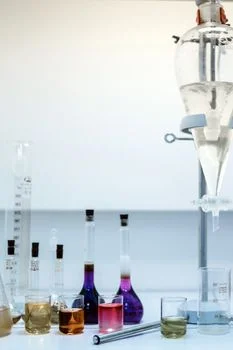
An integrated 2026 fab treatment train is a seven-stage segregated system. Each stage has a defined influent specification and a measurable effluent target, and the EPC's P&ID should be auditable stage by stage against the parameter table in the next section.
Stage 1 — Source segregation. Acid/alkali, fluoride, TMAH, CMP, and UPW lines are kept in separate piping from the wet bench to the WWTP. In-line pH and conductivity probes on each header automatically divert off-spec flows to a holding tank.
Stage 2 — Equalization and screening. Rotary bar screens at 3–5 mm aperture protect downstream pumps. Flow-balanced EQ tanks (typically 8–24 hours of hydraulic retention) dampen loading swings; pH probes on the EQ outlet trigger caustic or acid dosing before the next stage.
Stage 3 — Primary organics destruction. TMAH and photoresist streams go to Fenton oxidation at pH 3 with an H₂O₂:COD mass ratio of 1.5:1 and Fe²⁺ at 200–500 mg/L, achieving 60–85% COD reduction. Ozone (3–5 g O₃/g COD) is the alternative for fabs that want to avoid iron-laden sludge. Wet air oxidation at 200–300 °C and 50–80 bar handles the 50,000–200,000 mg/L COD range, while electrochemical oxidation (boron-doped diamond anodes) is increasingly specified for >100,000 mg/L TMAH peaks. A PLC-controlled chemical dosing skid maintains stoichiometry within ±5% across all oxidation stages.
Stage 4 — Fluoride precipitation. Ca(OH)₂ is dosed to pH 8.5–9.5 in a two-stage reactor train, with polyaluminum chloride (PAC) at 50–100 mg/L for flocculation. A lamella clarifier for fluoride precipitation removes CaF₂ sludge; fluoride drops from 10,000 mg/L influent to 8–10 mg/L residual. A polishing ion-exchange step on the clarifier overflow is sometimes required to reach the most aggressive reuse targets below 5 mg/L.
Stage 5 — Heavy metals polishing. Strong-acid cation resins strip residual Cu and Ni, while selective anion resins capture tungsten complexes. Typical polish: Cu to <0.5 mg/L, Ni to <0.1 mg/L. Resin regeneration with H₂SO₄/HCl produces a small brine that is recycled upstream into the equalization tank.
Stage 6 — Membrane polishing. A 0.1 µm PVDF ultrafiltration guard filter feeds a two-pass RO polishing train. First-pass RO permeate is the reuse feed for UPW make-up; second-pass RO handles the most demanding TOC targets. RO reject (15–30% of feed) goes to a brine concentrator or ZLD crystallizer where required by local water-stress conditions. For facilities pursuing 95%+ recovery, mechanical vapor recompression (MVR) crystallizers on the brine stream are now standard.
Stage 7 — Sludge handling. CaF₂ and metal-hydroxide sludges from stages 4 and 5 are thickened and dewatered with a filter press for CaF₂ and metal-hydroxide sludge to 35–45% dry solids for off-site disposal as a stabilized industrial waste. The broader economics and process-control architecture of fab water systems are evolving fast, as covered in AI-driven process control in fab wastewater and in the electronics-assembly wastewater treatment plant supplier guide for 2026.
Removal Efficiencies and Effluent Targets by Stream
The parameter table below consolidates the unit operations against their achievable effluent targets and the regulatory basis each target must be defended against. Use it to validate vendor proposals and to anchor any discharge permit discussion.
| Stream | Influent Range | Unit Operation | Effluent Target | Compliance Basis |
|---|---|---|---|---|
| CMP — TSS | 500–5,000 mg/L | DAF + lamella + UF (0.1 µm) | < 5 mg/L | China GB 39731 Tier 1 (2020) |
| TMAH + photoresist — COD | 50,000–200,000 mg/L | Fenton or O₃ + biological SBR | < 50 mg/L | Taiwan EPA TWQC; EU BAT-AEL |
| Fluoride | 100–10,000 mg/L | Ca(OH)₂ precipitation + IX polish | < 8 mg/L (8–10 mg/L typical) | Taiwan TWQC 15 mg/L; EU BAT-AEL 5–25 mg/L |
| Copper | 10–500 mg/L | pH adjust + IX or electrocoagulation | < 0.5 mg/L | EU BAT-AEL; Korea WQC |
| UPW blowdown — TOC | 5–20 mg/L | RO + EDI | < 1 ppb (UPW reuse grade) | SEMI F63 UPW spec |
| System water recovery | — | Integrated train | 70–85% to process; 15–30% brine to ZLD or off-site | HydropureWater field data, 2026 |
Several numbers here are worth defending in writing. The <8 mg/L fluoride target sits below the Taiwan TWQC 15 mg/L ceiling and comfortably inside the EU BAT-AEL 5–25 mg/L band — important because a fab discharging to surface water in either jurisdiction must show statistical compliance, not just nominal performance. The Cu <0.5 mg/L target is the standard for ion-exchange polish; if your vendor quotes <0.1 mg/L, expect to pay for a second polishing column or electrocoagulation. TOC <1 ppb after RO + EDI is the SEMI F63 threshold for ultrapure water reuse back into the fab's process loop. Overall recovery of 70–85% is achievable without ZLD; pushing beyond 90% requires brine concentration and crystallization, which the next section covers.
Water Reuse, ZLD, and 2026 Cost Reality
For a 10,000 m³/day fab, the economic argument for reuse is straightforward. A modern UPW-grade reuse loop recovers process-quality water at a levelized cost of $1.50–3.00/m³ in 2026, against municipal tariff-plus-discharge costs of $3.50–8.00/m³ in water-stressed semiconductor clusters (Phoenix, Hsinchu, Pyeongtaek, Xi'an, Singapore). Typical payback for a reuse retrofit sits at 3–5 years, with the most aggressive RO + EDI + ZLD configurations reaching payback in 2–3 years where local water tariffs exceed $6/m³.
Operating-cost structure for a 10,000 m³/day fab WWTP in 2026 breaks down as electricity 30–40% (aeration blowers, RO high-pressure pumps, MVR compressors), chemicals 35–45% (Ca(OH)₂ is the single largest line item, followed by H₂O₂, NaOH, and ion-exchange regeneration acid), sludge disposal 10–15% (CaF₂ and metal-hydroxide cake hauling), labor and membrane replacement 10–15%. The chemical share is the most volatile input and is the first place to look when an OPEX variance appears. Resource recovery market trends through 2030 point to CaF₂ valorization (ceramic feedstock, metallurgical flux) as a partial offset to disposal cost in larger fabs.
Zero liquid discharge is no longer optional in several regions. Arizona's draft 2026 groundwater permitting, Israeli Industrial Discharge rules, Singapore's PUB trade-effluent framework, and parts of China (Tianjin, the Yellow River basin) all either require or strongly incentivize 95%+ liquid recovery. Adding an MVR crystallizer to the RO reject stream is the current best-in-class route; it adds roughly $8–15 million CAPEX for a 10,000 m³/day fab and brings overall water recovery to 95–99% with a crystalline Na₂SO₄/CaSO₄ by-product. The trade-off is energy: MVR alone can add 25–40 kWh/m³ of brine treated, which is why ZLD economics are most defensible where both water tariffs and discharge penalties are high.
Frequently Asked Questions
Q: What fluoride discharge limit applies to a 12-inch fab in 2026?
A: It depends on jurisdiction. Taiwan EPA TWQC sets 15 mg/L for surface-water discharge, EU IED BAT-AELs run 5–25 mg/L, and China's GB 39731-2020 sets 8 mg/L Tier 1 for direct discharge. The tightest practical design target is <8 mg/L F⁻ after Ca(OH)₂ precipitation plus ion-exchange polish.
Q: Can TMAH developer wastewater be treated biologically?
A: Not directly. With a BOD/COD ratio below 0.05, TMAH is refractory to conventional activated sludge. Fenton, ozone, wet air oxidation, or electrochemical oxidation must precede any biological step, after which an SBR can polish residual COD to <50 mg/L.
Q: What is a realistic water-recovery rate for a 2026 fab WWTP without ZLD?
A: 70–85% recovery to the process loop is the typical integrated-train ceiling once RO and EDI polishing are included. Pushing above 90% requires brine concentration and crystallization, adding $8–15 million CAPEX for a 10,000 m³/day fab.
Q: How much sludge does a 10,000 m³/day fab generate?
A: A 10,000 m³/day fab producing HF and Cu-bearing streams will generate 15–40 tonnes/day of dewatered CaF₂ and metal-hydroxide cake at 35–45% dry solids, depending on the influent F⁻ and metals load. Off-site disposal as stabilized industrial waste is the standard route.